Last Updated on April 2, 2026 by Peperomia obtusifolia
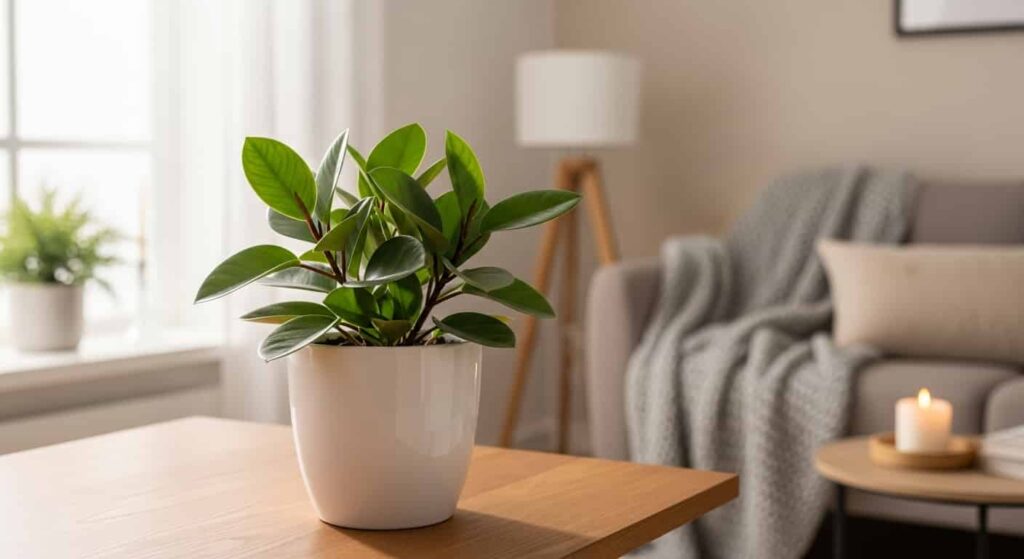
Quick answer: Peperomia obtusifolia (baby rubber plant) tolerates average indoor humidity (about 40–60% relative humidity). It does not need a tropical steam room. Increase humidity only if your air is very dry or you see crisp leaf edges; a pebble tray or grouping plants is usually enough. Avoid misting as the main humidity strategy.
What humidity does Peperomia obtusifolia need?
Peperomia obtusifolia prefers moderate humidity, similar to most homes. It is not as demanding as many true ferns or calatheas. Many people grow it successfully in normal room humidity between roughly 40% and 60% RH.
If humidity drops below about 35% for long periods—common in heated winter air—leaves may develop brown, crispy tips or slightly slower growth. In that case, gentle humidity boosts help.
Is Peperomia obtusifolia the same as “baby rubber plant”?
Yes. Peperomia obtusifolia is widely sold as baby rubber plant or pepper face. It is unrelated to Ficus elastica (the true rubber tree). The same humidity rules apply to the common green form and variegated cultivars like ‘Variegata’.
Signs your humidity is too low
Watch for these signals before changing your whole routine:
| Sign | What it often means |
|---|---|
| Brown, dry leaf tips | Very dry air, underwatering, or salt buildup from tap water |
| Leaves feel thin or papery | Often dehydration or low humidity combined with dry soil |
| Pest flare-ups (spider mites) | Spider mites love dry, warm air; not “proof” of humidity alone |
Note: Crispy edges can also come from direct hot sun, underwatering, or mineral buildup. Rule out light and watering before blaming humidity only.
Signs humidity is fine (or higher than needed)
- New leaves emerge normal size and shape without chronic tip burn
- You are not constantly fighting mold on pots or soggy soil from over-misting
- The plant grows steadily in spring and summer with proper light and water
Peperomia obtusifolia does not require terrarium-level moisture. Too much ambient moisture around leaves without airflow can encourage fungal issues.
Easy ways to raise humidity (ranked by usefulness)
1. Humidifier (best for dry climates)
A small cool-mist humidifier near your plant zone is the most reliable way to lift room humidity. Aim for a comfortable 40–55% in the plant area—not extreme spikes.
2. Group plants together
Placing several houseplants close together creates a slightly more humid microclimate through transpiration. Leave a little space for airflow.
3. Pebble tray
Set the pot on a tray of pebbles and water so the pot base is above the water line. This adds a small amount of local humidity as water evaporates. Refill as needed.
4. Bathroom or kitchen placement (if light is adequate)
Rooms where people shower or cook often have slightly higher humidity—only if the plant still gets bright indirect light and is not blasted by cold drafts or direct sun.
5. Misting (optional, not a substitute)
Misting gives a short-lived surface boost. It does not replace a humidifier in very dry air. If you mist, use room-temperature water and avoid soaking leaves late in the day so they dry before night.
What not to do
- Do not leave the pot sitting in standing water—that causes root rot, not “humidity.”
- Do not rely on misting alone in very dry homes; fix the room or use a humidifier.
- Do not seal the plant in a plastic bag long term unless you are propagating or following a specific recovery protocol—poor airflow can cause rot.
Humidity vs. watering: do not confuse them
Humidity is moisture in the air. Watering is moisture in the soil.
Peperomia obtusifolia has semi-succulent leaves and tolerates slightly drying between waterings. High humidity does not mean you should water more. Always check the soil, not the calendar.
Short rule: Let the top inch or two of soil dry before watering again (adjust for pot size, season, and light).
Seasonal humidity tips
| Season | What to expect | Easy tip |
|---|---|---|
| Winter | Heating dries indoor air | Humidifier, pebble tray, or move to a slightly more humid room |
| Summer | Often more humid indoors | Watch for overwatering; humidity is rarely the limiting factor |
| AC season | Air conditioning can dry air | Same as winter: small humidifier or grouping |
FAQ: Peperomia obtusifolia humidity
Does Peperomia obtusifolia need a humidifier?
Not always. If your home stays around 40–60% RH, you usually do not need one. Use a humidifier if humidity is consistently low (for example, under ~35%) and you see ongoing leaf tip damage not explained by light or watering.
Is 30% humidity too low for Peperomia obtusifolia?
It can be marginal. Some plants cope; others show tip browning or slower growth. If 30% is your winter norm, add one reliable method (humidifier or pebble tray) and see if new growth improves.
Should I mist my Peperomia obtusifolia every day?
Daily misting is optional, not required. If you enjoy misting, do it lightly in the morning. Do not depend on misting alone in arid conditions.
Do pebble trays really work?
Yes, a little. They modestly increase local humidity. They work best combined with grouping plants or in small rooms. They are weaker than a humidifier in very dry air.
Can too much humidity hurt Peperomia obtusifolia?
Indirectly, yes. Stagnant, wet foliage and poor airflow can encourage fungal problems. Keep moderate humidity with normal ventilation, not a constantly wet leaf surface.
Does bathroom humidity replace a humidifier?
Sometimes partially, if the bathroom has enough indirect light and temperature swings are not extreme. Many bathrooms are too dark for long-term growth—light matters more than a few extra steamy minutes per day.
Key takeaways (for quick scanning)
- Target range: roughly 40–60% indoor relative humidity is ideal for most homes.
- Tolerance: Peperomia obtusifolia is forgiving and not a high-humidity specialist.
- Raise humidity if the air is very dry or leaves show consistent crispy tips.
- Best tools: humidifier > grouping > pebble tray; misting is minor support.
- Always separate humidity from watering—check soil moisture before watering.
This guide is for general houseplant care and is not a substitute for advice tailored to extreme climates, greenhouses, or commercial growing.