
Peperomia Obtusifolia
Peperomia obtusifolia, the baby rubber plant, is a small, thick-leaved houseplant from the forests of Mexico, the Caribbean, southern Florida and northern South America. It wants bright, filtered light and soil that dries out between waterings. Most of the problems people run into with it start with too much water.
What is Peperomia obtusifolia?
It is an evergreen perennial in the pepper family, Piperaceae, the same family as the black pepper vine. The species name means “blunt-leaved”, which describes the rounded, slightly notched leaf tips. The leaves are thick and waxy and hold water, so the plant copes with a missed watering far better than with soil that never dries.
In the wild it grows in the forest understorey, sometimes in leaf litter on the ground and sometimes on tree bark. That is why its roots are fine and shallow, and why it rots in heavy, wet compost. Indoors it usually stays around 20–30 cm tall and produces thin, cream-coloured flower spikes that look more like tails than flowers.
The common name causes confusion. It is not related to the rubber tree, Ficus elastica, which is toxic to cats and dogs. Peperomia obtusifolia is listed as non-toxic to cats, dogs and horses by the ASPCA. The baby rubber plant vs rubber tree comparison covers how to tell them apart.
Peperomia obtusifolia care at a glance
The short version. Each row links to a longer guide, and the full care guide puts it all in one place.
| Factor | What it needs | More detail |
|---|---|---|
| Light | Bright, filtered light, roughly 2,000–4,000 lux. An east window works well, or a spot set back from a south or west window. It survives lower light but stops growing and gets leggy. | Light requirements |
| Water | Water only once the top 2–3 cm of soil is dry. In a 12 cm pot that often works out to every 10–14 days in summer and every 3–4 weeks in winter, but check the soil, not the calendar. | How to water |
| Soil | A loose, free-draining mix. About half coir-based compost, 30% perlite and 20% fine orchid bark is a good starting point. Straight potting compost stays wet too long. | Soil mix recipe |
| Pot | Must have a drainage hole. Go only slightly wider than the root ball; the roots are small and a big pot of wet soil is the usual route to rot. | Choosing a pot |
| Temperature | 18–24 °C (65–75 °F). Keep it above 10 °C (50 °F) and away from cold windows and draughts in winter. | Temperature range |
| Humidity | Normal room humidity of 40–60% is fine. It does not need misting. | Humidity |
| Feeding | A balanced fertiliser at half strength, once a month in spring and summer. Nothing in winter. | Fertiliser |
| Repotting | Every 2–3 years in spring, or sooner if roots are coming out of the drainage hole. | When to repot |
Common problems and what usually causes them
Before changing anything, push a finger 2–3 cm into the soil. Whether it is wet or dry changes the answer for nearly every symptom below. For a longer walk-through, see Peperomia obtusifolia problems.
Not sure which one it is?Answer two quick questions and get the most likely cause.Open the problem checker| What you see | Most likely cause | Guide |
|---|---|---|
| Leaves curling downward | Usually dry roots. If the soil is wet, the roots may be rotting and unable to take up water. | Read the guide |
| Yellow lower leaves, soil still damp | Too much water or a mix that drains poorly. | Read the guide |
| Black or dark brown spots | Overwatering, oedema, or a bacterial or fungal leaf spot. | Read the guide |
| Healthy-looking leaves suddenly dropping | Cold, overwatering, or a sudden move to a new spot. | Read the guide |
| Wrinkled, soft leaves | Thirst, if the soil is dry. Root damage, if the soil is wet. | Read the guide |
| Stems flopping or falling over | Stretching for light, or rot at the base of the stem. | Read the guide |
| Long bare stems, smaller new leaves | Not enough light. | Read the guide |
| Soft, black stem base | Stem rot, almost always from soil that stayed wet. | Read the guide |
| Brown, crispy leaf edges | Long dry spells, very dry air, or salt build-up from fertiliser or tap water. | Read the guide |
| White cottony clumps in leaf joints | Mealybugs. | Read the guide |
Guides by topic
Watering and soil
Light and placement
Propagation and pruning
Varieties
Growth and flowering
Quick answers
Is Peperomia obtusifolia a succulent?
Not botanically, but it behaves like a semi-succulent. The leaves and stems store water, which is why it should dry out between waterings.
Can it live in low light?
It will survive a dim corner for a while, but it stops growing, the stems stretch, and variegated forms lose their colour. It does much better near a bright window.
Is it the same as a rubber plant?
No. “Rubber plant” usually means Ficus elastica, a much larger tree that is toxic to pets. The two only share a name because both have thick, glossy leaves.
Can it grow in water?
Cuttings root well in water, and some people keep them there for months. For long-term growth it does better moved into soil or a semi-hydro setup. See growing Peperomia obtusifolia in water.
How do I make it bushier?
More light first, then pinch or cut the stem tips in spring. New shoots usually form just below the cut. The pruning guide shows where to cut.
Latest guides
How Often to Water Peperomia? Signs and Method
Watering is the single most common cause of Peperomia obtusifolia failure, and almost always in the direction of too much rather than too little. The fix is reading the substrate and the leaf, not following a fixed schedule.
Watering Peperomia with Rainwater: Benefits & Science
Rainwater suits Peperomia obtusifolia well because it is naturally low in dissolved minerals, so it does not leave the lime and salt build-up that hard tap water does — a genuine, if modest, benefit distinct from the commonly repeated claim that rain functions as a meaningful natural fertiliser.
Is Well Water Safe for Peperomia? Dangers & Solutions Guide
Untreated well water is not automatically better for Peperomia obtusifolia than municipal tap water — it commonly runs harder and more alkaline, which drives the same mineral-lockout mechanism as hard tap water, and iron or manganese content varies enough between individual wells that testing matters more than assuming it is either safe or dangerous.
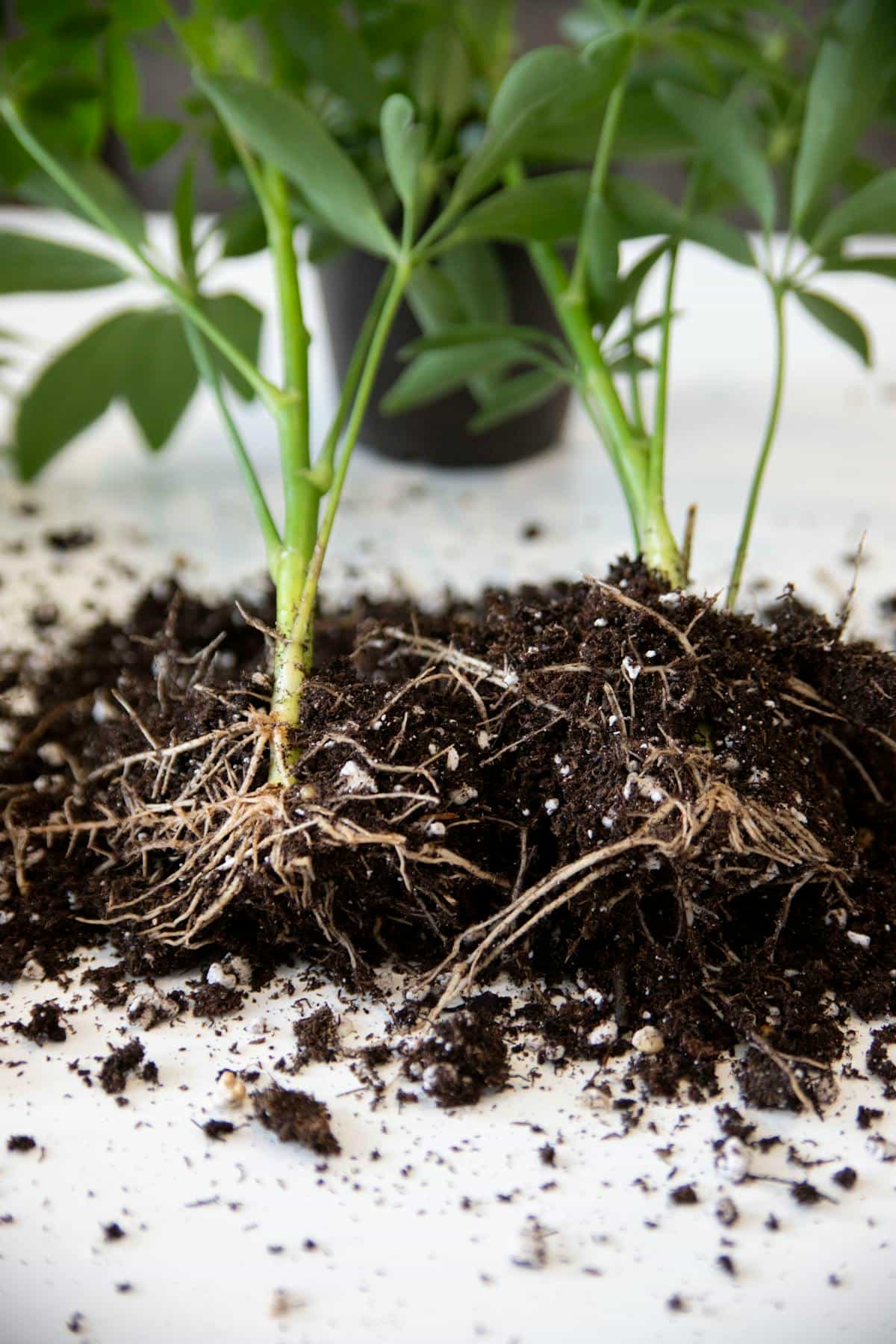
When to Repot Peperomia: 7 Clear Signs
Repotting too early causes shock, but repotting too late stalls growth. Learn to read your Peperomia's hydraulic and structural signals, and the conservative one-inch rule that keeps the root zone oxygenated.
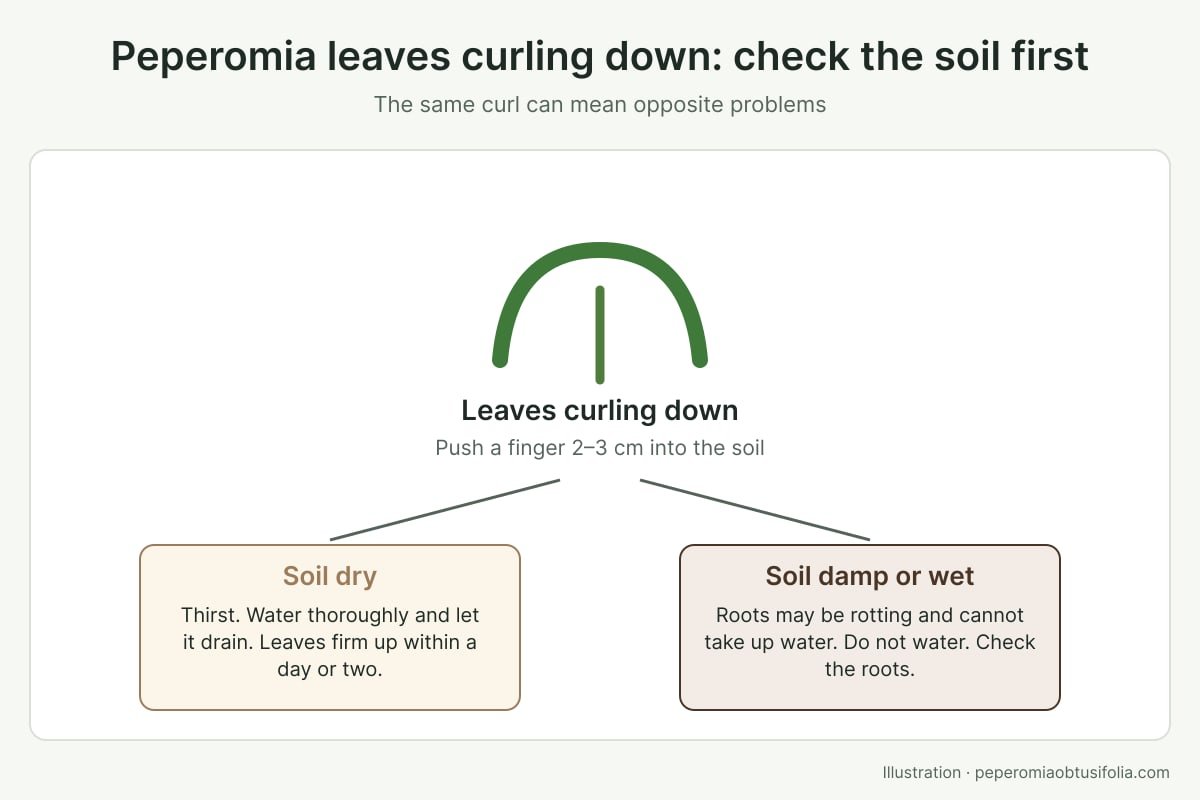
Peperomia Leaves Curling Down: Causes and Fixes
When Peperomia obtusifolia leaves curl downward, the direction is diagnostic. The soft claw signals root failure; the rigid dome signals light deficit; the firm hook signals nutrient toxicity. Adding water to the wrong cause accelerates collapse.
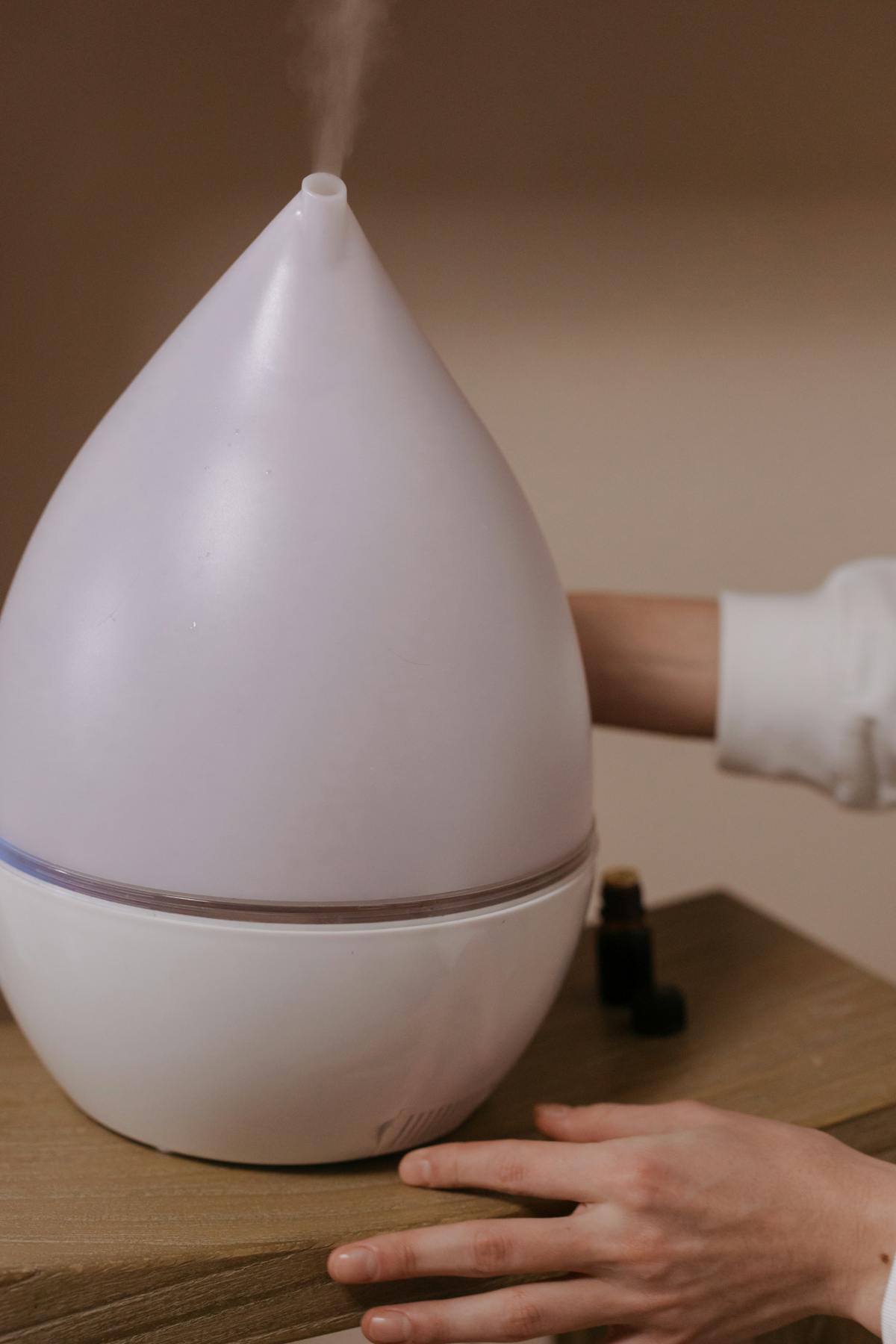
Peperomia Humidifier: Best Cool vs Warm Mist
Choosing a humidifier for Peperomia obtusifolia comes down to water quality and placement, not a single universally superior mist type — each option has a specific failure mode worth knowing before you buy.
Sourced, not guessed
Light levels, watering intervals, and other figures are checked against the RHS, Kew, Missouri Botanical Garden, and NC State Extension before publication.
One named author
Written by Umar Farooq, who researches each guide before writing it — no anonymous editorial team, no fabricated credentials.
Corrected when wrong
Found an error? It gets checked against the source and fixed — see the corrections policy for how.