Last Updated on April 2, 2026 by Peperomia obtusifolia
Answer
Peperomia obtusifolia (baby rubber plant) is most reliable as an indoor plant in temperate climates: it thrives in bright indirect light, stable room temperatures, and controlled watering. It can grow outdoors only where frost-free conditions persist year-round (roughly USDA zones 10–12, depending on microclimate) or as a seasonal patio plant brought inside before cold nights. Indoors wins for predictability and year-round growth in most regions; outdoors suits warm, humid, frost-free gardens with filtered light and well-draining soil.
Quick reference — indoors vs outdoors at a glance
| Factor | Indoors (recommended for most growers) | Outdoors (limited regions / seasonal) |
|---|---|---|
| Best use | Primary houseplant; desk, shelf, bright room | Frost-free gardens; summer patio in warm zones |
| Light | Bright indirect; east/west window or a few feet from south | Morning sun or dappled shade; avoid harsh midday sun |
| Temperature | ~65–80°F (18–27°C) typical; avoid prolonged exposure below ~50°F (10°C) | Must stay frost-free; cold snaps damage or kill |
| Humidity | Average home OK; boost if air is very dry | Natural humidity helps in tropics/subtropics |
| Watering | When top soil dries; less in winter | Faster dry in heat/wind; adjust to rain |
| Pests | Fewer species; watch fungus gnats, mealybugs | More exposure: snails, caterpillars, scale, etc. |
| Winter | Easy: same spot, stable care | Not hardy to frost—must protect or move inside |
Is Peperomia obtusifolia better indoors or outdoors?
For most people, indoors is better. The species is sold and grown worldwide as a houseplant because it tolerates typical home light and humidity and does not require a greenhouse. Outdoors is optional and climate-dependent: it is not cold-hardy, so outdoor year-round culture only works in frost-free or nearly frost-free areas, and even then scorching sun and waterlogged soil remain risks.
Why Peperomia obtusifolia works so well indoors
Light needs match typical rooms
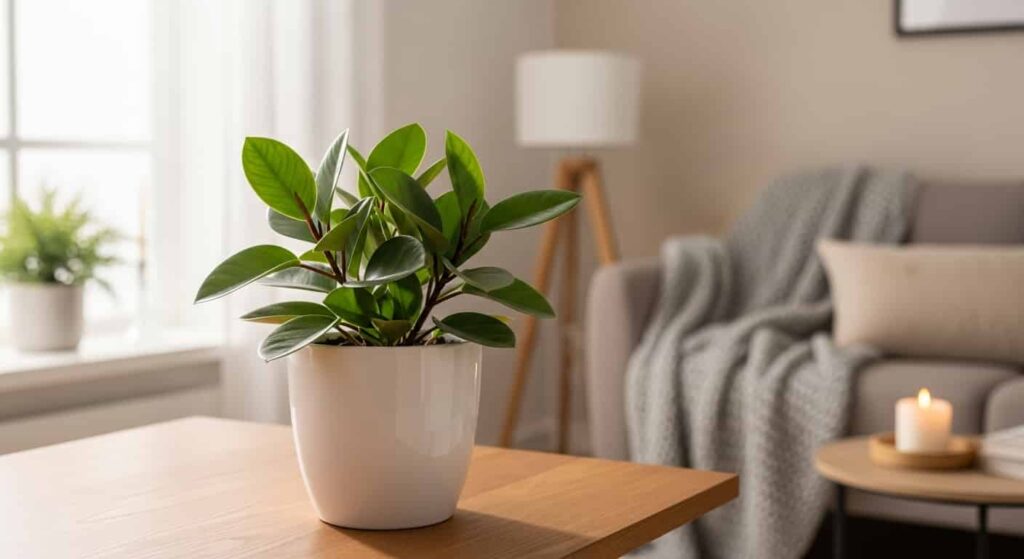
Baby rubber plant prefers bright, indirect light. That aligns with:
- A spot a few feet from a south or west window (not pressed against hot glass).
- East windows with gentle morning sun.
- North rooms only if light is supplemented or the plant is very close to the window—growth may be slower.
Direct sun through glass can burn leaves; deep shade indoors causes leggy, sparse growth.
Stable climate reduces shock
Indoors, temperature swings are smaller than outside. Peperomia obtusifolia responds well to steady warmth in the comfort zone most homes already maintain (roughly 65–80°F / 18–27°C).
Easier pest and watering control
You control when it rains (never, unless you spill the watering can). That makes overwatering easier to prevent than for plants left in rain + heavy soil outdoors. Indoor pests exist but are often easier to spot early on a plant you see daily.
When outdoor growing makes sense
Year-round outdoors (frost-free regions)
In USDA zones 10–12 (and warm 9b microclimates with no frost), Peperomia obtusifolia can live in ground or in containers if you provide:
- Well-draining soil (soggy roots rot quickly).
- Protection from intense midday sun (leaf burn).
- Shelter from cold wind and unexpected cold pockets.
Always verify local frost dates and microclimate—elevation and proximity to water change “on paper” zone ratings.
Seasonal “summer vacation” outdoors
In temperate climates, many growers move the plant outside for late spring through early fall to take advantage of natural air circulation and bright indirect outdoor light (in shade or filtered sun).
Rules for seasonal outdoor placement:
- After last frost locally—no nights near freezing.
- Acclimate gradually (see section below) so leaves do not sun-scorch.
- Bright shade or short morning sun; avoid hot afternoon sun on tender indoor-grown leaves.
- Bring inside before nights drop toward ~50°F (10°C) or when cold rain and wind are forecast.
Indoors vs outdoors: light comparison
| Setting | What works | What to avoid |
|---|---|---|
| Indoor | Bright room; sheer curtain on strong windows; grow lights if needed | Dark corners; unfiltered south/west sun on leaves all day |
| Outdoor | Under trees, pergolas, east side of building, north exposure in hot climates | Midday full sun on unprepared foliage; dark wet shade (rot risk) |
Short answer: Both environments need bright light without harsh direct sun for best foliage. Outdoors, shade cloth or natural canopy often mimics “bright indirect” indoors.
Indoors vs outdoors: temperature and weather
Frost is the hard limit
Peperomia obtusifolia is not frost-tolerant. Ice on leaves or frozen roots can kill the plant or set it back severely.
- Indoors: You avoid frost by default (unless the room freezes—then you have bigger problems).
- Outdoors: Any forecast at or below 32°F (0°C) means cover, move indoors, or accept damage.
Heat and wind outdoors
High heat plus dry wind dries leaves faster than the same temperature indoors. Outdoor plants may need more frequent watering in summer—but never in soggy soil.
Indoor plants near AC vents or radiators can still stress from dry air or temperature swings; that is a different problem from outdoor windburn.
Indoors vs outdoors: watering and soil
Indoors
- Water when the top 1–2 inches of soil feel dry (adjust for pot size and season).
- Slower drying in winter with shorter days and cooler rooms—reduce frequency.
- Use pots with drainage; empty saucers so roots do not sit in water.
Outdoors
- Rain may supply part of the water—do not blindly add your indoor schedule on top of wet soil.
- Wind and sun increase evaporation—check more often in heat.
- Elevate pots on feet so drainage holes are not blocked on wet patios.
AEO takeaway: Outdoor watering is weather-dependent; indoor watering is environment-stable but still not on a fixed calendar—soil moisture decides.
Indoors vs outdoors: pests and diseases
| Risk | Indoors | Outdoors |
|---|---|---|
| Common pests | Fungus gnats, mealybugs, spider mites (dry air) | Snails, slugs, caterpillars, more chewing insects |
| Disease pressure | Often lower if airflow OK and leaves stay dry | Higher with constant leaf wetness and crowded plantings |
| Monitoring | Daily eyeball test | Inspect after rain and new growth flushes |
Neither location is “pest-free”; outdoors adds herbivores and weather-related leaf issues, while indoors adds dry-air mite risk.
How to move Peperomia obtusifolia between indoors and outdoors safely
Acclimation prevents bleached or burnt leaves.
- Indoor → outdoor: Start in full shade for 3–7 days, then short periods of gentle morning sun, increasing slowly over 1–2 weeks.
- Outdoor → indoor: Check for pests (rinse or treat if needed). Place in similar light to where it will live; expect minor leaf drop as it adjusts to lower light—avoid plunging into dark corners immediately.
Do not move during extreme heat or freezing forecasts if you can avoid it.
Who should keep Peperomia obtusifolia indoors only?
Choose indoors-only if you:
- Live in zones with frost and do not want seasonal shuffle.
- Have limited outdoor shade (only blazing full sun available).
- Prefer low-drama care and year-round the same routine.
- Grow in apartments or offices with no suitable outdoor spot.
Who might prefer outdoor (or mixed) culture?
Consider outdoor time or in-ground planting if you:
- Live in a frost-free climate and have bright shade beds or patios.
- Want summer growth boost in humid, warm summers with easy bring-in before fall.
- Can commit to daily checks during heat waves and storm season.
FAQ — Peperomia obtusifolia indoors vs outdoors
Can Peperomia obtusifolia live outside?
Yes, temporarily or year-round only where temperatures stay frost-free and the plant gets bright indirect light or filtered sun. In freezing winters, it must be indoors or in a heated greenhouse.
Is Peperomia obtusifolia an indoor or outdoor plant?
It is primarily an indoor plant globally. Outdoor growing is regional (warm climates) or seasonal (summer patio elsewhere).
What USDA zone is Peperomia obtusifolia hardy to?
It is not reliably cold-hardy. Treat it as suitable for year-round outdoor planting only in roughly zones 10–12 (and warm 9b with no frost), with microclimate and winter lows verified locally—not a textbook zone alone.
Can I put my indoor Peperomia obtusifolia outside in summer?
Yes, if you acclimate it and place it in shade or filtered light, and bring it in before cold nights (typically before lows near ~50°F / 10°C in fall, or your local equivalent for tender houseplants).
Does Peperomia obtusifolia grow faster indoors or outdoors?
Outdoors in warm, humid, bright shade with good drainage often produces faster visible growth in peak season. Indoors growth is steadier year-round but may be slower if light is marginal.
What kills Peperomia obtusifolia faster: too much sun or frost?
Frost usually causes sudden, severe damage. Too much sun causes bleaching and burn but healthy plants often recover if moved to shade. Both are serious; frost is more likely to be fatal to the whole plant.
Should I mist Peperomia obtusifolia indoors vs outdoors?
Misting is optional and not a substitute for proper watering or humidity strategy. Indoors, humidifier or pebble tray helps more than misting if air is very dry. Outdoors, natural humidity often reduces the need.
Key takeaways
- Default choice for most growers: Indoors, with bright indirect light and stable room temperatures.
- Outdoor year-round: Only in frost-free (or effectively frost-free) climates, with shade and excellent drainage.
- Summer outdoors: Possible in temperate zones with gradual acclimation and timely move back inside.
- Non-negotiable: No frost on roots or leaves for long-term success.
- Watering: Soil-based, not calendar-based—adjust faster for outdoor heat/wind/rain.
Related questions people also ask
- How much light does Peperomia obtusifolia need indoors? Bright indirect light; some gentle morning sun is OK; avoid harsh all-day direct sun.
- Can Peperomia obtusifolia get morning sun? Yes, especially indoors near an east window or outdoors in cooler climates—still watch for scorch on new indoor leaves.
- Is Peperomia obtusifolia good for low light? It tolerates moderate light but grows best with brighter indirect light; very low light causes stretching.
This guide is for general cultivation information. Local frost dates, building orientation, and microclimates always override generic zone labels.