Last Updated on April 2, 2026 by Peperomia obtusifolia
Scientific name: Peperomia obtusifolia ‘Lemon Lime’
Also sold as: Lemon Lime peperomia, Lemon Lime baby rubber plant
Answer (quick summary)
Peperomia obtusifolia ‘Lemon Lime’ is a compact, variegated houseplant with rounded, glossy leaves in chartreuse to lime green tones, often with darker green marbling or edges. Treat it like other baby rubber plant peperomias: bright, indirect light (a bit more than plain green forms to keep color strong), water when the top soil dries, a fast-draining, chunky potting mix, moderate humidity (not mandatory), and typical warm room temperatures. It is slow to moderate in growth, pet-friendly according to common veterinary houseplant lists for the Peperomia genus, and fits desks, shelves, and small pots well.
What is Peperomia obtusifolia ‘Lemon Lime’?
‘Lemon Lime’ is a cultivar of Peperomia obtusifolia, a species in the pepper family (Piperaceae) from Central and northern South America. It is not a true rubber tree (Ficus); the nickname “baby rubber plant” refers to thick, succulent-like leaves.
How to recognize it:
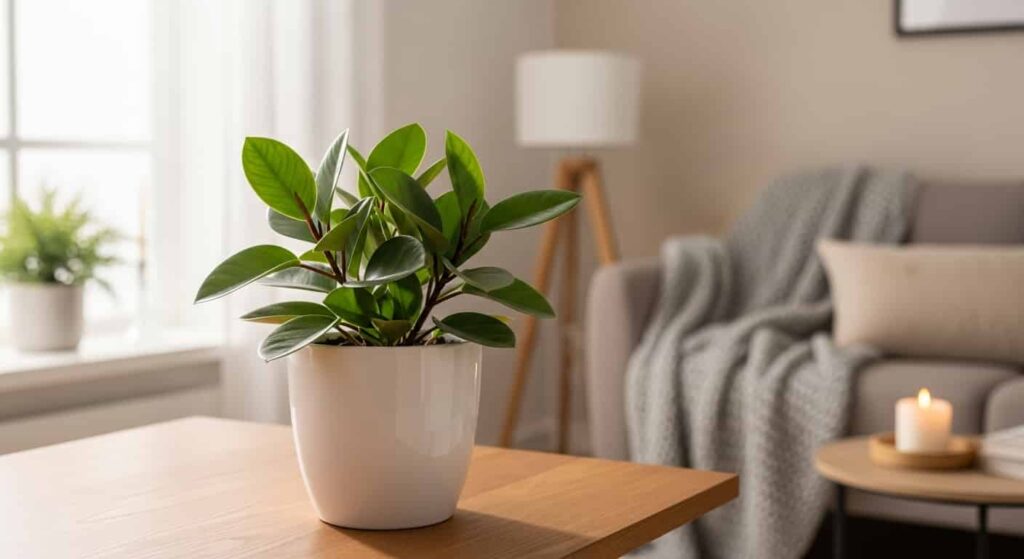
- Leaf shape: Thick, oval to spoon-shaped, blunt tip (“obtusifolia” = blunt leaves).
- Color: Bright yellow-green to lime with variable darker green streaks, margins, or inner zones depending on lighting and maturity.
- Habit: Bushy, upright to slightly spreading stems; stays relatively small indoors compared to large foliage trees.
- Texture: Leaves feel smooth and slightly waxy.
It is grown for colorful foliage; flowers are small, greenish spikes—interesting but not showy.
How is ‘Lemon Lime’ different from plain green obtusifolia?
| Feature | ‘Lemon Lime’ | Green P. obtusifolia |
|---|---|---|
| Color | Lime / chartreuse variegation | Solid deep green |
| Light needs | Slightly higher bright indirect light to maintain contrast | Tolerates a bit more dim light before looking “off” |
| Growth | Similar overall rate | Similar |
| Care | Same watering, soil, humidity rules | Same |
If new leaves come in mostly dark green, the plant is often asking for more bright indirect light (or it is adapting to lower light by producing more chlorophyll).
What light does ‘Lemon Lime’ need?
Best: Bright, indirect light for much of the day—think near an east-facing window, or set back from a south- or west-facing window so leaves are not cooked by hot midday sunbeams.
Acceptable: Medium light (well-lit room, not pressed against the darkest corner). Growth may slow; color may be less vivid.
Avoid long-term: Deep shade or only a far corner with no bright period—often leads to leggy stems, smaller leaves, and loss of lime/yellow tones on new growth.
Direct sun: Short periods of mild morning sun are often fine. Harsh afternoon sun through clear glass can bleach or burn leaves.
Rule of thumb: Variegated peperomias usually need a touch more “useful” light than the all-green form to keep the colorful look.
How often should you water Peperomia ‘Lemon Lime’?
Water when the top 1–2 inches (2–5 cm) of soil feel dry to the touch—roughly every 7–14 days in many homes, faster in summer, slower in winter when growth slows.
Signs you are watering too often: yellowing leaves, mushy stems, sour soil smell, gnats, leaves drop easily—often tied to root rot from soggy mix.
Signs you are underwatering: soft, wrinkled leaves (succulent-like), drooping that improves after a thorough drink, very dry pot weight.
Technique: Water deeply until water runs from drainage holes; discard saucer water after ~15–30 minutes. Do not let the pot sit in standing water.
What soil and pot work best?
Use a fast-draining, airy indoor mix, same philosophy as other Peperomia obtusifolia plants:
- Roughly 40–50% quality peat- or coir-based potting soil
- 30–40% perlite, pumice, and/or small orchid bark
- 10–20% optional coco coir for slight moisture buffer
Always use a pot with drainage holes. Terra cotta dries faster than plastic; plastic is fine if the mix is light and you do not overwater.
Repotting: Only when root-bound or soil breaks down—often every 2–3 years for typical indoor growth. Peperomia roots are fine; shallow pots are often better than very deep tubs that hold wet soil at the bottom.
Humidity and temperature
Humidity: Average home humidity (40–60%) is usually fine. Brown crispy leaf edges in very dry winter air can sometimes improve with a pebble tray, grouping plants, or a small humidifier—not always required.
Temperature: Roughly 65–80°F (18–27°C) daytime. Avoid cold drafts from windows in winter and sudden drops below about 50°F (10°C) for long periods.
Do not mist as a “humidity strategy” unless you enjoy it—surface moisture can spread foliar issues in stagnant air; humidity in the room matters more than wetting leaves.
Fertilizing
During active growth (spring–summer): Use a balanced liquid houseplant fertilizer at half the label strength, about every 4–6 weeks, or per product directions for slow growers.
Fall–winter: Reduce or pause feeding when growth is minimal.
Avoid heavy doses of cheap, high-salt fertilizers on small pots—flush the soil occasionally with plain water if mineral buildup is suspected (white crust on soil).
Pruning and cleaning
Prune to control height, encourage bushiness, or remove damaged leaves—use clean, sharp scissors; cuts can be near a node if you want tidier regrowth.
Wipe leaves gently with a damp cloth to remove dust—helps photosynthesis and shows off gloss.
Rotate the pot every few weeks for even light exposure.
Propagation
‘Lemon Lime’ is commonly propagated like other P. obtusifolia:
- Stem cuttings in water or moist soil (nodes under water/soil).
- Leaf cuttings can work for some peperomias but stem cuttings are usually easier for beginners.
Tip: Take cuttings in spring or early summer for faster rooting. Keep warm, indirect light, and stable (not soggy) moisture.
Common problems (diagnosis quick list)
| Symptom | Likely causes | What to try first |
|---|---|---|
| Yellow leaves, soil always wet | Overwatering / poor drainage | Dry down longer; check holes; repot if soil is heavy |
| Wrinkled, soft leaves | Underwatering | Water thoroughly; adjust schedule |
| Pale or all-green new growth | Low light | Move to brighter indirect spot |
| Brown crispy patches on leaves | Sunburn or dry air | Diffuse sun; improve ambient humidity slightly |
| Small brown spots, sticky residue | Pests (e.g. scale, mealybugs) | Inspect stems/leaf axils; isolate; treat with labeled horticultural oil or soap per instructions |
| Gnats flying around soil | Fungus gnats; moist top layer | Let top dry more; yellow sticky traps; consider BTI (mosquito bits) for larvae per label |
Always isolate new plants a few weeks to avoid bringing pests into a collection.
Is Peperomia ‘Lemon Lime’ toxic to cats and dogs?
The ASPCA lists Peperomia species as non-toxic to cats and dogs. Individual animals can chew plants and vomit from fiber or novelty, not necessarily poison—still discourage nibbling and confirm with your vet if your pet has special conditions or ate a large amount.
FAQ
Is Peperomia obtusifolia ‘Lemon Lime’ good for beginners?
Yes, for growers who can resist overwatering. Its needs are straightforward; the main mistake is watering too often in heavy soil without drainage.
How big does ‘Lemon Lime’ get indoors?
Often 8–12 inches (20–30 cm) tall in a typical pot over time, sometimes larger in ideal conditions—still compact compared to large houseplants.
Why are my Lemon Lime leaves turning green?
Usually lower light: the plant adds more chlorophyll to survive. Increase bright indirect light gradually and clean leaves of dust.
Can Peperomia ‘Lemon Lime’ grow in low light?
It may survive for a while, but color and form suffer. Prefer medium to bright indirect light for best appearance.
Should I mist my Lemon Lime?
Not required. If you mist, do it lightly and ensure good air movement; prioritize room humidity and correct watering instead.
How do I know if I’m overwatering?
Persistent damp soil, musty smell, yellow leaves, black mushy stems, or fungus gnats are strong clues. Let the top 1–2 inches dry between waterings and use chunky mix.
Can I put it outside in summer?
In warm, frost-free weather, you can place it in bright shade or dappled sun—acclimate slowly. Bring inside before cold nights. Watch for sunburn and pests when returning indoors.
Takeaways
- Bright indirect light keeps lime/chartreuse color strongest.
- Water when the topsoil dries; never let roots sit soggy.
- Use well-draining, chunky soil and a pot with holes.
- Warm room temps, average humidity—no fussy rituals required.
- Pet-friendly on common lists; still prevent chewing.
This guide is for general houseplant care and is not a substitute for professional veterinary or agricultural advice for unusual pests, diseases, or plant health emergencies.