Last Updated on April 2, 2026 by Peperomia obtusifolia
Answer (quick summary)
The three varieties covered here are (1) classic green Peperomia obtusifolia, (2) ‘Variegata’ (marble) with cream-and-green leaves, and (3) ‘Lemon Lime’ with chartreuse to lime foliage. All share the same easy care playbook: bright, indirect light (variegated forms need a bit more light than plain green), water when the top soil dries, fast-draining chunky soil, warm room temperatures, and moderate humidity (optional). They stay compact, suit desks and shelves, and are widely listed as non-toxic to cats and dogs on common veterinary houseplant references for the Peperomia genus—always confirm with your vet if a pet has chewed plants.
What is Peperomia obtusifolia?
Peperomia obtusifolia is a tropical foliage plant in the pepper family (Piperaceae), native to parts of Central and northern South America. It is often called baby rubber plant because of thick, glossy, rounded leaves—but it is not related to the true rubber tree (Ficus elastica).
Why people love it: low maintenance for a “look-at-me” houseplant, slow to moderate growth, and many colorful cultivars from one species.
What are the 3 beautiful Peperomia obtusifolia varieties?
Below are three widely available forms. Names can vary by nursery tags; use leaf color and pattern to confirm what you have.
| Variety | Common names | Leaf look (typical) | Best for |
|---|---|---|---|
| Green (species type) | Baby rubber plant, green obtusifolia | Solid deep green, thick oval leaves | Lower-light corners vs. heavy variegates; very forgiving |
| ‘Variegata’ | Marble peperomia, variegated baby rubber | Cream, white, or pale yellow mottling and streaks on green | Bright rooms; striking contrast on a shelf |
| ‘Lemon Lime’ | Lemon Lime baby rubber | Chartreuse to lime with darker green marbling or edges | Color pop in minimal décor; needs enough light to stay vivid |
Direct answer: If you want the easiest in dimmer spots, pick green. For bold pattern, pick ‘Variegata’. For neon color, pick ‘Lemon Lime’.
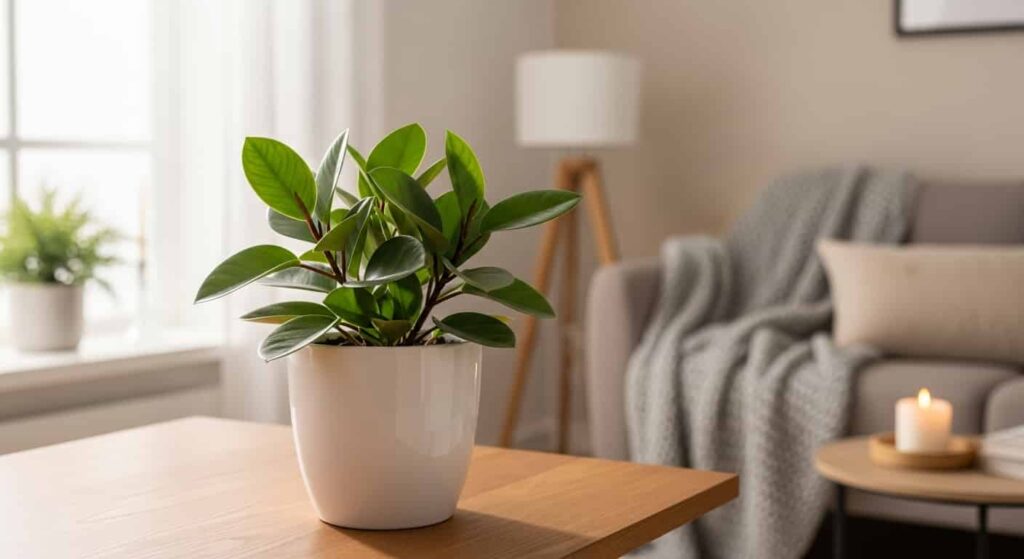
Variety 1: Green Peperomia obtusifolia (classic)
What does it look like?
- Leaves: Thick, spoon-shaped to oval, blunt tip (that is what obtusifolia refers to).
- Color: Rich green, sometimes with a slight waxy sheen.
- Habit: Bushy, upright to slightly spreading stems; stays small compared to large indoor trees.
Why choose the green form?
It tolerates slightly lower light before looking stretched or dull compared with variegated siblings, because more chlorophyll helps it photosynthesize in less ideal spots.
Any care quirks?
Fewer quirks than variegates. It still rots if overwatered—the chunky soil rule applies to every variety on this list.
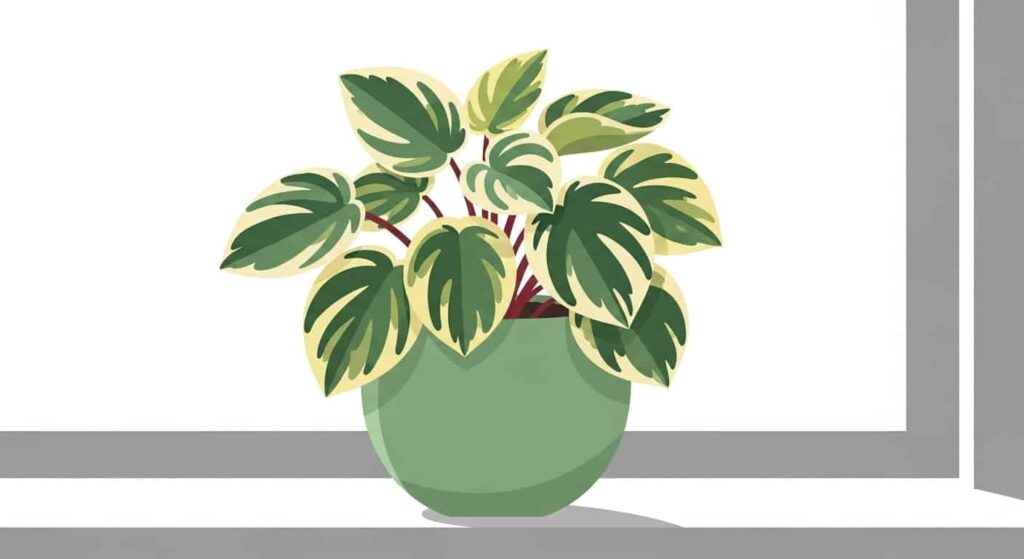
Variety 2: Peperomia obtusifolia ‘Variegata’ (marble)
What does it look like?
Irregular cream, ivory, or pale yellow variegation on a green leaf background—often described as marble or splash pattern. Individual plants differ; some leaves are half-and-half, others lightly speckled.
What light does ‘Variegata’ need?
Bright, indirect light is the practical default. The pale parts of the leaf have less chlorophyll, so deep shade often causes:
- smaller leaves
- reversion to greener growth
- leggy stems reaching for light
Short answer: Put it where it gets gentle, steady brightness—for example near an east window or set back from a stronger south/west window so hot midday sunbeams do not scorch leaves.
How is care different from green?
Watering, soil, pot, and humidity: same as green. Light: a bit more demanding—not “difficult,” just less shade-tolerant if you want to keep the marble look.
Variety 3: Peperomia obtusifolia ‘Lemon Lime’
What does it look like?
Bright yellow-green to lime foliage with variable darker green streaks or margins depending on age and lighting. It reads as high-contrast and modern in plant styling photos.
What is the main care note for ‘Lemon Lime’?
Light drives the color. If new growth comes in mostly dark green, the plant is often increasing chlorophyll to cope with lower light. Moving it to brighter indirect light usually restores stronger lime tones over time (along with consistent watering—never compensate low light with extra water).
Is ‘Lemon Lime’ harder than green?
Not harder—just more light-sensitive for aesthetics. The basic schedule (dry topsoil, well-draining mix) matches the other two varieties.
Easy plant care for all three varieties
These rules apply to green, ‘Variegata’, and ‘Lemon Lime’ unless noted.
How much light do Peperomia obtusifolia plants need?
Best for most homes: Bright, indirect light for a good part of the day.
- Green: Often okay in medium light; may grow slower.
- Variegated / Lemon Lime: Aim for brighter indirect light to maintain pattern and color.
Avoid: Long-term deep shade (weak growth) and harsh afternoon sun through glass (bleached or burned leaves).
How often should you water them?
Water when the top 1–2 inches (2–5 cm) of soil feel dry. In many homes that is roughly every 7–14 days, faster in warm/active growth periods, slower in winter.
Signs of overwatering: yellowing leaves, mushy stems, sour soil smell, fungus gnats, leaves dropping with wet soil.
Signs of underwatering: soft, slightly wrinkled leaves (succulent-like texture), drooping that improves after a thorough drink.
Technique: Water deeply until water exits drainage holes; empty the saucer after 15–30 minutes.
What soil and pot should you use?
Use a fast-draining, airy indoor mix, for example:
- 40–50% quality peat- or coir-based potting soil
- 30–40% perlite, pumice, and/or small orchid bark
- 10–20% optional coco coir for slight moisture buffer
Always use a pot with drainage holes. Terra cotta dries faster than plastic; plastic works if you do not overwater.
What temperature and humidity are best?
Temperature: Typical indoor room range (~65–80°F / 18–27°C) suits them. Avoid cold drafts and sudden chills next to single-pane windows in winter.
Humidity: Moderate is nice but not mandatory; they are not delicate ferns. If air is very dry, grouping plants or a small humidifier can reduce crispy leaf tips—but fix watering first if leaves yellow or stems rot.
Should you fertilize?
Light feeding in spring and summer is enough for most hobbyists: a balanced liquid houseplant fertilizer at half strength every 4–6 weeks, or as directed on the label. Pause or reduce in late fall and winter when growth slows.
Do you need to prune them?
Optional. Pinch tips if you want bushier growth; remove damaged leaves anytime. They are not fast giants—pruning is for shape, not constant maintenance.
Quick comparison: 3 varieties at a glance
| Topic | Green | ‘Variegata’ | ‘Lemon Lime’ |
|---|---|---|---|
| Standout feature | Classic lush green | Cream / white marble pattern | Neon lime color |
| Light (relative) | Most shade-tolerant of the three | Needs brighter indirect for pattern | Needs brighter indirect for lime color |
| Watering | When top soil dries | When top soil dries | When top soil dries |
| Soil | Chunky, fast-draining | Chunky, fast-draining | Chunky, fast-draining |
| Size indoors | Compact | Compact | Compact |
| Pet notes (general lists) | Often listed non-toxic (Peperomia) | Same | Same |
Frequently asked questions
Which Peperomia obtusifolia variety is the easiest?
The solid green form is usually the most forgiving in lower light and when you are still learning watering discipline. Variegated types are still easy—they simply show poor lighting sooner.
Are Peperomia obtusifolia plants good for beginners?
Yes, if you follow one rule: do not keep soil wet. They are forgiving of a missed watering more often than constant moisture.
Why are the leaves drooping?
Most common: dry soil (water thoroughly if pot is light and soil is dry) or overwatering / root stress (check whether soil is soggy and stems soft). Less common: cold shock or recent repotting stress.
Can Peperomia obtusifolia grow in low light?
Green may survive medium-low light with slower growth. ‘Variegata’ and ‘Lemon Lime’ typically lose contrast or color in dim spots. For best results, offer bright indirect light.
Are these plants toxic to cats and dogs?
Peperomia species are commonly listed as non-toxic on ASPCA and similar pet-oriented plant references—but any plant material can cause mild stomach upset if eaten. Ask your veterinarian if your pet has a habit of chewing plants.
How big do they get indoors?
They usually stay compact—often under 12 inches (30 cm) in height for many desk pots, sometimes a bit taller in ideal conditions over years, not weeks.
How do you propagate Peperomia obtusifolia?
Stem cuttings in moist, airy mix or water (then transition to soil) work well for many growers. Use healthy, non-yellowing stems and indirect light while roots form.
Key takeaways (for quick scanning)
- Three standouts: Green (classic), ‘Variegata’ (marble), ‘Lemon Lime’ (lime).
- Same core care: dry topsoil between waterings, drainage holes, chunky mix, warm room.
- Variegates need more “useful” light to keep pattern and color—not harder, just less shade-friendly.
- Overwatering is the #1 problem; light is the #1 reason variegates look dull.
- Great for small spaces and beginners who can resist daily watering.
This article is for general plant-care education and is not a substitute for professional veterinary advice or for diagnosing pests and diseases from photos alone.