Last Updated on April 2, 2026 by Peperomia obtusifolia
Quick answer: To make Peperomia obtusifolia (baby rubber plant) bushier, pinch or cut stems just above a leaf node during active growth (spring through early fall). Each cut signals the plant to branch from buds near that node, producing two or more new stems instead of one long shoot. Combine pruning with bright indirect light and appropriate watering so new growth is compact and full, not stretched and sparse.
At a glance
| Topic | Summary |
|---|---|
| Why pruning works | Cuts remove apical dominance so lateral buds activate → more branches |
| Best time | Spring to early fall; avoid heavy pruning in dark, cold winter |
| Where to cut | 1/4–1/2 inch (0.5–1 cm) above a node (where leaf meets stem) |
| Goal | Shorter, denser habit; fewer leggy bare stems |
| Pairs well with | Rotate the pot for even light; repot if root-bound and growth stalls |
What is Peperomia obtusifolia?
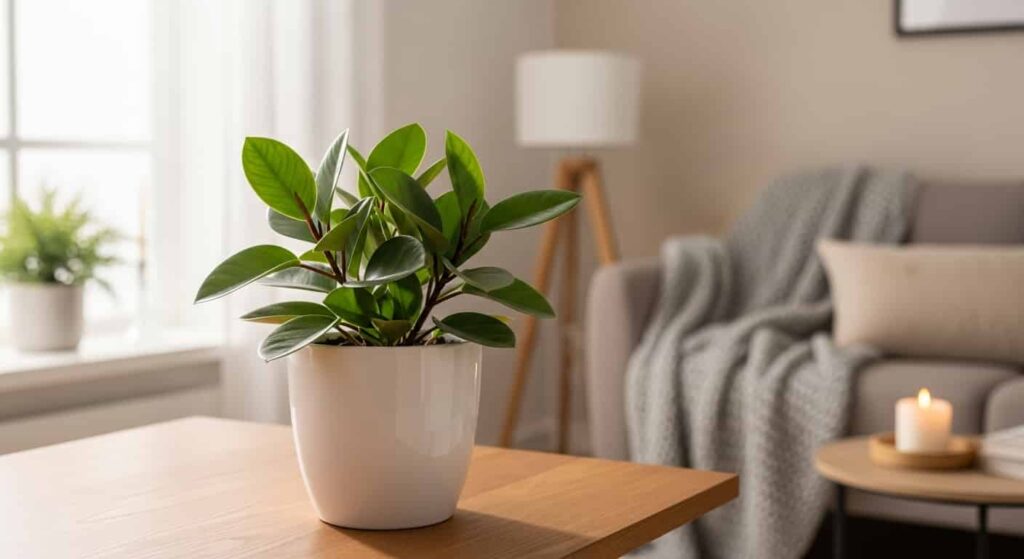
Peperomia obtusifolia is a compact, succulent-like Peperomia with thick, glossy leaves—often called baby rubber plant. It naturally forms a low, branching mound. Without enough light, stems can stretch (etiolate), looking thin and sparse. Strategic pruning redirects energy into side growth, which reads as a bushier plant.
Why does pruning make Peperomia obtusifolia bushier?
Direct answer: Plants grow mainly from terminal buds at stem tips. When you remove the tip, hormones shift so buds below the cut often wake up and grow into new side shoots. On Peperomia obtusifolia, that means more stems and leaves in the same pot volume—fuller silhouette, less “one long vine” look.
What is a node?
A node is the slightly thicker ring on the stem where leaves, stipules, or scars attach. New branches usually emerge near nodes. Cutting above a node (not into bare wood with no leaves for many months) gives the plant clear signals for where to branch.
When should you prune Peperomia obtusifolia for bushier growth?
Best window: Late spring through early fall, when the plant is actively growing and can heal and push new shoots quickly.
Avoid: Heavy pruning in low-light winter if your home is cool and days are short—new growth may be weak or slow, and open cuts stay vulnerable longer in stagnant air.
Light exception: You may snip a damaged or diseased leaf or tip anytime for plant health; that is maintenance, not a full “shape” prune.
What tools do you need?
- Clean, sharp scissors or pruners—wipe blades with rubbing alcohol before and between plants to reduce disease spread.
- Optional: Gloves if your skin is sensitive to plant sap (usually mild; wash hands after).
How do you prune Peperomia obtusifolia step by step?
- Decide the shape. Picture a slightly rounded mound or even dome—not flat on one side from one window.
- Identify leggy stems—long gaps between leaves, thin stems, or bare lower sections.
- Choose a node on each stem you shorten—prefer a node with healthy leaves or visible buds.
- Cut at a slight angle about 1/4–1/2 inch (0.5–1 cm) above the node. Angles help water run off the cut surface.
- Remove only what you need in one session—up to roughly 20–30% of foliage is a common safe range for many houseplants; extreme haircuts stress the plant.
- Water normally after a day or two if soil was already appropriate; do not overwater “to help recovery.”
- Place in bright indirect light so new shoots grow stocky, not stretched.
Repeat light touch-ups every few weeks during the growing season if you want layered fullness rather than one dramatic chop.
Pinching vs. cutting: which is better for bushier Peperomia obtusifolia?
| Method | What you do | Best for |
|---|---|---|
| Pinching | Remove soft growing tip by hand (young tissue) | Very young stems; subtle bushiness |
| Snipping | Cut with scissors above a node | Precision, thicker stems, clear shaping |
For noticeable bushiness on mature stems, cutting above a node is usually more reliable than pinching alone.
Should you propagate the pruned pieces?
Yes, if you want more plants. Many Peperomia obtusifolia stem tips root in water or moist mix when nodes are included. This does not replace pruning for bushiness on the mother plant, but it uses cuttings instead of wasting them.
What else helps besides pruning?
Pruning alone cannot fix deeply low light or chronic overwatering.
- Light: Bright, indirect light encourages tight internodes (shorter spaces between leaves). Low light → leggy growth returns after pruning.
- Water: Let the top inch or so of soil dry for many indoor setups; soggy soil weakens roots and stunts new side shoots.
- Rotation: Turn the pot a quarter turn weekly so all sides get light—fuller all around.
- Nutrition: If you fertilize, use dilute product in spring and summer per label; over-fertilizing does not substitute for light and can harm roots.
Common mistakes when pruning Peperomia obtusifolia
- Cutting too low with no healthy nodes left on a stem—recovery is slower or that stem may not resprout as hoped.
- Removing most leaves at once—risk of stress and slow bounce-back.
- Pruning in poor conditions (dark corner, cold draft)—new growth stays weak.
- Dull dirty tools—tears and infection risk on cuts.
Frequently asked questions
Does Peperomia obtusifolia need pruning to survive?
No. Pruning is optional for health in most homes. It is a shaping and fullness tool. Remove dead or yellowed leaves anytime for aesthetics.
How long after pruning will I see new branches?
Often 2–6 weeks in warm, bright conditions during the growing season—timing varies with light, temperature, and plant vigor.
Can I prune variegated Peperomia obtusifolia the same way?
Yes. Same node rule applies. Variegated growth can be slightly slower; avoid over-pruning in one go.
Will pruning fix a plant that is only leggy from low light?
Partially. It removes leggy length, but new growth will stretch again unless you improve light or use grow lights.
Is Peperomia obtusifolia toxic to pets?
Often listed as non-toxic or mild in many consumer references, but individual pets may still vomit if they chew plants. When in doubt, ask your veterinarian and keep plants out of reach.
Summary
Prune Peperomia obtusifolia above nodes in spring through early fall to trigger branching and a bushier habit. Use clean sharp tools, avoid removing most of the foliage at once, and give bright indirect light plus sound watering so the plant fills in with compact new growth rather than thin, stretched shoots.
Disclaimer: Plant responses vary by environment, genetics, and care. This article is for general information and is not a substitute for professional horticultural or veterinary advice.