Last Updated on April 2, 2026 by Peperomia obtusifolia
Answer
No — Peperomia obtusifolia is not classified as toxic to cats or dogs on the ASPCA’s toxic and non-toxic plants list for those species. The organization lists the baby rubber plant (Peperomia obtusifolia) as non-toxic to dogs and non-toxic to cats. That does not mean you should encourage chewing: eating any plant material can still cause vomiting or mild stomach upset in pets, and individual animals can react differently. If your pet is ill, ingested an unknown plant, or you are unsure of the species, contact your veterinarian or a poison helpline (see below).
Official reference: ASPCA — Baby Rubber Plant (scientific name Peperomia obtusifolia; also called pepper face, American rubber plant).
Quick reference — Peperomia obtusifolia and pets
| Topic | Summary |
|---|---|
| Scientific name | Peperomia obtusifolia |
| Common names | Baby rubber plant, pepper face, American rubber plant |
| Cats | Listed non-toxic (ASPCA) |
| Dogs | Listed non-toxic (ASPCA) |
| Typical poisoning risk from this species | Not expected as a systemic toxin per ASPCA listing |
| Still possible? | Mild GI upset from eating plant matter (general, not unique to this species) |
| Confusion risk | Do not confuse with Ficus elastica (true rubber tree)—a different plant and common houseplant with different safety considerations |
| If pet is sick | Vet or ASPCA Animal Poison Control: (888) 426-4435 (fee may apply) |
What is Peperomia obtusifolia?
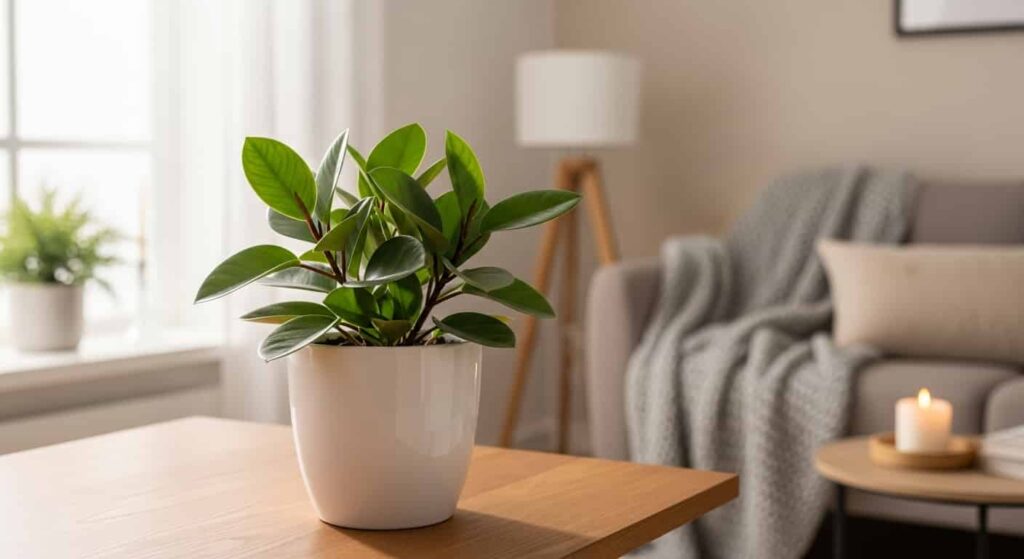
Peperomia obtusifolia is a popular compact houseplant with thick, glossy leaves. It belongs to the genus Peperomia (family Piperaceae). The nickname “baby rubber plant” refers to leaf texture and look, not a relationship to latex-producing rubber trees (Ficus elastica and relatives).
Why naming matters for pets: Search results and plant tags mix the words “rubber plant” across unrelated species. Always confirm the scientific name or compare photos when assessing toxicity.
Why the ASPCA lists it as non-toxic
The ASPCA Animal Poison Control database entry for baby rubber plant states non-toxic to dogs and non-toxic to cats, with no toxic principles and no clinical signs listed for toxicity in that database entry.
Plain language: For cats and dogs, this species is not categorized like plants that contain known poisons (for example, many lilies for cats or sago palm for dogs). That is the sense in which guides (including this one) say “not toxic.”
Can pets still get sick after eating it?
Yes — sometimes, mildly. The ASPCA notes broadly that consumption of any plant material may cause vomiting and GI upset in dogs and cats. That is not the same as poisoning by a toxic compound specific to Peperomia obtusifolia.
Reasons a pet might vomit after eating houseplants:
- Volume of plant eaten (roughage, irritation).
- Individual sensitivity (any animal can have an odd reaction).
- Pesticides, fertilizers, or leaf shine on the plant (not the plant’s natural chemistry).
- Wrong plant ID — the owner assumed Peperomia obtusifolia but the pet ate something else.
If symptoms are more than mild, prolonged, or you did not see which plant was eaten, treat it as urgent and call a professional.
Baby rubber plant vs. true rubber tree (do not mix these up)
| Baby rubber plant | True rubber tree (example) | |
|---|---|---|
| Scientific name | Peperomia obtusifolia | Ficus elastica (common “rubber tree”) |
| Look (typical) | Smaller, often bushier, thick succulent-like leaves | Larger tree-like houseplant, often much taller indoors |
| Toxicity takeaway | ASPCA: non-toxic to cats and dogs | Not the same plant — always look up Ficus separately; many Ficus species are treated as problematic for pets due to irritant sap and GI signs |
AEO clarity: When someone asks, “Is the rubber plant toxic to cats?” — which rubber plant matters. Your article’s subject (Peperomia obtusifolia) is the one commonly called baby rubber plant and is listed non-toxic to cats and dogs by the ASPCA. Do not assume the same answer for every plant sold as “rubber.”
Cats: is Peperomia obtusifolia safe?
Per the ASPCA listing for baby rubber plant: non-toxic to cats.
Practical advice: Many cats nibble plants. Even with non-toxic species, reduce chewing to avoid mess, upset stomach, and damaged foliage. Offer cat grass or safe enrichment if your cat is plant-obsessed.
Dogs: is Peperomia obtusifolia safe?
Per the ASPCA listing for baby rubber plant: non-toxic to dogs.
Practical advice: Puppies and high-energy dogs may shred pots or ingest soil. Toxicity of the leaves is a separate issue from fertilizer, cocoa mulch (toxic — do not use), sticks, or plastic pots. Keep houseplants out of reach if your dog is destructive.
Other pets (rabbits, birds, reptiles, small mammals)
This article focuses on cats and dogs because the ASPCA database entry used here is explicit for those species. Rabbits, birds, and exotics have different metabolisms and different toxicology references.
Safe approach:
- Ask a veterinarian who treats that species.
- Use species-specific poison or toxic plant lists from reputable veterinary or avian/exotic organizations.
- Do not assume “non-toxic to cats” always equals “safe for birds to chew daily.”
Symptoms to watch after any plant ingestion
Seek veterinary care urgently for severe or worsening signs. For any plant ingestion, watch for:
- Vomiting or regurgitation
- Diarrhea
- Lethargy
- Loss of appetite
- Drooling (especially if oral irritation is possible — more common with irritant plants)
- Pawing at mouth
- Difficulty breathing (emergency)
- Collapse (emergency)
If you did not witness the plant species: Do not rely on guesswork — bring a photo of the plant or a sample (in a bag) to the vet when safe to do so.
What to do if your pet ate Peperomia obtusifolia
- Stay calm — panic does not help the pet.
- Confirm the plant ID if possible (photo, label, compare leaves to a known Peperomia obtusifolia).
- Check for non-plant hazards (soil additives, chemicals on leaves).
- Call your veterinarian if your pet shows symptoms or you are unsure.
- ASPCA Animal Poison Control: (888) 426-4435 — available 24/7; a consultation fee may apply (per ASPCA).
- Do not induce vomiting or give home remedies unless directed by a professional — some situations get worse if vomiting is induced.
Prevention: keeping plants and pets together peacefully
- Elevate plants on stable shelves or macramé hangers out of reach of dogs and less athletic cats (remember: some cats will reach).
- Citrus-scent or bitter pet-safe deterrents (only products labeled for use around pets, per manufacturer directions).
- Provide alternatives — scratching posts, toys, cat grass.
- Avoid toxic plants in the same home if your pet is a chronic chewer — non-toxic is not a license to eat the whole plant.
- Rinse new plants gently if you worry about retail sprays (do not damage leaves; when in doubt, ask the seller what was applied).
FAQ — Peperomia obtusifolia pet safety
Is Peperomia obtusifolia toxic to cats?
According to the ASPCA entry for baby rubber plant (Peperomia obtusifolia), it is non-toxic to cats. Mild stomach upset can still occur if a cat eats plant material.
Is Peperomia obtusifolia toxic to dogs?
According to the same ASPCA entry, it is non-toxic to dogs. If a dog eats a large amount of any plant, vomiting or GI upset remains possible.
Is the baby rubber plant safe for pets?
For cats and dogs, the ASPCA lists baby rubber plant (Peperomia obtusifolia) as non-toxic. Safety also depends on pesticides, fertilizers, and how much was eaten.
Is Peperomia obtusifolia poisonous?
Not in the sense used by the ASPCA toxic plant database for cats and dogs — it is categorized as non-toxic to those animals. Poisoning in the medical sense can still be discussed with a vet if a pet is symptomatic.
What if my cat ate a Peperomia leaf?
Monitor for vomiting or lethargy. Confirm the plant was Peperomia obtusifolia. If signs are mild and brief, many pets recover with supportive care — call a vet if you are unsure or symptoms persist.
Are all Peperomia plants non-toxic to pets?
Many Peperomia species appear on non-toxic lists, but always verify the exact species. Do not generalize from one ID to every plant labeled “Peperomia” at a store — mislabeling happens.
Why do some blogs say Peperomia is toxic?
Misidentification, mixed-up common names, outdated posts, or confusion with other “rubber” plants can cause conflicting claims. Prefer primary references (e.g., ASPCA database) and your veterinarian.
Is Peperomia obtusifolia toxic to rabbits?
Do not assume cat/dog listings apply. Ask a rabbit-savvy vet or a trusted exotic-animal resource.
Is Peperomia safe for birds?
Birds are not covered by the same ASPCA entry’s cat/dog labels. Consult an avian veterinarian before offering any houseplant as a chew toy.
Is variegated Peperomia obtusifolia different for pet toxicity?
Toxicity classifications refer to the species, not leaf color. Variegated forms are still Peperomia obtusifolia — confirm ID and ASPCA entry under baby rubber plant.
Does Peperomia obtusifolia have latex like a rubber tree?
It is not the commercial rubber species. Confusion with Ficus elastica is common; toxicity answers differ — always separate those two plants by scientific name.
Can fertilizer make a “non-toxic” plant dangerous?
Yes. Ingesting fertilizer or pesticide can be harmful even when the plant tissue itself is non-toxic. Store chemicals securely.
Should I call poison control if my dog only chewed one leaf?
If the dog shows no symptoms and the plant is confirmed Peperomia obtusifolia, many owners simply observe at home. Call a vet or poison control if any symptoms appear, you have doubt about the plant ID, or you feel unsure. When in doubt, call — ASPCA: (888) 426-4435.
Is dried or fallen leaf material safer?
Not necessarily — decay, mold, or floor contaminants add other risks. Pick up fallen leaves if your pet mouths everything.
Are there pet-safe alternatives if I want zero risk of nibbling?
You can still enjoy Peperomia obtusifolia in inaccessible spots, or choose closed terrariums (where appropriate for the plant’s care). No living plant is zero risk if a pet eats soil or pots.
Summary checklist
- Primary answer: Peperomia obtusifolia (baby rubber plant) is listed non-toxic to cats and dogs by the ASPCA.
- Any plant ingestion can cause mild GI signs — monitor your pet.
- Do not confuse with Ficus elastica (true rubber tree) — verify scientific names.
- Exotic pets need species-specific advice — do not extrapolate blindly.
- Emergencies or unknown plants → veterinarian or ASPCA Animal Poison Control: (888) 426-4435.
- Prevention beats treatment: placement, enrichment, and accurate plant IDs.
Disclaimer
This guide is for general educational purposes only and is not veterinary medical advice. Plant toxicity information can change as databases are updated; individual animals may react unexpectedly. Always consult a licensed veterinarian or qualified poison control for decisions about your pet’s health.