Last Updated on March 24, 2026 by Peperomia obtusifolia
If your Peperomia obtusifolia has outgrown its pot, looks crowded, or you simply want more plants without spending money — dividing it is one of the easiest and most rewarding things you can do as a plant parent.
In this guide, you’ll learn exactly when to divide your plant, how to do it without causing harm, and what to do afterward to make sure both halves thrive.
What Is Peperomia Obtusifolia?
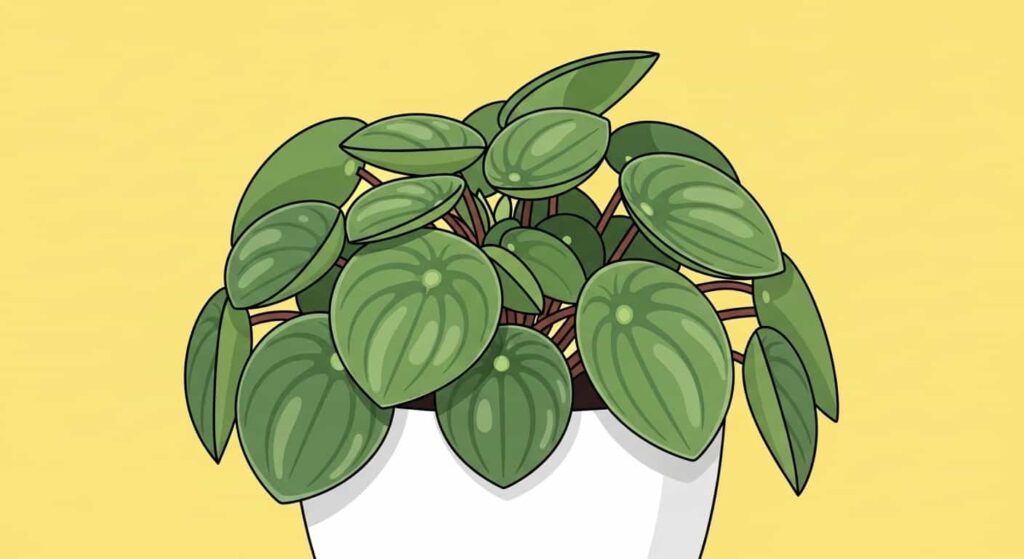
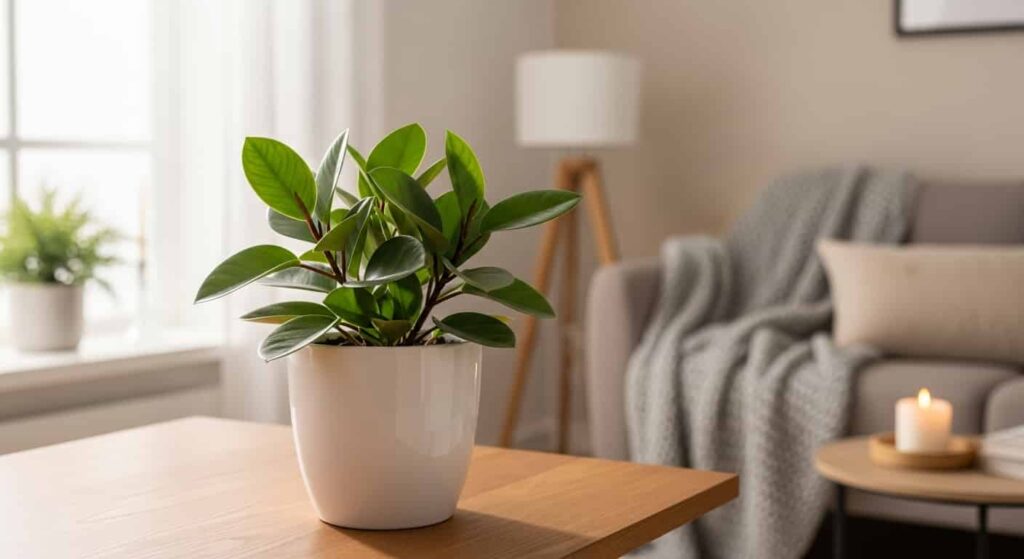
Peperomia obtusifolia, commonly called the Baby Rubber Plant or American Rubber Plant, is a compact, low-maintenance houseplant prized for its thick, glossy leaves and forgiving nature. It’s a popular choice for beginners and seasoned plant collectors alike.
Unlike many houseplants, it doesn’t grow from a single central crown — it produces multiple stems from the base, which makes division a natural and safe way to propagate and manage it.
Should You Divide or Propagate?
Before grabbing your scissors, it’s worth knowing that Peperomia obtusifolia can be multiplied two ways:
| Method | Best For | Difficulty |
|---|---|---|
| Division | Overgrown, root-bound plants | Very Easy |
| Stem/Leaf Cuttings | Any healthy plant, any time | Easy |
Division is faster — you get an established plant with roots almost immediately. Cuttings take longer but work even on smaller plants.
This guide focuses on division, but we’ll touch on cuttings briefly too.
When to Divide Peperomia Obtusifolia
Timing matters. Divide your plant at the wrong time and it will struggle. Get it right and it bounces back quickly.
✅ Best Time: Spring or Early Summer
Spring is the ideal window. Your plant is entering its active growing season, which means:
- It has the energy to recover fast
- New roots establish quickly
- Stress is minimized
Early summer works well too, as long as temperatures are stable and the plant isn’t in direct intense heat.
⚠️ Avoid Dividing In:
- Winter — the plant is resting and won’t recover as efficiently
- During a heat wave — adds unnecessary stress
- Right after repotting — let it settle for at least 4–6 weeks first
- When the plant is already stressed (yellowing leaves, pests, overwatering issues) — fix the problem first
Signs Your Plant Is Ready to Be Divided
Look for these clear signals:
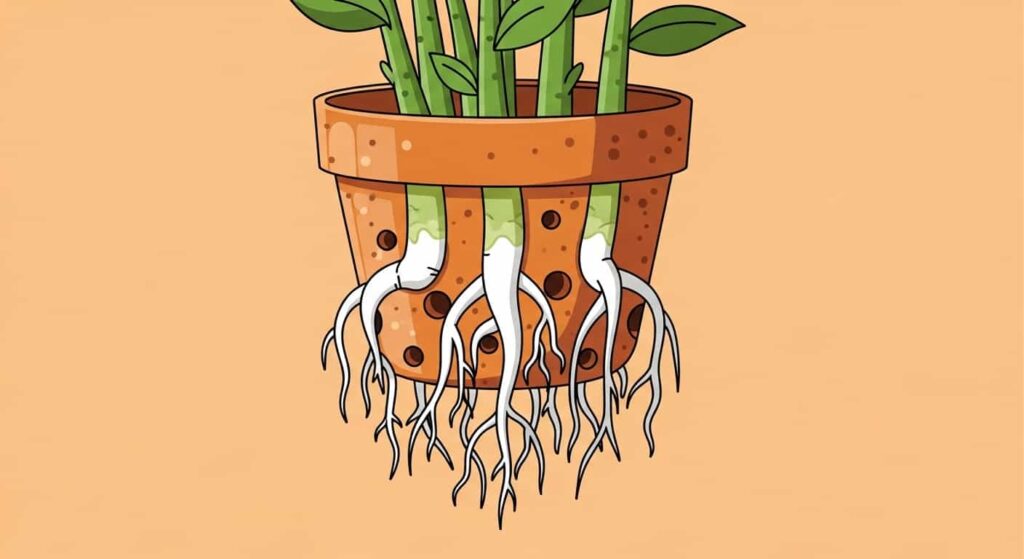
- Roots are escaping the drainage holes — a classic sign of being root-bound
- Multiple thick stems crowding each other — the plant is dense and tangled at the base
- Soil dries out unusually fast — roots are taking up too much space
- Slow or no growth — even in the growing season
- The plant looks lopsided or top-heavy — several stems are leaning outward
If you notice two or more of these signs together, your plant is telling you it’s time.
What You’ll Need
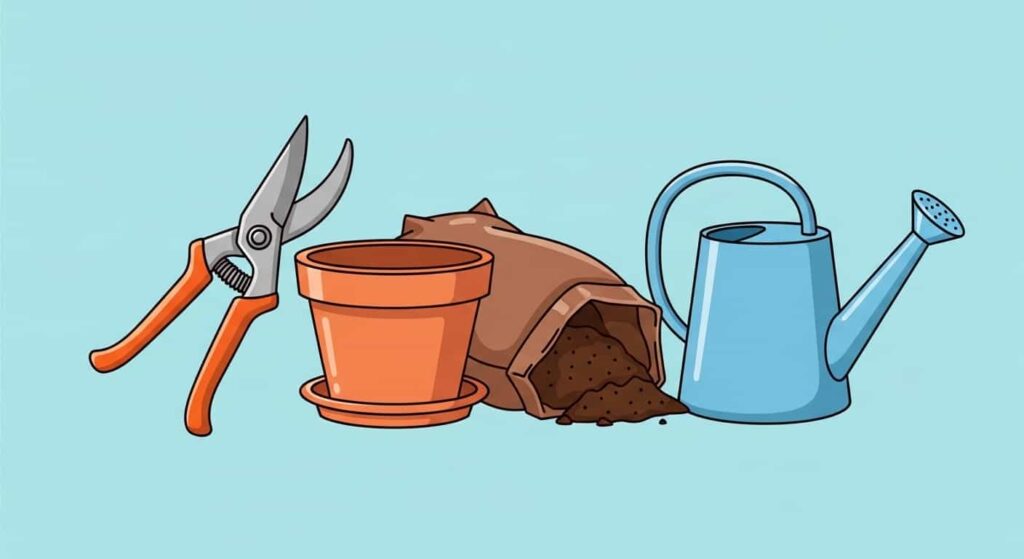
Before you start, gather everything so the process is smooth and quick — minimizing the time roots are exposed to air.
- Clean, sharp scissors or pruning shears — dull blades crush stems and invite disease
- A clean knife — for separating tightly bound root sections
- New pots (one for each division) — only slightly larger than the root ball
- Fresh, well-draining potting mix — a mix designed for succulents or a standard potting mix amended with perlite works well
- Gloves (optional but recommended)
- Clean cloth or paper towels — to wipe blades between cuts
💡 A high-quality pair of pruning shears makes clean cuts that heal faster and reduce disease risk. Check the best-rated options here →
💡 The right potting mix is critical for Peperomia after division. See the well-draining mixes plant parents love →
Step-by-Step: How to Divide Peperomia Obtusifolia
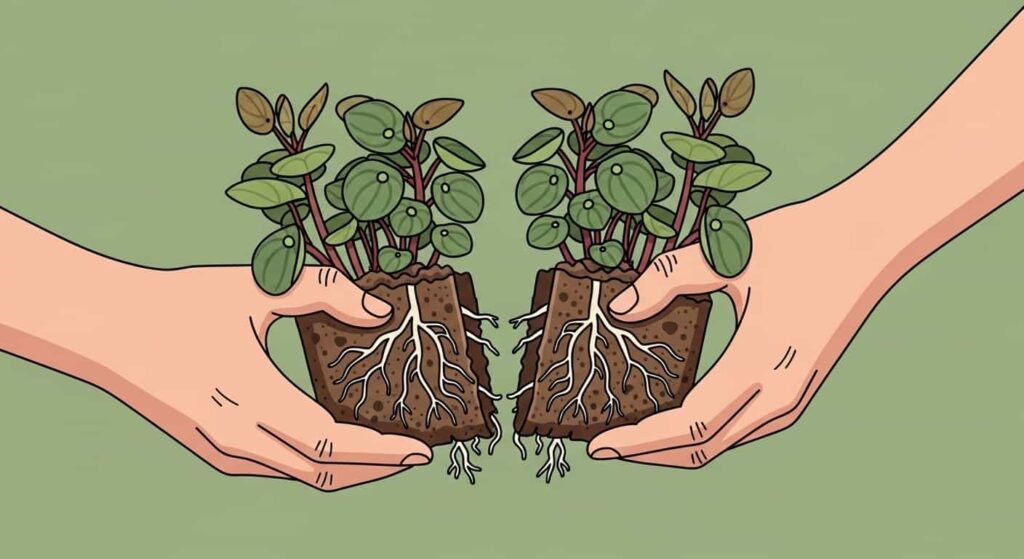
Step 1: Water the Plant 1–2 Days Before
Give your plant a good drink 24–48 hours before dividing. Moist soil holds together better, reducing root damage, and a hydrated plant handles stress more gracefully.
Don’t water it right before — soggy soil makes it harder to work with.
Step 2: Remove the Plant From Its Pot
Turn the pot sideways or upside down and gently squeeze the sides if it’s a plastic pot. Tap the bottom. Slide the plant out carefully.
If roots are clinging to the pot, use a clean knife or chopstick to loosen them from the edges. Never yank the plant by its stems.
Step 3: Loosen and Examine the Root Ball
Set the plant on a clean surface. Use your fingers to gently loosen the outer roots and shake off excess soil. You don’t need to remove all the soil — just enough to see the structure and identify natural separation points.
Look for:
- Natural clusters of stems that grow separately from each other
- Clear gaps between root sections
- Individual stems with their own root systems
Step 4: Separate the Sections
This is the key step. How you do it depends on how tightly bound the roots are:
If roots are loosely tangled: Use your fingers to gently tease the sections apart, working slowly from the bottom upward.
If roots are tightly matted: Use a clean, sharp knife to cut through the root ball. Aim to give each division a healthy portion of roots and at least 2–3 stems.
Don’t worry about cutting a few roots — Peperomia obtusifolia is resilient and will regrow them quickly.
⚠️ Make sure each division has both stems and roots. A stem alone without roots is a cutting, not a division, and needs different treatment.
Step 5: Trim Any Damaged Roots
After separating, take a moment to trim off any roots that are:
- Mushy or dark brown (signs of rot)
- Broken or crushed
- Excessively long and tangled
Clean cuts heal faster than torn ends. Wipe your scissors between cuts with rubbing alcohol if possible.
Step 6: Let the Divisions Rest (Optional but Helpful)
Some plant parents prefer to let the cut surfaces dry for 30–60 minutes before potting. This helps callous slightly and reduces the chance of rot. It’s not mandatory, but it’s a good habit — especially if you noticed any mushy roots.
Step 7: Pot Each Division
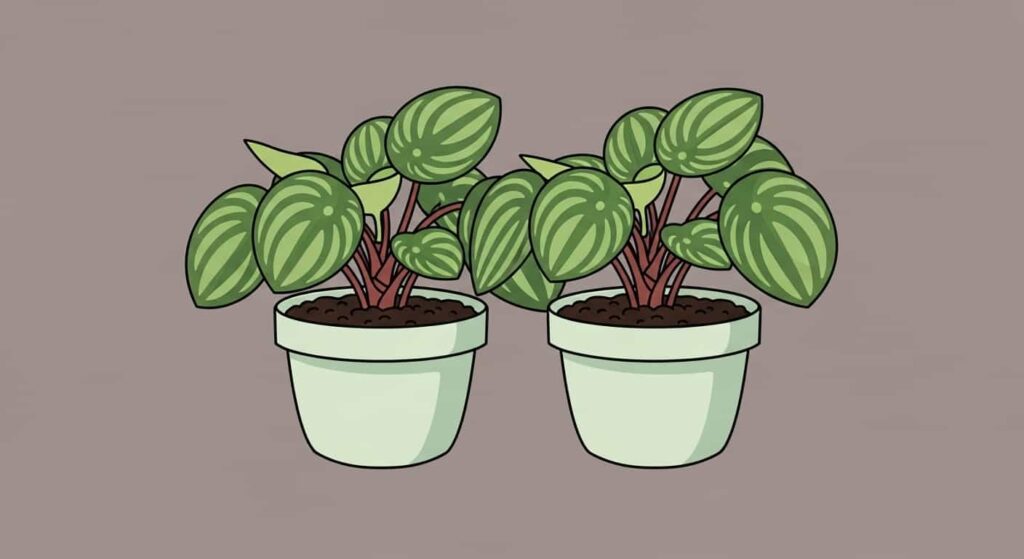
Plant each division in its new pot:
- Add a layer of fresh potting mix to the bottom of the pot
- Center the division and hold it at the right height
- Fill in around the roots, pressing gently to eliminate air pockets
- The base of the stems should sit just at soil level — not buried, not elevated
- Choose a pot with drainage holes — this is non-negotiable for Peperomia
💡 Pots with proper drainage holes and breathable materials help prevent root rot after division. Shop the top choices for Peperomia here →
Step 8: Water and Place in Bright, Indirect Light
Water each newly potted division gently until water drains from the bottom. Then place them in a spot with bright, indirect light — avoid direct sun for the first 2–3 weeks while they’re recovering.
Aftercare: The First 4 Weeks
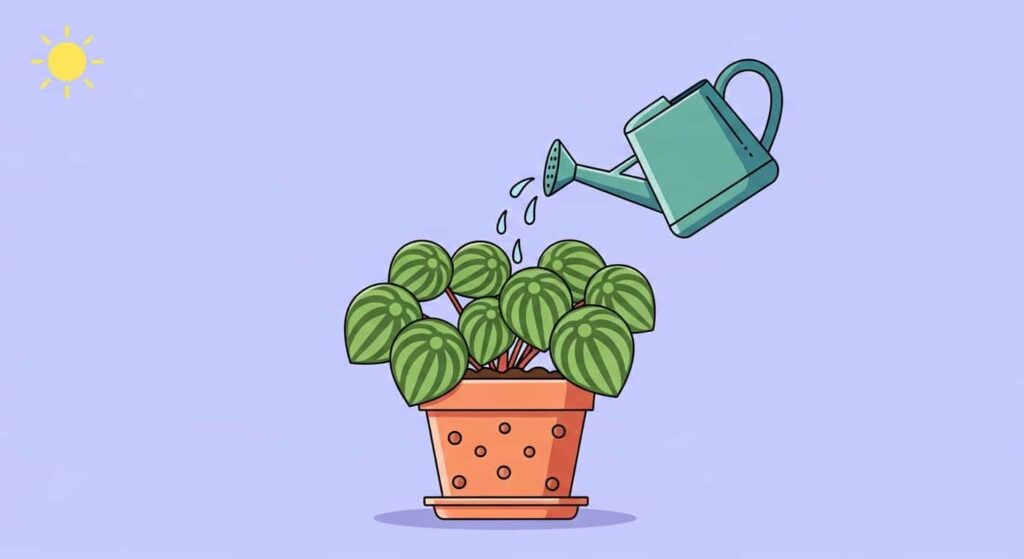
The weeks after division are critical. Follow these guidelines:
Watering
Water when the top inch of soil feels dry. Don’t overwater — the smaller root system can’t absorb as much as before. Err on the dry side during the first two weeks.
Light
Bright, indirect light is ideal. Avoid dark corners (too little energy to recover) and direct harsh sun (adds stress).
Fertilizing
Skip fertilizer for the first 4–6 weeks. New roots are tender and fertilizer salts can burn them. Once you see new growth, resume a light feeding schedule.
Humidity & Temperature
Peperomia obtusifolia is comfortable in normal household conditions — 65–80°F (18–27°C) and average indoor humidity. No special treatment needed after division.
What’s Normal vs. What’s Concerning
| Normal | Concerning |
|---|---|
| A few leaves drop in the first 1–2 weeks | Rapid leaf drop on most stems |
| Slightly wilted look for a few days | Stems turning soft or mushy |
| Slow growth for 3–4 weeks | No recovery after 5–6 weeks |
| Yellowing of 1–2 older leaves | Widespread yellowing |
A little drooping right after division is completely normal — your plant is redirecting energy underground to grow new roots. As long as the stems are firm, you’re fine.
What to Do With Leftover Stems
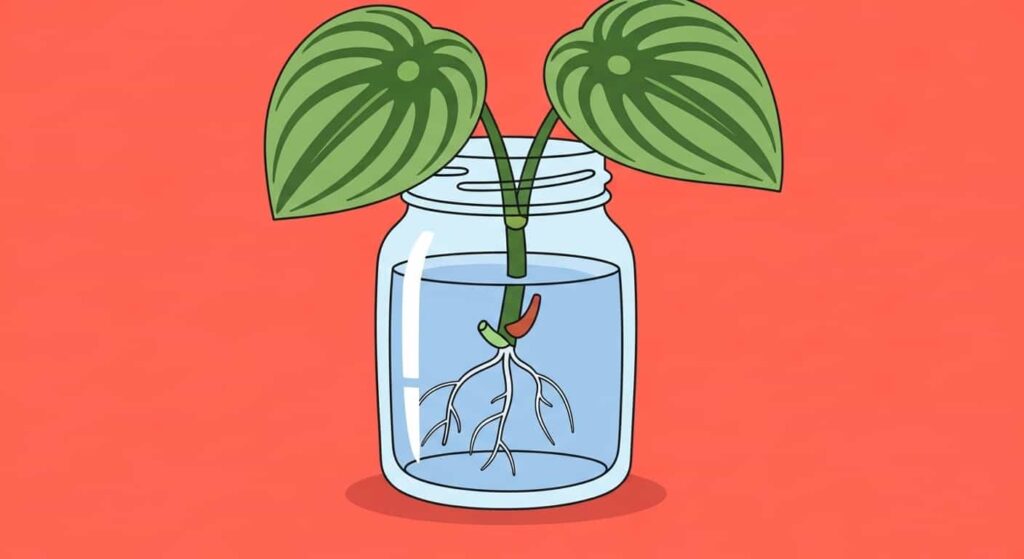
When dividing, you’ll often end up with a few stems that broke off without roots. Don’t throw them away — they’re cuttings.
Quick Stem Cutting Method:
- Ensure the stem is at least 3–4 inches long with 2–3 leaves
- Remove the bottom 1–2 leaves
- Let the cut end dry for a few hours
- Place in moist potting mix or a glass of water
- Keep in bright, indirect light
- Roots should appear within 3–6 weeks
💡 Rooting hormone gel can significantly speed up propagation from cuttings and boost success rates. See the most popular options →
Frequently Asked Questions
Can I divide a small Peperomia obtusifolia?
It’s possible, but it’s better to wait until the plant has multiple well-established stems and a sizeable root system. Dividing a very small plant causes disproportionate stress. A good rule of thumb: if it’s not yet root-bound, it doesn’t need dividing.
How many sections can I divide it into?
As many as there are natural, separate root clusters — as long as each section has at least 2–3 stems and a good root portion. Don’t force too many divisions from a single plant; each piece needs enough resources to sustain itself.
My plant has no obvious separation points. What do I do?
You can still cut through the root ball with a sharp, clean knife. Just make sure each piece has roots and stems. Peperomia is forgiving — it will recover even from imperfect cuts.
Why are leaves dropping after division?
Leaf drop shortly after division is a stress response, and it’s normal. The plant is shedding leaves it can no longer support while focusing on root recovery. As long as new growth appears within a few weeks, the plant is fine.
Do I need to use rooting hormone when dividing?
No. Since you’re dividing — not propagating from cuttings — the roots are already established. Rooting hormone is only helpful for stem or leaf cuttings.
Final Thoughts
Dividing your Peperomia obtusifolia is one of the simplest ways to multiply your collection, refresh an overgrown plant, and give it a new lease on life — all for free.
The keys to success:
- Divide in spring or early summer
- Make sure each division has both roots and stems
- Use fresh, well-draining soil
- Don’t overwater during recovery
- Be patient — new growth is the sign you did it right
Once you’ve done it once, you’ll wonder why you waited so long. Happy dividing!