
Disclosure: This article contains affiliate links. If you choose to purchase through these links, I may earn a small commission at no extra cost to you. I only recommend products I personally use and genuinely believe will help your plants thrive. The money earned helps support the time, research, and plant experiments that go into creating these detailed guides. Thank you for your support!
I still remember the day I brought home my first Peperomia Obtusifolia Alba from a tiny plant shop in Portland. Its cream-edged leaves caught the afternoon light streaming through the shop window, and I was immediately smitten. That was six years ago, and that same plant still thrives on my kitchen windowsill today—a living reminder of how far I’ve come in my plant parenting journey.
The Peperomia Obtusifolia Alba, commonly known as the Baby Rubber Plant, has captured the hearts of plant lovers everywhere with its striking cream and green variegated leaves. This compact houseplant brings a touch of tropical elegance to any space while remaining surprisingly easy to care for.
Whether you’re a beginner looking for your first houseplant or an experienced gardener expanding your collection, this comprehensive plant care guide will help you grow a thriving Peperomia Obtusifolia Alba. From understanding its basic needs to troubleshooting common issues, we’ll cover everything you need to know about this beautiful variegated beauty.
The Baby Rubber Plant stands out among houseplants for its thick, glossy leaves and compact growth habit. Unlike its all-green cousin, the Alba variety features stunning cream-colored edges that make it a perfect accent plant for bright spaces. Best of all, this plant forgives minor care mistakes, making it an excellent choice for busy plant parents.
Understanding Your Baby Rubber Plant’s Needs
☀️ Light Requirements: The Secret to Stunning Variegation
I learned about variegation fading the hard way. Two years ago, I moved one of my favorite Alba plants to a darker corner to make space on my plant shelf. Within two months, the new leaves emerged with barely any cream coloring—just solid green. The plant was healthy, but it had lost what made it special.
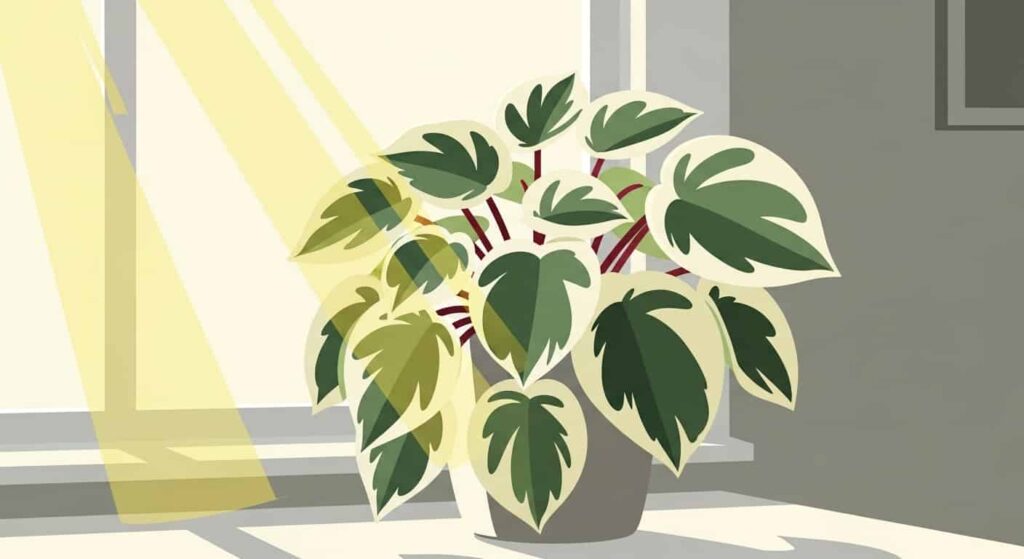
Your Peperomia Obtusifolia Alba thrives in bright, indirect light. Place it near a window that receives plenty of natural light but avoid direct sunlight, which can scorch the delicate variegated leaves and cause the cream portions to turn brown.
East or north-facing windows work perfectly for this plant. If you only have south or west-facing windows, position your plant a few feet back from the glass or use a sheer curtain to filter the light. Under proper lighting conditions, the variegation will remain vibrant and the plant will maintain its compact shape.
Why Light Matters for Variegation
Variegation in plants like Peperomia Obtusifolia Alba is caused by a genetic mutation that reduces chlorophyll production in certain leaf cells. According to the Royal Horticultural Society, this mutation creates the beautiful cream and yellow patterns we love—but it also means these plants have less chlorophyll to convert light into energy through photosynthesis.
This is why variegated varieties actually need more light than their all-green counterparts. When light is insufficient, the plant produces more chlorophyll to survive, turning those cream patches green as it maximizes its energy absorption. This is a survival mechanism, not a disease—but it’s also your plant telling you it needs better light.
If Natural Light Is Limited
If your home lacks bright natural light—or if you’re dealing with dark winter months—don’t worry. Grow lights are a game-changer for maintaining variegation.
The Aokrean Plant Grow Light 3-Pack is an excellent choice for your variegated Peperomia. These sleek halo lights feature 48 full-spectrum LEDs each, three optional light modes (white, warm white, and red), and 10 dimmable brightness levels. The height adjusts from 6.5 to 26 inches, and the built-in auto timer offers 3, 9, or 12-hour settings. With three lights in one pack, you can illuminate multiple plants or create a dedicated plant display area.
For precise light control, pair your grow light with a timer. The BN-LINK Indoor Mini 24-Hour Mechanical Outlet Timer 2-Pack offers 24 on/off settings per day with 30-minute intervals. These simple mechanical timers are perfect for automating your grow lights on a consistent schedule.
Pro Tip: Position grow lights 12-18 inches above your plant and run them for 12-14 hours daily to mimic natural daylight cycles. Consistency is key for maintaining healthy variegation.
💧 Watering Needs: The Goldilocks Approach
I’ll never forget the day I discovered root rot on my favorite Peperomia. The leaves had turned yellow and mushy, and when I pulled it from the pot, the roots were black and smelled terrible. I spent an hour at my kitchen table with scissors, trimming away damaged roots and repotting in fresh soil. That plant survived, but it taught me to never water on autopilot again.
The Baby Rubber Plant prefers a “soak and dry” watering approach—and there’s a scientific reason why. Peperomias are sometimes called “semi-succulents” because their thick leaves store water. This adaptation allows them to survive dry periods in their native tropical habitats, where rainfall is inconsistent.
However, this same adaptation makes them susceptible to root rot in overly moist soil. Their roots evolved to breathe, not to sit in water.
When to Water
Allow the top inch of soil to dry out completely between waterings. The easiest way to check? Stick your finger into the soil. If it feels dry at your first knuckle, it’s time to water.
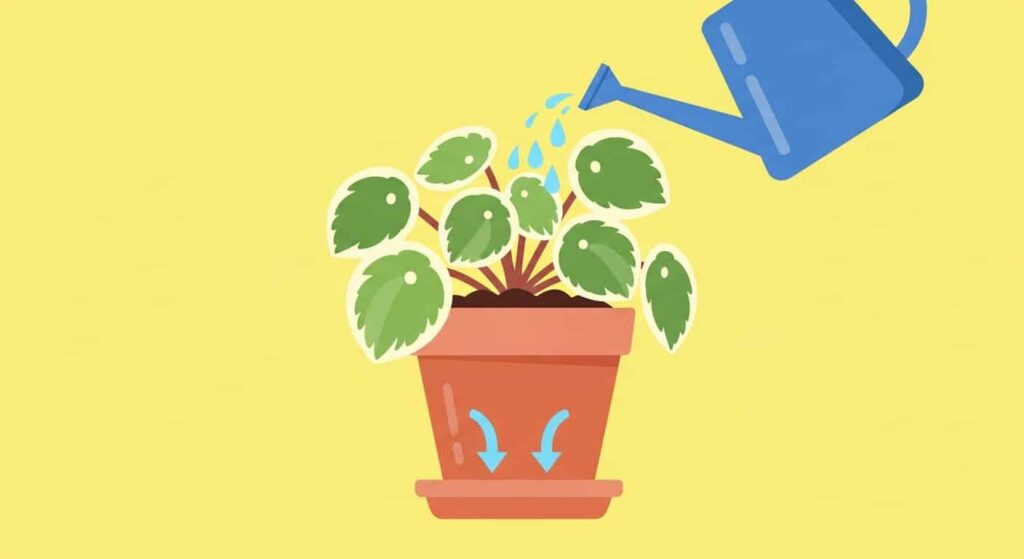
When you do water, do so thoroughly until excess water drains from the bottom of the pot. Then—and this is crucial—discard that excess water immediately. Never let your plant sit in a saucer of water.
Seasonal Adjustments
- Spring & Summer: Every 7-10 days (active growth period)
- Fall & Winter: Every 2-3 weeks (slower growth, less light)
Signs You’re Getting It Right
Healthy watering looks like:
- Leaves feel firm and plump
- Soil dries out between waterings
- New growth appears regularly
Warning signs of overwatering:
- Yellow, mushy leaves 🟡
- Soft, black stems
- Musty smell from soil
- Fungus gnats hovering around the pot
Warning signs of underwatering:
- Wrinkled, deflated leaves
- Leaves feeling thin rather than plump
- Soil pulling away from pot edges
Take the Guesswork Out of Watering
A soil moisture meter is the best tool for preventing overwatering—and the reason I haven’t lost a plant to root rot in years.
The XLUX Soil Moisture Meter requires no batteries, gives instant readings, and features a large dial with color-coded zones (dry/moist/wet). Just insert the probe, and you’ll know exactly whether your plant needs water. The single-probe design minimizes root damage, and the plant watering guide printed on the back is a handy reference.
Water with Precision
When it’s time to water, using the right tool makes a difference. A long-spout watering can helps you direct water exactly where it’s needed—at the soil level—without splashing the leaves (which can lead to fungal issues).
The Qilebi Watering Can features a 14-inch long thin spout and a 1.8L capacity. It comes with a detachable shower nozzle, giving you two options: use it without the nozzle for precise soil watering, or attach it for gentle misting. The high-quality plastic construction is thick-walled and compression-resistant, and it’s available in seven colors to match your decor.
Don’t forget to empty excess water from your saucers after watering. Bleuhome 6 Pack 6 Inch Plant Saucer Trays are heavy-duty PP plastic with a matte finish and waterproof design. With over 500 positive reviews and a 4.5+ star rating, these saucers reliably catch drainage water and protect your furniture.
🌱 Soil and Potting: Creating the Perfect Foundation
After experimenting with dozens of soil combinations over the years, I’ve landed on a simple recipe that my Peperomias respond to best. They root faster, grow fuller, and stay healthier when their roots have the right environment.
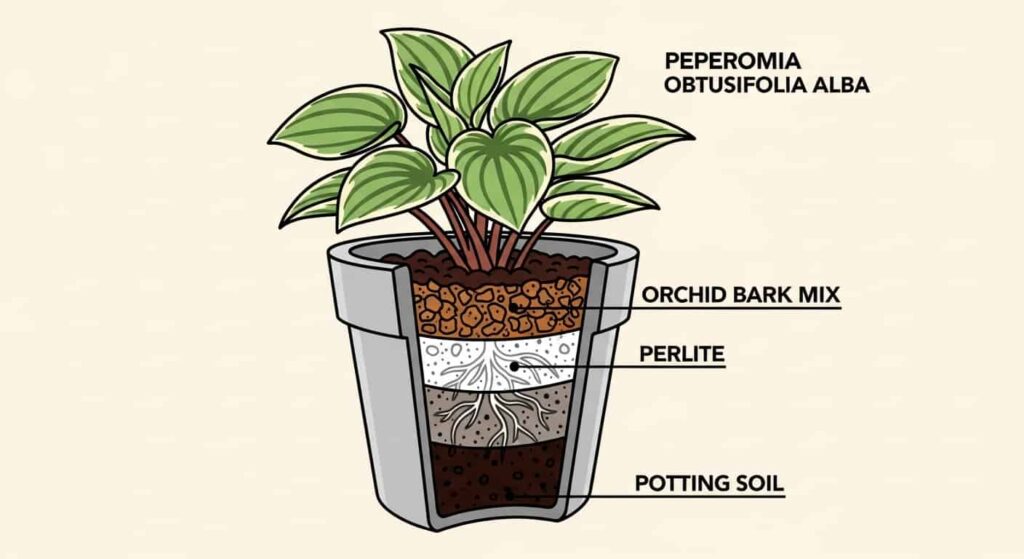
Choose a well-draining potting mix for your Peperomia Obtusifolia Alba. A standard indoor potting soil mixed with perlite or orchid bark works well. The goal is to create a soil that holds some moisture but allows excess water to drain quickly.
In the wild, Peperomias often grow as epiphytes on trees, meaning their roots are exposed to air and never sit in soggy conditions. According to the University of Florida IFAS Extension, this epiphytic nature explains why they need such well-draining soil—their roots are adapted to breathing, not swimming.
DIY Soil Components
If you’re mixing your own soil, here are the components I recommend:
For the orchid bark component, Better-Gro Special Orchid Mix is a premium blend of western fir bark, hardwood charcoal, and sponge rock. This is exactly the type of chunky, well-aerated material your Peperomia roots love. The resealable bag keeps it fresh between uses, and it’s formulated by professional orchid growers for excellent drainage and airflow.
For a complete pre-mixed option, Soil Sunrise Philodendron Plant Potting Soil Mix is a 100% natural blend containing peat moss, pine bark, worm castings, perlite, and lime. While formulated for philodendrons, its chunky, well-draining composition works beautifully for Peperomias too. It’s pH-balanced and provides excellent drainage and nutrient retention.
Another excellent option is Boniosz Gritty Mix Rocks —a 2lb blend of red/black lava rock, maifanitumis, diatomite, and green zeolite. This professional formulation is pH-optimized, drains faster than traditional soil, and helps prevent root rot. Perfect for succulents, cacti, bonsai, and terrariums—and your Peperomia will appreciate it too.
Keep Things Clean
Repotting can be messy, but the right tools make it easy. The Onlysuki Repotting Mat is 26.8″ x 26.8″ of waterproof, high-density PE fabric with copper buckles on all four corners and a fixed strap. It catches all the soil, is easy to clean and dry, and folds away for storage. Perfect for early spring sowing, transplanting, and soil replacement on kitchen counters, lawns, or terraces.
Repotting Guidelines
Repot your Baby Rubber Plant every 2-3 years or when it becomes rootbound. Choose a pot only slightly larger than the current one, as these plants prefer to be somewhat pot-bound. Always ensure your pot has drainage holes to prevent water buildup.
🌡️ Temperature and Humidity: Creating a Tropical Microclimate
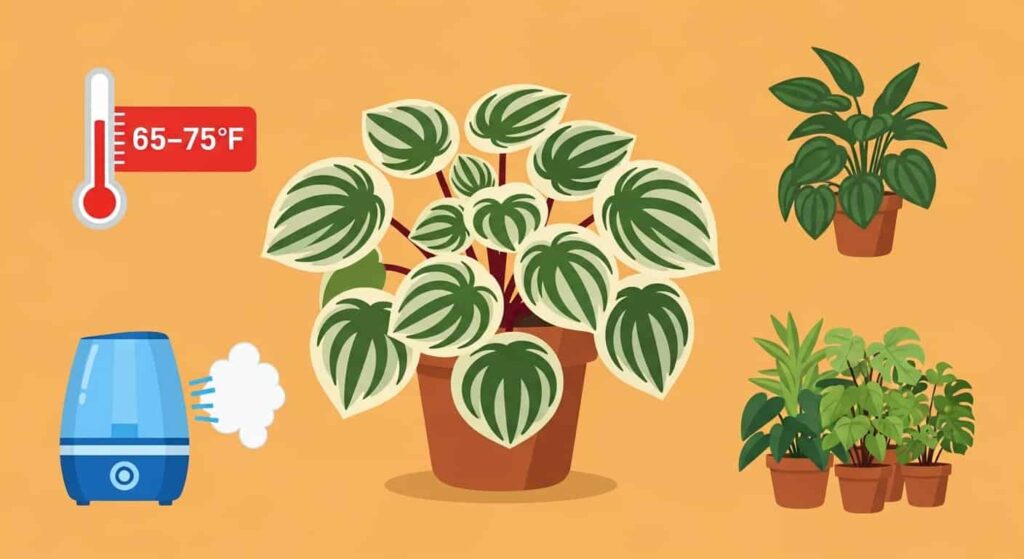
Peperomia Obtusifolia Alba enjoys consistent temperatures between 65-75°F (18-24°C) . Avoid placing your plant near heating vents, air conditioning units, or drafty windows where temperature fluctuations can stress the plant.
These plants tolerate average household humidity levels well, typically 40-50%. However, they appreciate slightly higher humidity, especially during dry winter months. You can increase humidity by placing a humidifier nearby, grouping plants together, or setting the pot on a pebble tray filled with water.
Signs of low humidity include brown, crispy leaf edges or leaves that appear dull rather than glossy. If your home is particularly dry, mist the air around your plant occasionally, but avoid getting water directly on the leaves to prevent fungal issues.
Monitor Your Environment
You can’t improve what you don’t measure. A hygrometer tells you exactly what’s happening with your temperature and humidity.
The Veanic 4-Pack Mini Digital Temperature Humidity Meters are perfect for monitoring multiple locations. Each unit is just 1.89″ x 1.13″ x 0.6″ with a clear LCD display showing temperature (-58°F to 158°F) and humidity (10%-99%RH). Accuracy is ±2°F for temperature and ±5%RH for humidity, and batteries last 12-18 months. Place one near your plants, another across the room—you’ll quickly understand your home’s microclimates.
Boost Humidity When Needed
If your hygrometer shows humidity consistently below 40%, here are your options:
The LEVOIT Top Fill Humidifier offers a 2.5L tank, operates at just 26-28dB (whisper-quiet), and runs for up to 25 hours on the low setting. The top-fill design makes it incredibly easy to clean and refill, and the 360° rotating nozzle lets you direct mist where it’s needed. It covers rooms up to 219 square feet and features auto shut-off for safety.
Pebble Tray Method: This simple technique works beautifully. Fill a tray with water and pebbles, then set your pot on top. As water evaporates, it creates a humid microclimate around your plant.
Pair a waterproof tray with NUPICK 3 lbs Pebbles for Indoor Plants —these 3/8-inch polished decorative rocks are dye-free, oil-free, smooth, and dust-free. They’re perfect for pebble trays and also work beautifully as a top dressing for potted plants.
Keep Temperatures Consistent
If your home gets chilly in winter or you have drafty windows, a seedling heat mat can keep your plant’s roots warm without heating the whole room.
The BN-LINK Durable Seedling Heat Mat 2-Pack is waterproof (IP67), ETL listed, and provides uniform heat distribution. It gently raises root zone temperature 10-20°F above ambient air using far-infrared heating technology. With nearly 3,000 reviews and a 4.6-star rating, it’s a trusted choice among plant enthusiasts. Each mat measures 10″ x 20.75″ and comes with a 15-month warranty.
🌿 Fertilizing: Feeding for Success
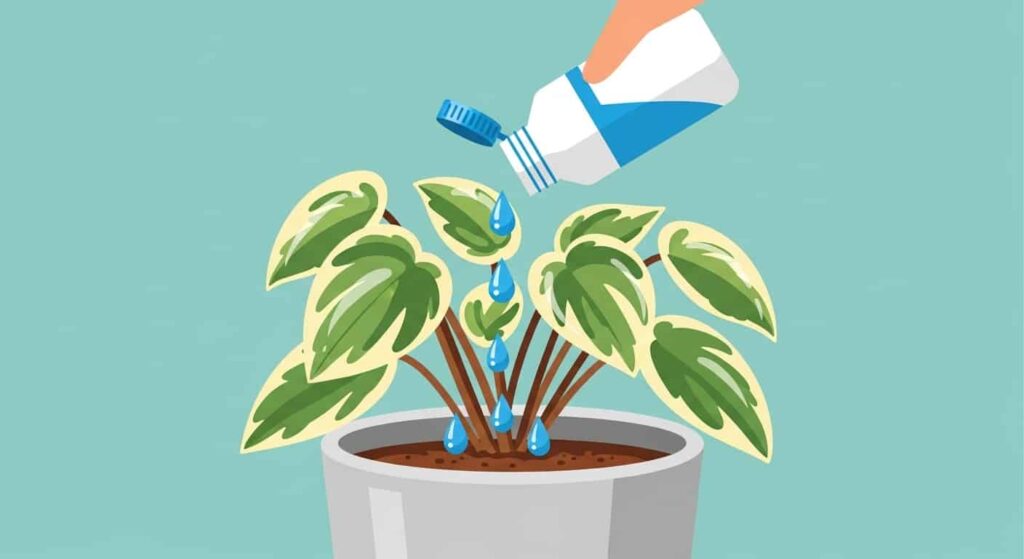
Feed your Baby Rubber Plant with a balanced, diluted houseplant fertilizer during the growing season (spring through early fall). Use a fertilizer diluted to half strength every 4-6 weeks to avoid over-fertilization.
During winter months, reduce or eliminate fertilizing as the plant’s growth naturally slows. Over-fertilizing can cause salt buildup in the soil and lead to brown leaf tips or stunted growth.
Signs of proper fertilization include steady new growth and vibrant leaf coloration. If leaves become pale or growth slows significantly during the growing season, your plant may benefit from more frequent feeding.
The Espoma 8 Ounce Concentrated Organic Indoor Plant Food is an excellent choice for your Peperomia. This organic formula is concentrated—just dilute as directed—and safe for kids and pets. It works well for a wide range of houseplants including pothos, fiddle leaf figs, monsteras, snake plants, and palms. The pack of three bottles gives you a 24 oz total supply that will last through multiple growing seasons.
🔍 Common Problems and Solutions
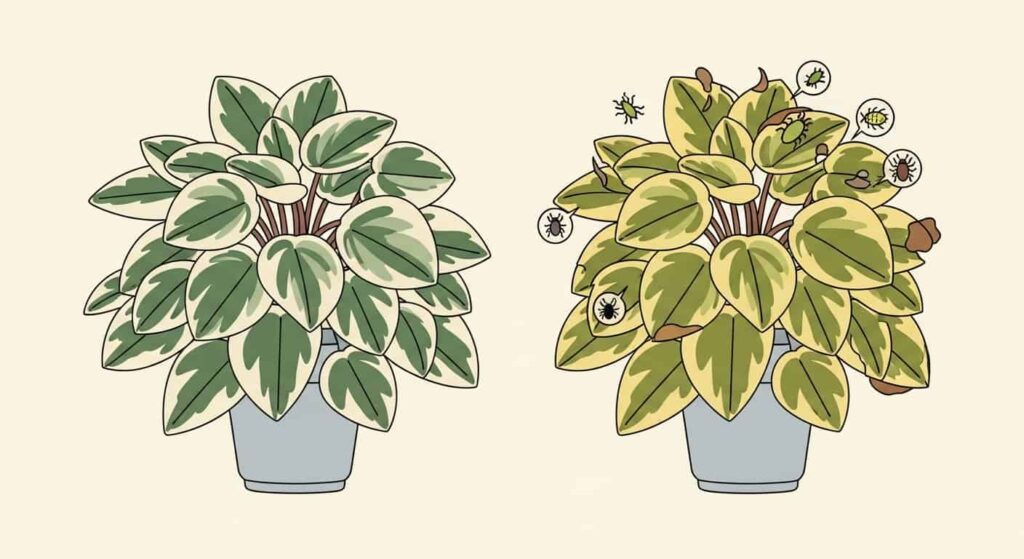
Even with the best care, issues can arise. Here’s how to identify and address common problems with your Peperomia Obtusifolia Alba.
Brown or Black Leaves
Cause: Usually indicates overwatering or root rot.
Solution: Check the roots immediately. Remove the plant from its pot, trim away any black, mushy roots with clean scissors, and repot in fresh, well-draining soil. Reduce watering frequency going forward.
Fading Variegation
Cause: Not enough light.
Solution: Move your plant to a brighter location with indirect sunlight. Consider adding a grow light if natural light is limited. The cream coloring should return in new growth once light conditions improve.
Wrinkled, Soft Leaves
Cause: Your plant is thirsty.
Solution: Water thoroughly and adjust your watering schedule to prevent the soil from drying out completely. Consider using a moisture meter to find the right balance.
Brown Leaf Tips
Cause: Often caused by low humidity, over-fertilization, or water quality issues.
Solution: Increase humidity around your plant, reduce fertilizer frequency or strength, and consider using filtered or distilled water rather than tap water.
Pest Issues
Watch for mealybugs, spider mites, and aphids. These pests are attracted to stressed plants, especially in dry indoor conditions.
The HARRIS Neem Oil Spray for Plants is ready-to-use (no mixing required), cold-pressed, and contains 2% neem oil. It’s effective against common pests while also giving leaves a nice shine. The 128oz bottle is a great value, and with 691 reviews and a 4.2-star rating, it’s a proven performer. This organic, biodegradable spray controls aphids, beetles, mites, and whiteflies while also addressing fungal issues.
For an alternative approach, NATRIA Insecticidal Soap comes in a convenient 2-pack of 24-ounce ready-to-use spray bottles. It’s fast-acting (kills in minutes), approved for organic gardening, and safe to use on harvest day. With over 8,700 reviews and a 4.2-star rating, it’s trusted by thousands of gardeners. Simply spray directly on affected areas to control aphids, mealybugs, mites, and whiteflies on indoor and outdoor plants.
✂️ Propagation Methods: Multiplying Your Collection
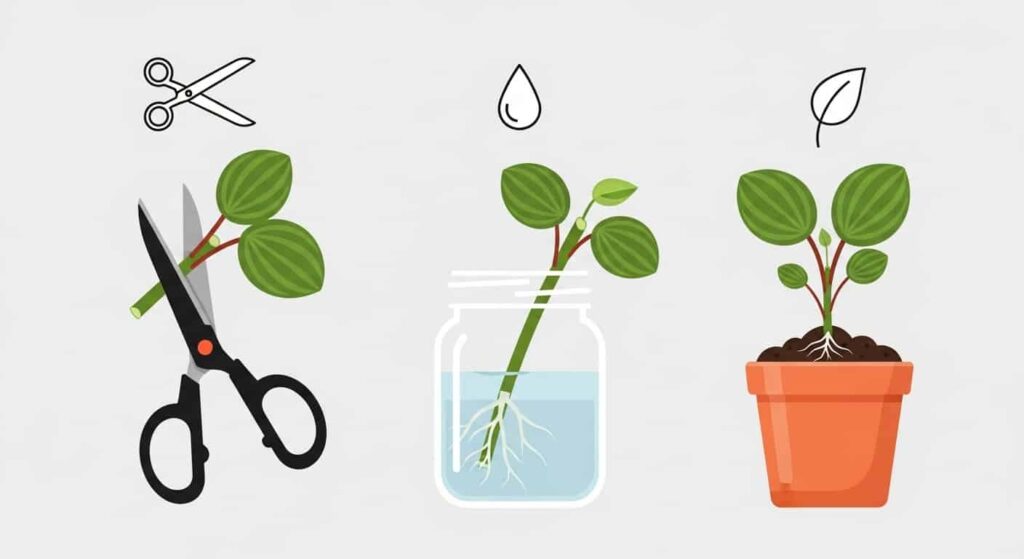
My record is propagating twelve new plants from a single mother plant over two years. I’ve lost count of how many baby Peperomias I’ve given away to friends—they make wonderful housewarming gifts. There’s something magical about watching tiny roots emerge from a leaf cutting and knowing you’ve created a new life.
Propagating your Peperomia Obtusifolia Alba is surprisingly simple and rewarding. The most successful method is leaf propagation, which works well with the plant’s thick, succulent-like leaves.
The Science Behind Propagation
When you cut just below a leaf node, you’re tapping into the plant’s natural biology. Nodes contain concentrated auxins—plant hormones that stimulate root growth. This is why roots will emerge from that point, whether in water or soil.
Letting the cutting dry for 24 hours before planting allows a callus to form, which prevents rot when the cutting is placed in moist medium.
Leaf Propagation Method
- Select a healthy, mature leaf
- Cut it with the petiole (leaf stem) attached, cutting just below the node
- Allow the cutting to dry for 24 hours to prevent rot
- Place it in moist potting mix or water
- If using water, change it every few days to prevent bacterial growth
- If using soil, keep consistently moist but not soggy
- Wait for roots to develop (typically 2-4 weeks)
- Watch for tiny new plants at the base of the leaf
- Transfer water-propagated cuttings to soil once roots are established
Stem Propagation Method
You can also propagate through stem cuttings:
- Cut a 3-4 inch section of stem with several leaves attached
- Remove the bottom leaves, leaving the nodes exposed
- Follow the same rooting process as leaf cuttings
Tools for Successful Propagation
Sharp, clean cutting tools are essential. Dull or dirty tools can crush stems and introduce disease.
The Saboten SD-8 Japanese Micro Tip Harvesting Snips are ultra-light at just 2.3 oz with HRC60 blade steel hardness. Made in Japan with V-rib durability processing, these precision snips feature a smooth spring action, safety lock, and comfort grip. The 45mm micro-tip blade is perfect for taking clean cuttings without crushing delicate stems. With a 4.8-star rating from 38 reviews, they’re a premium choice for serious plant parents.
Display Your Propagations
Once you’ve started propagating, why not display your cuttings beautifully? The Mkono Plant Propagation Tubes feature a 3-tiered wall-hanging wooden stand with 15 removable glass test tubes (4.3″ long, 1″ diameter). This self-watering design is perfect for hydroponic propagation of pothos, lucky bamboo, African violets, and moss. The set includes a cleaning brush and mounting hardware, and with over 500 reviews and a 4.5-star rating, it’s a favorite among plant propagators. Hang it on your wall to create a living art installation while you watch roots develop.
Varieties and Related Plants
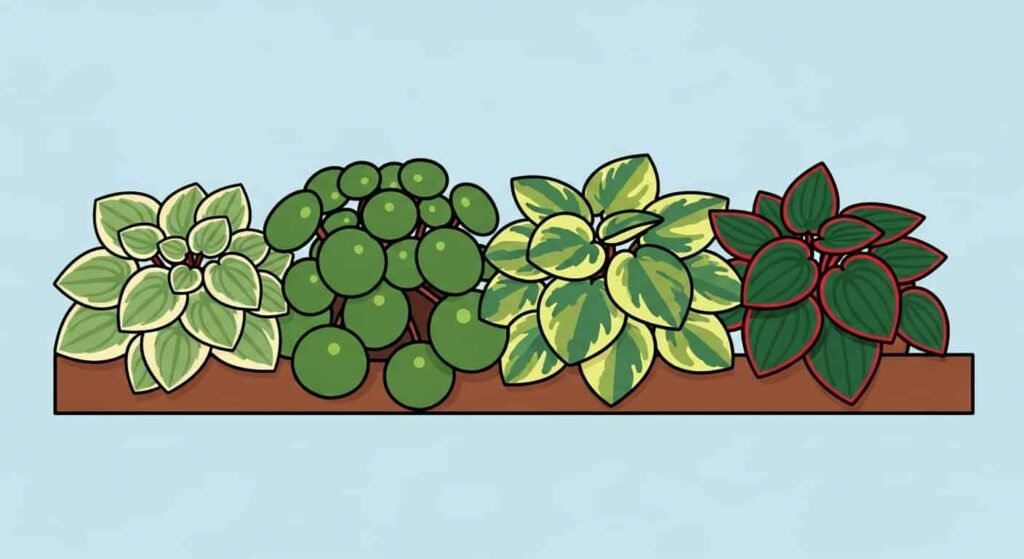
The Peperomia family offers numerous beautiful varieties for plant collectors. The standard Peperomia Obtusifolia features solid green leaves, while the ‘Green Gold’ variety displays yellow-green variegation.
Other popular Peperomia varieties include the Peperomia Clusiifolia (Red Edge Peperomia) with red-edged leaves, and Peperomia Obtusifolia ‘Marble’ featuring white and green marbled patterns.
All Peperomia varieties share similar care requirements, making them excellent companion plants. Their compact size and varied leaf patterns create beautiful groupings on shelves or plant stands.
Advanced Light Measurement
For serious plant enthusiasts who want to optimize their growing conditions:
If you’re using grow lights and want to ensure your variegated Peperomia is getting exactly the right light intensity, a PAR meter can provide precise measurements.
The AH-Quantuv PAR Meter tests PPFD (400-750nm) and UVA (320-400nm) irradiance intensity. It displays separate Blue, Green, and Red PAR values, features a HOLD function, and records up to 100 PAR data points with temperature compensation. CE certified and powered by included AAA batteries, this professional-grade tool is perfect for optimizing grow light placement, calibrating LED systems, and ensuring your variegated plants receive ideal light for maintaining those stunning cream patterns.
When to Adjust This Advice
This is important, so please read it:
Every home is different. If you keep your home unusually warm (above 80°F), your plant may need more frequent watering. If you live in a naturally humid climate like the Pacific Northwest, you may need less humidity support. If you’re using powerful grow lights for 14+ hours daily, your plant may not enter winter dormancy.
Good news for pet owners: the ASPCA lists the Baby Rubber Plant as non-toxic to cats and dogs, making it a safe choice for homes with furry friends.
Always observe your plant and adjust based on its specific environment. The best advice I ever received was from a veteran grower who told me, “Your plant will tell you what it needs—you just have to learn to listen.”
Growing Your Perfect Baby Rubber Plant
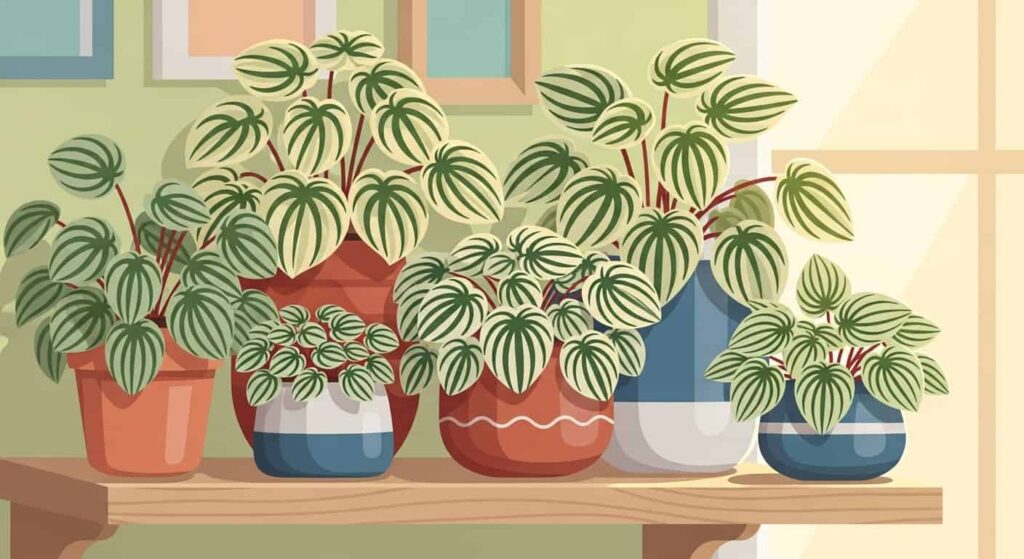
The Peperomia Obtusifolia Alba proves that stunning houseplants don’t have to be difficult to grow. By providing bright, indirect light, well-draining soil, and careful watering, you’ll enjoy this plant’s beautiful variegated foliage for years to come.
Remember that consistency is key with plant care. Establish a routine for checking soil moisture, and your Baby Rubber Plant will reward you with steady growth and vibrant coloration. Don’t be afraid to experiment with propagation—it’s a fun way to expand your collection or share plants with friends.
Every plant parent’s journey includes a few casualties. I’ve killed my share of plants learning what works. But with the right knowledge and tools, your Peperomia Obtusifolia Alba will thrive and reward you with beautiful foliage for years to come.
Start your Peperomia journey today, and discover why this charming plant has become a favorite among both new and experienced plant parents.
Quick Reference: Peperomia Obtusifolia Alba Care Summary
| Aspect | Recommendation |
|---|---|
| Light | Bright, indirect light (east or north-facing windows ideal) |
| Water | Soak and dry—water when top inch of soil is dry |
| Soil | Well-draining mix (potting soil + perlite + orchid bark) |
| Temperature | 65-75°F (18-24°C) |
| Humidity | 40-50% (higher appreciated in dry conditions) |
| Fertilizer | Balanced, half-strength every 4-6 weeks in growing season |
| Repotting | Every 2-3 years, only slightly larger pot |
| Propagation | Leaf or stem cuttings in water or soil |
Sources & Further Reading
- ASPCA Non-Toxic Plant List: Baby Rubber Plant
- University of Florida IFAS Extension: Peperomia Production Guide
- Missouri Botanical Garden: Indoor Plant Care
- Royal Horticultural Society: Plant Propagation
Summary: Products by Section
| Section | Recommended Products |
|---|---|
| Light Requirements | Aokrean Halo Grow Light 3-Pack, BN-LINK Mechanical Timer 2-Pack |
| Watering Needs | XLUX Soil Moisture Meter, Qilebi Watering Can, Bleuhome Plant Saucer Trays |
| Soil and Potting | Onlysuki Repotting Mat, Better-Gro Orchid Mix, Soil Sunrise Philodendron Mix, Boniosz Gritty Mix |
| Temperature & Humidity | Veanic 4-Pack Hygrometers, LEVOIT Top Fill Humidifier, NUPICK Pebbles, BN-LINK Seedling Heat Mats |
| Fertilizing | Espoma Organic Indoor Plant Food |
| Common Problems | HARRIS Neem Oil Spray, NATRIA Insecticidal Soap |
| Propagation | Saboten Japanese Micro Snips, Mkono Propagation Tubes |
| Advanced Tools | AH-Quantuv PAR Meter |
Leave a Reply