
Disclosure: This article contains affiliate links. If you choose to purchase through these links, I may earn a small commission at no extra cost to you. I only recommend products I personally use and genuinely believe will help your plants thrive. The money earned helps support the time and research that goes into creating these detailed guides. Thank you for your support!
I’ll never forget the first time I saw a variegated Peperomia at a local nursery.
There it sat on a crowded shelf—thick, spoon-shaped leaves splashed with cream, yellow, and green like someone had dipped them in paint. I bought it immediately, no hesitation. That was seven years ago, and today that same plant sits happily on my shelf, having survived three moves, countless seasons, and more than a few learning moments on my part. Along the way, I’ve propagated it into over a dozen new plants that now live with friends and family across the country.
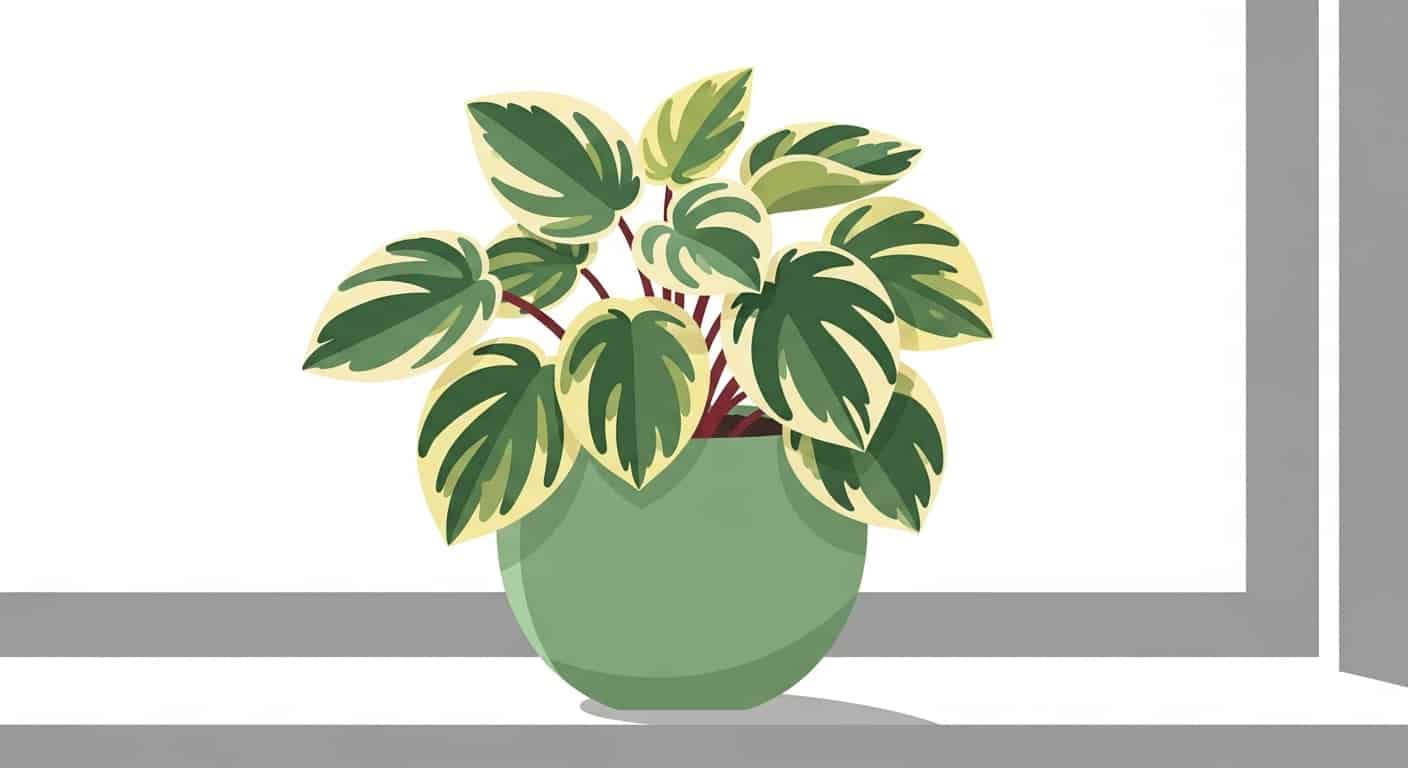
If you’re looking for a houseplant that’s both beautiful and easy to care for, the Peperomia Obtusifolia Variegata is an excellent choice. Often called the Variegated Baby Rubber Plant or Variegated Pepper Face, this charming indoor plant features thick, glossy leaves with stunning variegation patterns. Its compact size and forgiving nature make it a favorite among both new and experienced plant parents.
This guide provides all the essential plant care tips you need to help your Variegated Peperomia thrive. We’ll cover everything from ideal lighting and watering schedules to how to deal with common problems. By the end of this article, you’ll have the confidence to grow a healthy and vibrant Baby Rubber Plant.
A Complete Care Guide for Your Peperomia
The Peperomia Obtusifolia Variegata is known for being low-maintenance, but giving it the right conditions will ensure it stays lush and beautiful. Let’s dive into exactly what this plant needs to thrive.
☀️ Light Requirements: The Secret to Stunning Variegation
I learned about variegation fading the hard way. Two years ago, I moved one of my favorite variegated Peperomias to a darker corner to make space on my plant shelf. Within two months, the new leaves emerged with barely any cream coloring—just solid green. The plant was fine, but it had lost what made it special.
Why Light Matters for Variegation
Variegation in plants like Peperomia Obtusifolia Variegata is caused by a genetic mutation that reduces chlorophyll production in certain leaf cells. According to the Royal Horticultural Society, this mutation creates the beautiful cream and yellow patterns we love—but it also means these plants have less chlorophyll to convert light into energy.
This is why variegated varieties actually need more light than their all-green counterparts—but it must be indirect to prevent scorching. When a variegated plant doesn’t get enough light, it will produce more chlorophyll to survive, turning those cream patches green as it tries to maximize its energy absorption.
The Perfect Light Setup
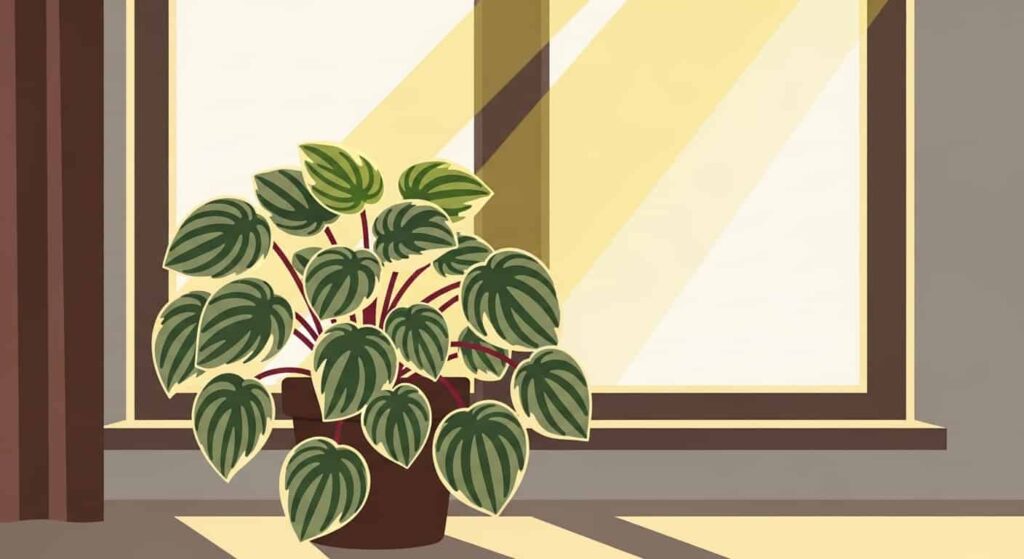
Ideal Light: Your Variegated Peperomia thrives in bright, indirect light. An east-facing window that gets gentle morning sun is perfect. You can also place it a few feet away from a south or west-facing window, where the light is bright but filtered through sheer curtains.
Low Light: While it can tolerate lower light conditions, the variegation will fade, and growth will slow significantly. If you notice new leaves coming in with less variegation, this is your plant telling you it needs more light.
Direct Sunlight: Avoid placing your plant in direct, intense sunlight. The harsh rays can scorch the leaves, causing them to turn yellow or develop brown spots.
If Your Home Lacks Natural Light
Not everyone has perfect windows—I certainly don’t in my 1920s apartment. Grow lights are a game-changer for maintaining variegation in low-light homes or during dark winter months.
The FOXGARDEN Grow Light is an excellent option for your Variegated Peperomia. It features full spectrum LEDs, an auto timer with 4/8/12-hour settings, and four dimmable brightness levels. The height adjusts from 8.5 to 24.8 inches, and 180° rotation lets you direct light exactly where needed. The 2-pack design means you can light multiple plants.
For smaller spaces or individual plants, the GooingTop LED Grow Light offers 6000K full spectrum with 84 LEDs. It’s dimmable with five levels and includes auto timing options of 4, 8, or 12 hours. The adjustable arm and clip design make it perfect for attaching to shelves or desks. With over 2,800 positive reviews, it’s a trusted choice among indoor gardeners.
Another favorite is the RWNTAO 168 LEDs Clip Grow Light , which comes in a convenient 2-pack. Each light features three spectral modes (white, red, or combined), 10 dimmable brightness levels, and a flexible 360-degree gooseneck. The strong clip mount attaches easily to plant stands, shelves, or tabletops. This is what I use on my own plant shelf, and my variegated plants have never looked better.
If you have multiple plants, consider the Aokrean Halo Grow Light 3-Pack . These sleek halo lights feature 48 LEDs each, three optional spectrums, 10 brightness levels, and auto timers. The height adjusts from 6.5 to 26 inches, and the modern design looks great in any room. They’re perfect for creating a dedicated plant display area.
Pro Tip: Set your grow light on a timer for 12-14 hours daily to mimic natural daylight cycles. Consistency is key for maintaining healthy variegation. Many of the lights above include built-in timers, but if yours doesn’t, an outlet timer works wonderfully.
💧 Watering Needs: The Goldilocks Approach
I’ll be honest—I killed my first Peperomia by overwatering. I was watering on a schedule rather than checking the soil, convinced that plants needed weekly drinks like clockwork. Within a month, the roots rotted, and I lost the plant entirely. These days, I never guess.
One of the most common mistakes with Baby Rubberplant care is overwatering. These plants have succulent-like leaves that store water, making them quite drought-tolerant. In their native tropical habitats, Peperomias often grow as epiphytes on trees, meaning their roots are exposed to air and periods of dryness between rains.
When to Water
Water your Peperomia when the top 2-3 inches of soil feel completely dry to the touch. The easiest way to check? Stick your finger into the soil. If it feels dry at your second knuckle, it’s time to water.
How to Water
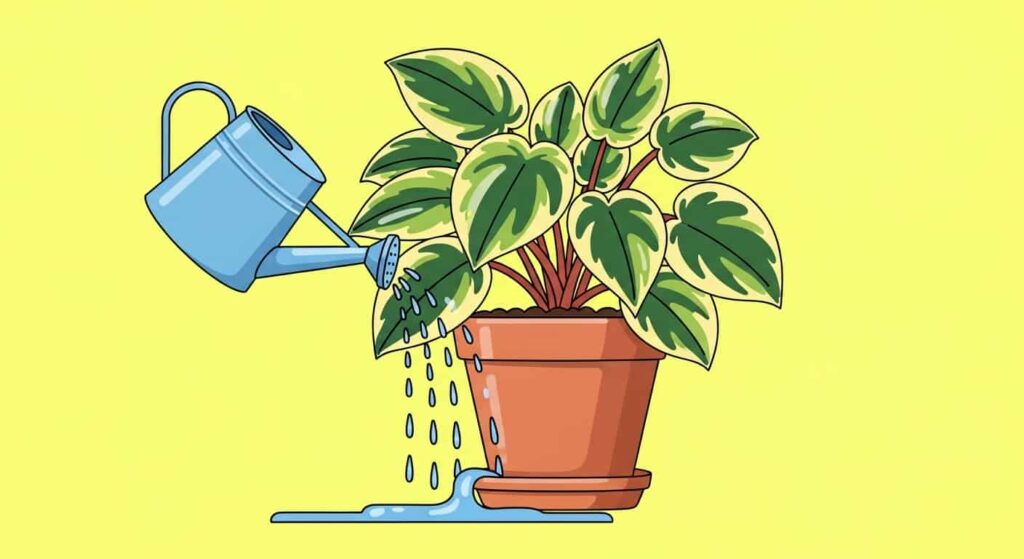
When it’s time to water, do so thoroughly until you see water draining from the bottom of the pot. This ensures the entire root ball gets hydrated. Discard any excess water from the saucer immediately—never let your plant sit in standing water, as this invites root rot.
Seasonal Adjustments
The frequency of watering will depend on the season and your home’s environment:
- Spring & Summer: Every 1-2 weeks (active growth period)
- Fall & Winter: Every 2-3 weeks (slower growth, less light)
Take the Guesswork Out of Watering
A soil moisture meter is the best tool for preventing overwatering—and the reason I haven’t lost a plant to root rot in years.
The XLUX Soil Moisture Meter is my top recommendation. It requires no batteries, gives instant readings, and features a large dial with color-coded zones (dry/moist/wet). Just insert the probe, and you’ll know exactly whether your plant needs water. The single-probe design also minimizes root damage.
For larger pots, the XLUX Long Probe 2-Pack features a 12-inch probe (5.5 inches longer than standard) that reaches deeper soil where moisture can hide. This is especially useful if you have your Peperomia in a taller pot.
If you want even more data about your plant’s environment, the IRTOV 4-in-1 Soil Meter measures moisture, pH, temperature, AND light intensity—all on a backlit LCD display. This covers multiple aspects of your plant’s care in one device. It’s what I use for my pickier plants.
Signs You’re Getting It Right
Healthy watering looks like:
- Leaves feel firm and plump
- Soil dries out between waterings
- New growth appears regularly
Warning signs of overwatering:
- Yellowing lower leaves
- Soft, mushy stems
- Musty smell from soil
- Fungus gnats hovering around the pot
Water with Precision
When it’s time to water, using the right tool makes a difference. A long-spout watering can helps you direct water exactly where it’s needed—at the soil level—without splashing the leaves (which can lead to fungal issues).
The Qilebi Watering Can features a 14-inch long spout and a 1.8L capacity. It comes with a detachable shower nozzle, giving you two options: use it without the nozzle for precise soil watering, or attach it for gentle misting. Available in seven colors.
The Etarewilt Watering Can offers similar features with a removable sprinkler head and long spout design. The thick-walled PP resin construction is impact-resistant and built to last.
For a more decorative option, the LTSUMI Metal Watering Can is made of premium stainless steel with a comfortable wooden handle. The long thin spout provides precise control, and the rust-resistant construction means it will last for years. At 35 oz (1000 ml), it’s the perfect size for watering a few plants without being too heavy.
Don’t forget to empty excess water from your saucers after watering. Bleuhome Plant Saucer Trays 6-Pack are heavy-duty PP plastic with a matte finish, available in multiple sizes and colors. They catch drainage water and protect your furniture.
🌱 Soil Preferences: Creating the Perfect Foundation
After experimenting with dozens of soil combinations over the years, I’ve landed on a simple recipe that my Peperomias respond to best. They root faster, grow fuller, and stay healthier when their roots have the right environment.
The right soil mix provides the perfect balance of drainage and moisture retention for your Peperomia. In the wild, these plants often grow as epiphytes—meaning their roots are exposed to air and never sit in soggy conditions. According to the University of Florida IFAS Extension, mimicking this environment is key to success.
The Perfect DIY Mix
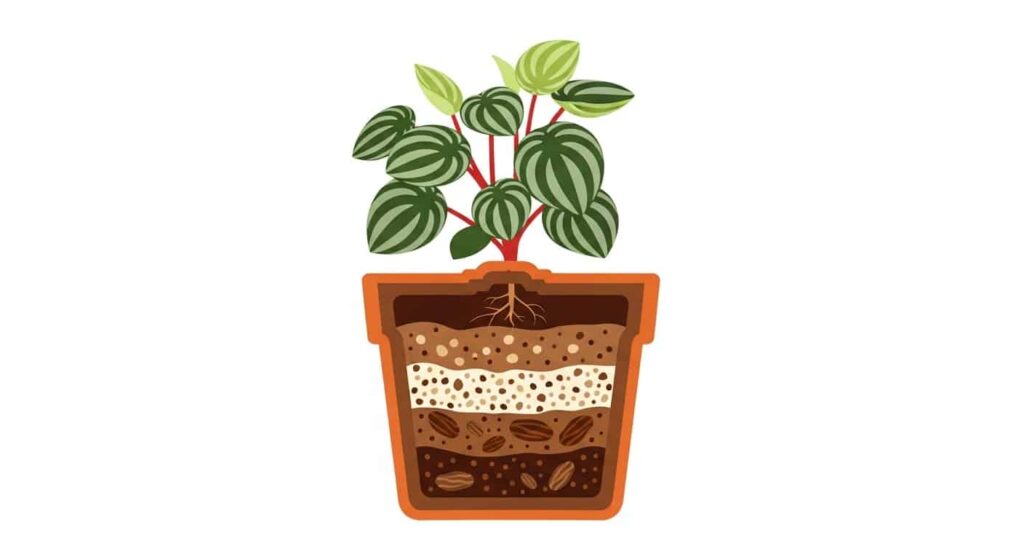
Create your own well-draining mix by combining equal parts:
- Potting soil (provides nutrients and structure)
- Perlite (adds aeration and drainage)
- Orchid bark (creates chunky texture for air flow)
This mixture provides excellent aeration and prevents the soil from becoming waterlogged.
Soil Components
For the perlite component, Voulosimi Organic Perlite comes in a 25QT bag and features neutral pH 7.0. It prevents soil compaction and promotes excellent aeration and drainage. With over 2,300 reviews, it’s a trusted choice.
Another excellent option is FURWEY Organic Perlite , which offers 30QT of 3-6mm horticultural perlite. It’s 100% natural volcanic glass, pH neutral, and non-toxic.
For the orchid bark component, Better-Gro Special Orchid Mix is a premium blend of western fir bark, hardwood charcoal, and sponge rock. This is exactly the type of chunky, well-aerated material your Peperomia roots love. The resealable bag keeps it fresh between uses. If you have multiple plants, the Better-Gro Orchid Mix 2-Pack offers better value.
For those who want the absolute best, Orchiata Bark from New Zealand is 100% pure Pinus radiata bark. It’s toxin-free, stable, long-lasting, and holds water and nutrients beautifully. Yes, it’s pricier—but it’s the gold standard among serious collectors.
Store-Bought Options
If DIY isn’t your style, several excellent pre-mixed options are available:
Molly’s Aroid Mix is a premium soilless chunky potting mix designed specifically for tropical plants. It’s well-aerated, fast-draining, and enhanced with mycorrhizae. The gnat-resistant formula is a nice bonus.
Gardenera Premium House Plant Potting Soil is hand-blended with 100% natural organic humus and worm castings. With nearly 300 reviews and a 4.4-star rating, it’s a solid choice.
Soil Sunrise Tropical House Plant Potting Mix contains peat moss, horticultural perlite, worm castings, and lime. It’s 100% natural with no added fertilizers or chemicals.
🌡️ Temperature and Humidity: Creating a Tropical Microclimate
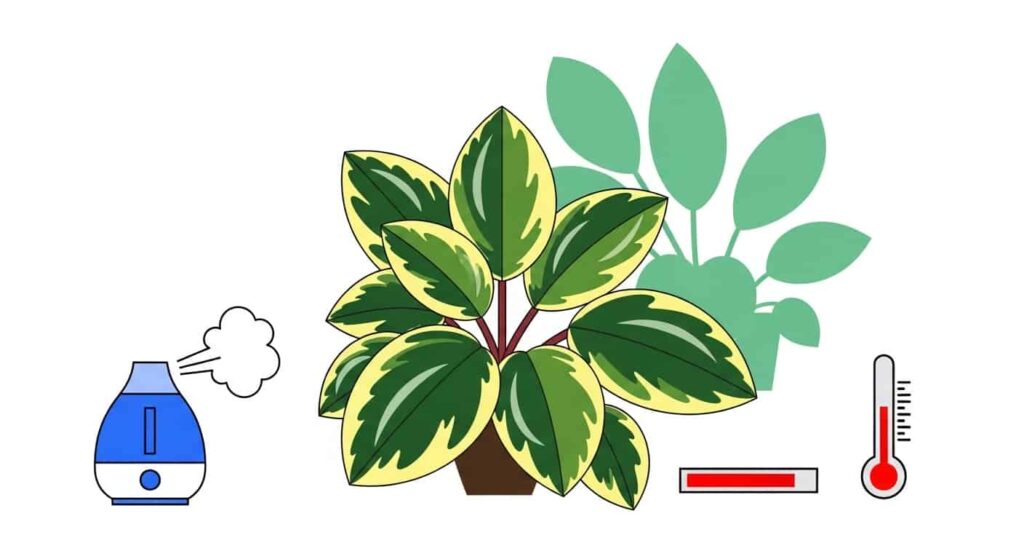
Coming from tropical regions, the Peperomia Obtusifolia Variegata enjoys warm and humid conditions, but it’s quite adaptable to typical indoor environments.
Temperature Needs
Keep your plant in a room with temperatures between 65-80°F (18-27°C) . It is not frost-tolerant, so protect it from cold drafts from windows or air conditioners. I learned this lesson when I lost a plant to a chilly windowsill one winter—now I keep everything a few feet back from the glass.
Humidity Preferences
Your Peperomia appreciates average to high humidity levels. If your home is particularly dry—common in winter with heating running—you can increase humidity using several methods.
Monitor Your Environment
You can’t improve what you don’t measure. A hygrometer tells you exactly what’s happening with your temperature and humidity.
The DOQAUS Digital Hygrometer is my go-to recommendation. It features high accuracy (±1°F), a 5-second refresh rate, and an air comfort indicator with three face icons (dry/comfort/wet). The 2.3″ LCD display is easy to read, and it offers three mounting options: hanging hole, tabletop stand, or magnet. Over 1,000 reviews speak to its reliability.
For monitoring multiple locations, the Serundo Mini Hygrometer 2-Pack offers fast 10-second response time with ±1°F temperature accuracy and ±3%RH humidity accuracy. They run on included LR44 button cell batteries.
If you have a larger collection, the ANFBYOH 6-Pack Hygrometer lets you monitor every room or every plant area. Each unit features a clear LCD display and updates every 10 seconds.
Boost Humidity When Needed
If your hygrometer shows humidity consistently below 40%, here are your options:
Humidifiers:
The ROSEKM Cool Mist Humidifier features a 2.0L tank, quiet ultrasonic operation, and a 360° nozzle. It’s perfect for bedrooms, home offices, or plant areas.
The LEVOIT Top Fill Humidifier offers a 2.5L tank, operates at just 28dB, and runs for up to 25 hours. The top-fill design makes it incredibly easy to clean and refill. It covers rooms up to 219 square feet.
For larger spaces, the Dreo Smart Humidifier is outstanding. It features a 4L top-fill tank, runs for up to 36 hours, operates at a whisper-quiet 28dB, and covers rooms up to 300 square feet. You can control it via touch, app, or voice commands, and the built-in hygrometer automatically maintains your desired humidity level. With over 9,400 reviews and a 4.4-star rating, it’s a proven performer.
Pebble Trays:
This simple method works beautifully. Place a tray filled with water and pebbles beneath your pot. As water evaporates, it creates a humid microclimate around your plant.
The Pinkunn Humidity Trays 2-Pack are rectangular, corrosion-resistant plastic trays with drainage holes. They’re perfect for creating pebble trays. Pair them with OUPENG Polished Pebbles —2 pounds of natural mixed-color stones with a paraffin wax coating for enhanced shine. No sharp edges, and they look beautiful in any setting.
Keep Temperatures Consistent
If your home gets chilly in winter or you have drafty windows, a seedling heat mat can keep your plant’s roots warm without heating the whole room.
The BN-LINK Seedling Heat Mat 2-Pack is waterproof (IP67), ETL listed, and provides uniform heat distribution. It gently raises root zone temperature 10-20°F above ambient air. With nearly 3,000 reviews and a 4.6-star rating, it’s a trusted choice.
For advanced heating technology, the RooTrimmer Graphene Heat Mats 4-Pack use graphene heating material for efficient, even warmth. They’re waterproof, fit standard 1020 trays, and use just 20W of power.
If you need to heat multiple plants, the BN-LINK Heat Mats 4-Pack offers excellent value. Each mat is 10″ x 20.75″, IP67 waterproof, and features far-infrared heating technology.
🔍 Common Problems and Solutions
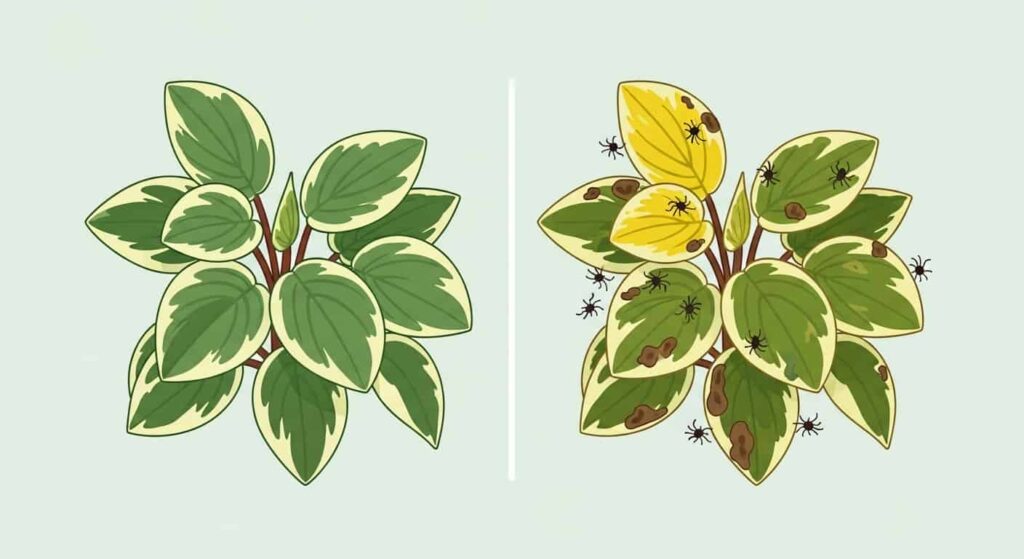
Even the easiest plants can run into issues. Here’s how to troubleshoot some common problems with your Variegated Peperomia.
🍂 Leaf Drop
Sudden leaf drop is often a sign of overwatering or a sudden temperature change. Check the soil moisture and ensure the plant isn’t near a cold draft. Adjust your watering schedule and move the plant to a more stable location if needed.
🥀 Root Rot
This is the most serious issue and is caused by soggy soil. Symptoms include mushy stems, wilting, and yellowing leaves. If you suspect root rot, remove the plant from its pot, trim away any black, mushy roots, and repot it in fresh, dry soil. Don’t water for at least a week afterward.
🐛 Pests
Common pests like mealybugs, spider mites, and scale can occasionally affect your Peperomia. Inspect your plant regularly, especially the undersides of leaves and along stems. If you spot pests, treat them immediately.
For pest control, I recommend having a treatment on hand before problems appear. The HARRIS Neem Oil Spray for Plants is ready-to-use (no mixing required), cold-pressed, and contains 2% neem oil. It’s effective against common pests while also giving leaves a nice shine. The 128oz bottle is a great value.
For an alternative approach, Bonide Insecticidal Soap 2-Pack is ready-to-use and approved for organic gardening. It controls multiple insect species through direct contact and ingestion.
Another excellent option is Natria Insecticidal Soap 2-Pack . It’s fast-acting, ready-to-use, and formulated for organic gardening. With over 8,700 reviews, it’s a proven performer against aphids, mealybugs, mites, and whiteflies.
🌿 Simple Peperomia Propagation Tips
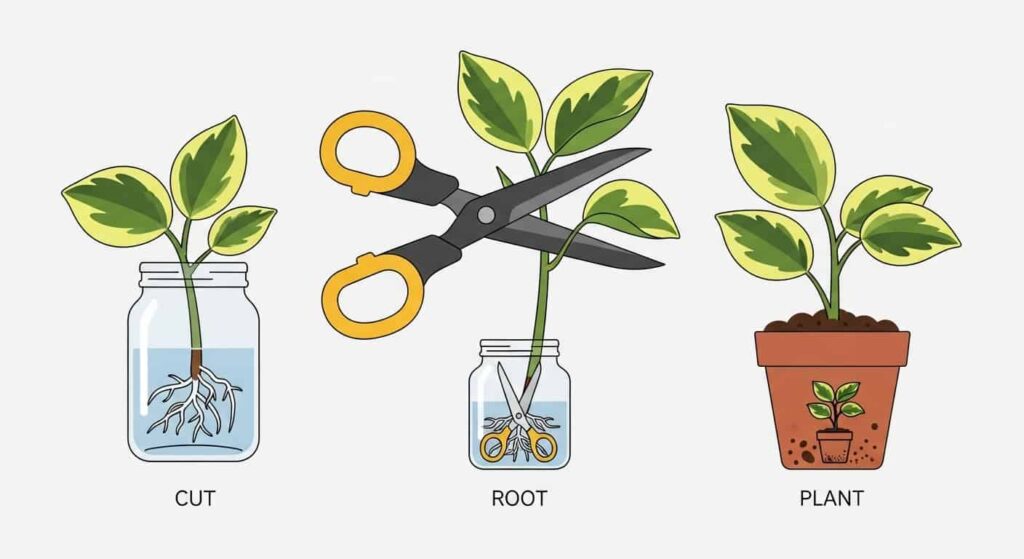
I’ve lost count of how many baby Peperomias I’ve given away over the years—they make wonderful gifts. My record is propagating eight new plants from a single mother plant over the course of a year. There’s something magical about watching tiny roots emerge from a cutting and knowing you’ve created a new life.
One of the most rewarding aspects of owning this plant is how easy it is to propagate. You can create new plants to expand your collection or share with friends.
The Science Behind Propagation
When you take a cutting just below a leaf node, you’re tapping into the plant’s natural biology. Nodes contain concentrated auxins—plant hormones that stimulate root growth. This is why roots will emerge from that point, whether in water or soil.
Propagation with Stem Cuttings
Step 1: Take a Cutting
Using clean scissors or shears, cut a healthy stem with 2-3 leaves. Cut just below a leaf node (the point where a leaf grows from the stem).
Step 2: Prepare the Cutting
Remove the lowest leaf from the cutting, leaving the node exposed. This prevents the leaf from rotting in water and gives the node clear access to moisture.
Step 3: Root in Water or Soil
- Water Method: Place the cutting in a jar of water, ensuring the node is submerged but the remaining leaves are above the water line. Change the water every few days to prevent bacteria growth. Roots should appear in 2-4 weeks.
- Soil Method: Dip the cut end in rooting hormone (optional but helpful) and plant it directly into a small pot with a well-draining soil mix. Keep the soil lightly moist but not wet.
Step 4: Care for the New Plant
Place the cutting in a spot with bright, indirect light. Once it has established a strong root system and shows new growth, you can care for it as a mature plant.
Tools for Successful Propagation
Sharp, clean cutting tools are essential for successful propagation. Dull or dirty tools can crush stems and introduce disease.
The Leize Flower Scissors feature high carbon SK5 steel blades with an 8mm cutting width. The ergonomic non-slip handles are comfortable to use, and the bypass blade style ensures clean cuts. Lightweight at just 4.9 oz.
For a premium option, the Saboten Japanese Micro Tip Harvesting Snips are made in Japan with HRC60 blade steel. They’re ultra-light at just 2.3 oz, feature spring action for ease of use, and include a safety lock. These are what I use for all my precision cutting needs.
While rooting hormone is optional, it can increase your success rate, especially for beginners.
When to Adjust This Advice
This is important, so please read it:
Every home is different. If you keep your home unusually warm (above 80°F), your plant may need more frequent watering. If you live in a naturally humid climate like the Pacific Northwest, you may need less humidity support. If you’re using powerful grow lights for 14+ hours daily, your plant may not enter winter dormancy.
Always observe your plant and adjust based on its specific environment. The best advice I ever received was from a veteran grower who told me, “Your plant will tell you what it needs—you just have to learn to listen.”
Grow Your Plant Collection Today
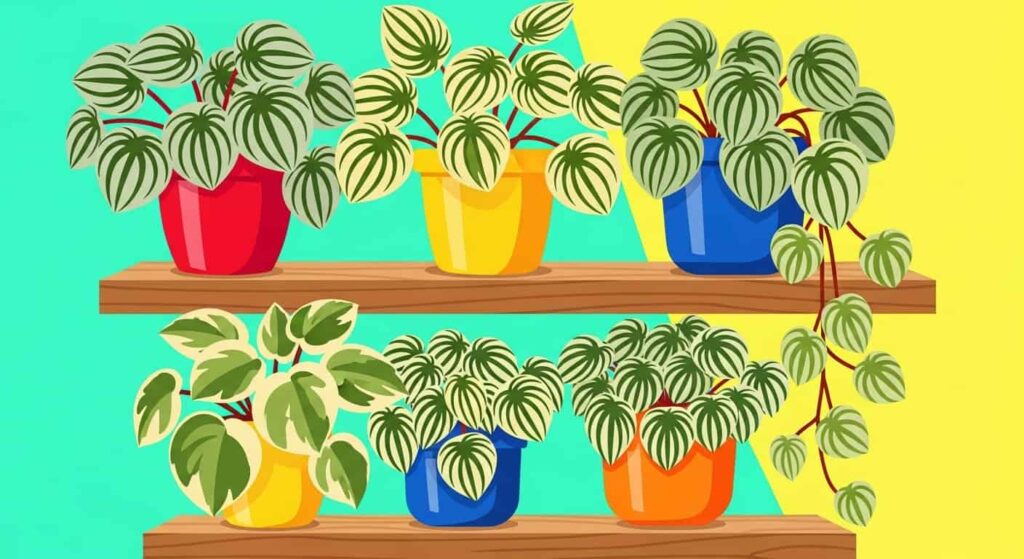
The Peperomia Obtusifolia Variegata is a fantastic addition to any indoor plant collection. Its striking looks and easy-going nature make it a joy to grow. With the right combination of light, water, and soil, your Variegated Pepper Face will flourish for years to come.
Remember that every plant parent’s journey includes a few casualties. Mine certainly did. But with the right knowledge and tools, your Variegated Peperomia will thrive and reward you with beautiful foliage and endless propagation opportunities.
Give this delightful plant a try and watch it bring a touch of tropical beauty into your home.
Leave a Reply