
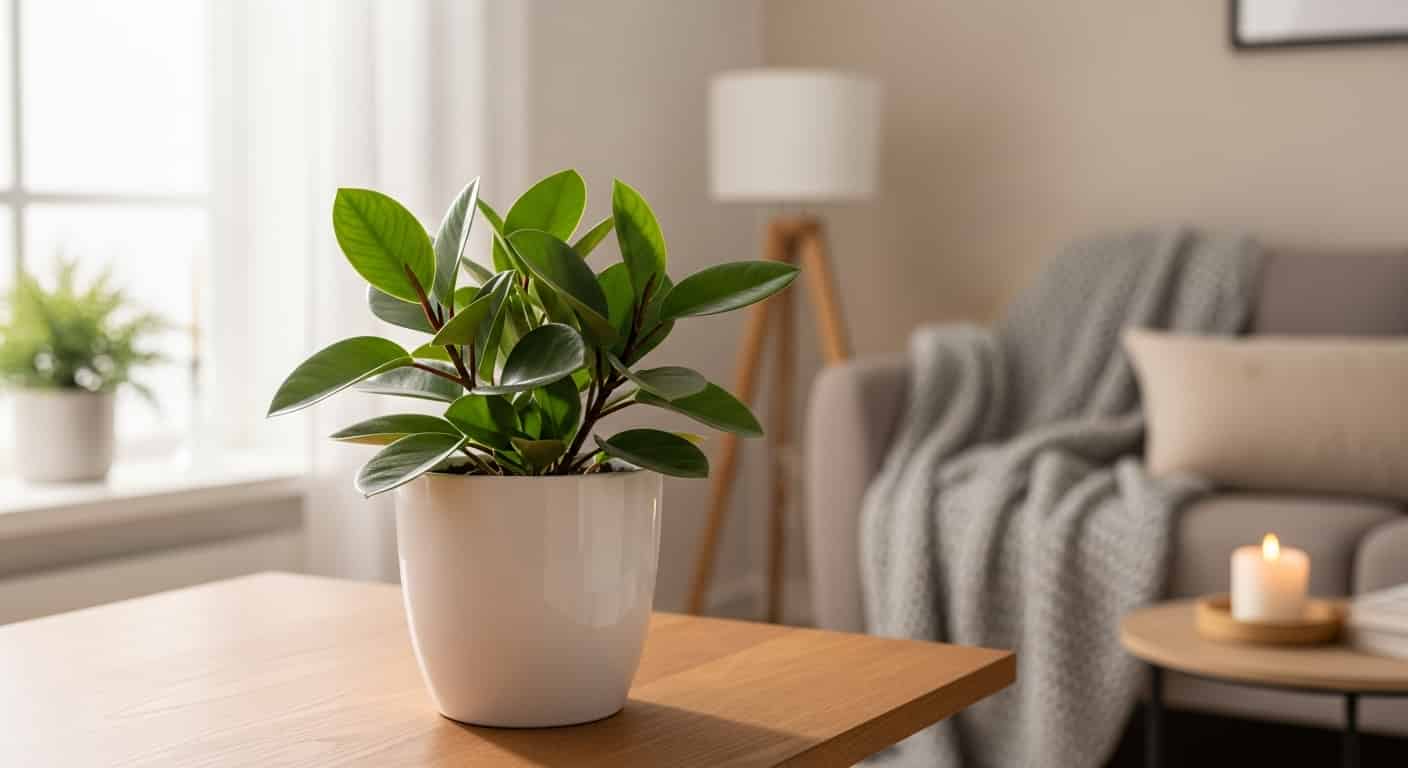
Disclosure: This post contains affiliate links. If you make a purchase through these links, I may earn a small commission at no additional cost to you. I only recommend products I genuinely believe will help your plants thrive during the winter months.
I’ll never forget the winter I almost killed my favorite Peperomia.
There I was, proud plant parent, watering on autopilot just like I did in summer. Then came the yellow leaves. Then the mushy stems. By the time I realized what was happening, root rot had taken hold, and I spent an hour at my kitchen table with scissors and a desperate hope, trimming away blackened roots and repotting in fresh soil.
That was eight winters ago. These days, my Peperomia collection has grown to over a dozen plants, and they sail through the cold months with glossy leaves and zero drama. The difference? I learned that winter care isn’t about doing more—it’s about doing less, but smarter.
If you’re reading this because your beloved Baby Rubber Plant is looking a bit sad as temperatures drop, you’re in the right place. This guide will walk you through exactly how to keep your Peperomia Obtusifolia thriving through winter, based on years of hands-on experience and a fair share of mistakes along the way.
First, Let’s Understand Your Plant
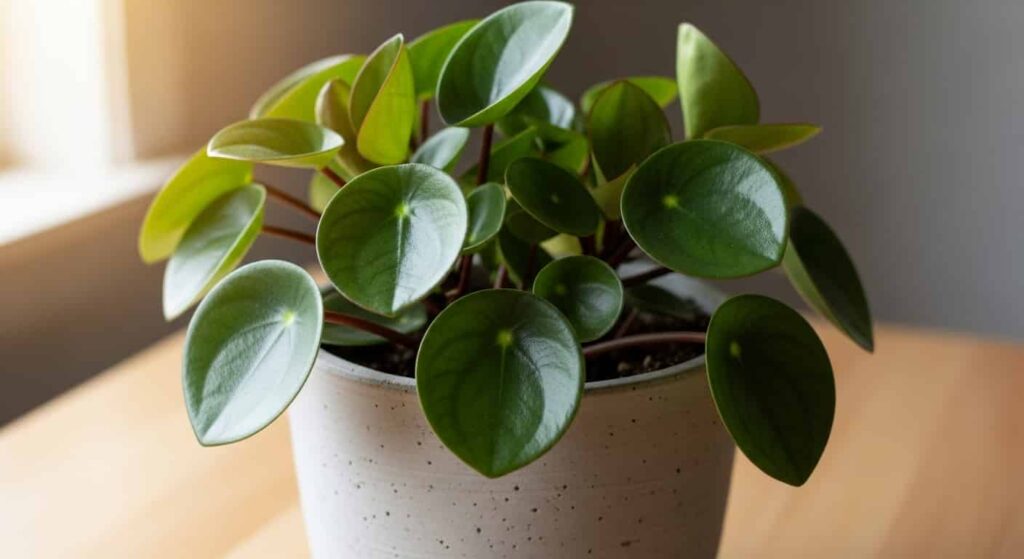
Before we dive into winter specifics, let’s talk about what makes your Peperomia Obtusifolia tick. These charming plants—often called Baby Rubber Plants or Pepperface Plants—hail from tropical regions of South America. According to the University of Florida IFAS Extension, Peperomias are epiphytes that naturally grow in tropical forest understories, which explains their preference for consistent humidity and well-draining soil.
What Your Plant Needs (In a Nutshell)
- Light: Bright, indirect light. Those thick, succulent-like leaves can handle some direct morning sun, but harsh afternoon rays will scorch them.
- Water: This is crucial—your Peperomia stores water in its thick leaves, making it naturally drought-tolerant. The golden rule? Let the soil dry out between waterings.
- Temperature: 65-75°F (18-24°C) is the sweet spot. These tropical natives hate cold drafts.
- Humidity: They crave 40-50% humidity. Think “tropical understory,” not “desert.”
- Soil: Well-draining, airy soil is non-negotiable. Standard potting mix alone is too heavy.
Why Winter Is Different (And What Changes)
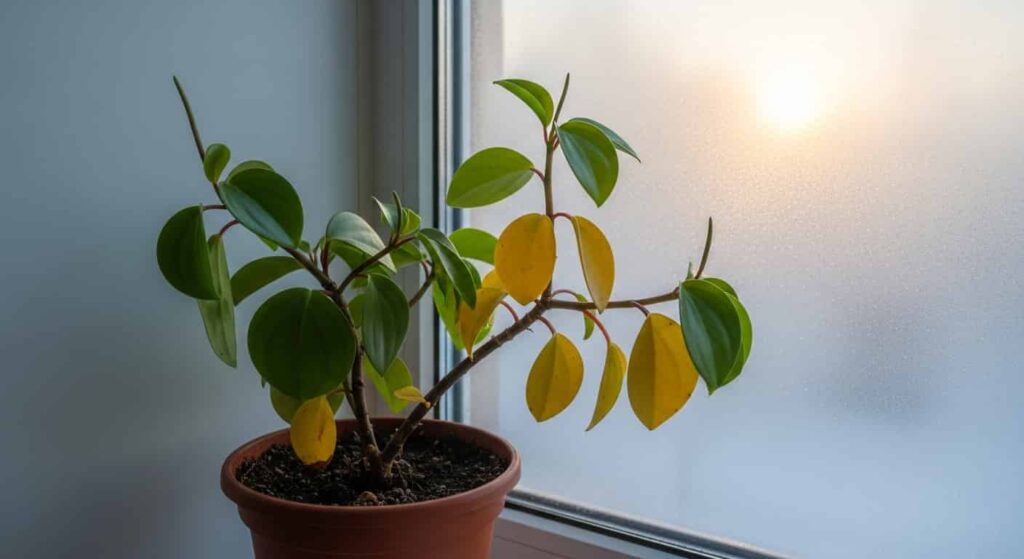
Winter throws three major curveballs at your Peperomia Obtusifolia. Understanding these helps you adjust your care proactively rather than reactively.
1. The Light Problem
Shorter days and weaker sunlight mean your plant gets significantly less light than it did in summer. According to research from the Missouri Botanical Garden, light intensity drops by up to 50% during winter months in northern climates. This triggers slower growth and can cause leaves to lose some vibrancy.
2. The Humidity Challenge
Here’s the irony: while it’s snowing outside, your indoor air is drier than a desert. Heating systems suck moisture out of the air, often dropping humidity below 30%. For a tropical plant that evolved in humid forests, this is stressful. Low humidity often shows up as brown leaf tips or edges.
3. Temperature Rollercoasters
Cold drafts from windows and doors, combined with blasts of dry heat from vents, create temperature swings that stress your plant. As houseplant expert Darryl Cheng of House Plant Journal notes, “Plants don’t mind gradual temperature changes, but sudden fluctuations can trigger stress responses like leaf drop.”
4. Slower Metabolism
Your Peperomia Obtusifolia naturally slows its growth during winter—it’s a survival strategy, not a problem. But this means it needs less water and absolutely no fertilizer until spring.
Essential Winter Care Tips That Actually Work
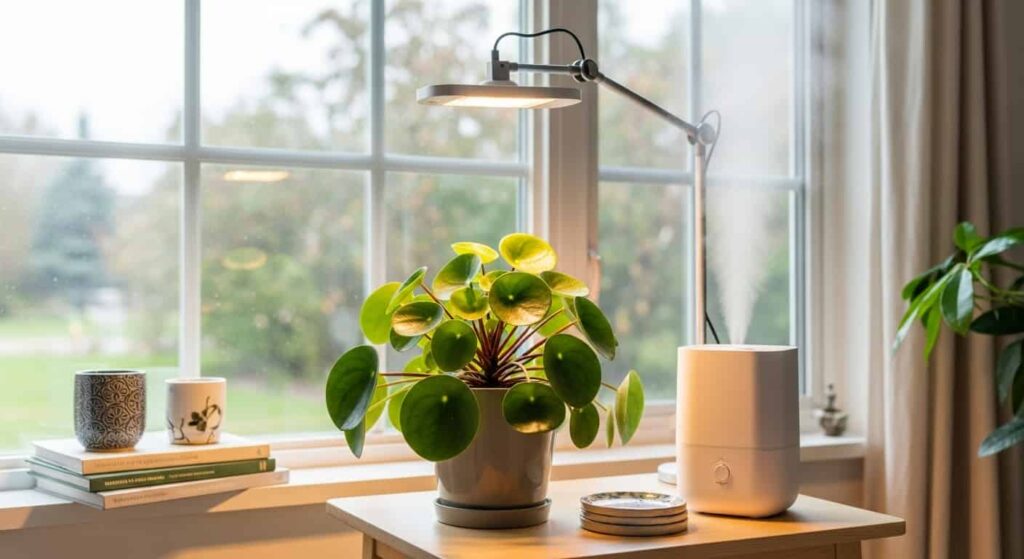
Now let’s get practical. Here’s exactly how to adjust your care routine, based on what I’ve learned through years of trial and error.
💧 1. Rethink Your Watering Schedule
This is where most plant parents get into trouble. I know because I was one of them.
During winter, your Peperomia Obtusifolia enters what horticulturists call semi-dormancy. Think of it as your plant taking a well-deserved rest after summer’s active growth. Its metabolism slows down significantly, which means it simply isn’t thirsty the way it was in July.
The Golden Rule: Water less frequently than in summer, allowing the soil to dry out more between waterings. I check soil moisture every 7-10 days rather than following a strict schedule.
How to Know If You’re Doing It Right
Signs of proper watering:
- Leaves feel firm and plump to the touch
- Soil an inch below the surface feels slightly moist, never wet
- The pot feels lighter than right after watering
Warning signs of overwatering:
- Yellowing lower leaves 🟡
- Soft, mushy stems
- A musty smell from the soil
- Fungus gnats hovering around the pot
My Secret Weapon: A Moisture Meter
I’ll be honest—I killed two perfectly good Peperomias before I invested in a moisture meter. Now I never guess.
The XLUX Soil Moisture Meter is my go-to recommendation. No batteries needed, instant readings, and the color-coded dial makes it impossible to misinterpret. For larger pots (anything over 8 inches), the XLUX Long Probe version reaches deeper soil where moisture can hide. And if you’re looking for a budget option that still does the job, the Censinda Soil Moisture Meter works perfectly for smaller containers.
☀️ 2. Bring On the Light
First, move your plant to your brightest window—south-facing is usually best during winter. But if your home is like my 1920s apartment with tiny windows, natural light alone won’t cut it.
Grow lights aren’t just for serious hydroponic setups anymore. They’re affordable, effective, and the single biggest difference-maker in my winter plant care routine.
The FECiDA 1200W Equivalent LED Grow Light is what I use on my larger plant shelf. It’s dimmable from 0-100%, features full spectrum including UV-IR, and has a quiet cooling fan that doesn’t bother me when I’m working nearby. Plus, you can daisy-chain multiple lights if you have a whole collection to support.
For smaller spaces or single plants, the Aokrean Small Halo Grow Light is wonderfully versatile. It adjusts from 6.5 to 26 inches tall, offers three spectrum modes, and includes an auto timer—perfect for a desk plant or small shelf.
Another crowd-favorite is the LEOTER Gooseneck Grow Light —with over 12,000 positive reviews, it’s trusted for good reason. The flexible gooseneck lets me direct light exactly where needed, and the 10 dimmable levels give precise control.
Pro tip: Pair your grow light with a timer for consistency. I use the BN-LINK 8 Outlet Surge Protector with Mechanical Timer —four timed outlets, four always-on outlets. For more precise control, the BN-LINK Indoor Digital Timer Outlet offers 7-day programming and even has a random vacation mode that turns lights on and off while you’re away (great for fooling plant sitters).
Don’t forget to rotate your plant weekly. This ensures even light exposure and prevents that awkward lean toward the window.
💦 3. Boost That Humidity
Remember how I said heating systems dry out indoor air? Let me give you a real example: last winter, I measured my apartment’s humidity at 22% in January. That’s drier than Death Valley. No wonder my plants were suffering.
You have several options to combat this, from simple to high-tech.
The simple solution: A pebble tray. Fill a tray with water and pebbles, then set your pot on top. As water evaporates, it creates a humid microclimate right around your plant. Pinkunn Bonsai Humidity Trays are perfect for this—they’re designed to hold water without risking root rot.
The high-tech solution: A humidifier. The Dreo Smart Humidifier is honestly a game-changer. Its 4-liter tank runs for up to 36 hours, operates at a whisper-quiet 28 dB, and covers rooms up to 300 square feet. I control mine via app, and the built-in hygrometer automatically maintains my desired humidity level. Set it and forget it.
How to know if you need more humidity: Get a hygrometer. The DOQAUS Digital Hygrometer updates every 5 seconds and features a comfort indicator with smiley faces—genius for quickly seeing if conditions are ideal. Want to monitor multiple rooms? The Govee Bluetooth Hygrometer 3-Pack connects to your phone, sends alerts if humidity drops, and stores data for up to two years. For professional-grade accuracy, the SMARTRO SC42 Digital Hygrometer uses built-in Swiss sensors.
One important note: Avoid misting leaves directly in winter. Cool, wet leaves in low-light conditions can invite fungal problems. Focus on ambient humidity instead.
🌡️ 4. Watch the Temperature
Your Peperomia Obtusifolia hates surprises—especially cold ones. Keep it away from heating vents, radiators, and drafty windows. Aim for consistent temperatures between 65-70°F if possible.
If your home gets chilly at night, move plants away from windows where temperatures drop after sunset. I learned this the hard way when I lost a plant to a cold snap near a drafty window.
For extra protection during cold spells, consider a seedling heat mat. The BN-LINK Durable Seedling Heat Mat 2-Pack is waterproof and gently raises root zone temperature 10-20°F above ambient air—perfect for keeping roots cozy without heating the whole room. The Higoro 2-Pack Seedling Heat Mat offers similar performance with an auto shut-off feature. For a single mat, the AUPETEK Seedling Heat Mat is reliable and easy to clean.
Common Winter Problems (And How I Fix Them)
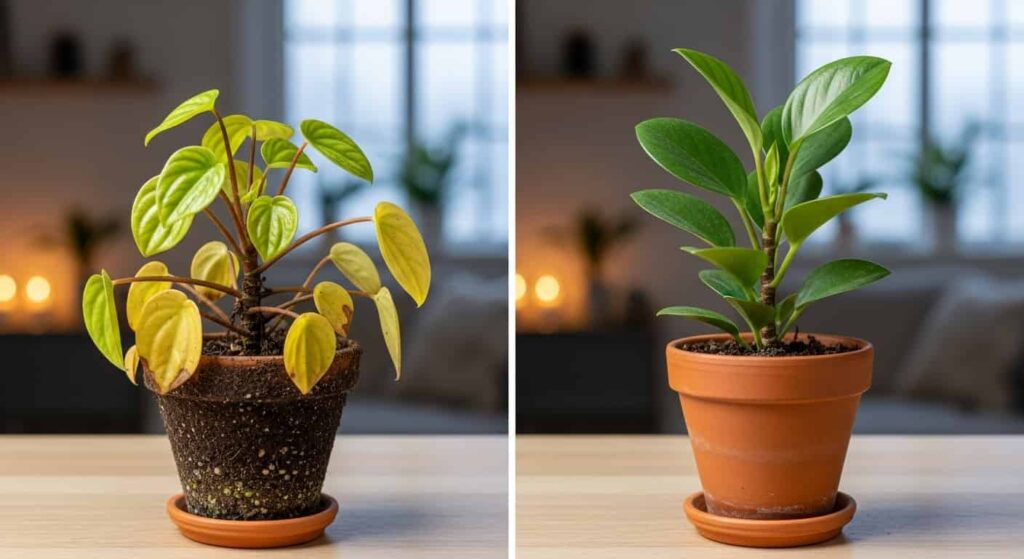
Even with the best care, winter can bring challenges. Here’s what to watch for and how to respond based on what’s worked for me.
🌱 Overwatering and Root Rot
The #1 winter killer. Cooler temps + wet soil = root rot. Watch for yellowing leaves, soft black roots, and a musty smell from the soil.
If you spot root rot: Act fast. Remove the plant, trim away all black/mushy roots with clean scissors, and repot in fresh, well-draining soil. Don’t water for at least a week afterward. I’ve saved several plants this way—it’s stressful but often successful if caught early.
🍂 Leaf Drop
If your plant suddenly drops leaves, check three things: temperature (drafts?), watering (too much or too little?), and light (not enough?). A few dropped leaves can be normal, but a shower of them means something’s wrong.
🐛 Pesky Pests
Dry indoor air and stressed plants attract spider mites and mealybugs. Check regularly for tiny webs, white cotton-like spots, or small moving insects.
For minor infestations, HARRIS Neem Oil Spray for Plants is my go-to. It’s ready-to-use (no mixing required), cold-pressed, and effective against common pests while also giving leaves a nice shine. Just spray directly on affected areas.
🌿 Slow or Stopped Growth
Don’t panic if your Peperomia Obtusifolia seems to pause growth during winter. This dormancy is completely normal. Do not fertilize during this time—your plant can’t process nutrients effectively and you risk burning the roots. Wait until you see new growth in spring (usually March or April) before resuming regular feeding.
When to Ignore This Advice
This is important, so please read it:
Every home is different. If you keep your home unusually warm (above 75°F) in winter, your plant may need more frequent watering. If you have grow lights running 14 hours a day, your plant may not enter full dormancy. If you live in a naturally humid climate like the Pacific Northwest, you may need less humidity support.
Always observe your plant and adjust based on its specific environment. The best advice I ever received was from a veteran plant grower who told me, “Your plant will tell you what it needs—you just have to learn to listen.”
Looking Ahead: Spring Preparation
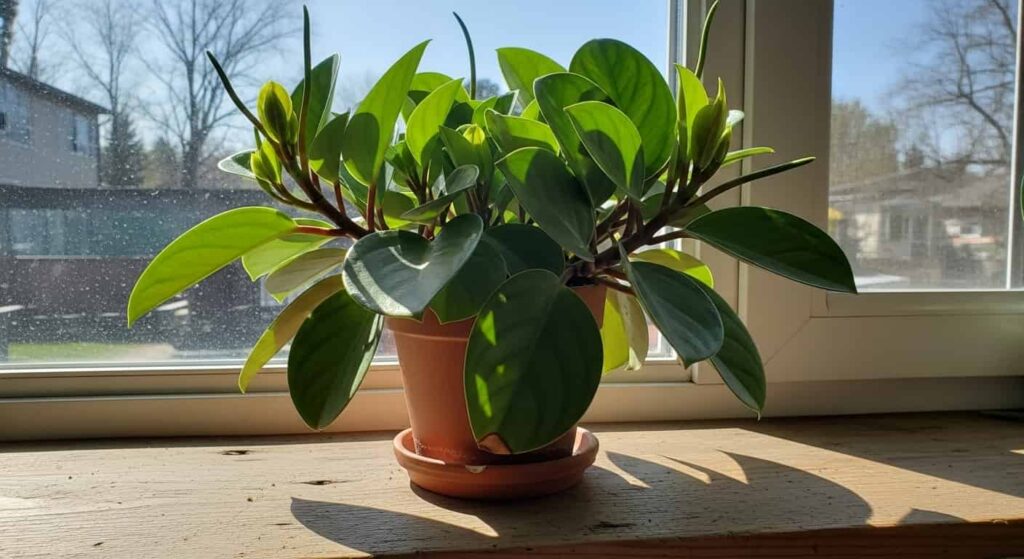
Winter care isn’t just about survival—it’s about setting the stage for spring success. As days lengthen and temperatures warm, you’ll notice signs that dormancy is ending: new leaf buds, faster drying soil, and an overall perkier appearance.
When you see these signs, gradually increase watering and start thinking about repotting if needed. Spring is the perfect time to refresh soil and give roots room to grow.
For repotting, I recommend Better-Gro Special Orchid Mix —it provides the chunky, well-draining structure Peperomia roots love. You can also amend existing soil with MDPQT Horticultural Perlite or Voulosimi Organic Perlite to improve drainage and aeration. Both are excellent investments that will last through many repotting sessions.
Your Plant Will Thank You
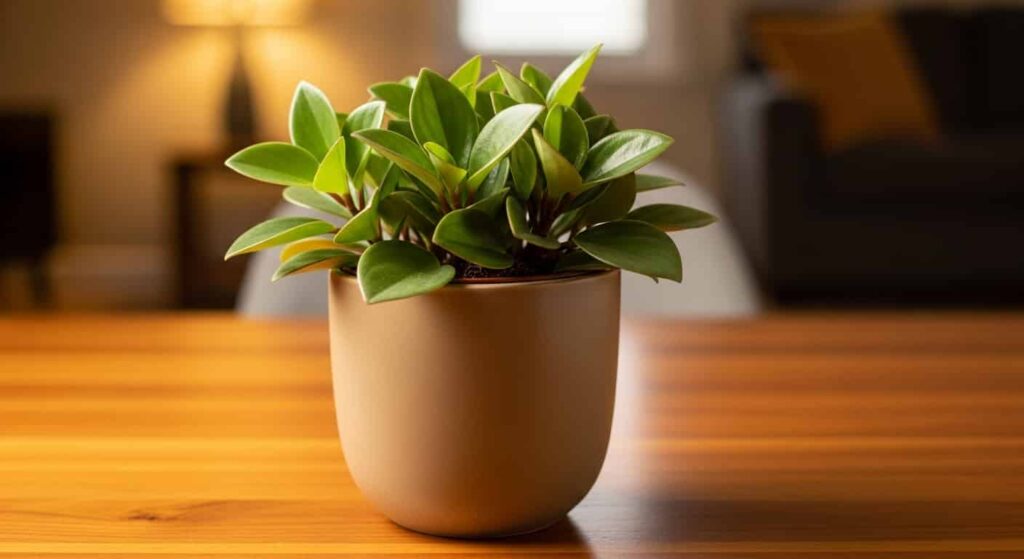
Here’s the thing about Peperomia Obtusifolia winter care: it’s not complicated, but it does require paying attention. Water less, light more, boost humidity, and watch for problems before they escalate.
Remember that less is often more during winter. Your plant’s slower metabolism means it needs gentler care. Resist the urge to overwater or overfeed. Trust your plant—it knows what it’s doing.
With these indoor plant tips, you’ll enjoy healthy green leaves through winter and robust growth when spring returns. Your Baby Rubber Plant will emerge from the cold months ready to thrive in the brighter, warmer days ahead.
Leave a Reply