Best Pots for Peperomia: Size, Material and Drainage
Peperomia pots need three things regardless of material: at least one drainage hole, a diameter only 2–3 cm larger than the current root ball, and a match to the grower's own watering tendency. Unglazed terracotta is the default recommendation — its porous clay walls passively wick excess moisture, improving root-zone aeration by an estimated 30–40% compared to non-porous plastic or glazed ceramic. But that same wicking action dries the substrate faster, so a grower who already under-waters is better matched to plastic. For decorative ceramic pots without drainage, use the cachepot method: keep the plant in a plastic nursery liner and place it inside the ceramic container.
Most growers underestimate the role of the container in their plant's health. The pot is not just a vessel—it is a dynamic component of the substrate system. Its material controls evaporation rate, its size determines how long the soil stays wet after watering, and its drainage capacity is the final variable standing between a healthy root zone and an anaerobic rot pocket. For Peperomia obtusifolia, which has a fine, shallow root system adapted to the fast-draining substrates of tropical forest floors, container selection is as consequential as soil composition.
1. Peperomia Pots: The Root Biology
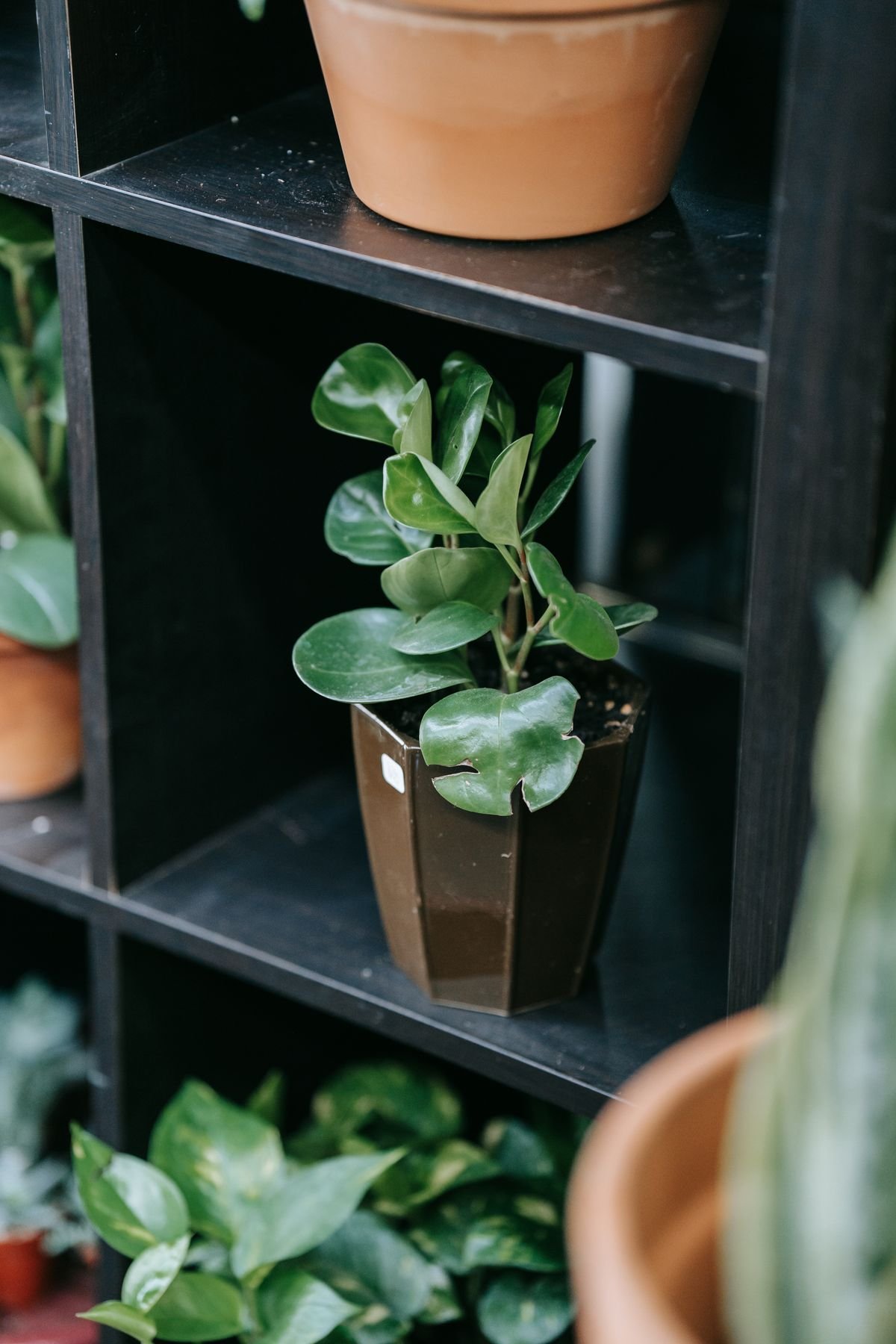
Peperomia obtusifolia is a facultative epiphyte. In its native habitat across Venezuela, Colombia, and Ecuador, its root system clings to the surface of tree bark and decomposing organic matter — environments that are characterised by rapid water transit and high oxygen availability. The roots are fine, thready, and shallow, never designed to sit in accumulated moisture.
In a container, this biology has a direct implication: the soil must dry from the bottom up within 5–7 days of watering. If it does not, the fine root hairs begin to break down in the anaerobic conditions, and the plant enters a decline that manifests first as wilting and then as sudden leaf drop. The NC State Extension Gardener Plant Toolbox entry for Peperomia obtusifolia confirms the species requires "well-drained" media — a requirement that your container must actively support, alongside a substrate actually built for that drainage rate; see the soil mix recipe for the exact ratio this guide assumes throughout.
A pot cannot compensate for a moisture-retentive substrate, and a well-built substrate cannot compensate for a container with no drainage hole — the two variables interact rather than substitute for each other, which is why a grower who fixes only one of them often sees no improvement at all.
Your pot choice either accelerates or retards this drying process. It is the first variable to get right.
2. The Snug Fit Rule: Pot Size and the Wet Soil Trap
Before comparing materials, the correct pot size must be established. An oversized container is one of the most common causes of root rot regardless of material quality.
The Mathematics of Excess Moisture
If a Peperomia's root ball occupies 40% of the pot volume, the remaining 60% is unoccupied substrate that holds moisture with no roots nearby to absorb it. That moisture will remain in the soil for days or weeks, creating the anaerobic conditions that drive root rot. The plant's surface leaves dry out from the ambient air while the lower root zone is drowning. This is why a plant can show simultaneous "wilting" (from root dysfunction) and "dry-looking" upper soil — a pattern that confuses growers into adding more water.
The Rule: Select a pot that is only 2–3 cm (approx. 1 inch) larger in diameter than the plant's current root ball. Peperomia obtusifolia actually grows more vigorously when slightly root-bound, as this ensures the entire substrate volume dries quickly after each watering.
Depth Matters Too
Avoid deep, tall pots. Peperomia's root system is shallow and lateral, rarely extending more than 10–12 cm below the surface. Deep pots accumulate moisture in the lower third, which the root system never reaches, creating a permanent perched water zone even in well-draining soil.
3. Material Comparison: Terracotta vs. Plastic vs. Ceramic
Nebraska Extension's guide to choosing a container for houseplants identifies container porosity — and matching it to the grower's own watering habit — as the primary variable affecting root zone health, consistent with the material comparisons below.
Terracotta: The Default, Not a Universal Rule
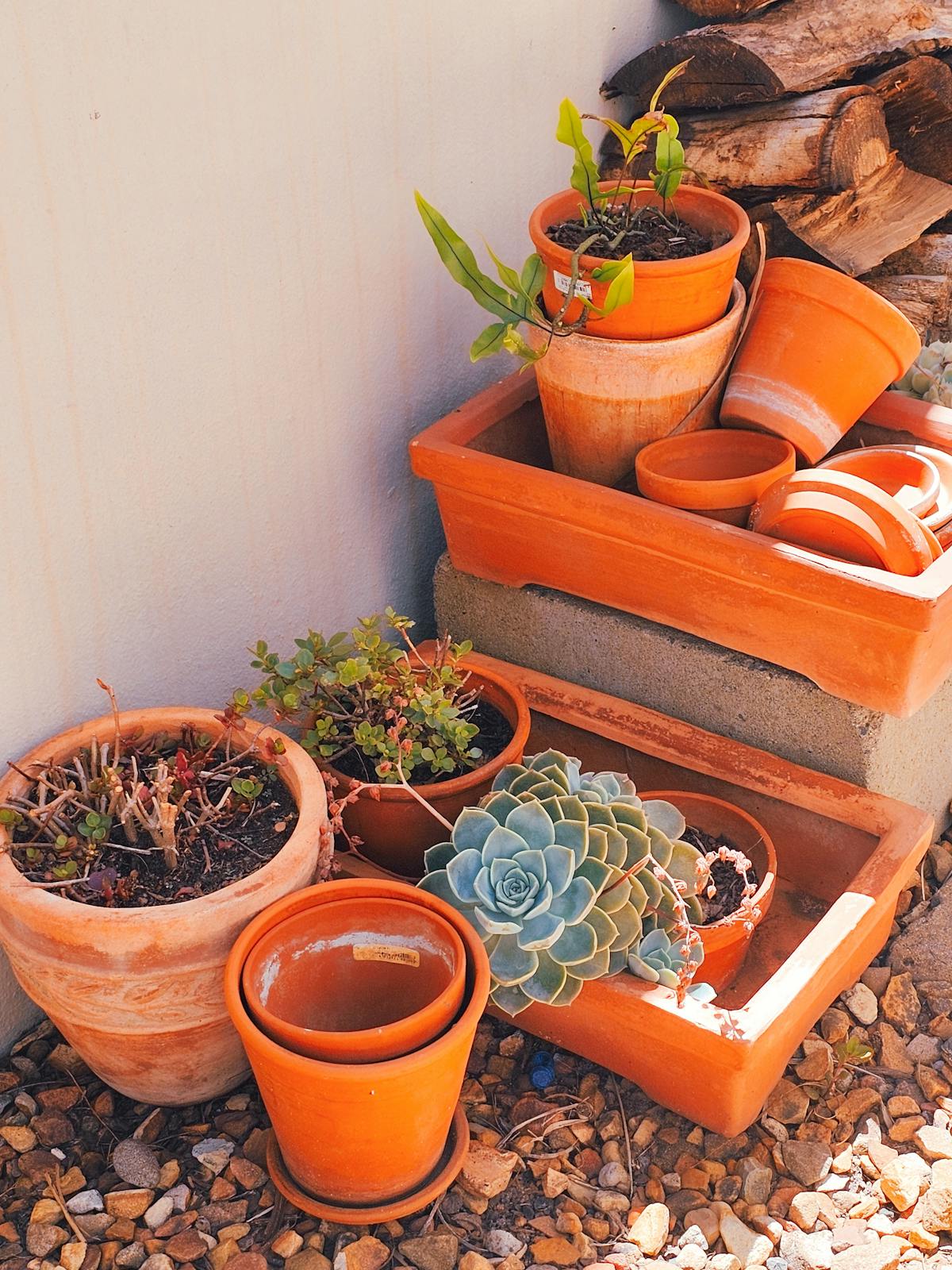
Unglazed terracotta is fired clay with a porous microstructure that passively wicks moisture from the substrate and admits oxygen through the same pores, aerating the root zone between waterings. This is the mechanism behind terracotta's reputation as the "gold standard" pot material — but the same porosity that protects an over-waterer works against an under-waterer, drying the substrate 20–30% faster than plastic in summer or air-conditioned rooms.
- Best For: Beginners, growers with a history of overwatering, high-humidity rooms.
- Best avoided by: Growers who already under-water, or very dry rooms — use the weight test, not visual checks, to calibrate either way.
Peperomia obtusifolia in terracotta: three things worth knowing.
- The white crust is normal. Water moving out through the clay walls evaporates on the outside surface and leaves behind the minerals it was carrying, from tap water and fertiliser. The result is a white or grey crust (efflorescence) on the outside of the pot. It does not hurt the plant and can be scrubbed off with a stiff brush and a little vinegar. It does not mean the pot has removed salts from the root zone, though; salts still build up in the substrate and still need flushing out. The white crust guide covers how.
- Clay keeps roots slightly cooler. Water evaporating from the pot wall draws heat away from the substrate, so a terracotta pot tends to run a little cooler than a plastic one in the same spot. On a warm windowsill this is a small but real advantage.
- Colour matters more than material in direct sun. A dark plastic pot sitting in sun absorbs heat and can warm the root zone noticeably. If a plant has to sit in a sunny window, a light-coloured pot or terracotta is the safer choice.
Plastic: The Lightweight Alternative
Plastic is a non-porous, inert material that retains 100% of substrate moisture, releasing it only through the drainage hole or surface evaporation.
- Best For: Experienced growers with precise watering routines, hanging baskets where pot weight is a concern, and under-waterers who need the substrate to hold moisture longer.
- Consideration: With no passive moisture regulation, a single overwater event in a plastic pot has no recovery mechanism — the entire substrate column must dry through the drainage hole alone, which can take 2–3x longer than in terracotta. Compensate with a substrate carrying a minimum of 30% perlite.
Glazed Ceramic: Aesthetics Over Function
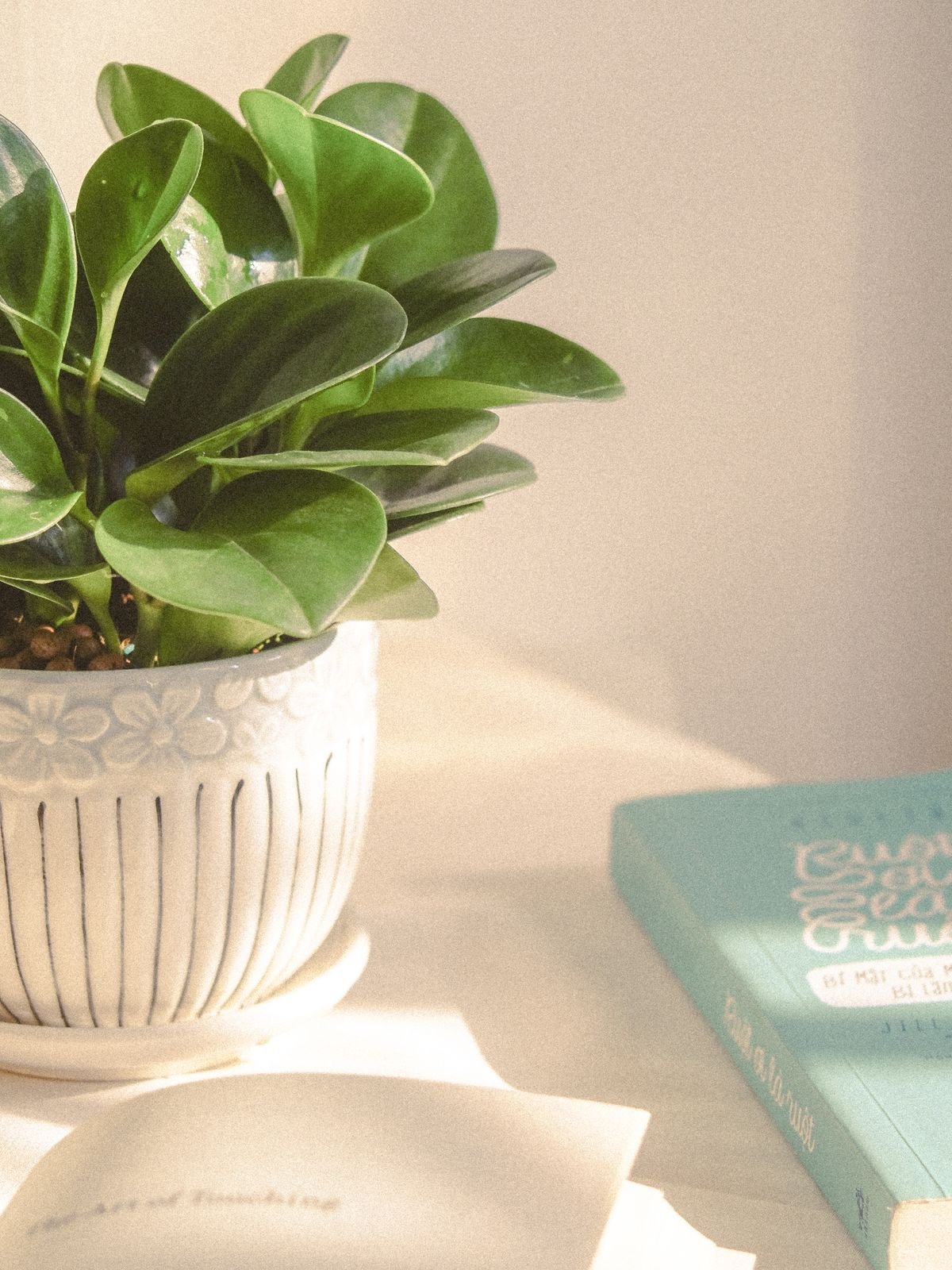
Glazed ceramic behaves like plastic — the glaze seals the porous clay surface, eliminating the passive moisture wicking that makes unglazed terracotta valuable. Ceramic pots are often heavy, frequently sold without drainage holes, and carry the same overwatering risk as plastic.
- Best For: Use as a cachepot (see below), never as a direct planting vessel without a drainage hole.
- When It Works: If the ceramic pot has a drainage hole and you pair it with a well-draining substrate, it functions identically to a plastic pot of the same size.
LECA and Semi-Hydroponic Planters
A growing segment of the plant community is moving toward LECA (Lightweight Expanded Clay Aggregate) semi-hydroponic setups. In this system, roots grow into individual clay balls rather than substrate, sitting just above a water reservoir. The Royal Horticultural Society's Peperomia plant guide recommends moderately moist, well-drained conditions — and LECA systems can achieve this when the water level is kept below the pot's bottom inch. This is an advanced technique that eliminates the substrate entirely but requires careful monitoring; the full setup, nutrient solution requirements, and reservoir maintenance are covered in the LECA guide rather than here, since a cachepot-style outer container is still the norm even in semi-hydroponic setups.
4. Drainage: The Non-Negotiable Variable
Drainage holes are not optional. A container without a drainage hole functions as a reservoir: water accumulates at the base, the substrate above it becomes saturated, and root rot is a near-certainty within 4–6 weeks.
The Perched Water Table Myth
Many older care guides recommend placing a layer of gravel, rocks, or broken pottery at the base of the pot to "improve drainage." This is demonstrably counter-productive. The mechanism is this: water does not move freely from a fine-textured medium (substrate) into a coarse medium (rocks) until the substrate is 100% saturated. The gravel layer does not improve drainage — it simply elevates the saturation zone, moving it closer to the root ball. This is the definition of a perched water table, and it worsens root rot risk compared to a plain pot with drainage holes alone.
The correct solution is a well-composed substrate, not a layer of rocks. The fine inorganic particles (perlite, pumice) distributed throughout the growing medium accelerate drainage far more effectively than a segregated gravel layer at the base.
A pot and substrate combination that stays wet for the wrong reasons often shows up on the foliage well before the roots are inspected — dark, sunken lesions on the leaves are a common downstream sign of exactly this failure mode. If that symptom is already present, see the black spots guide for cause-by-cause diagnosis rather than assuming the pot alone explains it.
5. The Cachepot Method: Decorative Beauty Without Root Risk
The cachepot system is the practical compromise between aesthetic preference and plant health. It involves two containers:
- The Inner Liner: A plastic nursery pot (which always has drainage holes) containing the plant and its substrate. This is the functional container.
- The Outer Cachepot: A decorative ceramic, concrete, or glazed vessel with no drainage hole. This is purely aesthetic.
The Protocol:
- Pot your Peperomia in the appropriate-sized plastic liner.
- Place the liner inside the decorative cachepot.
- When watering, lift the liner out, carry it to the sink, water thoroughly, and allow it to drain for 10–15 minutes.
- Return the drained liner to the cachepot. Place a small layer of pebbles inside the cachepot base so the liner never sits in residual drain water.
This system gives you the full flexibility of decorative containers without compromising the plant's drainage requirements.
6. Repotting Timing: Reading the Root Signals
Even in the correct container, Peperomia obtusifolia will eventually outgrow its pot. Signs that a size increase is needed:
- Roots are visibly emerging from the drainage holes and cannot be pushed back.
- The plant's growth rate has stalled for more than one full growing season despite adequate light and nutrition.
- The substrate dries completely within 24–48 hours of watering, even with a correct mix — this indicates the root ball has fully colonised the available space.
These three are a starting checklist, not the complete picture — the full seven-sign inspection, including root-bound checks that do not require unpotting the plant, is covered in the repotting signs guide.
When repotting, move up only one size (2–3 cm in diameter). Never skip sizes. For the step-by-step method, timing, and substrate refresh protocol, see the Repotting Guide.
Conclusion
The right peperomia pots are matched to the grower's watering habit and the room's humidity, not chosen from a universal rule. The container is the physical frame of your plant's root environment: sized 2–3 cm larger than the root ball, fitted with at least one drainage hole, and made from a material — unglazed terracotta by default, plastic for under-waterers — that regulates moisture in the direction your watering habit needs correcting. Pair it with a well-draining substrate and a weight-based watering protocol, and the "silent killer" of root rot becomes a manageable risk rather than an inevitable outcome.
Care FAQ
Does my Peperomia pot need a drainage hole?
Yes — this is non-negotiable. Without a drainage hole, water pools at the base of the pot, creating an anaerobic zone where root rot bacteria thrive. If you love a decorative pot without a hole, use it as a cachepot with a plastic nursery liner that you remove to water and drain.
Is terracotta better than plastic for Peperomia?
Terracotta is the default recommendation for most growers. Its porous clay walls act as a passive moisture regulator, wicking excess water from the substrate and improving root-zone aeration by 30–40% compared to plastic — but that same wicking dries the substrate faster, so growers who already under-water are better matched to plastic or a glazed pot.
Can I use a self-watering pot for my Peperomia?
No. Self-watering pots are designed to maintain consistent substrate moisture — the exact opposite of what Peperomia obtusifolia requires. This species needs a defined "dry-down" cycle between waterings. A self-watering reservoir eliminates that cycle entirely, placing the root zone in permanent saturation.
Should I put rocks at the bottom of a pot for drainage?
No. This is a widely repeated myth that is demonstrably harmful. Rocks at the bottom create a "perched water table" — a zone of permanent saturation that rises closer to the root ball. The solution is a well-composed, aerated substrate, not rocks.
Do glazed ceramic pots work for Peperomia obtusifolia?
Yes, provided the pot has a drainage hole. Glaze seals the clay, so a glazed ceramic pot behaves like plastic rather than terracotta: it holds substrate moisture for longer. Match it to a grower who under-waters, and extend the dry-down check to the full top 2-3 cm before re-watering.