
Best Time to Propagate Peperomia: Seasonal Windows Explained
The best time to propagate peperomia (Peperomia obtusifolia) is mid-spring through early summer, when active growth, longer photoperiods, and root-zone temperatures of 22–25 °C shorten the lag between wounding and adventitious root initiation. Year-round indoor propagation is possible, but winter cuttings without supplemental heat and light take longer and lose more often to stem rot while the wound remains unsealed.
Calendar season is a proxy, not the mechanism. Cuttings root when carbohydrate reserves, auxin signalling, and warm substrate coincide. In temperate homes those conditions peak after the spring equinox. The full method comparison lives in the propagate P. obtusifolia guide; this article answers only when to make the cut.
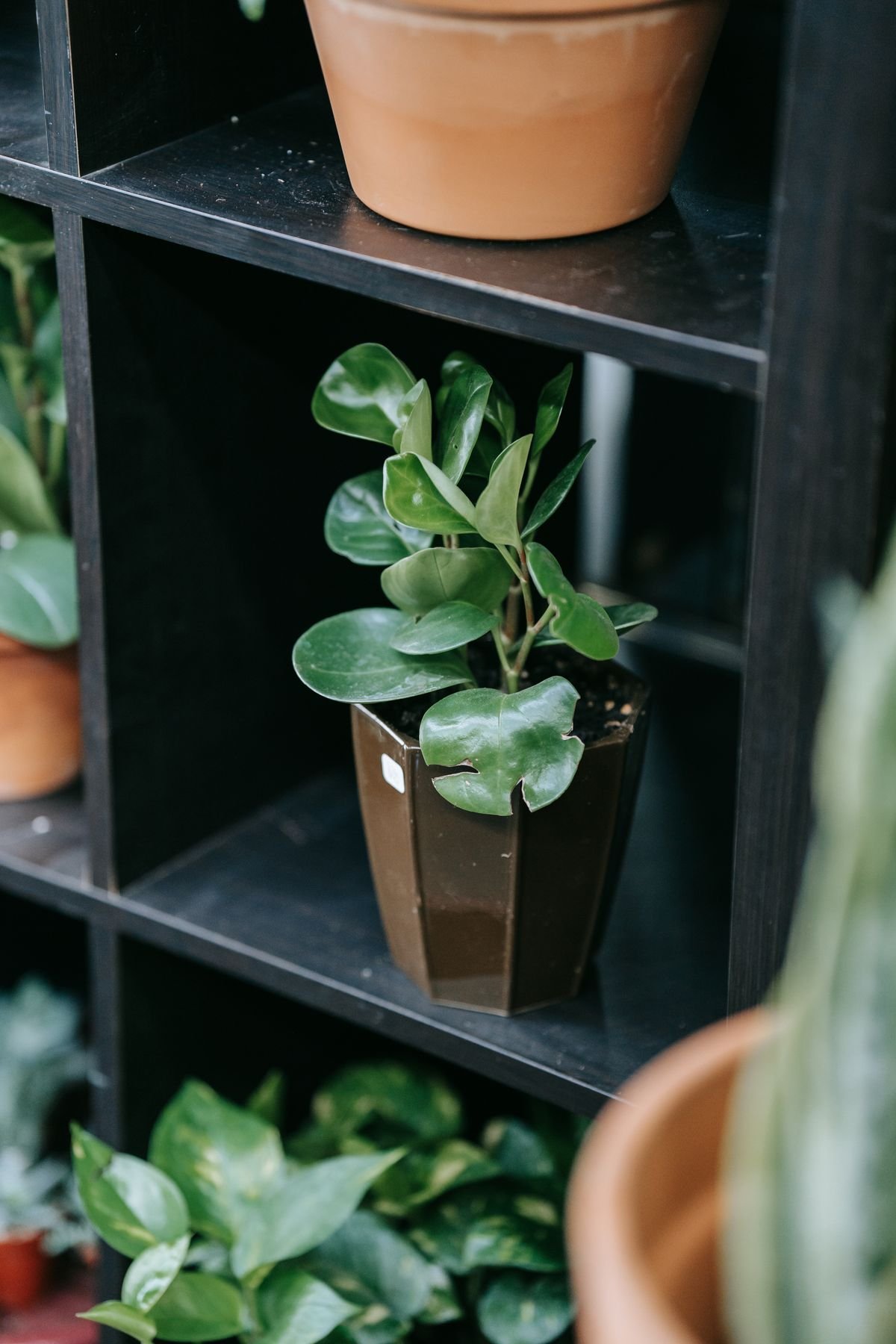
Quick Reference: Seasonal Propagation Windows
| Season (N. hemisphere) | Relative outcome | Typical time to first roots | Dominant risk |
|---|---|---|---|
| Mid-spring–early summer | Highest alignment with 80–95% stem-cutting success | Water 14–28 days; substrate 21–42 days | Overheating above ~28 °C with low RH |
| Late summer | Still workable if heat managed | Similar if root zone held 22–25 °C | Thermal stress; soft tissue collapse |
| Autumn | Moderate; lag lengthens | Often 4–6+ weeks | Falling lux; slower wound sealing |
| Winter (ambient only) | Lowest without intervention | Often 6–8+ weeks | Pathogen rot during long unrooted lag |
Seasonal ranking assumes ambient indoor conditions with no heat mat and no grow light. Peak-season stem cuttings commonly reach 80–95% success with first roots in 14–28 days (water) or 21–42 days (aerated substrate). Species context: facultative epiphyte, Piperaceae; care thresholds in the Missouri Botanical Garden profile and NC State Extension entry.
1. Best Time to Propagate Peperomia: The Spring–Summer Window
The best time to propagate peperomia is the stretch from mid-spring into early summer because three controllable variables move into the optimum band together:
- Light at the leaf — parent tissue near 2,000–4,000 lux supports surplus carbohydrate for wound repair and root initiation. Below ~800–1,000 lux, cuttings inherit depleted reserves.
- Root-zone temperature — 22–25 °C accelerates cell division at the node. Ambient air at 18 °C with a cold windowsill tray is not the same as a warm medium.
- Photoperiod — lengthening days reduce the metabolic slowdown described in the dormancy guide. Semi-dormant parents do not donate vigorous cuttings.
The standard advice — wait for spring — is directionally correct for ambient homes, and incomplete. Spring is useful because it usually delivers lux and warmth; a dim, cold April sill is not an automatic green light. Measure conditions, then cut.
The RHS Peperomia growing guide likewise places softwood cuttings in spring and summer — the horticultural consensus matches the physiology.
2. Why Autumn and Winter Slow Rooting
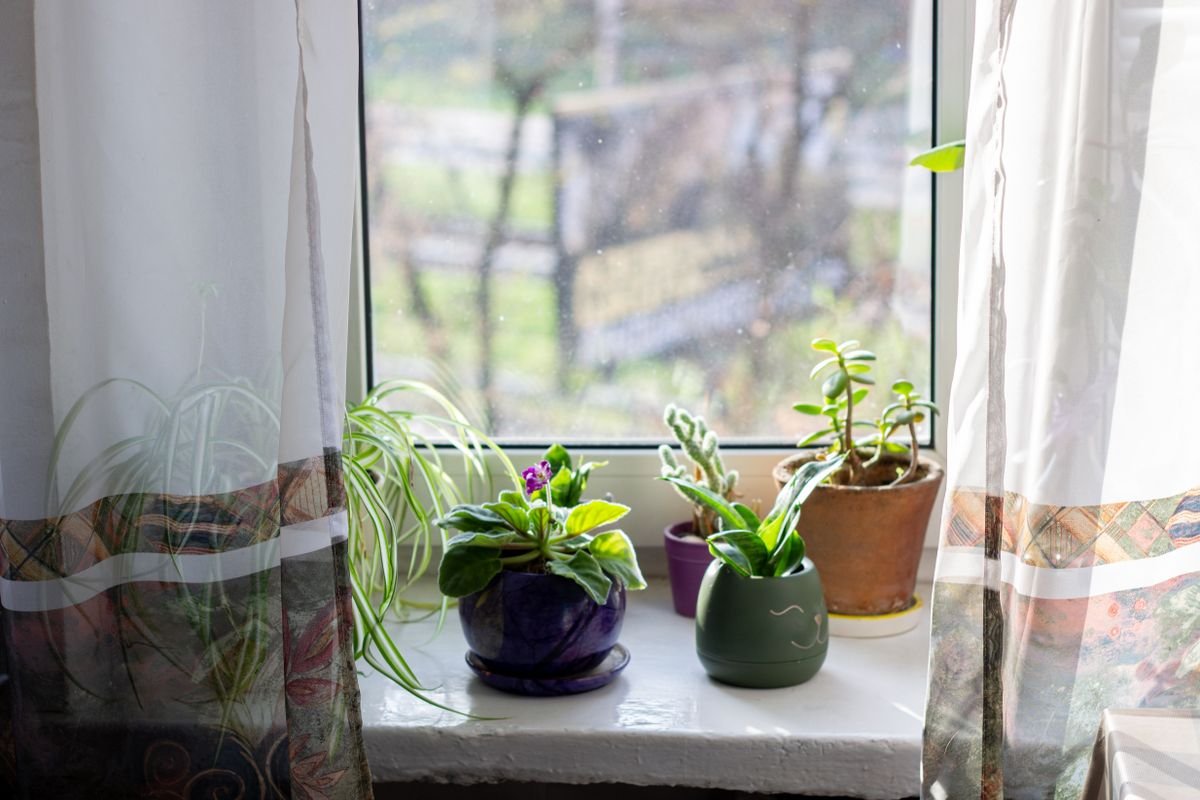
Shorter days and lower sun angles drop indoor light toward or below the species' tolerated minimum. Growth rate on established plants falls to near zero from roughly November–February in temperate homes. A cutting taken then faces a longer unrooted interval.
During that lag:
- The wound stays open longer, so bacterial and fungal colonisation have more time to win.
- Heated indoor air often sits below 30% RH, raising vapour-pressure deficit on leaves that cannot yet replace water through roots.
- Substrate that feels "fine" at 24 °C becomes risky at 15 °C because metabolism — not microbes — slows first.
Temperature floors matter as much as day length. Below about 18 °C ambient, adventitious root initiation slows sharply; sustained exposure near 10 °C risks cellular damage in tropical tissue. The commonly cited indoor floor of ~18 °C (65 °F) is this metabolic threshold, not an arbitrary preference.
Humidity strategy also shifts by season. In spring, a lightly moist aerated medium plus room RH near 40–60% is often enough. In winter houses at 20–30% RH, an unrooted cutting loses water through the cuticle faster than it can replace it — hence the vented humidity dome in off-season protocols, not because peperomia is a high-humidity rainforest obligate year-round.
Autumn is intermediate: still workable if you start early, hold 2,000+ lux, and keep the root zone warm. Mid-winter ambient propagation is the failure mode most often mislabelled as "peperomia is hard to root."
3. Winter Propagation: When You Must Override the Calendar
Broken stems, rescue cuts from root rot, and rare cultivar salvage do not wait for April. Winter propagation is feasible when you reconstruct spring physically:
| Signal to restore | Target |
|---|---|
| Bottom heat | ~24 °C at the medium |
| Photoperiod + intensity | ~14 hours at ≥2,500 lux |
| Humidity around the cutting | 70–80% RH under a vented dome |
| Hormone (optional) | IBA only as backup; not a heat/light substitute |
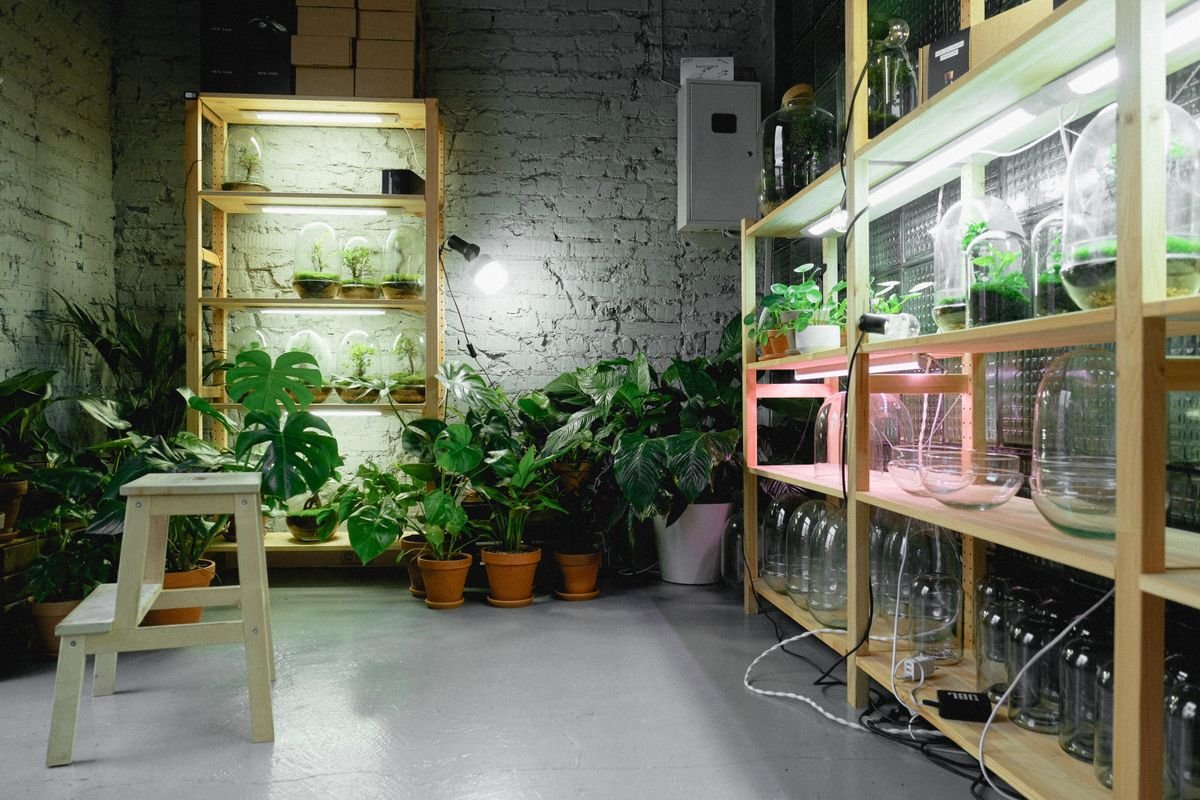
In practice this means moving the whole propagation setup away from the natural winter environment rather than trying to compensate for it in place: a seedling heat mat under the propagation vessel restores the root-zone warmth a cold windowsill can't provide, a full-spectrum grow light on a timer restores the missing photoperiod, and something as simple as an inverted clear cup or a vented plastic bag over the cutting holds humidity around the leaf without sealing it airtight — cracking the cover for a few minutes daily still matters, since a fully sealed dome invites the same rot risk a stagnant, overly wet setup causes at any time of year. Rooting hormone is a reasonable extra edge in this scenario specifically, though it remains optional insurance rather than a substitute for the heat and light above. If cuttings collapse into mush before roots appear despite this setup, diagnose with the why peperomia cuttings rot guide rather than taking more material from the same stressed parent.
4. Parent Plant Readiness Before You Cut
Timing includes the state of the donor, not only the month.
Do not take cuttings when the parent shows:
- Sustained light below ~1,000 lux with elongated internodes (etiolation — weak carbohydrate stores).
- Active mealybugs, thrips, or soft stem tissue.
- Recent overwatering with sour substrate or collapsing lower leaves.
- Heavy variegation loss from chronic light deficit on chimeric cultivars.
Prefer stems with firm, glossy leaves, short internodes, and at least one healthy node. For variegated forms, cut stem sections that already show the desired pattern; leaf cuttings regenerate from layers that usually produce all-green plantlets — covered in the methods guide and variegated leaf propagation.
5. Hemisphere Calendar and Method Timing Notes
Northern hemisphere default: plan primary batches March–June (local climate adjusted). Pause ambient-only batches November–February unless heat and light are controlled.
Southern hemisphere default: shift the same physiological window to September–December.
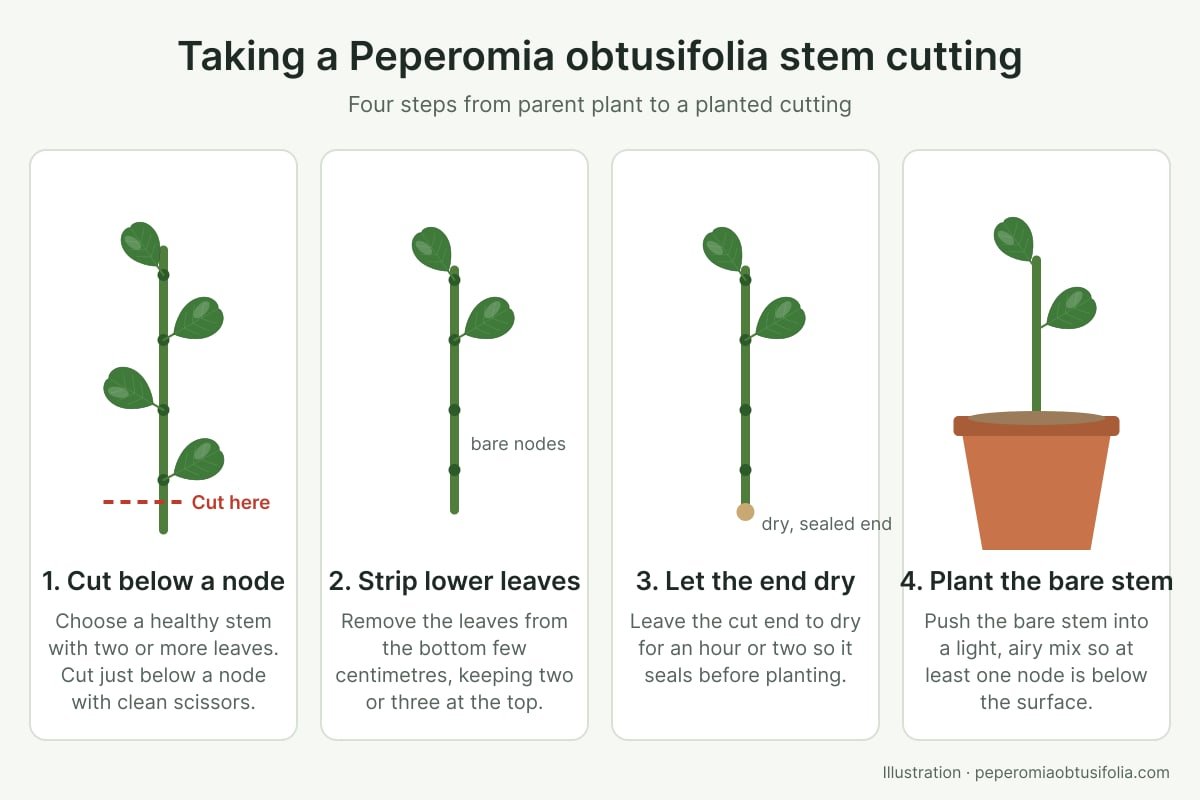
How to know the window has worked. In water, look for white primary roots 1–2 cm long before potting up — usually inside 14–28 days in season. In substrate, a gentle tug that meets resistance at 3–4 weeks is the field test; new leaf expansion at 4–6 weeks confirms the root system is supplying the shoot. If six weeks pass in spring with no resistance and the stem base is still firm, raise root-zone temperature and lux before discarding the cutting. Soft, darkened tissue at the base means rot won the lag — cut again from healthier material rather than waiting longer.
Method does not change the preferred season, only the timeline once you cut:
- Stem tip in substrate — fastest reliable structure; best matched to the spring window.
- Water stem cuttings — visible roots in 14–28 days in season; still transfer before roots become long and brittle.
- Leaf + petiole — slower year-round; avoid as the primary plan for variegates.
- Division — best at spring repotting, when the plant is already exiting slow growth.
Rooting hormone is optional in season. Site position: P. obtusifolia roots without it; see the powder vs gel rooting hormone guide only if you need the winter edge case.
6. When Not to Propagate — Even in Spring
Spring is not a blank cheque.
Skip or delay if:
- Room temperature exceeds ~28 °C with RH below 40% (high VPD desiccates unrooted cuttings).
- You cannot hold the cutting at ≥2,000 lux without direct sun scorch (>40,000 lux unfiltered).
- The only available stems are flowering spikes with little vegetative node tissue.
- You need the parent intact for display and have no spare node — wait rather than strip a sparse plant.
Taking four cuttings from one underlit specimen in "perfect May" still fails. Season opens the window; parent health and environment decide whether roots form inside it.
Conclusion
The best time to propagate peperomia remains mid-spring to early summer, when light, warmth, and parent vigour align with the species' highest stem-cutting success band. Autumn lengthens the wait; winter ambient conditions raise rot risk during a long unrooted lag. Override the calendar only when you can hold ~24 °C at the medium and a long, bright photoperiod — then follow the dedicated winter protocol rather than repeating failed ambient cuts. Choose the season first, confirm the parent is fit to donate tissue, then use the four-method propagation guide for the cut itself.
Care FAQ
When is the best time to propagate Peperomia obtusifolia?
Mid-spring through early summer, when day length, leaf-surface light near 2,000–4,000 lux, and root-zone temperatures of 22–25 °C coincide with peak meristematic activity. Stem cuttings then typically show roots in 14–28 days in water or 21–42 days in aerated substrate.
Can you propagate Peperomia in winter?
Yes, but only if you replace the missing environmental signals. Without supplemental light and bottom heat, winter cuttings sit unrooted longer and face higher stem-rot risk. With a heat mat near 24 °C and 14-hour photoperiods at ≥2,500 lux, rooting can approach growing-season timelines.
How long do Peperomia cuttings take to root?
In the active season, water-rooted stem cuttings usually show primary roots in 14–28 days; substrate stem cuttings take 21–42 days. Leaf cuttings need 28–56 days to root and months for a plantlet. Outside the active season, expect the same methods to take longer unless heat and light are controlled.
Do I need rooting hormone for Peperomia?
Not in peak season. P. obtusifolia roots readily without hormone (stem cuttings commonly reach 80–95% success). IBA is optional insurance in winter or on stressed material, not a substitute for adequate warmth and light.
Should I propagate variegated Peperomia at a different time of year?
Use the same seasonal window, but take stem cuttings with variegated nodes — not leaf cuttings, which usually revert to green. Variegated tissue needs at least 30–40% more light than all-green forms, so winter attempts without grow lights fail more often.