Best Window for Peperomia: Direction and Distance
The best window for peperomia (Peperomia obtusifolia) in a northern-hemisphere home is usually east-facing: cool morning sun plus bright light that commonly lands in the 2,000–4,000 lux optimum without afternoon heat load. South and west exposures work if the plant sits roughly 1.5–2 metres back from unfiltered glass or behind a sheer curtain. North windows support survival near the sill but rarely fuel compact growth — and in the southern hemisphere the high-sun wall is north, not south.
Window direction is a map of intensity and heat, not a decoration preference. P. obtusifolia is a facultative epiphyte from neotropical understorey; indoors it needs measured photons at the leaf, not a vague “bright room.” Full photon-flux and DLI detail lives in the light requirements guide; this article ranks compass orientations and placement distance.
Quick Reference: Best Window for Peperomia by Direction
Northern-hemisphere defaults (flip high-sun vs low-sun walls in the southern hemisphere — see Section 5):
| Direction | Typical role | Starting placement | Main risk |
|---|---|---|---|
| East | Best default | Sill or within ~0.5 m | Rare morning heat in midsummer; still verify lux |
| South | High energy | 1.5–2 m back or sheer on sill | Scorch; cold glass in winter if pot touches pane |
| West | Hot afternoon | 1.5–2 m back or sheer | Thermal stress + high VPD when room is already warm |
| North | Low, stable | On the sill only | Sub-1,000 lux a metre back; reversion in variegates |
Targets from site thresholds: optimum 2,000–4,000 lux; tolerated minimum 800–1,000 lux; etiolation onset below 800 lux; direct-sun damage risk above 40,000 lux unfiltered. Species notes: NC State Extension, Missouri Botanical Garden.
1. Best Window for Peperomia: East, South, West, North
University extension lighting guidance treats window orientation as a primary indoor predictor — see the University of Illinois houseplant lighting overview. Applied to P. obtusifolia:
East — the default best window for peperomia
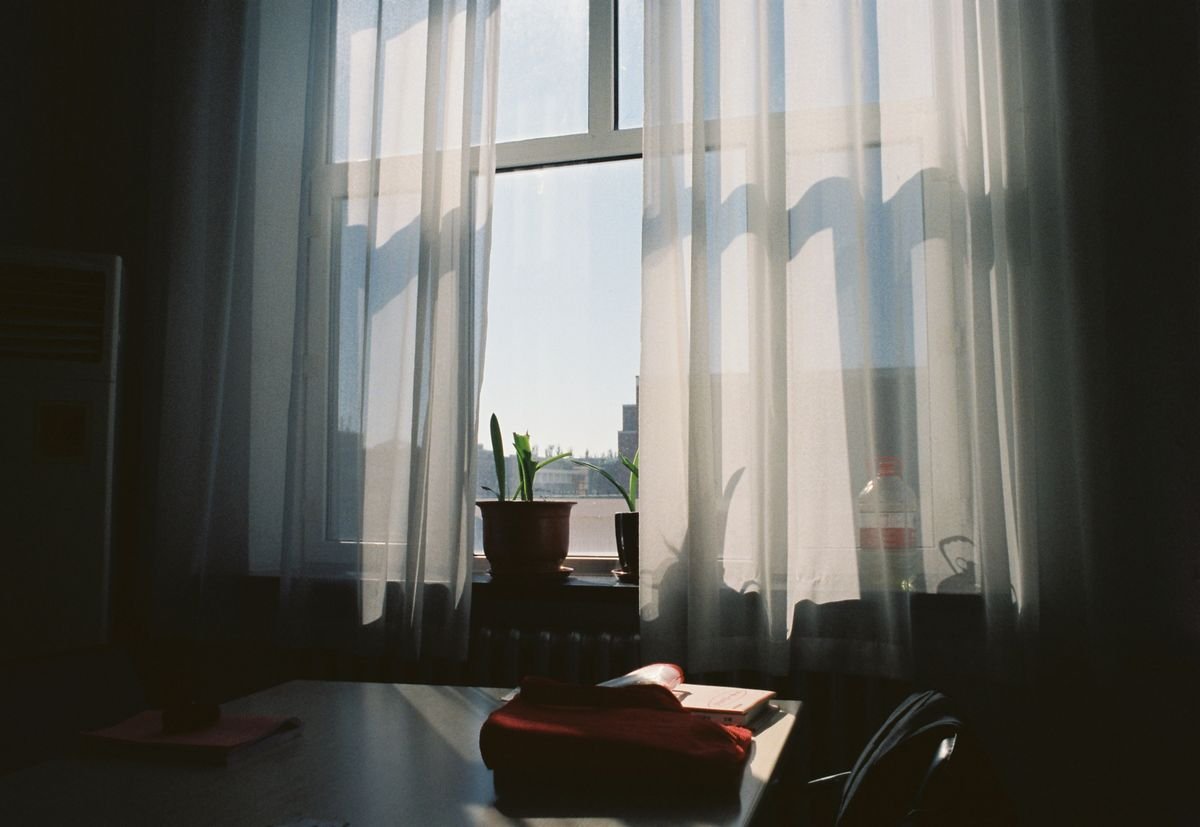
Morning sun is shorter and cooler than afternoon sun. Stomatal gas exchange and carbon uptake start while leaf temperature is still moderate. Place on the sill or within about 0.5 m. Midsummer may require a half-metre setback if leaf edges crisp — confirm with a meter, not assumption.
South — workable power, not a free sill
Unfiltered southern exposure delivers the day’s highest intensity and heat. Use for growth only with distance or diffusion. A sheer curtain converts harsh beams into filtered light; the physics of filtered vs bounced indirect light is covered in filtered vs indirect light. Scorch diagnosis: sunburn treatment.
West — similar intensity, worse heat timing
West light arrives when indoor air is already warm. Transpiration demand rises while root uptake may lag — soft leaves and edge burn appear faster than on an east sill at the same peak lux. Treat west like south: set back or filter.
North — survival shelf, not a growth engine
No direct sun and lower absolute intensity. Keep the pot on the glass line. At ~1 m back, many northern rooms fall below the 800–1,000 lux survival band. Solid green 'Jade' holds longest here; variegated forms lose pattern first.
"Bright indirect light" without a lux number has no diagnostic value. Direction is a hypothesis; the leaf-surface reading is the test.
2. Distance From the Glass: Why Direction Alone Fails
Light from a window aperture falls off steeply with distance — approximated by the inverse-square law for a point-like source. Indoors the window is an extended aperture, but the practical rule still holds: doubling distance from the bright zone cuts usable intensity far more than “half.”
Field pattern:
- Near the glass (0–0.5 m): often thousands of lux on east/south exposures.
- ~1 m back: commonly a large fraction of that intensity is gone.
- ~2–3 m into the room: many “bright” rooms measure hundreds of lux — enough to look pleasant, not enough for compact P. obtusifolia growth.
A plant 3 m from a large south window can etiolate while the owner believes the exposure is “too sunny.” Direction named the wall; distance set the dose. Legginess mechanism and repair: fix leggy peperomia and phototropism / leaning.
3. Green vs Variegated: Same Compass, Different Floor
Chlorophyll density sets the light floor.
- All-green forms ('Jade' and similar) use the full lamina for photosynthesis. They tolerate north sills longer than chimeras.
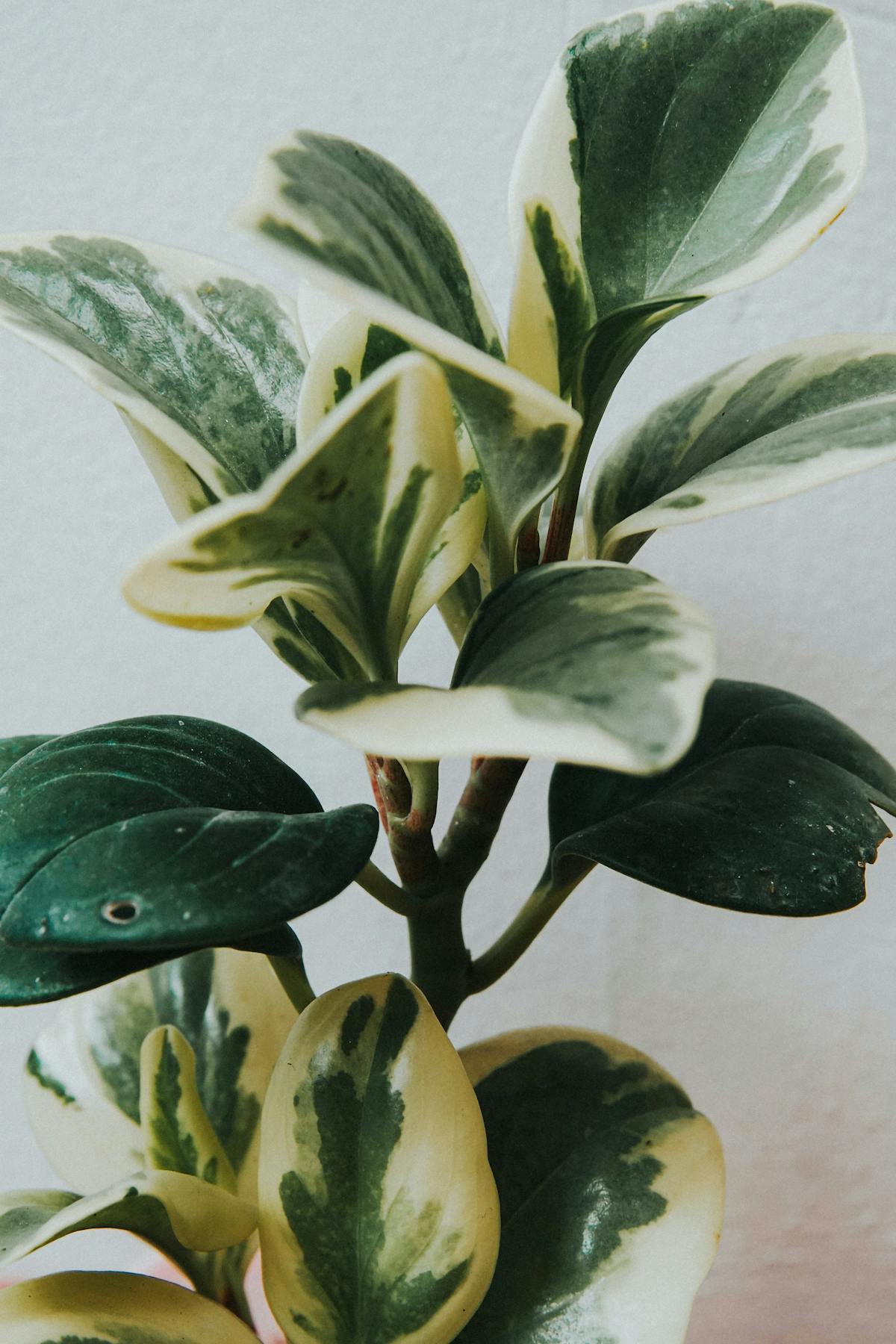
- Variegated forms ('Variegata', 'Marble', 'Albo-Marginata', 'Lemon Lime') carry 30–40% less functional chlorophyll in patterned tissue. They need roughly 30–40% more light than green forms to hold pattern — often the upper half of the 2,000–4,000 lux band or slightly above on the green tissue.
Low light does not “bleach” variegation first; it favours reversion to green meristem output. Full thresholds: variegation light. Do not answer reversion by pushing the plant onto an unfiltered west sill at noon — that substitutes scorch for shade.
4. Seasonal Shift, Dirty Glass, and Cold Panes
The best window for peperomia is not fixed for 12 months.
Winter. Move closer to the glass (without leaf contact on freezing panes). Dust and film on glass can cut a meaningful fraction of already scarce photons — clean inside and out at the seasonal low. Low-E coatings reduce some infrared and UV; if a “bright” new window still reads low PAR/lux at the leaf, supplement with a grow light rather than guessing (grow lights vs sunlight; for fixture choice and mounting distance once you've decided to supplement, see the grow light setup guide).
Summer. The same east sill may run hot. Pull 0.3–0.5 m back or add a sheer. South/west setbacks may need to increase.
Cold glass. Leaf temperature on a winter north or east pane can sit several degrees below room air. Combined with wet substrate, that pairing is a classic oedema trigger — see winter / dormancy context. Keep pots off ice-cold glass even when chasing lux.
5. Hemisphere Flip: When “North” Means High Sun
Compass advice copied from northern-hemisphere blogs fails south of the equator.
| Hemisphere | High-sun wall | Low-sun wall |
|---|---|---|
| Northern | South (and west afternoons) | North |
| Southern | North (and west afternoons) | South |
If you live in Australia, New Zealand, southern Africa, or southern South America, treat “north window” guidance from US/UK sources as the intense exposure — apply the 1.5–2 m / sheer rules — and treat south as the weaker, more stable wall. East remains the gentler morning option in both hemispheres; west remains the hot afternoon risk.
6. How to Confirm the Spot in Ten Minutes
- Measure lux at the leaf surface at the brightest daytime hour you occupy the room.
- Accept the spot if readings sit near 2,000–4,000 lux for growth goals (higher end for variegates).
- If below ~1,000 lux, move toward the glass, change wall, or add a lamp — do not fertilise or water more to “fix” light deficit.
- Watch new internodes over 4–6 weeks: stretch of 1–3 cm with smaller leaves means chronic deficit; bleached papery patches mean excess direct load.
Meter method detail: lux and foot-candles for peperomia.
Conclusion
The best window for peperomia is the one that delivers 2,000–4,000 lux at the leaf with manageable heat — most often an east exposure in northern-hemisphere homes, with south and west usable only at distance or behind diffusion, and north reserved for sill-level survival. Flip high-sun and low-sun walls if you are in the southern hemisphere. Rank direction first, then fix distance, season, and cultivar light floor; measure lux before blaming water or fertiliser for stretch or scorch.
Care FAQ
Which window direction is best for Peperomia obtusifolia?
An east-facing window is the default best window for peperomia in the northern hemisphere. It supplies cool morning sun plus bright light for the rest of the day, typically landing near the 2,000–4,000 lux optimum at the leaf without the afternoon thermal load of unfiltered south or west glass.
Can Peperomia live in a north-facing window?
It can survive if the pot sits on the sill and leaf-surface light stays above about 800–1,000 lux. Growth slows, internodes lengthen, and variegated cultivars are more likely to revert. In the southern hemisphere, north is the high-sun wall — treat it like a northern-hemisphere south window.
How many lux does a Peperomia obtusifolia need?
Optimum is 2,000–4,000 lux at the leaf surface for compact internodes and active growth. Tolerated minimum is roughly 800–1,000 lux. Sustained levels below 800 lux trigger etiolation; unfiltered direct sun above about 40,000 lux risks chloroplast damage and scorch.
Will direct sun kill my Peperomia?
Short morning sun from an east window is usually tolerated and often useful. Prolonged unfiltered afternoon sun from south or west exposures can raise leaf temperature enough to bleach tissue and brown patches. Distance, sheer filtration, or relocation prevents most damage.
How far from a south or west window should Peperomia sit?
As a starting range, place the plant about 1.5–2 metres back from unfiltered south or west glass, or use a sheer curtain on the sill. Verify with a lux reading — direction alone does not guarantee the 2,000–4,000 lux band once distance multiplies the drop-off.