Peperomia Obtusifolia Brown Leaves: 11 Causes & How to Fix Each
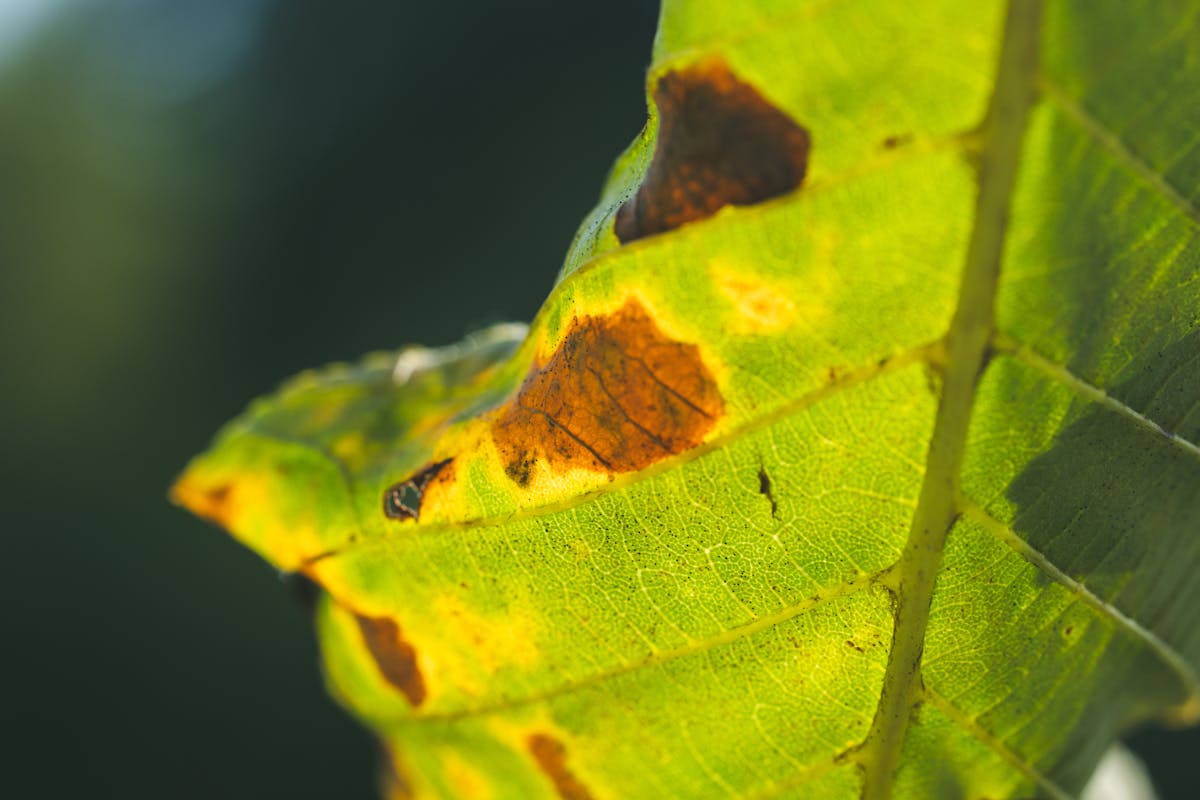
Brown leaves on Peperomia obtusifolia are a cellular distress signal — and the texture, location, and pattern of the browning identify the cause precisely. In botanical terms, all brown discolouration is a form of necrosis: cell death triggered by a specific, identifiable stress. Soft and mushy indicates a fundamentally different problem from crispy and papery, which is different again from pale and bleached.
The short answer: The most common cause is overwatering, which produces soft mushy brown patches that expand over days. The second most common — and the category responsible for almost every "brown tip" complaint — is mineral accumulation from tap water, low ambient humidity, or fertiliser salt burn, each of which produces a distinct pattern at the leaf perimeter. Sunburn produces bleached patches only on the uppermost leaves. Matching the browning type to its cause before applying any treatment is the critical step. The wrong intervention — watering a plant with root rot, restricting water from a plant with salt burn — compounds the problem.
For the foundational care framework that prevents most browning events, see the complete care guide.
Diagnostic Table: Match Your Browning to Its Cause
Before applying any treatment, examine the affected leaves and match what you observe to this table:
| Appearance | Location | Additional Signs | Most Likely Cause |
|---|---|---|---|
| Soft, mushy, expanding patches | Leaf centre or base; lower leaves first | Sour smell from substrate; wilting despite wet mix | Overwatering / Root rot |
| Crispy, dry edges and margins | Leaf perimeter on most leaves | No other symptoms | Low humidity / Transpiration deficit |
| Crispy tips, sharp defined border | Leaf tips across the whole plant | Gradual onset over weeks | Tap water mineral accumulation |
| Pale bleached patches turning papery | Upper leaves nearest the window | Only on sun-exposed leaves | Direct sunlight / Sunburn |
| Sudden marginal browning; limp leaves | Tips and edges; may affect whole leaf | Occurred after cold draught or near heating vent | Temperature stress |
| Puckered, dull leaves before browning | Throughout plant | Very dry substrate; pot very light | Underwatering |
| Brown tips advancing inward | Leaf tips on most leaves | Recent heavy fertilisation; white crust on substrate | Fertiliser salt burn |
| Stippling, bronzing, leaf distortion | Underside of leaves first | Fine webbing; tiny moving dots | Spider mites |
| Circular brown spots, yellow halo | Random placement, multiple leaves | Spots do not expand rapidly | Fungal leaf spot |
| Concentric brown rings | Random placement, multiple leaves | Spots may merge | Ring spot virus |
| Brown patches shortly after repotting | Variable | Occurred within 2–4 weeks of move | Transplant shock |
| Browning on lowest, oldest leaves only | Basal leaves while upper growth is healthy | Leaves drop cleanly | Natural senescence |
A Sub-Diagnostic for Brown Tips: The End-of-Line Vulnerability
Three of the eleven causes — low humidity, tap water minerals, and fertiliser salt burn — present primarily as tip browning. They are confused with each other constantly because the visual outcome is similar. The mechanism behind why tips are vulnerable at all is the same in every case.
P. obtusifolia has thick, semi-succulent leaves served by a vascular system that delivers water from the roots outward through a branching network of veins. The leaf tip is the farthest point from the petiole — the structural end of the line. Whatever stress reduces water delivery, increases water loss, or concentrates a toxic compound in the transpiration stream affects the tip first, because the tip is downstream of every other tissue. The cells at the tip dehydrate, accumulate the highest concentration of dissolved minerals, or simply receive the least replacement water. They die first. The brown advances inward from there.
Distinguishing the three tip causes is a matter of reading the border:
| Tip Browning Signature | Cause | Discriminating Detail |
|---|---|---|
| Crispy, papery, crumbles when touched, soft transition into green | Humidity deficit (Cause 2) | Symmetrical on all leaves; correlates with central heating or winter |
| Sharp dark border, narrow band of brown, gradual onset over weeks | Tap water minerals (Cause 3) | Worse on older specimens; resolves with switch to filtered water |
| Sharp border, faster onset, white crust often visible on substrate | Fertiliser salt burn (Cause 7) | Recent feeding event; concentrated on newest growth |
Each cause's full mechanism and fix is detailed below. The tip border is the discriminator; the substrate inspection confirms.
Cause 1: Overwatering and Root Rot — Mushy, Expanding Brown Lesions
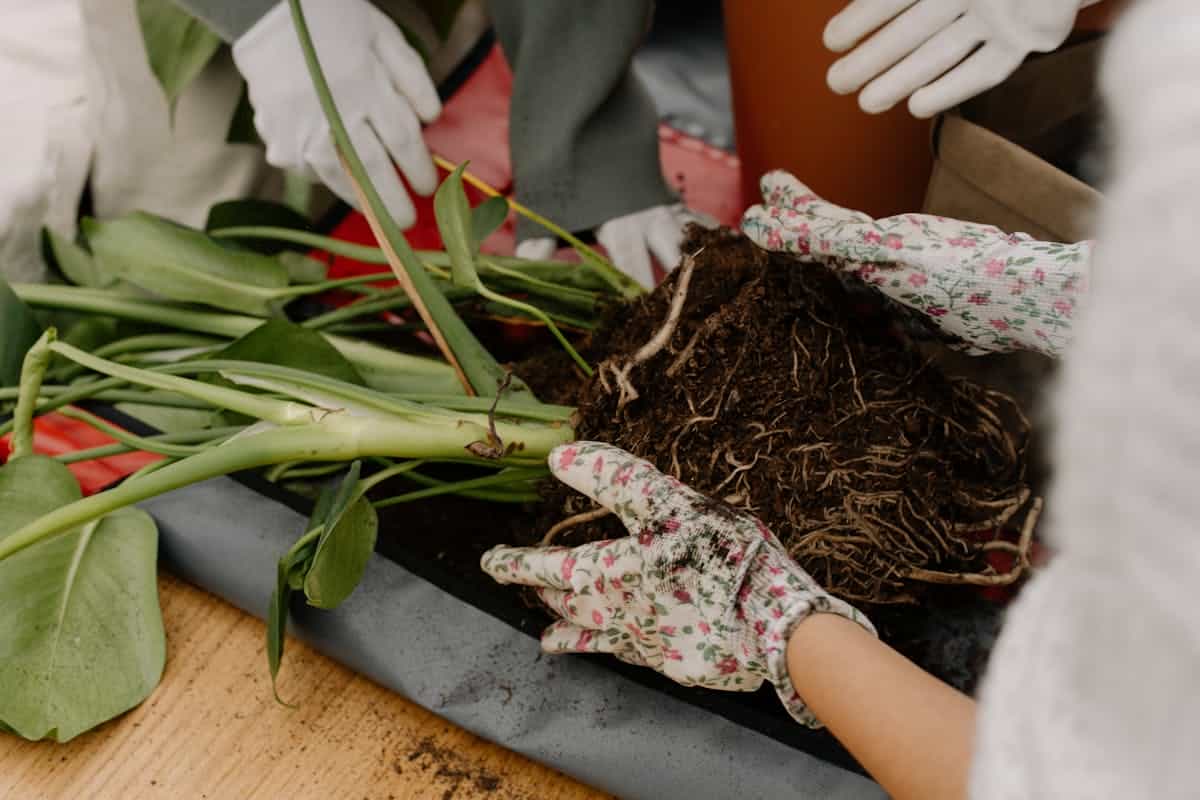
This is the most common cause of browning in container-grown P. obtusifolia, and the most frequently misdiagnosed. When leaves are soft, wet, and collapsing — especially on the lower portion of the plant — the root system is decomposing in an anaerobic substrate.
P. obtusifolia is a facultative epiphyte with a fine, shallow root system adapted to free-draining substrate and intermittent drought. In its native Venezuelan, Colombian, and Ecuadorian forest understorey, the substrate is leaf litter, bark, and rocky outcrops — it dries rapidly between rainfall events. A root system adapted to this environment has no tolerance for prolonged saturation. Substrate that remains continuously wet for more than five days initiates irreversible anaerobic damage to the fine root hairs.
The progression is predictable. Waterlogged substrate displaces oxygen from the mix; roots suffocate and begin to rot; the decomposing root mass produces bacterial pathogens (Pythium, Phytophthora, Fusarium) that secrete cell-wall-dissolving enzymes; those enzymes travel upward through the vascular system and cause leaf cells to collapse. The resulting brown tissue is soft and wet — structurally opposite to the crispy browning produced by environmental desiccation.
A frequent diagnostic case in reader correspondence: a 14 cm plastic pot with standard multipurpose compost begins showing soft, wilted leaves in late October. The grower increases watering frequency from weekly to every four to five days, reasoning that wilting indicates drought. Three weeks later, lower leaves have yellowed and detached. Inspection reveals that the original wilting was caused by root dysfunction from the saturated substrate, not water deficit — additional watering accelerated the damage. The diagnostic key is wilting in wet substrate, not in dry.
A related but distinct presentation is oedema — water-soaked blisters on the underside of older leaves that burst to corky brown patches, triggered by recent watering combined with a sudden temperature drop. Oedema does not progress beyond the initial damage and does not produce a sour-smelling substrate. See the oedema differential guide for distinguishing it from root rot and bacterial leaf spot.
Diagnosis: Press the substrate surface. If it feels wet and compacted, check root condition by gently unpotting. Brown or black roots with a soft, mushy texture and a sour odour confirm root rot. Healthy roots are firm and white-to-tan.
Fix: Unpot immediately. Remove all black, soft, or foul-smelling roots with sterilised scissors. Allow the remaining root ball to air-dry for 30 minutes. Repot into fresh substrate — 50% peat-free compost, 30% perlite, 20% fine bark — in a container only 2–3 cm larger than the surviving root mass. Withhold water for one week. The full triage protocol is in the overwatering rescue guide.
Cause 2: Low Humidity — Crispy Edges From Vapour Pressure Deficit
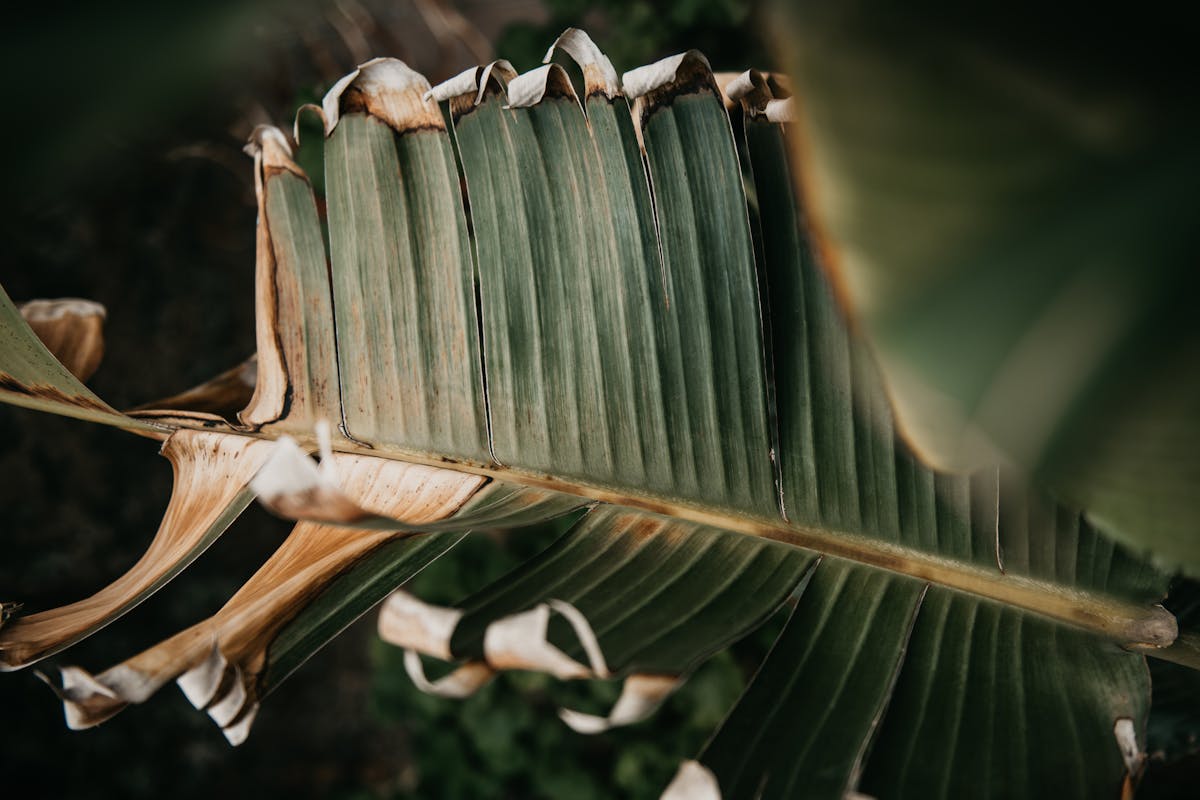
P. obtusifolia leaves lose water vapour continuously through stomata — a process called transpiration. In its native habitat, atmospheric humidity exceeds 60% RH, which moderates the rate of water loss. In a centrally heated indoor environment, particularly in winter, humidity routinely drops below 30% RH. At this point, the vapour pressure difference between the leaf tissue and the surrounding air becomes steep enough that the leaf margins — the farthest point from the root water supply — desiccate faster than the roots can replenish moisture. The edge cells die, producing the characteristic crispy, papery brown border that crumbles when touched.
The species' optimum range is 40–60% RH. Leaf-edge desiccation onset is the risk threshold at <30% RH.
Variegated cultivars — 'Alba', 'Albo-Marginata', 'Variegata' — are markedly more vulnerable to this cause. The white and cream-coloured leaf tissue lacks the protective pigments that reduce water loss in green tissue. Crispy browning appears at the pale margins first and progresses inward faster than in all-green specimens.
Diagnosis: Crispy, papery brown margins on most leaves simultaneously, without any soft or mushy tissue. Symptoms typically worsen in winter when heating systems reduce ambient humidity.
Fix: Use a thermometer-hygrometer to measure actual humidity near the plant — tactile assessment is unreliable. To raise humidity, in descending order of effect: run a room humidifier with a hygrometer; group plants together; place the pot on a pebble tray with water sitting below the drainage holes. Misting is a cosmetic action; it does not alter the fundamental climate of the room, and the 5–15 minute spike in localised RH at the leaf surface returns to ambient before the plant registers it. For the long-form mechanism, see why misting fails for this species. For detailed humidity management, see Peperomia Obtusifolia Humidity.
Cause 3: Tap Water Mineral Accumulation — Sharp-Bordered Brown Tips
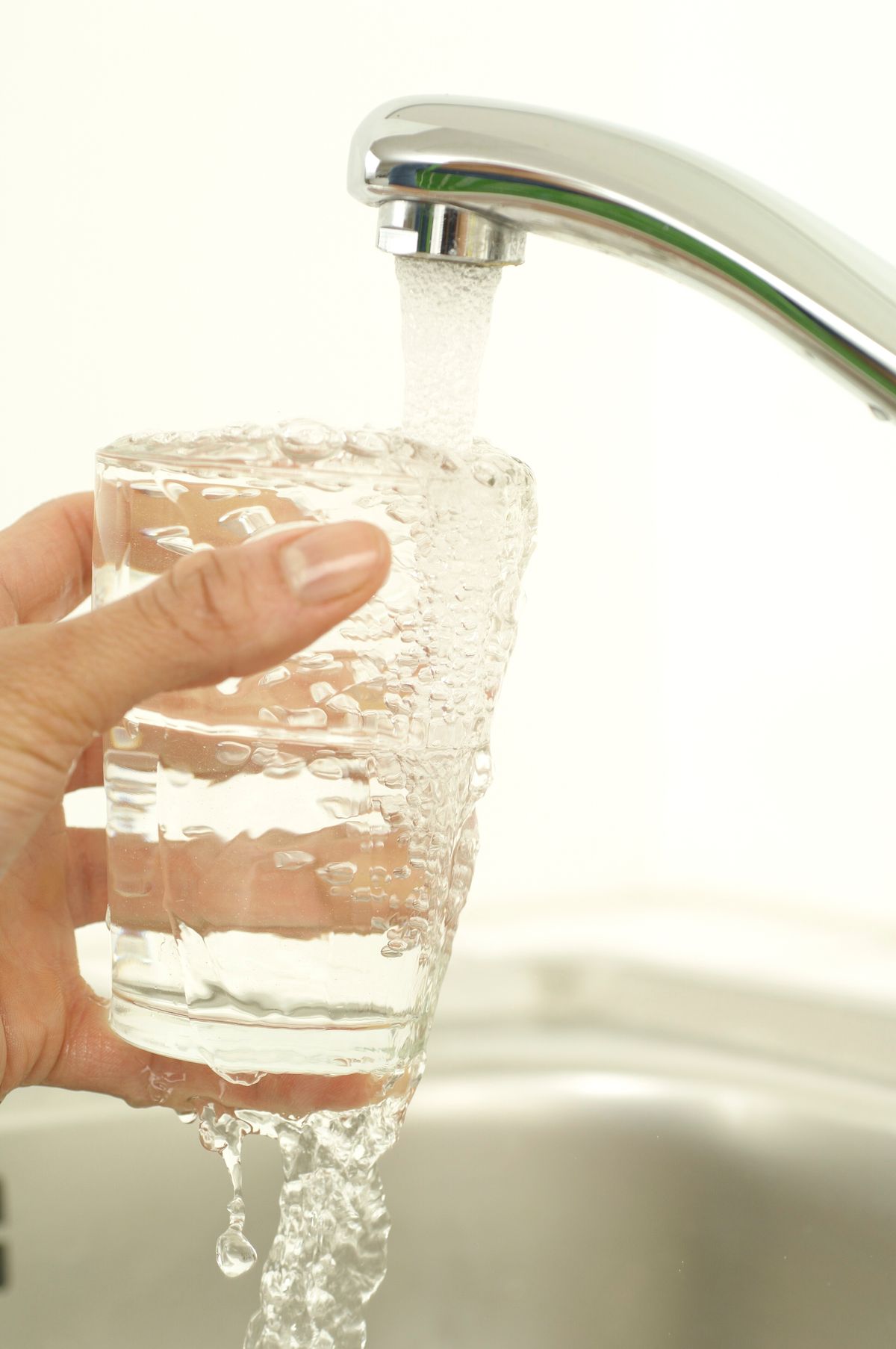
Municipal tap water contains dissolved minerals — fluoride, chloramine, and calcium — that the plant absorbs through its roots along with water. These ions travel to the farthest point of the vascular system: the leaf tips. Over weeks and months, they accumulate to concentrations that destroy the tip cells. This is fluoride toxicity, and it is common in all succulent and semi-succulent houseplants.
The distinguishing diagnostic feature is a sharp, clearly defined border between living and dead tissue at the tip. The browning does not spread further as long as watering continues with the same source water — it advances incrementally each watering cycle. Unlike humidity-related browning, the affected tissue is restricted to the tips rather than spreading along the entire leaf margin.
A recurring pattern in the salt-encrusted-bottom-watered specimen: a plant bottom-watered exclusively for 12+ months develops a white crust on the substrate surface and around the upper rim of the pot, with tip-browning on older leaves. The mechanism is geometric — bottom-watering only ever moves moisture upward through capillary action and never flushes salts downward and out of the pot. Dissolved fertiliser salts and tap-water minerals concentrate at the upper substrate. As ionic concentration rises, root osmotic potential compromises; in severe cases, water reverses across the root membrane and the plant exhibits drought symptoms in wet substrate. Bottom-watering is not the universally superior method it is claimed to be. It is a useful default that requires top-flushing with low-mineral water every four to six watering cycles — not an either-or replacement for top-watering. Either-or framing is wrong; rotation is the correct protocol.
Diagnosis: Brown tips with an unusually clean, defined boundary, appearing gradually across most leaves. Symptoms often appear on older specimens or plants in the same substrate for more than a year without flushing. White crust on the substrate confirms salt accumulation.
Fix: Switch permanently to filtered, distilled, or collected rainwater. Flush the substrate thoroughly: deliver 3–5× the pot volume of low-mineral water from above over 20–30 minutes, allowing free drainage out of the bottom — this dissolves and washes accumulated mineral salts out of the upper substrate. The detailed procedure is in the substrate flush protocol. If using tap water in future, allow it to sit uncovered for 24 hours before use; this off-gasses chlorine but does not remove fluoride.
Cause 4: Direct Sunlight — Photo-Oxidative Bleaching
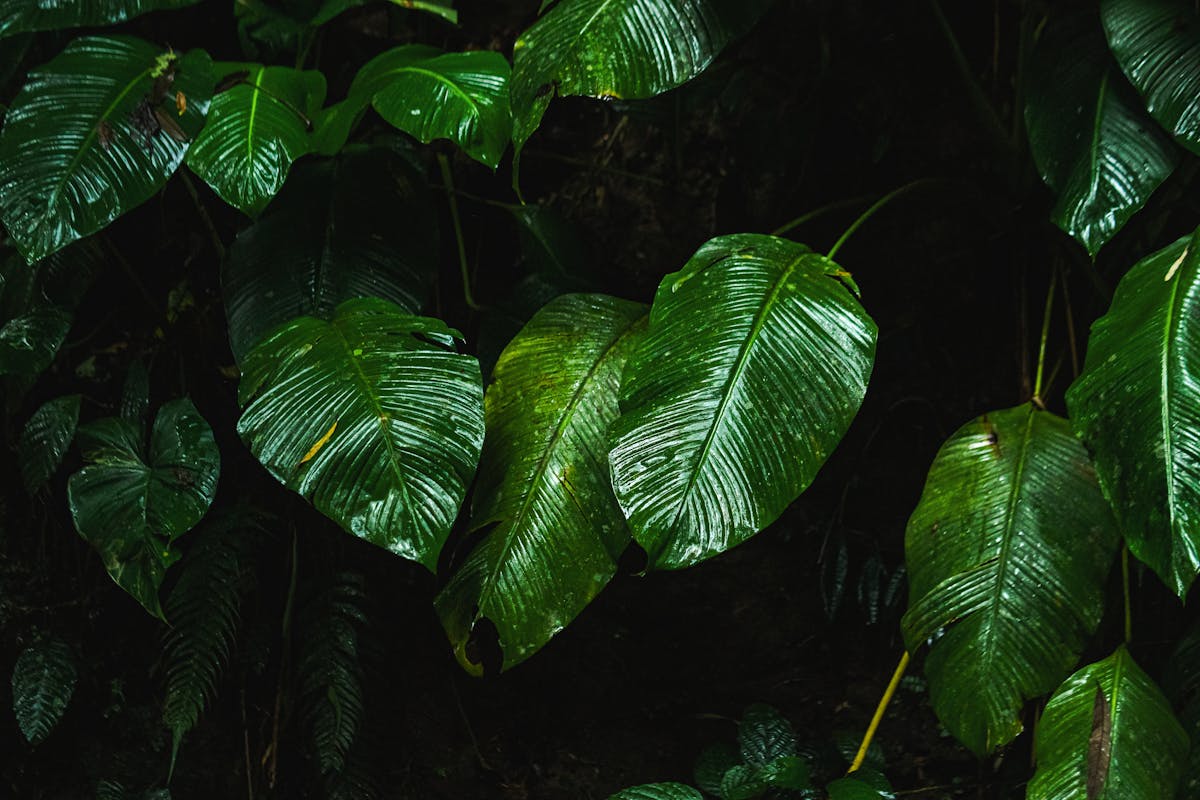
P. obtusifolia evolved in a forest understorey where the canopy intercepts 60–85% of incoming solar radiation. Its photosynthetic apparatus is calibrated for diffuse, low-intensity light. When exposed to direct, unfiltered summer sun through south- or west-facing glass — particularly between 10:00 and 16:00, when irradiance exceeds 40,000 lux — the photosystems become overwhelmed. Reactive oxygen species accumulate faster than the antioxidant defences can neutralise them. The chloroplasts in the most-exposed cells are destroyed, producing pale bleached patches that subsequently turn papery brown.
This damage is permanent in the affected leaves. The bleached cells are dead and will not recover.
Diagnosis: Pale, washed-out patches with diffuse edges that subsequently turn papery brown, appearing only on the uppermost leaves closest to the window. No soft or mushy tissue. Symptoms develop rapidly — sometimes within a single afternoon of intense sun exposure.
Fix: Move the plant to a position receiving 2,000–4,000 lux of bright indirect light, measured with a meter or calibrated phone app at the leaf surface. An east-facing window providing morning sun only, or a south/west-facing position with a sheer curtain to filter midday intensity, is appropriate. Remove the bleached leaves — they contribute nothing to photosynthesis and will not recover their colour.
Cause 5: Temperature Stress — Cellular Damage From Heat or Cold
P. obtusifolia tolerates a daytime range of 15–30°C, with an optimum of 18–24°C. Below 10°C sustained, cellular damage occurs; below 15°C at leaf surface, stomatal function is impaired. These thresholds are lower than most growers assume — a plant positioned near a single-glazed window can reach 8–10°C at leaf level on a cold winter night, even when the room is 18°C.
Cold damage typically produces sudden, water-soaked browning at the margins that progresses inward — different from the gradual crispy browning of humidity deficit. Heat damage from proximity to radiators or heating vents produces rapid wilting followed by browning, often on the side of the plant nearest the heat source. The oedema presentation described in Cause 1 is a specific cold-water-on-warm-substrate event in this temperature category.
Diagnosis: Rapid onset browning following a cold draught, temperature drop, or proximity to a heating or cooling source. Check leaf surface temperature with a thermometer in the specific microclimate where the plant sits — not the general room reading.
Fix: Relocate the plant away from radiators, air-conditioning units, exterior doors, and single-glazed windows. Keep the plant at least 50 cm from exterior walls in winter. Ensure no draught reaches the plant when windows or doors are opened in cold weather.
Cause 6: Underwatering — Puckering Before Browning
Underwatering is less common than overwatering in P. obtusifolia but produces a distinct progression. The plant stores water in the parenchyma cells of its thick leaves — when the substrate dries completely and the stored reserve is depleted, turgor pressure drops. Leaves feel soft and puckered rather than firm and glossy. Browning from underwatering follows this puckering and typically begins at the tips and edges.
The first-knuckle "is it dry?" test is unreliable for this species — P. obtusifolia roots draw moisture from the lower substrate while the top 2–3 cm dries. A dry top knuckle does not indicate water-need. A chopstick or wooden skewer drawn from mid-pot, or pot-weight comparison against a recently watered reference, is more accurate.
Diagnosis: Substrate is bone dry at depth, not just at the surface. Pot lifts noticeably light. Leaves are soft and slightly wrinkled rather than firm. The browning has not progressed in a mushy or expanding pattern.
Fix: Water thoroughly until liquid runs from the drainage holes. Allow the pot to drain completely; do not leave it standing in water. In a 12 cm container with a free-draining mix, summer interval is every 10–14 days; winter is every 21–28 days. Water only when the top 2–3 cm of substrate is dry and the pot has lost perceptible weight — not on a fixed schedule.
Cause 7: Fertiliser Salt Burn — Tip Necrosis From the Root Zone
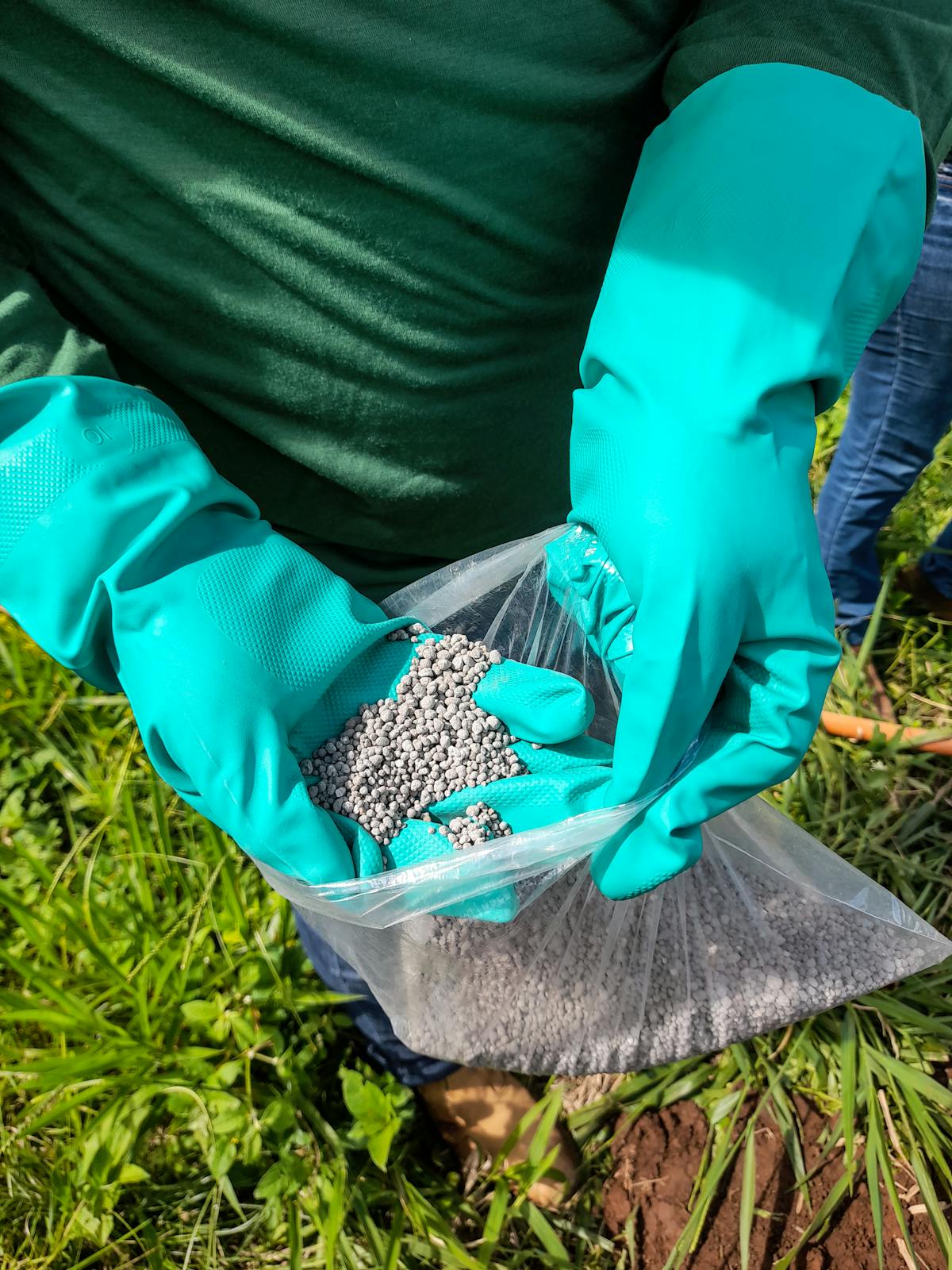
Over-application of synthetic fertiliser deposits excess dissolved salts in the substrate. These raise the osmotic concentration at the root zone above the concentration inside the root cells, reversing water movement: instead of water flowing from substrate into roots, it flows outward. The result is root desiccation and tip burn on the foliage above.
The symptom is crispy brown tips advancing inward along the leaf margins — visually similar to mineral accumulation from tap water, but with a faster onset correlated with recent fertilisation. At roughly twice the recommended fertiliser concentration, leaf-tip burn begins.
Diagnosis: Brown tips that appeared shortly after fertilisation, or in a plant fertilised regularly at full strength. The symptom is most pronounced on the newest growth, which has the highest water-uptake demand. A white crust on the substrate surface is the confirming visual.
Fix: Flush the substrate immediately with plain low-mineral water — 3–5× pot volume from above until the runoff is clear. Reduce fertiliser to a balanced NPK 20-20-20 at 50% of label rate, applied monthly during spring and summer only — never in autumn or winter, when reduced light decreases metabolic demand and unused fertiliser salts accumulate.
Cause 8: Spider Mites — Stippled Bronzing on Leaf Undersides
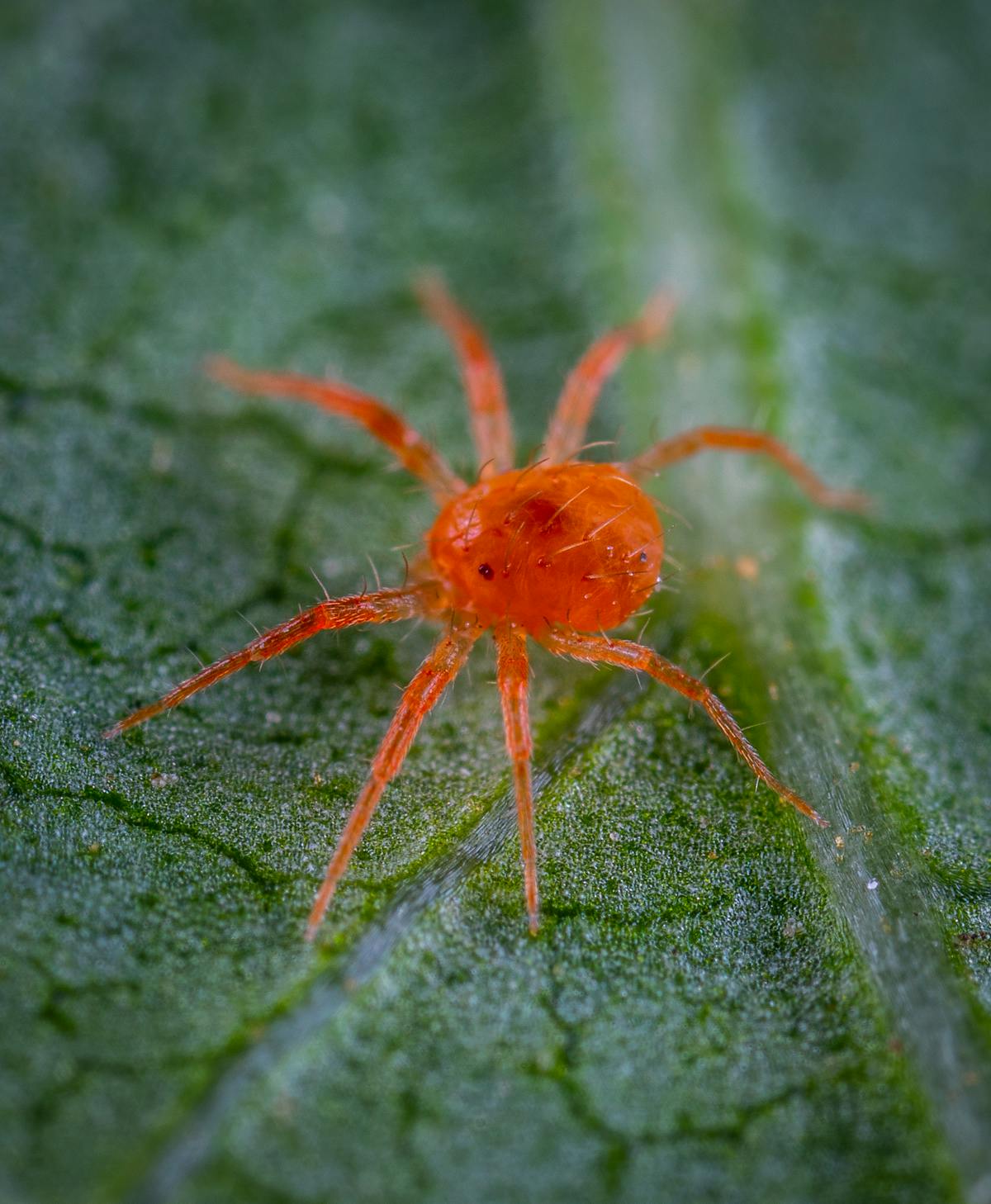
Spider mites (Tetranychus urticae) feed by piercing individual leaf cells and extracting their contents, leaving pale stippling on the upper surface. As infestation progresses, the stippling merges into a bronze or silver discolouration, and fine webbing becomes visible on undersides and between stems.
The thick, waxy cuticle of P. obtusifolia offers some physical resistance to mite feeding, but the undersides remain accessible. Low humidity below 40% RH accelerates mite populations significantly — the same conditions that cause crispy leaf margins also create ideal mite habitat. This is why winter mite outbreaks coincide with humidity-driven crispy browning, and the two are routinely confused.
Diagnosis: Check undersides with a 10× magnifying glass. Stippling visible as tiny pale dots on the upper surface. Fine webbing in severe infestations. Mites are visible as tiny moving dots (≈ 0.5 mm) on the undersides.
Fix: Wipe undersides with a damp cloth. Raise ambient humidity above 50% RH to inhibit mite reproduction. Apply a neem oil solution — 2 ml neem per litre of water, with a drop of mild soap as emulsifier — to all leaf surfaces and undersides; repeat every 5–7 days for three applications. Isolate the affected plant immediately. The full identification and treatment protocol is in the spider mite guide.
Cause 9: Fungal Disease and Ring Spot Virus — Defined Spots and Concentric Rings
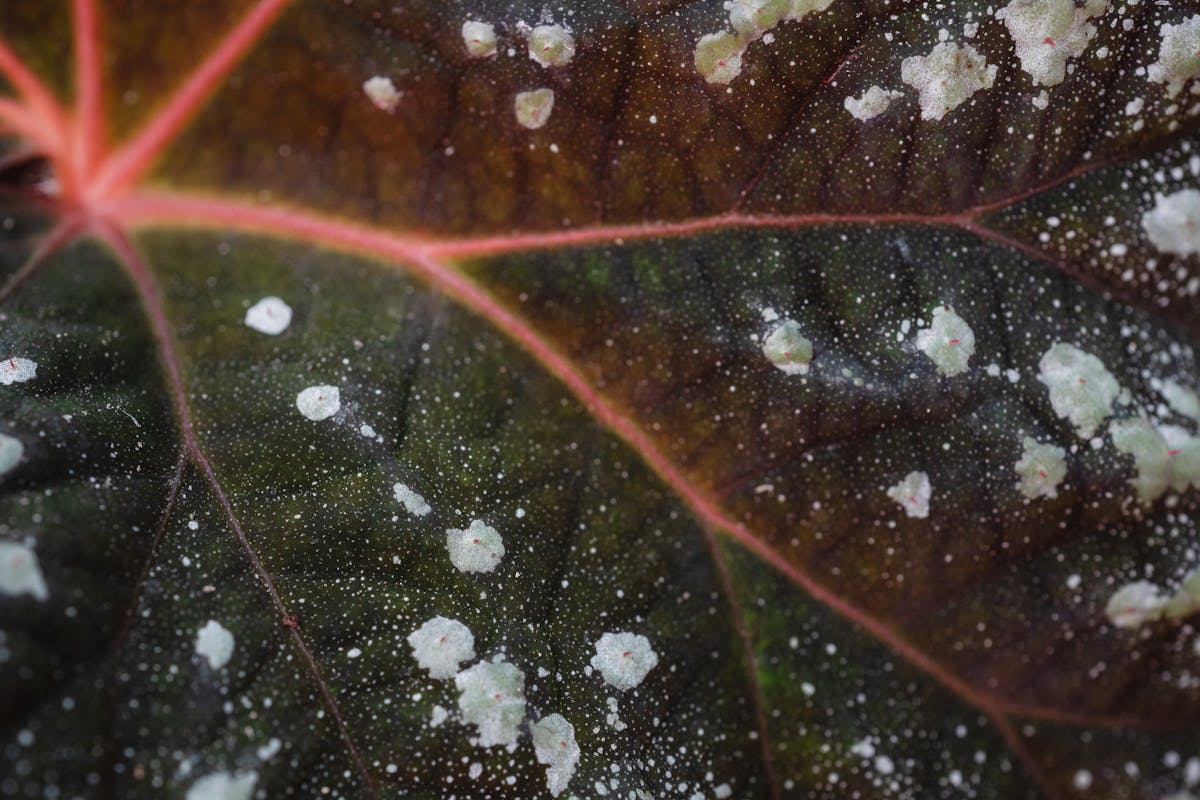
Three fungal pathogens commonly affect P. obtusifolia: Cercospora, Phyllosticta, and Rhizoctonia. Each produces circular or irregular brown spots with a yellow chlorotic halo — distinctly different from the diffuse spreading pattern of overwatering or the marginal pattern of humidity deficit. Fungal spots typically have defined edges and may have a darker ring at the perimeter. They spread slowly compared to bacterial root rot.
Peperomia ring spot virus — a viral rather than fungal disease — produces concentric translucent-to-brown rings on the leaf surface. Unlike fungal infections, it has no chemical treatment. Infected plants should be isolated and discarded to prevent spread to other specimens. The University of Illinois IPM reference on Peperomia diseases documents both fungal and viral signatures in detail.
Diagnosis: Discrete circular or irregular brown spots with yellow halos for fungal disease, distributed across multiple leaves without a particular location pattern. Concentric rings for ring spot virus. The tissue outside the spots remains healthy. Spots do not respond to watering adjustments.
Fix: For fungal disease, remove all affected leaves immediately with sterilised scissors. Keep foliage dry — deliver water to the substrate only. Improve airflow around the plant. Apply neem oil to all surfaces weekly for three to four weeks. For severe Cercospora or Phyllosticta, a copper-based fungicide applied per manufacturer's instructions is effective. For Rhizoctonia, systemic fungicides containing myclobutanil are appropriate. For ring spot virus, there is no recovery — isolate and discard the plant.
Cause 10: Transplant Shock — Browning After Repotting or Arriving From a Nursery
This cause is absent from most generic care guides yet is among the most common scenarios growers encounter: leaves beginning to brown within two to four weeks of repotting, or shortly after bringing a new plant home.
The mechanism is root disturbance. During repotting, the fine root hairs that perform most water and nutrient uptake are inevitably damaged. The root system cannot immediately supply water at the rate the leaves require. The resulting temporary water deficit causes tip browning and sometimes leaf drop, even when the substrate is adequately moist. New plants from nurseries or online retailers undergo the same stress from shipping, different humidity and light conditions, and substrate changes.
The distinguishing feature is timing: browning appears within two to four weeks of a move, and substrate is not overly wet.
Fix: Do not add stress during this period. Maintain stable temperature (18–24°C), humidity (40–60% RH), and light (2,000–4,000 lux). Do not fertilise for four to six weeks after repotting. Resist repotting again to "fix" the problem — repeated root disturbance extends recovery. Brown leaves from transplant shock do not indicate a continuing problem; monitor new growth over 4–6 weeks to confirm recovery.
Cause 11: Natural Senescence — When Browning Requires No Intervention
If the only leaves turning brown are the oldest, lowest leaves at the base of the stem — and all upper growth is compact, glossy, and healthy — no intervention is needed. This is natural senescence: the plant systematically withdrawing nutrients from its oldest, lowest, most-shaded leaves to redirect resources toward newer growth. As the plant grows taller and new leaves form at the top, basal leaves produce less photosynthetic energy than they cost to maintain. The plant retrieves their nutrients, causing gradual yellowing and browning, then drops them.
The diagnostic key is location: basal leaves only, while upper growth is actively healthy.
Remove dropped leaves from the substrate surface to maintain sanitation.
The Pruning Protocol
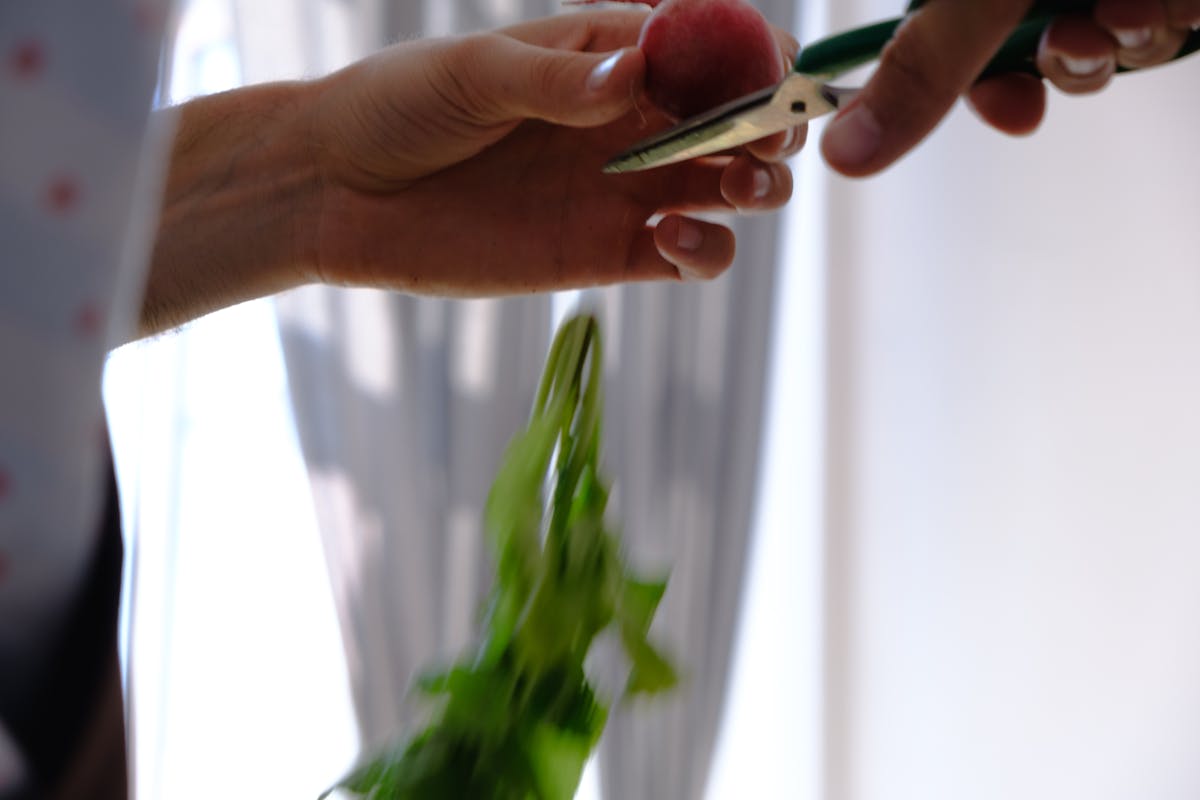
Once the environmental cause has been identified and corrected, remove damaged tissue:
- Sterilise scissors with 70% isopropyl alcohol before every cut and between plants.
- For a leaf that is fully brown, cut cleanly at the petiole base where it meets the main stem.
- For a leaf with only a brown tip, trim the dead portion but leave a hairline sliver of brown at the cut point. Cutting into living green tissue creates a fresh wound that will itself brown.
- After a significant browning event, allow the plant 4–6 weeks of undisturbed, stable conditions before repotting, fertilising, or relocating.
Recommended Diagnostic Products
- Digital hygrometer and thermometer — required to confirm whether ambient RH sits in the
40–60%target band before assigning blame to humidity. - Filtered water pitcher or distilled water — the persistent fix for tap-water tip burn (Cause 3) where switching the water source is more effective than periodic flushing.
- Sterile pruning snips — for the protocol above. Isopropyl alcohol between cuts prevents cross-contamination.
- Cool-mist room humidifier — the only intervention that reliably holds room RH in the target band.
Sources and Related Reading
- Wikipedia — Necrosis (cell-death mechanism reference)
- Wikipedia — Transpiration (the mechanism behind humidity-driven tip browning)
- Wikipedia — Fluoride toxicity (the tap water mineral mechanism)
- NC State Extension — Peperomia obtusifolia (species profile and indoor cultivation reference)
- University of Illinois IPM — Peperomia diseases (fungal and viral pathogen reference)
- ASPCA — Baby Rubber Plant (non-toxic to cats, dogs, horses)
Internal mechanism references on this site:
- Peperomia obtusifolia care guide — parent reference for thresholds.
- Peperomia obtusifolia curling leaves — the sibling diagnostic for curling, often co-occurring with browning.
- Overwatering rescue protocol — the triage procedure for Cause 1.
- Substrate flush protocol — the leaching procedure for Causes 3 and 7.
- Peperomia obtusifolia humidity — humidity calibration for Cause 2.
- Why misting fails for this species — the long-form mechanism behind avoiding misting as a humidity strategy.
- Peperomia obtusifolia oedema — differential diagnosis for the blistering presentation mentioned in Cause 1.
- Spider mite identification and treatment — full protocol for Cause 8.
Summary: Matching the Symptom to the Fix
Brown leaves on P. obtusifolia fall into two structural categories: soft and mushy (always indicating excess moisture or pathogen activity) and crispy and dry (always indicating desiccation, chemical toxicity, or physical damage). Location narrows the diagnosis: spreading from the base suggests overwatering; tips only suggest mineral accumulation, humidity deficit, or fertiliser burn (sub-diagnose by reading the tip border); upper leaves only suggest sunburn; all margins simultaneously suggest humidity deficit. Identify the type before applying any treatment. The wrong response extends the damage rather than correcting it.
Care FAQ
Should I cut off the brown leaves on my Peperomia?
Yes. Brown leaf tissue is dead — it produces no energy and cannot recover. Use sterilised scissors to remove the entire leaf at the petiole base. If only the tip is brown, trim just the dead portion but leave a hairline sliver of brown at the cut edge; cutting into living tissue creates a fresh wound that will itself brown. Sterilise the scissors with 70% isopropyl alcohol before and between cuts.
Can brown leaves on Peperomia turn green again?
No. Necrotic plant tissue is permanent — the cells have ruptured and their contents oxidised. Browning is not a reversible condition in existing tissue. The goal of treatment is to identify and correct the underlying cause so that all subsequent new growth emerges healthy. Do not discard the plant based on current brown leaves; assess the new growth after four to six weeks of corrected conditions.
Why are the tips of my Peperomia turning brown and crispy?
Crispy brown tips with sharp, well-defined borders are most commonly caused by mineral accumulation from tap water — fluoride, chloramine, and calcium transported to the leaf tips and deposited there over weeks. The second most common cause is ambient humidity below 30% RH, which desiccates the leaf margins. The third is fertiliser salt burn, which has a faster onset correlated with recent feeding. Switch to filtered, distilled, or collected rainwater and flush the substrate thoroughly to resolve the mineral causes.
What does overwatering look like on Peperomia obtusifolia?
Overwatering produces soft, mushy, expanding brown patches rather than crispy edges. The tissue collapses because bacteria from the decomposing root system produce cell-wall-dissolving enzymes that travel upward through the vascular system. Lower leaves yellow first. A sour or rotting smell from the substrate confirms root anaerobiosis. The plant may also wilt despite wet substrate — because the damaged roots can no longer transport water, not because of drought.
Can Peperomia obtusifolia recover from root rot?
Yes, if caught early enough. Unpot the plant, remove all black or soft roots with sterilised scissors, allow the remaining root ball to air-dry for 30 minutes, and repot into fresh free-draining substrate (50% peat-free compost, 30% perlite, 20% fine bark). Withhold water for one week to allow root wounds to callus. If caught before more than 50% of the root system has rotted, most specimens recover within three to six weeks.
How do I tell humidity-driven browning from chemical burn?
Humidity-driven crispy browning affects the full leaf margin uniformly and crumbles when touched. Chemical and fertiliser burn produces a sharper, narrower band of dark brown at the very tip and edge with a clean transition to living tissue. Salt burn often correlates with a visible white crust on the substrate surface; humidity-driven browning does not.
What is the difference between oedema and root rot browning?
Oedema produces discrete water-soaked blisters on the underside of the leaf, which later burst to corky brown patches — it is a hydraulic rupture event triggered by cold substrate combined with warm leaves, and does not progress beyond the initial damage. Root rot produces soft mushy brown patches that expand over days as bacterial enzymes spread through the vascular system. Substrate odour distinguishes them — root rot smells sour, oedema does not.