
Peperomia Humidity: Ideal Conditions and Warning Signs
Peperomia obtusifolia tolerates the 40–60% relative humidity typical of most homes without a humidifier, because a thick waxy cuticle and stomata that close under water stress limit how fast the leaves lose moisture to the air. Humidity becomes a genuine risk only outside that band: sustained below 30% RH produces leaf-margin desiccation and raises spider-mite pressure, and sustained above 75% RH with stagnant air raises fungal and bacterial leaf-spot risk. Most of what gets blamed on "low humidity" in this species — brown tips, wilting, blistered leaves — is actually salt accumulation, a cold draft, or a soil-moisture problem wearing a humidity costume.
Peperomia obtusifolia is a facultative epiphyte in the family Piperaceae, native to Florida, Mexico, the Caribbean, Central America, and South America (Kew Plants of the World Online). That native range includes seasonally dry leaf litter as well as humid tree bark, which is the ecological basis for the species' tolerance of centrally heated apartments and air-conditioned offices where ferns and calatheas struggle. The NC State Extension Gardener Plant Toolbox lists the species as tolerant of average indoor humidity provided the substrate is well drained, consistent with the cuticle-and-stomata mechanism below rather than a specific humidifier requirement.
| Factor | Optimum range | Risk threshold |
|---|---|---|
| Relative humidity | 40–60% RH | Below 30% sustained: margin desiccation, higher spider-mite risk |
| High-humidity ceiling | Below 75% RH | Above 75% RH with stagnant air: fungal / bacterial leaf-spot risk |
| Misting | Not a strategy | Raises RH for a few minutes only; wets foliage for hours in still air |
| Substrate moisture (separate lever) | Top 2–3 cm dry before rewatering | Soil that stays wet for long periods: root rot risk |
1. The Mechanism: Cuticle, Stomata, and Vapour Pressure Deficit
Every leaf loses water through transpiration — evaporation through microscopic pores called stomata, positioned on the underside of the leaf to keep them out of direct solar heating. In most tropical houseplants, this loss is rapid enough that ambient humidity has a direct effect on leaf turgor. P. obtusifolia is different because of two structural adaptations layered on top of the same basic physiology.
The first is the cuticle: a thick, lipid-based waxy layer covering the leaf surface. Unlike the thin cuticle of a Pothos or Calathea, this layer functions as a vapour barrier that keeps internal water in rather than letting it diffuse through the leaf skin. The second is stomatal control governed by guard-cell turgor. Each stoma is flanked by two guard cells; when the plant pumps potassium into them, they draw in water, swell, and bow outward to open the pore. When the surrounding air is dry, the plant reverses this process — releasing pressure so the guard cells collapse and seal the pore before hydraulic failure sets in. Under prolonged drought stress, the roots additionally release abscisic acid, a hormone that forces stomatal closure even in bright light, prioritising survival over growth.
This closing response is driven by vapour pressure deficit (VPD) — the gap between the humidity inside the leaf (effectively 100%) and the humidity of the surrounding air. Low humidity means high VPD: a strong "pull" on internal water that the plant resists by closing its stomata, which also halts CO₂ uptake and slows growth. High humidity means low VPD: the plant can keep its pores open longer, take in more CO₂, and grow faster — one reason Peperomia often looks more vigorous in a humid propagation cabinet than on a dry windowsill. Airflow modifies this further: a thin, stagnant layer of humid air (the boundary layer) normally clings to the leaf surface and buffers it against the drier room air. A fan or draft strips that layer away, increasing the effective transpiration rate even though the hygrometer reading in the room has not changed.
What actually sets the Peperomia obtusifolia transpiration rate. Three factors change how fast a given specimen loses water on top of the baseline cuticle-and-stomata mechanism above: light intensity (higher light raises leaf temperature and drives faster water loss, which is part of why a sunny-window specimen dries out faster than an identical plant in dim light), total leaf surface area (a large-leaved cultivar such as 'Marble' has more stomata in aggregate than a compact form like 'Pixie', and transpires correspondingly more in absolute terms even at the same rate per unit area), and pot material, covered in the pot-material section below. None of these change the species' fundamental humidity tolerance — they change how quickly the substrate dries between waterings, which is a watering-schedule input, not a separate care threshold.
2. Humidity vs. Soil Moisture: Two Different Levers, Not One Job
The most common humidity mistake with this species is not a wrong number — it is treating air humidity and substrate moisture as the same problem. They are not.
| Lever | What it controls | Peperomia target |
|---|---|---|
| Air RH / VPD | How fast leaves lose water to the air | 40–60% RH |
| Substrate moisture | Whether roots can supply water at all | Top 2–3 cm dry before rewatering |
| Misting | Brief leaf-surface wetness only | Not an effective RH strategy |
Raising humidity does not water the plant, and soaking the pot does not humidify the room. A specimen sitting in 90% RH with a bone-dry root ball will still wilt, because the atmosphere has never been the plant's water source — the substrate is. Conversely, keeping the mix wetter "to make up for" dry air is one of the more direct routes to root anoxia: the Missouri Botanical Garden notes the species is "susceptible to rot if soils are kept too moist," and soil that stays wet for long periods excludes oxygen from the root zone, creating the conditions for Pythium and Phytophthora rot (NC State Extension; University of Illinois RPD 653; see the overwatering and root-rot rescue guide). Use a hygrometer at leaf height for the air, and the weight-test method or a simple top-2–3-cm check for the pot. Treat them as two separate readings, not one impression of "the room feels dry."
3. Quick Decision Checklist: When Humidity Actually Needs Action
- Action needed: a hygrometer at leaf height reads below 30% RH for several consecutive days, and the plant shows crisping at the leaf margins or accelerated spider-mite activity.
- Optional, not required: RH sits steadily at 30–40% with no visible margin damage. The plant tolerates this range; raising humidity here is precautionary, not corrective.
- Skip entirely: reaching for a spray bottle, watering more often "because the air feels dry," or adding a humidifier without first checking whether the actual complaint (wilting, blistering, brown tips) is a substrate or draft issue instead.
4. What to Check Before You Adjust Anything
Before treating anything as a humidity problem, confirm the reading and rule out the two conditions most often mistaken for it.
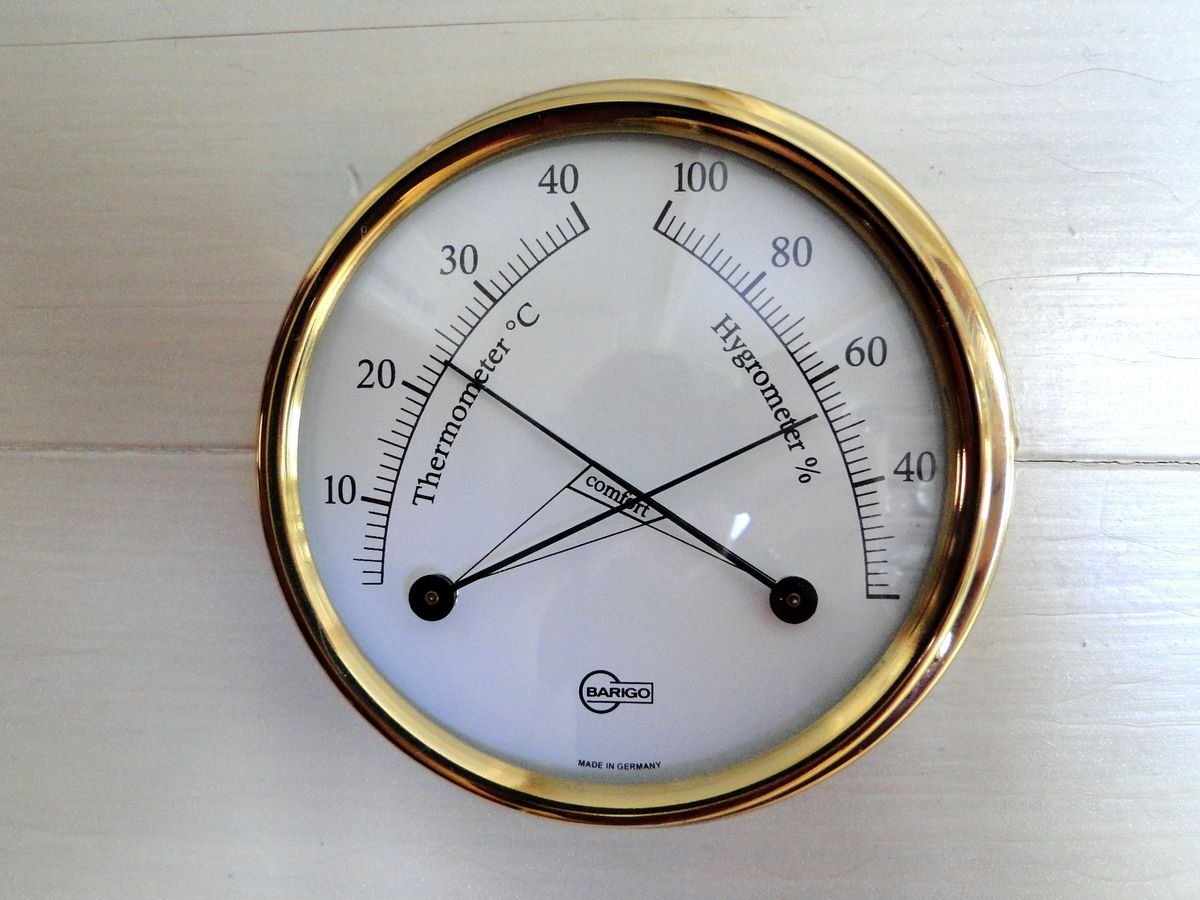
- Place a hygrometer at plant height, not on a shelf or near a door. Room averages understate the microclimate next to a radiator, a single-glazed window, or inside a sealed cabinet — all of which run drier or more volatile than the rest of the room.
- Check the substrate independently. Push a finger or a wooden skewer 2–3 cm into the mix. If it is still moist while the leaves show crisping, the cause is air RH or salt buildup, not water need.
- Rule out drafts. Cold air from an air-conditioning vent or an opened window lowers guard-cell temperature and can lock stomata in place, producing symptoms that mimic humidity stress. The RHS rates the species H1B (it needs a heated greenhouse or a home in the UK) and gives 18–30 °C as its ideal range, with a minimum of 10 °C; sustained exposure below roughly 10 °C causes cellular damage independent of humidity (see the air-conditioning impact guide and the temperature tolerance guide).
- Check plant age and recovery status. Freshly rooted cuttings and recently divided specimens have a smaller, less established root system and lose the cuticle's dry-air tolerance advantage until new growth hardens off; treat these more conservatively for the first few weeks.
5. Step-by-Step: Raising Humidity When It Is Genuinely Needed
Ranked by how well they work, once a genuine sub-30% RH problem is confirmed:
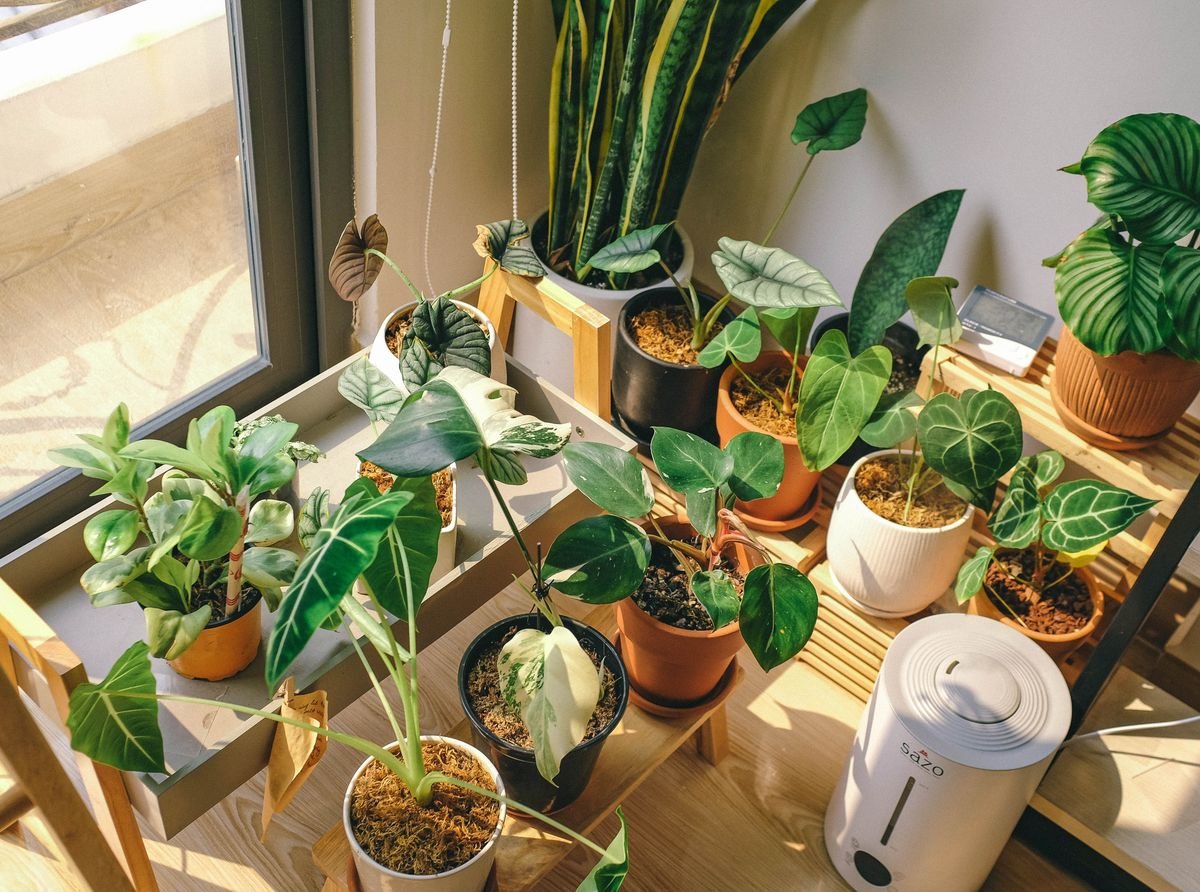
- Room humidifier with a hygrometer. This is the only method that reliably holds a room in the 40–60% band over time. Aim the target at 45–55% RH in winter, when central heating drops ambient humidity while simultaneously slowing surface evaporation from the pot — a combination that tempts growers into overwatering at exactly the wrong moment. For unit selection, see the cool-mist vs warm-mist humidifier comparison.
- Plant grouping. Clustering several transpiring plants together creates a shared, elevated-humidity microclimate through collective water vapour release. This is a genuine mechanism, not folklore, though it works best in a room with limited air exchange.
- Pebble tray. Placing the pot on a tray of water-covered pebbles (with the pot base above the waterline, not sitting in the water) adds a small, localised increase in humidity as the water evaporates. Useful as a supplement, not a primary strategy.
Misting is not on this list, and it is worth explaining why in full, since it is the most repeated piece of advice for this species. A spray bottle raises the relative humidity around the foliage for only a few minutes before it dissipates back to the room's baseline, so sustaining a higher RH this way would mean misting constantly. The waxy cuticle that keeps this species drought-tolerant is also a poor conductor of foliar water; the leaf cannot "drink" a mist application the way some thinner-leaved tropicals partially can. What misting reliably does is leave a film of standing water in leaf axils and on slightly cupped leaves, in an indoor environment with far less air circulation than the species' native canopy. That combination is the entry condition for bacterial leaf spot (water-soaked lesions with a yellow halo) and, in stagnant rooms, powdery mildew. Tap-water minerals left behind after evaporation also produce the chalky white spotting that dulls the foliage's characteristic gloss. The one legitimate exception is treating an active pest infestation — thoroughly wetting the foliage is necessary to achieve contact coverage when applying horticultural oil or insecticidal soap for spider mites — after which the plant should dry quickly in good airflow, not be left wet.
6. Adjustments for Season, Pot Material, and Cultivar
Winter and central heating. Heating systems raise VPD by drying the air, but they also slow surface evaporation from the pot as ambient temperature and airflow patterns change. Growers who keep a fixed watering schedule through this shift often end up watering into substrate that has not actually dried, compounding the risk of root anoxia at precisely the season when they are also trying to fix "dry air." Run the humidifier toward 45–55% RH, water strictly on dry-down rather than on a calendar, and keep at least 30% aeration in the mix (see the soil mix recipe) so the pot does not stay wet for longer than the plant tolerates.
Pot material. Terracotta wicks moisture from the substrate faster than plastic or glazed ceramic, which is a benefit for over-waterers but a liability in a room already running below 40% RH, where it can push the substrate into chronic under-watering territory. Match pot material to the room's humidity and the grower's own watering tendency rather than treating either material as universally superior.
Variegated cultivars. Variegated forms such as 'Variegata' and 'Albo-Marginata' do not require different humidity targets from the green form — the 40–60% RH range applies equally. Their meaningful environmental difference is light, not humidity: variegated tissue carries less chlorophyll, so these forms need brighter light than the green form to keep their colour, a separate issue from atmospheric moisture.
Airflow. A gentle fan does not need to be avoided in a humid room. It strips the boundary layer of stagnant air from the leaf surface, which is beneficial where standing moisture (from splashed water or overhead irrigation) is a leaf-spot risk, and only becomes a problem if it pushes an already-dry room past the plant's tolerance.
Moving outdoors for summer. Outdoor RH is rarely the limiting factor; direct sun and heat are. A specimen moved outside for the warm months typically needs shade and gradual acclimation before humidity becomes a relevant variable at all — see the outdoor summer guide for the sunburn and UV risks that matter more than RH in that setting.
Terrariums and enclosed cabinets. Sealed or partially sealed setups routinely hold 70–90% RH, well above this species' 75% risk threshold for stagnant-air leaf-spot. If growing in a terrarium, prioritise ventilation over humidity — this is one of the few setups where the risk sits at the high end of the range rather than the low end.
7. Warning Signs: Brown Tips, Curling, and What They Actually Mean
A crisp brown leaf tip is the default explanation offered for almost any Peperomia symptom, and it is usually the wrong one for this species. Because P. obtusifolia transpires slowly, minerals from tap water (chlorine, fluoride) and residual fertiliser salts accumulate in the substrate rather than being flushed through quickly, eventually burning the tissue at the leaf margin from the inside out — a substrate chemistry problem, not an air-moisture one. A cold draft from an air-conditioning vent produces a very similar-looking crispy edge through thermal shock to the margin cells, not desiccation.
| Symptom | Likely cause | Check |
|---|---|---|
| Crispy tips or margins, substrate normal | Salt accumulation or a cold draft | Flush substrate; check for nearby vents |
| Soft, whole-leaf wrinkling, light pot | Substrate too dry | Water thoroughly; recheck in a few days |
| Wilting with wet, sour-smelling mix | Root rot from overwatering | Unpot and inspect roots before adding water |
| Fine stippling with webbing, RH below 40% | Spider mites, favoured by dry air | Pest protocol plus raising RH toward the mid-band |
| Blisters on the underside of older leaves | Oedema — cool air with wet roots | Let the substrate dry down; not a humidity fix |
Spider mites are a genuine point of overlap between pest management and humidity: outbreaks accelerate when RH sits below roughly 40%, so raising humidity toward the optimum band is a legitimate part of a mite response, not just a pest treatment on its own (see identifying and treating spider mites). Oedema — water-soaked blisters that later turn corky — is a hydraulic event caused by wet roots continuing to push water into the leaf while cool temperatures have closed the stomata; it is corrected by drying the substrate down, not by adjusting humidity (see the oedema treatment guide).
8. Aftercare and Monitoring
Once humidity has been corrected, leave the hygrometer in place rather than removing it after the first good reading — a single humidifier session does not compensate for a room that will drift back below 30% RH once the heating cycles off overnight. Recheck weekly through the season most likely to cause problems (winter heating or dry-climate summer air conditioning), and expect any existing tip damage or oedema scarring to remain visible, since damaged tissue does not reverse. New growth produced under corrected conditions should show normal margins; if new leaves continue to crisp after RH has been confirmed in the optimum band for two to three weeks, the cause is more likely salt buildup or a draft than residual humidity stress, and the substrate or the plant's position should be checked next.
9. Common Mistakes
- Misting on a schedule as a substitute for humidifying. It does not sustain the target RH and adds a leaf-spot risk the humidifier does not.
- Watering more often because the air "feels dry." Air humidity and substrate moisture are separate levers; treat the pot on its own dry-down evidence.
- Reading a hygrometer left on a shelf across the room instead of at leaf height, where the actual microclimate — next to a radiator, a cold window, or inside a grouped display — is what the plant experiences.
- Assuming every brown tip is a humidity problem and ignoring salt buildup or drafts, the two more frequent causes in this species.
- Adding a humidifier for a wilting plant sitting in wet soil. That plant needs its roots inspected, not more ambient moisture.
- Running an essential-oil diffuser close enough to coat the leaves. This is a separate risk from humidity — oil particulates can dissolve the waxy cuticle rather than simply raising RH; see the essential oils safety guide for safe distancing.
Conclusion
Peperomia obtusifolia holds up in ordinary indoor air because its waxy cuticle and closable stomata were built for intermittent dry spells, not because it is indifferent to environment. Hold 40–60% RH when it is genuinely low, use a humidifier and plant grouping rather than a spray bottle, and treat air humidity and substrate moisture as the two separate readings they are. Most of the symptoms blamed on humidity in this species — brown tips, wilting in wet soil, blistered undersides — resolve once the actual lever (salt, root oxygen, temperature) is identified and corrected instead. For the rest of this species' care requirements, see the complete care guide.
Care FAQ
Does Peperomia obtusifolia need high humidity?
No. It is a semi-succulent facultative epiphyte with a thick waxy cuticle and stomata that close under dry-air stress, so the 40–60% relative humidity typical of most centrally heated or air-conditioned homes is sufficient. A humidifier is optional, not required, unless sustained RH drops below 30%.
Is high humidity a substitute for watering my Peperomia?
No. Humidity (air RH) and substrate moisture are separate levers. Air RH controls how fast the leaves lose water; the substrate is the only source of water the roots can actually take up. A plant sitting in 90% RH with bone-dry mix will still wilt, and a plant in a humid room does not need watering less often as a result.
Why does my Peperomia have brown leaf tips?
Usually not low humidity. The more common causes are salt accumulation from tap-water minerals or fertiliser residue, and cold drafts from an air-conditioning or heating vent that damage cells at the leaf margin. Both produce a crispy brown edge that looks identical to humidity stress but responds to a different fix.
Does misting help raise humidity for my Peperomia?
No. A hand mister raises the relative humidity around the foliage for only a few minutes before it returns to baseline. The waxy cuticle does not absorb the water either, so misting adds no lasting benefit and leaves the leaves wet long enough to raise the risk of bacterial leaf spot and fungal disease in still air.
What is the best way to raise humidity if my home is too dry?
In order of effectiveness: a room humidifier paired with a hygrometer is the only method that reliably holds 40–60% RH; grouping plants together creates a shared microclimate through collective transpiration; a pebble tray adds a little humidity right around the pot as the water evaporates. Misting is not on this list.
Why does my Peperomia wilt even though the soil feels wet?
This is almost always root rot, not a humidity problem. Soil that stays wet for long periods starves the roots of oxygen and leads to root rot (NC State Extension; University of Illinois RPD 653), and rotting roots cannot take up water even when the mix is soaked. Check the roots for a soft, dark, sour-smelling texture before adding a humidifier or more water — see the overwatering rescue guide.
Does moving air or a fan change how much humidity my Peperomia needs?
Yes, indirectly. A stagnant layer of humid air (the boundary layer) sits directly against the leaf surface and slows further water loss. A fan strips this layer away, which raises the effective transpiration rate and can push a borderline-dry room past the point where the plant shows margin stress, even if the hygrometer reading has not changed.
How do I tell low-humidity stress from underwatering?
Low humidity produces crisp, dry margins and fine tip burn while the substrate is still moist and older leaves stay plump. Underwatering produces soft, whole-leaf wrinkling with a noticeably light pot and dry substrate through the top several centimetres. Check the pot before treating either as a humidity issue.