
Best Fertilizer for Peperomia: Type and Schedule
The best Peperomia obtusifolia fertilizer is a balanced, water-soluble liquid with an NPK ratio of 20-20-20 (or 10-10-10 at doubled volume), diluted to 50% of the label rate and applied once a month, spring through summer only. That default changes if the plant is grown in LECA rather than soil, if it is a slow-growing variegated cultivar, or if the household travels enough that a monthly schedule will not be kept consistently — each of those conditions is covered below. The one rule that overrides all of them: never feed a plant that is not actively growing, because unused fertiliser salts accumulate in the substrate rather than disappearing on their own.
| Situation | Recommended approach | Avoid |
|---|---|---|
| Standard indoor pot, active growth | Liquid 20-20-20 at 50% strength, monthly | Full-strength label dose |
| Low light (below 2,000 lux) | Fix the light first; fertilise minimally or not at all | Feeding to compensate for slow growth |
| Variegated cultivar | Same dilution, same schedule — light is the limiting factor, not nutrients | Extra feeding to "help" variegation |
| Grown in LECA | Complete hydroponic nutrient solution at 50% strength | Soil-formulated liquid fertiliser |
| Frequent travel / inconsistent schedule | Slow-release granules at label rate, or skip a cycle rather than double the next dose | "Catching up" with a stronger feed |
| Winter, any situation | No fertiliser | Any fertiliser |
1. Why More Fertiliser Rarely Fixes a Struggling Plant
Fertiliser is not "plant food" in the sense that word implies — the plant builds its own sugars through photosynthesis. What a fertiliser actually supplies is the mineral raw material for that process and for structural growth: nitrogen for chlorophyll and new tissue, phosphorus for energy transfer, and potassium for stomatal regulation and general stress tolerance. P. obtusifolia evolved as a facultative epiphyte on nutrient-poor forest litter and tree bark, not a heavily fertilised nursery bed, and its root system reflects that: fine, easily damaged by concentrated salt, and adapted to intermittent rather than constant nutrient availability. Applying fertiliser at the rate suited to a fast-growing annual is a mismatch for this biology from the outset.
Liebig's law of the minimum explains why fertiliser so often fails to fix a slow or poor-looking plant. Growth is capped by whichever resource is scarcest, not by the sum of all resources available. If a plant is under-lit, light — not nitrogen — is the limiting factor, and adding fertiliser cannot substitute for it; the added salts simply accumulate in the substrate with no growth process to consume them, raising the risk of root injury. Confirm the plant is already getting adequate light (2,000–4,000 lux) and water on a proper dry-down cycle before assuming a nutrient problem exists.
2. Comparing Fertiliser Types: Liquid, Slow-Release, and Organic
| Type | Best for | Limitations | Avoid if |
|---|---|---|---|
| Liquid synthetic | Precise dilution control; can be flushed out quickly if over-applied | Highest salt index of the three; easiest to over-apply by guessing rather than measuring | You are not willing to measure and dilute each time |
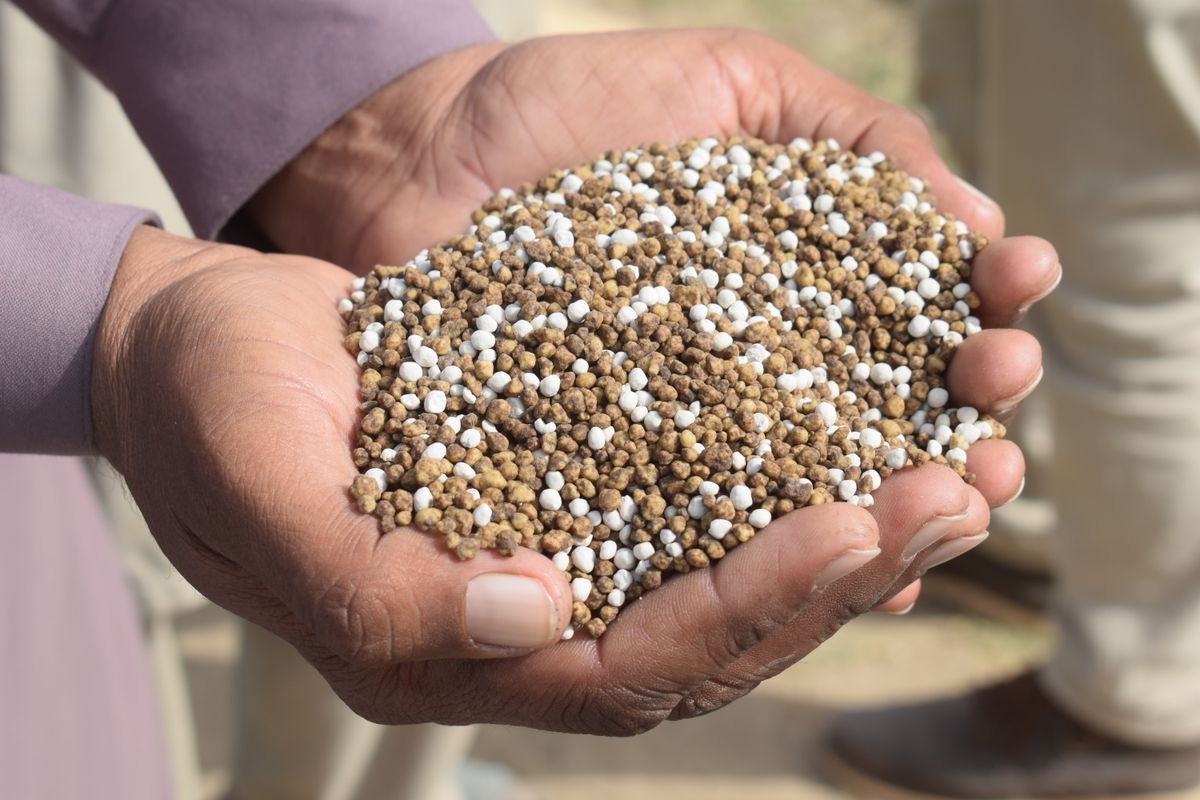
| Slow-release granules | Low-maintenance feeding over roughly 3–4 months | Cannot be removed once applied; a heat spike can accelerate release beyond what the plant can use | You tend to over-apply, or the pot sits somewhere temperature swings widely |
| Organic (fish, kelp, worm castings) | Gentler nutrient release; supports substrate microbial activity | Slower visible results; some products have a noticeable odour indoors | You need a fast correction for a confirmed deficiency |
Both the NC State Extension comparison of fertiliser forms and the University of Maryland Extension's indoor plant fertiliser guidance describe the same basic trade-off across plant types generally: liquid feed gives control at the cost of vigilance, while slow-release and organic options trade some of that control for convenience. For a species this sensitive to salt accumulation, the ability to dilute precisely and flush out a mistake is the deciding factor, which is why liquid is the default recommendation here rather than slow-release.
A formula that includes chelated micronutrients (iron, manganese, magnesium) is worth prioritising within any of these three types, since variegated cultivars in particular are more prone to interveinal chlorosis when these are missing.
3. Best Choice by Home Situation
- Standard indoor pot, actively growing: liquid 20-20-20 at 50% strength, monthly, spring–summer only — the baseline recommendation above.
- Low light (below roughly 2,000 lux): address the light source first. A plant surviving rather than growing at 800–1,000 lux has little use for additional nutrients, and feeding it does not substitute for the light it is missing.
- Dry climate or heavily air-conditioned home: dilution and schedule stay the same; salt accumulation is driven by feeding frequency and flushing habits, not ambient humidity.
- Overwatering tendency: be more conservative with frequency rather than dilution. A pot that stays wetter for longer already carries a higher root-stress load, and added salt compounds that risk.
- Small or juvenile plant: use the same dilution but consider extending the interval to six weeks rather than monthly — a smaller root mass has less capacity to use or buffer the same dose a mature specimen would.
- Variegated cultivar: identical dilution and schedule to the green form. The meaningful difference for variegated cultivars is light requirement, not fertiliser strength.
- Grown in LECA rather than soil: switch fertiliser type entirely, not just dilution — see Section 5.
- Frequent travel or inconsistent schedule: a slow-release granule product at label rate removes the monthly dependency, or simply skip a feeding cycle if travel interrupts it. Do not compensate for a missed month with a stronger dose on return.
- Recently repotted or recovering from root rot: withhold fertiliser until new growth confirms the root system is functioning again. Damaged or regenerating root hairs are more vulnerable to salt injury than an established root system, and feeding too early risks compounding the original problem rather than supporting recovery.
4. How to Apply Fertiliser Correctly
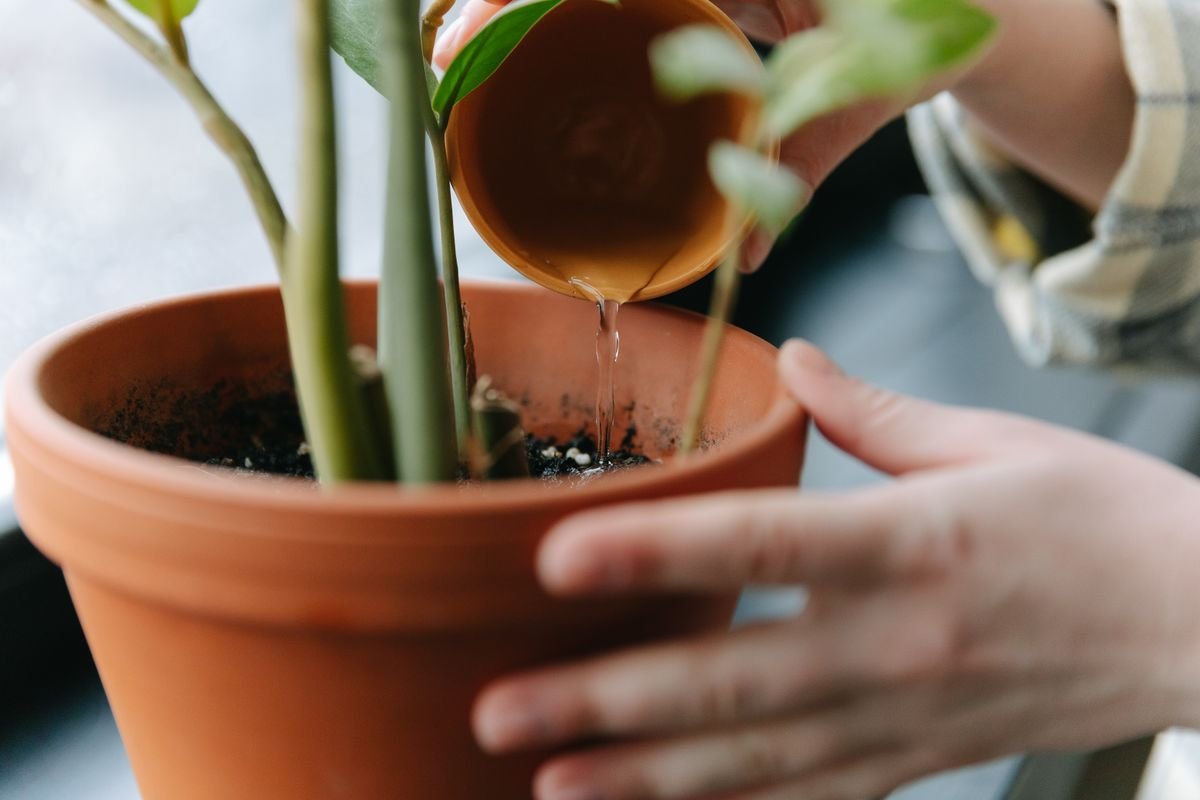
- Water first, on plain water, before feeding — never apply concentrated fertiliser to bone-dry substrate. A sudden influx of dissolved salt against dehydrated root hairs pulls water out of the roots rather than into them (the same reverse-osmosis mechanism behind fertiliser burn).
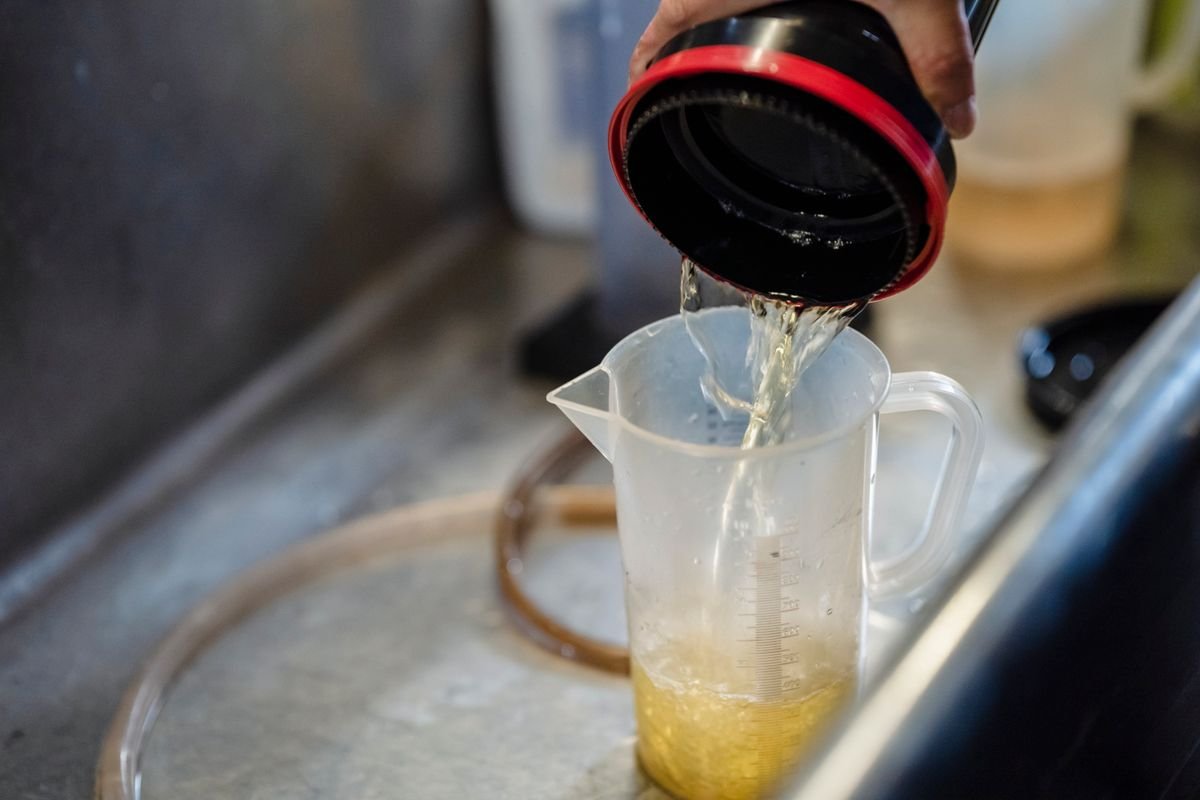
- Dilute to 50% of the label rate, measured rather than estimated. Manufacturer instructions are typically calibrated for faster-growing species; this species' fine root system tolerates less.
- Apply once monthly, spring through summer, and stop entirely from roughly November to February as growth slows toward near-zero in most temperate homes.
- Water enough to produce some drainage from the pot base each time, rather than feeding into a pot with no outflow — this keeps a fraction of dissolved salts leaving the substrate instead of concentrating over successive feedings.
- If bottom-watering by habit, top-flush periodically (roughly every four to six feedings) with plain water from above, since bottom-watering alone moves fertiliser salts upward through capillary action without ever flushing them back out.
5. Fertilising in LECA: A Different System, Not Just a Different Dilution
A specimen grown in LECA needs a genuinely different product, not the same liquid fertiliser at the same dilution. Soil-formulated fertilisers depend on substrate microbiota to mineralise nitrogen and mobilise phosphate from chelated forms; LECA is inert and sterile, so none of that biological conversion happens, and a soil-formulated liquid feed applied to LECA leaves much of its nutrient content unavailable to the plant. The correct choice is a complete hydroponic nutrient solution that supplies all essential minerals in an already-bioavailable ionic form, still diluted to roughly 50% strength given this species' slow growth rate, with the reservoir fully flushed with plain, pH-adjusted water every four weeks to prevent salt accumulation on the pebbles.
6. Common Buying and Application Mistakes
- Buying a "bloom booster" or high-nitrogen formula intended for flowering annuals. A balanced ratio close to 1-1-1 suits this species; skewed formulas encourage unstable, leggy growth rather than the compact habit this species is usually grown for.
- Applying fertiliser to compensate for slow growth caused by light, rather than checking the lux level first. This is the single most common way Liebig's law gets ignored in practice.
- Feeding on a fixed calendar regardless of season, rather than pausing through autumn and winter when uptake genuinely slows.
- Estimating dilution "by eye" instead of measuring. A species this salt-sensitive does not have much margin for a rough guess.
- Applying soil-formulated liquid fertiliser to a LECA setup, where the microbial conversions it depends on cannot occur.
7. Signs the Fertiliser Choice Is Not Working
| Sign | Likely cause | Correction |
|---|---|---|
| Crispy margins with a sharp border, often with a white or tan crust on the substrate surface | Salt accumulation from over-strength or too-frequent feeding | Flush with several pot-volumes of plain water; stop feeding for at least six weeks — see the fertiliser burn guide |
| Interveinal yellowing on new growth, older leaves normal | Micronutrient deficiency or pH lockout (more common in LECA) | Switch to a formula with chelated micronutrients; check reservoir pH if grown hydroponically |
| No visible growth response despite regular feeding | Light, not nutrients, is the limiting factor (Liebig's law) | Confirm lux level before adjusting fertiliser further |
| Leggy, elongated new growth after starting a new fertiliser | High-nitrogen or unbalanced formula | Switch to a balanced ratio close to 1-1-1 |
| Wilting despite moist substrate, after a recent feeding | Possible root-hair damage from concentrated salt | Check for salt crust; flush and withhold fertiliser rather than adding more water alone |
Conclusion
For most Peperomia obtusifolia grown in soil, the default answer does not need to be complicated: a balanced liquid fertiliser diluted to 50%, applied monthly in spring and summer, withheld entirely in winter. The situations that change this — LECA, a variegated cultivar, an inconsistent travel schedule — each point to a specific adjustment rather than a reason to feed more, and a plant that is not responding to fertiliser is more often missing light than nutrients. For the plant's full baseline care requirements, including the light and watering context that determines whether fertiliser is even useful, see the complete care guide. Growers shaping the plant for display — see the pruning guide and the feng shui placement guide — should note that a well-fed, well-lit plant produces the compact, glossy form both of those pages assume as the starting point.
Care FAQ
What is the best fertilizer for Peperomia obtusifolia?
A balanced, water-soluble liquid fertiliser with an NPK ratio of 20-20-20 (or 10-10-10 at doubled volume for equivalent strength), diluted to 50% of the label rate. This gives the most control over a light-feeding species with a fine, easily burned root system, and can be flushed out quickly if over-applied.
How often should I fertilise my Peperomia?
Once a month, spring through summer only. Growth slows to near-zero from November to February in most temperate homes, and feeding a plant that is not actively growing only accumulates salt in the substrate rather than being taken up.
Should I fertilise my Peperomia in winter?
No. Reduced light and lower temperature slow metabolic activity and nutrient uptake; unused fertiliser salts accumulate in the substrate instead, raising osmotic stress risk. Resume in spring once new growth appears.
Are slow-release fertiliser granules a good choice for Peperomia?
They work, but with less margin for error. If over-applied, granules cannot be leached out the way a liquid feed can, and a heat spike can release nutrients faster than the plant can use them. Liquid fertiliser gives finer control over dosage for a species this sensitive to salt.
Can fertiliser fix a Peperomia that is not growing well?
Only if the limiting factor actually is nutrients. Under Liebig's law of the minimum, growth is capped by whatever resource is scarcest — usually light, not nitrogen, phosphorus, or potassium. Fertilising a plant that is short on light adds salt load without adding growth, and can push it into fertiliser burn.
Does a Peperomia grown in LECA need different fertiliser?
Yes. Soil-formulated fertilisers rely on substrate microbes to mineralise nutrients into a usable form; LECA is inert and sterile, so those conversions do not happen. A specimen in LECA needs a complete hydroponic nutrient solution supplying all essential minerals in an already-bioavailable ionic form, still diluted to around 50% strength.