Yellow Leaves on Peperomia obtusifolia: Diagnosis & Recovery
Yellow leaves on Peperomia obtusifolia are a chlorophyll-breakdown signal — not a diagnosis. The location and pattern identify the cause. Bottom-up uniform yellowing with healthy roots is nitrogen mobilisation (fertiliser-responsive). Top-down interveinal yellowing (yellow tissue with persistent green veins) on new growth is iron lockout from alkaline substrate pH (chelated-iron-responsive). Whole-plant solid yellow with mushy texture on wet substrate is root anoxia and Pythium colonisation (the most common cause; requires unpotting, not more water). The standard reflex to "add fertiliser when leaves yellow" is wrong on a root-rotting plant — diagnose by pattern before intervening. Chlorosis is symptom; the underlying cause is mineral mobilisation, vascular failure, or pH chemistry — each demands a different response.
The mechanism behind yellowing is the enzymatic dismantling of chlorophyll. When a leaf is stressed — whether by nutrient deficit, root failure, light deficit, or pest activity — the plant degrades the green chlorophyll molecule and harvests its raw materials (nitrogen, magnesium). The underlying yellow and orange carotenoid pigments, which were always present beneath the chlorophyll, become visible. This is the same biochemistry that produces autumn foliage colour. On a houseplant, it indicates that the leaf is being decommissioned — usually because something has gone wrong with the supply chain that keeps it green.
| Pattern | Location | Most likely cause | Substrate test |
|---|---|---|---|
| Bottom-up uniform yellow, firm | Older leaves first, progressing upward | Nitrogen/magnesium mobilisation (fertiliser deficit or root failure) | Check moisture before assuming nutrient cause |
| Bottom-up uniform yellow, soft + wet substrate | Older leaves first | Root anoxia / Pythium root rot | Wet, sour-smelling = confirm rot |
| Top-down interveinal (green veins, yellow tissue) | New growth | Iron lockout from alkaline pH | Often dry; pH test confirms |
| Older-leaf interveinal | Older leaves | Magnesium deficit | Soil amendment with magnesium sulfate |
| Splotchy, irregular yellow | Random leaves | Pest damage or chlorine/fluoride from tap water | Inspect undersides for pests |
| Bleached/papery yellow on sun-facing side | Light-exposed leaves only | Photo-oxidative sunburn (>40,000 lux) | Relocate from direct sun |
| Lower-whorl loss, new specimen | Bottom 1–3 leaves | Acclimation; resolves in 2–4 weeks | Self-correcting if new growth is green |
1. Chlorosis — The Biology of Chlorophyll Breakdown
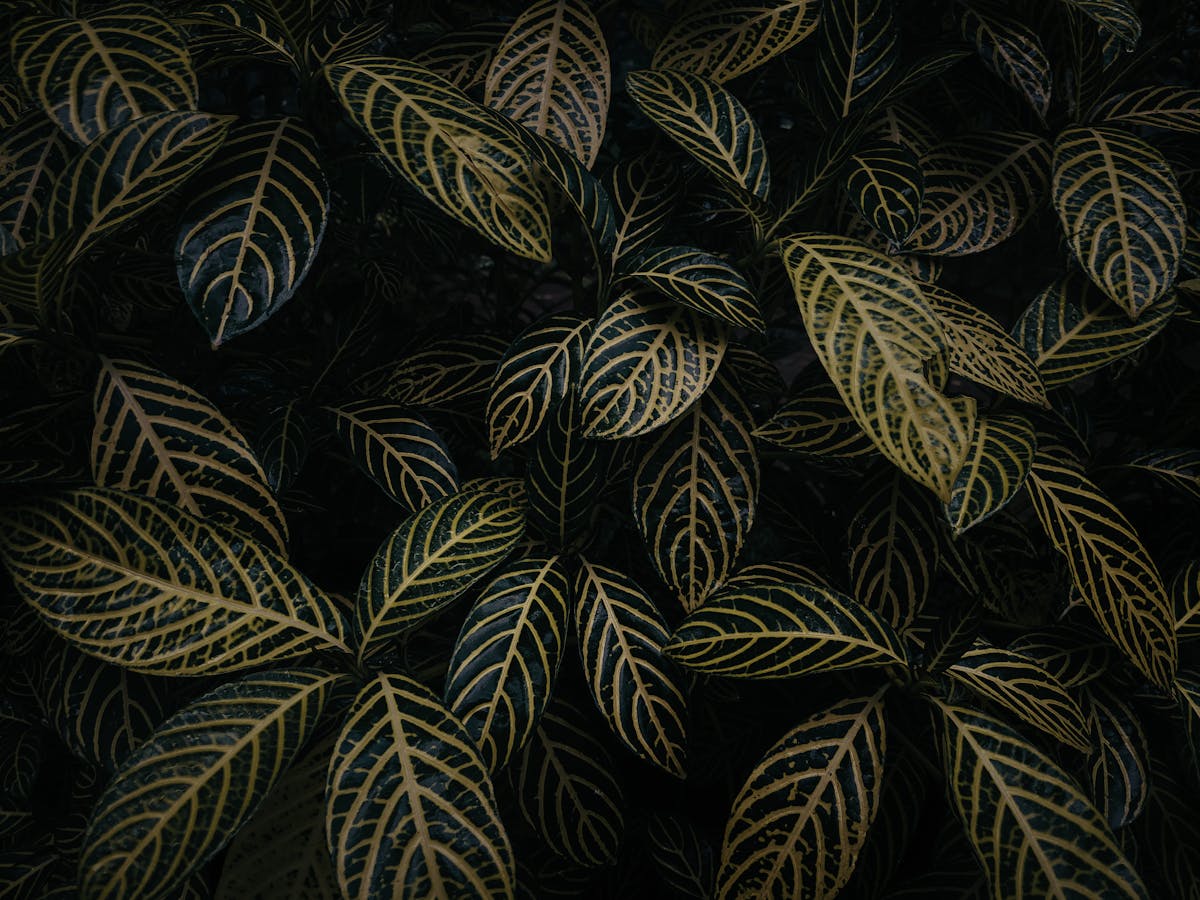
Chlorosis is the umbrella term for any condition in which a leaf loses its green pigmentation. The Wikipedia chlorosis article defines it as the failure of leaves to produce sufficient chlorophyll, and notes that the cause can be nutritional, environmental, or pathological. On Peperomia obtusifolia in indoor cultivation, four distinct chlorotic mechanisms produce visibly different patterns:
Mechanism 1 — Enzymatic dismantling for nutrient remobilisation. When the plant detects a nitrogen or magnesium shortage in the substrate, it triggers a programmed degradation of chlorophyll in older leaves. The released nitrogen and magnesium are translocated upward through the phloem to fuel new-leaf production. The visible result is bottom-up yellowing with otherwise firm leaves and a healthy plant otherwise. This is mobile-nutrient remobilisation, and it is the diagnostic signature of a hungry plant that is being a hungry plant — not a sick one.
Mechanism 2 — Iron lockout under alkaline pH. Iron is a structural cofactor in the enzyme that synthesises chlorophyll. Without iron the plant cannot build new chlorophyll, even when the rest of the chlorophyll machinery is intact. The catch: iron is immobile in plant tissue once placed, so iron deficiency produces yellowing in new growth rather than old. The further catch: iron precipitates out of soil solution at pH >7.0, becoming chemically inaccessible to the roots even when present in adequate amounts. The combination — alkaline tap water + immobile iron + new-growth chlorophyll synthesis — produces the classic interveinal chlorosis pattern: yellow leaf tissue with persistent dark-green veins on the newest leaves. The veins are green because they were built before the new tissue ran out of iron-dependent chlorophyll synthesis.
Mechanism 3 — Vascular failure from root anoxia. When roots die from continuous substrate saturation, the plant loses the ability to transport any minerals from substrate to canopy — not just nitrogen, not just iron, but all of them. The result is systemic chlorosis: uniform yellowing across the whole plant simultaneously, often accompanied by soft mushy leaves and the plant wilting in wet substrate. This is not nutrient deficit; it is mineral-delivery failure. Adding fertiliser produces no recovery because the delivery system is broken, not the supply.
Mechanism 4 — Light-deficit canopy reduction. Below approximately 800–1,000 lux of sustained light, the plant cannot photosynthesise enough carbohydrate to maintain its full canopy. It strategically sheds the least-productive (lower, shaded) leaves by triggering chlorophyll degradation and abscission. This pattern is bottom-up like nitrogen mobilisation, but is driven by light rather than nutrients; the diagnostic discriminator is the light measurement, not the leaf appearance.
2. The Pattern-Based Diagnostic Framework
The reliable approach is to identify the pattern before identifying the cause. Pattern first, hypothesis second, intervention third.
Bottom-up vs top-down. Look at the plant overall. If yellowing started on the lowest leaves and is progressing upward, the cause involves a mobile nutrient (nitrogen, magnesium, potassium) or an absorption failure (root rot, light deficit). If yellowing started on the newest leaves at the top, the cause involves an immobile nutrient (iron, manganese, calcium) or a chemical lockout (alkaline pH).
Uniform vs interveinal. Look at the texture of yellowing within a single leaf. If the whole leaf is uniformly pale, the cause is general (root rot, nitrogen, light, acclimation). If the tissue is yellow but the veins remain sharply green ("green skeleton" pattern), the cause is iron-specific or magnesium-specific — interveinal chlorosis is the signature of a chlorophyll-synthesis cofactor missing.
Firm vs mushy. Squeeze the yellow leaf gently. If it is still firm and turgid, the plant has a functional vascular system and the cause is nutritional or environmental. If it is soft and squishy, the vascular delivery has failed — almost always root rot, with the soft leaf being the visible end of the failure.
Substrate moisture and smell. Check the substrate. Wet + sour smell + yellow + soft leaves = active Pythium or Phytophthora infection in the root zone. Dry + yellow + firm leaves = the yellowing is not anoxia-driven; consider acclimation, light, or nutrient causes. Moderate moisture + yellow on new growth + green veins = pH lockout.
This four-question framework distinguishes the major causes in under five minutes per specimen. The intervention follows from the diagnosis.
3. Root Anoxia — The Most Common Cause
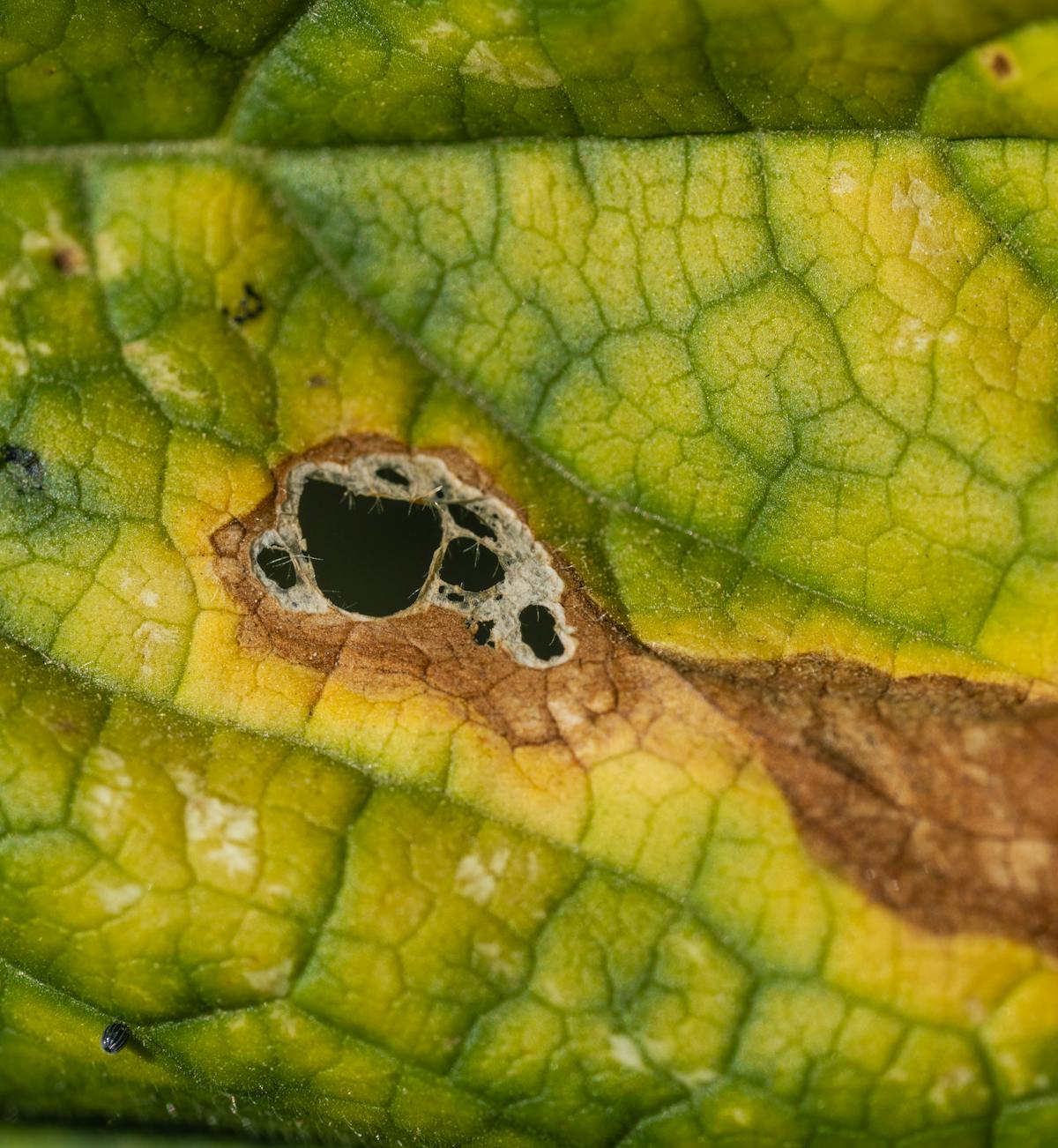
The single most common cause of yellow leaves on Peperomia obtusifolia is overwatering producing root anoxia. The site's editorial position is explicit: Peperomia obtusifolia tolerates <5 days of continuous saturation before root respiration fails and the Pythium/Phytophthora pathogens that are ubiquitous in indoor substrates colonise the dying roots. The resulting yellow leaves are not nutrient-deficient — they are receiving no nutrients at all, because the delivery system is broken.
The diagnostic case pattern is consistent across reader correspondence: a reader reports leaf yellowing beginning at the lower whorl and progressing upward; substrate is moist or wet on inspection; the plant has been watered weekly on a fixed schedule for several months. The diagnostic key is wilting in wet substrate — soft yellow leaves on a plant whose substrate is wet, with a sour smell at the soil surface and soft brown roots if the plant is unpotted. Adding more water at this point accelerates the failure; adding fertiliser produces no recovery because the constraint is mineral delivery, not mineral supply.
The intervention is procedural, not chemical: unpot the plant, rinse the root mass under running water to clear away dead substrate, prune all soft black roots back to firm white tissue with sterile shears, repot into fresh free-draining substrate (50% coir / 30% perlite / 20% bark) in a smaller pot if necessary, and resume watering only when the top 2–3 cm is fully dry. The full protocol is documented in the overwatering-rescue guide; the yellow leaves themselves do not recover but new growth emerging after the rescue is the indicator of success.
4. pH Lockout — The Chemistry of Alkaline Substrate
The second-most-common cause is nutrient lockout at alkaline substrate pH — the underlying chemistry of interveinal chlorosis on new growth.
Peperomia obtusifolia performs optimally at substrate pH 6.0–6.6 (slightly acidic). As pH drifts upward toward 7.0 and beyond — which happens slowly over 6–18 months of watering with municipal tap water that contains dissolved calcium and bicarbonate at typical hardness levels — three minerals undergo a chemical phase change that makes them physically inaccessible to the roots:
- Iron (Fe) precipitates as iron hydroxide above pH 7.0, becoming an insoluble solid that root membranes cannot transport.
- Manganese (Mn) undergoes a similar precipitation above pH 7.5.
- Phosphorus (P) binds tightly to calcium at high pH, forming calcium phosphate that is structurally bound to substrate particles.
The plant is starved of these elements even when the substrate contains abundant total amounts of each. Because iron is the most directly involved in chlorophyll synthesis, the most visible symptom is interveinal chlorosis on new growth — the diagnostic pattern familiar from limestone-soil grape vineyards in regions like Barolo and Burgundy.
The intervention is two-stage:
-
Substrate flush. Take the plant to a sink and run 2–3 pot-volumes of distilled water, rainwater, or filtered water through the substrate from above, allowing free drainage out of the bottom. This physically leaches the accumulated calcium and bicarbonate salts that have been pushing the pH upward. Repeat if the runoff is visibly hard or has a high mineral content.
-
Chelated iron application. Use chelated iron (Fe-EDDHA) at label rate. Chelation wraps the iron atom in an organic protective molecule that prevents the precipitation reaction with hydroxide ions — chelated iron remains in solution even at pH 7.5–8.0 and is absorbable by roots. This is the standard treatment in commercial horticulture for iron deficiency under alkaline conditions; for indoor Peperomia the same product applied as a substrate drench produces visible new-growth recovery within 3–6 weeks.
For chronic substrate alkalinity, a pH testing kit is a worthwhile one-time purchase to verify before each repot — and a switch to filtered or rainwater for routine watering prevents recurrence.
5. Nutrient Mobility — Why the Location Matters
The mobile/immobile distinction within plant nutrition is the most useful diagnostic framework for yellowing patterns. The site's fertiliser guide covers the mineral list in detail; the locations table below is the diagnostic shortcut.
| Nutrient | Mobility | Deficiency shows on | Visible pattern |
|---|---|---|---|
| Nitrogen (N) | Mobile | Older (lower) leaves first | Uniform pale yellow, firm |
| Magnesium (Mg) | Mobile | Older leaves first | Interveinal yellow, green veins, older leaves |
| Potassium (K) | Mobile | Older leaves first | Yellow margins progressing inward |
| Iron (Fe) | Immobile | New (top) leaves first | Interveinal yellow, green veins, new growth |
| Manganese (Mn) | Immobile | New leaves first | Similar to iron, slightly less sharp veins |
| Calcium (Ca) | Immobile | New leaves first | Cupped or distorted new leaves |
| Sulphur (S) | Immobile | New leaves first | Uniform pale new growth (rare on this species) |
The procedural rule: if yellowing is bottom-up, look for mobile-nutrient deficit or vascular failure (overwatering). If yellowing is top-down, look for immobile-nutrient lockout (alkaline pH) or absorption failure. The pattern is decisive in 80%+ of cases without needing any soil test at all.
For a confirmed mobile-nutrient deficit on a healthy-rooted plant, the intervention is straightforward: a balanced NPK fertiliser at 50% strength of label rate, applied monthly during the spring–summer growing season only. For magnesium-specific older-leaf interveinal chlorosis, a one-time magnesium sulfate (Epsom salt) drench at 1 teaspoon per 4 litres of water is the targeted intervention.
6. Other Causes — Light, Water Quality, Acclimation, Pests
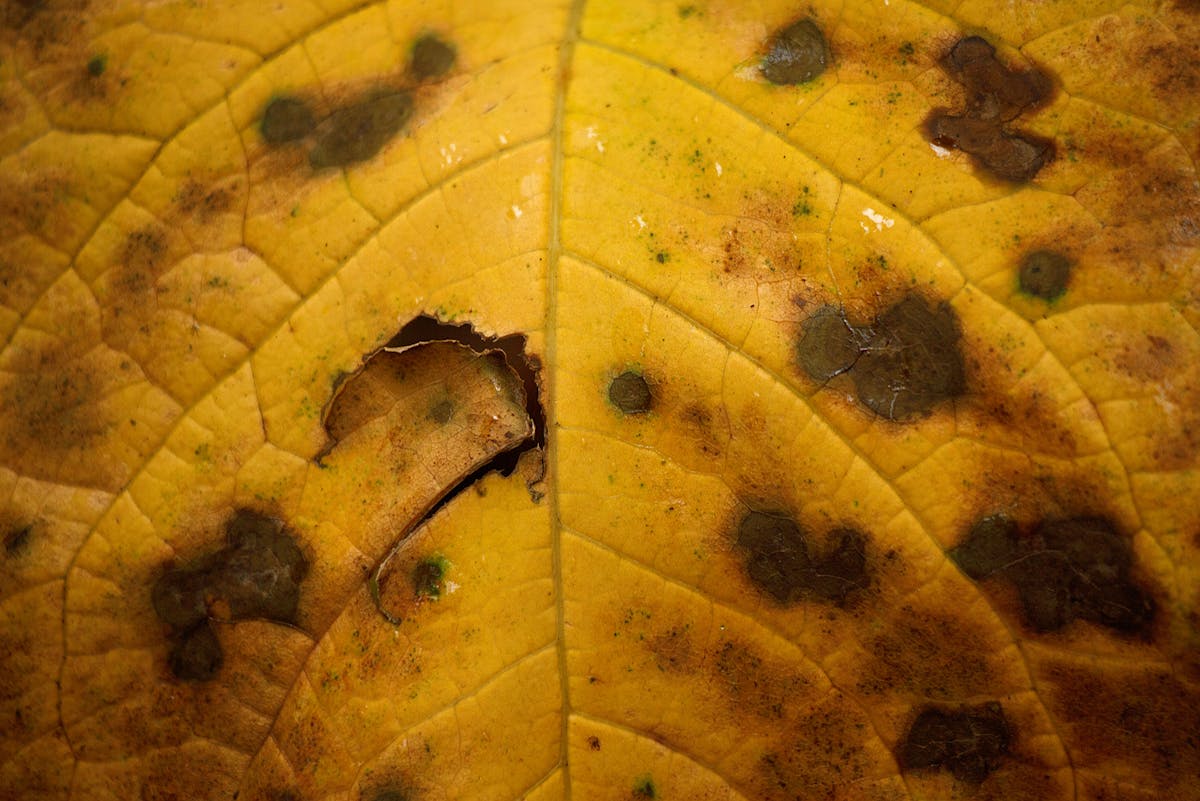
The four major causes above account for the majority of yellow-leaf cases on Peperomia obtusifolia. Three secondary causes complete the diagnostic checklist:
Light deficit at sub-1,000 lux. A plant placed 2–3 m from a window in a fluorescent-lit room may receive only 200–800 lux of usable light — below the species' tolerated minimum. The plant responds by triggering chlorophyll breakdown and abscission in the lowest leaves to reduce canopy maintenance cost. This pattern looks identical to nitrogen mobilisation; the discriminator is a light measurement (phone app or dedicated meter at leaf level). The intervention is relocation to 2,000–4,000 lux, not fertiliser.
Chlorine, fluoride, and mineral accumulation from tap water. Municipal water typically contains 0.5–4 mg/L chlorine and variable fluoride. Both accumulate at leaf tips, producing localised browning often preceded by yellowing margins. Combined with the alkaline-pH lockout mechanism in Section 4, tap water is the silent long-term driver of yellowing in many otherwise-well-cared-for specimens. The intervention is switching to filtered, rainwater, or distilled water — see the tap-water guide for the longer mechanism.
Acclimation shock from nursery to home. A newly-purchased specimen often drops 1–3 lower leaves over the first 2–4 weeks as it rebalances its canopy to the lower light, lower humidity, and lower fertiliser regime of a typical home. This is normal and self-corrects as long as new growth remains green. Persistent yellowing past 6 weeks indicates a genuine care problem.
Pest damage. Sap-sucking pests (spider mites, mealybugs, scale insects) drain chlorophyll-containing cell contents directly, producing splotchy or stippled yellow patches that do not follow the bottom-up or interveinal patterns of nutritional causes. Inspect leaf undersides under good light; pest treatment is documented separately in the site's pest guides.
7. Why the Standard "Add Fertiliser" Reflex Is Wrong
The deadpan editorial position: the standard houseplant-blog reflex of "yellow leaves mean your plant needs more fertiliser" is wrong on the most common case — root rot. Adding fertiliser to a plant with rotting roots adds osmotic stress to a vascular system that already cannot deliver what it has; it accelerates the failure rather than addressing it.
The procedural inversion the site repeatedly emphasises is diagnose-first. A plant with yellow leaves has, in approximate frequency order across reader correspondence:
- Root anoxia / Pythium root rot (~50% of cases) — fertiliser harms; intervention is unpotting, root pruning, repot into smaller free-draining pot.
- pH lockout from alkaline tap water (~20%) — fertiliser sometimes helps marginally but the limiting factor is chelated iron, not bulk nutrient supply; intervention is substrate flush plus Fe-EDDHA.
- Nutrient mobilisation from genuine deficit (~15%) — fertiliser helps; this is the case the standard advice was written for.
- Acclimation (~10%) — no intervention; resolves on its own.
- Light deficit / pests / water quality (~5%) — fertiliser does not help; specific intervention required.
The reflex "add fertiliser" is correct in roughly one case in seven. The other six cases either receive no benefit or are actively worsened. The five-minute pattern-based diagnostic in Section 2 takes less time than mixing a fertiliser solution and prevents the common worsening trajectory of intervention that targets the wrong mechanism.
Conclusion
Yellow leaves on Peperomia obtusifolia are a chlorophyll-breakdown signal, not a diagnosis. The pattern identifies the cause: bottom-up uniform yellowing with firm leaves and dry substrate is mobile-nutrient remobilisation (fertiliser-responsive); top-down interveinal yellowing on new growth is iron lockout from alkaline pH (chelated-iron-responsive); whole-plant solid yellow with mushy texture on wet substrate is root anoxia and Pythium colonisation (the most common cause, requiring unpotting rather than more water). The four-question diagnostic framework — bottom-up vs top-down, uniform vs interveinal, firm vs mushy, substrate dry vs wet — distinguishes the major causes in under five minutes. The standard "add fertiliser" reflex is correct in roughly one case in seven; the rest either receive no benefit or are actively worsened by it. Existing yellow leaves do not recover; clean new growth is the indicator that the underlying cause has been resolved.
Related diagnostic and care resources:
- Overwatering Rescue — The Root-Anoxia Recovery Protocol
- Root Rot and the Sour-Smelling Substrate — Pythium Diagnostic
- Fertiliser Guide — Balanced NPK at 50% Strength
- Tap Water and Mineral Accumulation — The Long-Term pH Driver
- Leaching Salts — The Substrate Flush Protocol
- Leaf Curling — Distinguishing Hydraulic Stress from Nutritional Yellowing
- Wikipedia: Chlorosis — The Chlorophyll-Breakdown Mechanism
Care FAQ
Why are my Peperomia obtusifolia leaves turning yellow?
The pattern identifies the cause. (1) Bottom-up uniform yellowing with healthy roots = nitrogen or magnesium remobilisation; the plant is moving mobile nutrients from old leaves to new growth and needs balanced fertiliser at 50% strength. (2) Top-down interveinal yellowing (yellow tissue with persistent green veins on new growth) = iron lockout from alkaline substrate pH; the plant cannot absorb iron despite adequate soil content. (3) Whole-plant solid yellow with mushy stems and wet substrate = root anoxia and Pythium colonisation, the most common cause; adding water or fertiliser accelerates the failure. Diagnose by pattern before intervening.
Can yellow Peperomia leaves turn green again?
Rarely. Once chlorophyll has been enzymatically dismantled and the chloroplast structure has collapsed, the green colour does not return to that leaf. The two exceptions are mild magnesium deficiency (early-stage interveinal chlorosis on older leaves), where magnesium-sulfate application can sometimes restore partial colour within 2–3 weeks, and very early chlorosis from pH lockout, where chelated iron application can partially re-green new growth that has not yet completed cell-wall expansion. Treatment success is assessed on new growth, not on existing yellow leaves — clean new leaves are the indicator that the underlying problem is resolved.
Does overwatering cause yellow leaves on Peperomia?
Yes, and it is the single most common cause. Continuous substrate saturation produces root anoxia within ~5 days, followed by Pythium/Phytophthora colonisation. The damaged root system cannot transport nitrogen and other minerals to the canopy, producing systemic yellowing despite the substrate being visibly wet. The diagnostic key — covered in detail in the overwatering rescue guide — is wilting in wet substrate: yellow soft leaves on a plant whose substrate is moist or wet. Adding more water accelerates the failure; the correct intervention is to unpot, inspect roots, and rescue what is viable.
What is the difference between chlorosis and root rot yellowing?
Chlorosis is a mineral-deficit pattern: typically interveinal (yellow tissue with sharp green veins on new growth from iron lockout, or on older growth from magnesium deficit), leaves retain firm texture, substrate is at normal moisture, and the plant is otherwise healthy. Root-rot yellowing is a vascular-failure pattern: typically uniform solid yellow across the whole leaf, soft mushy texture, substrate wet, sour smell at the substrate, and stems may be softening at the base. The two require opposite interventions — chlorosis needs nutrient or pH correction; root rot requires unpotting and aggressive pruning of black roots. Confusing them produces worsening outcomes either way.
How do I fix interveinal chlorosis on Peperomia obtusifolia?
The three-step recovery protocol: (1) Substrate flush — run 2–3 pot-volumes of low-mineral water (distilled, rainwater, or filtered) through the pot from above to leach accumulated calcium and sodium salts that are driving the substrate alkaline; (2) Chelated iron application — apply Fe-EDDHA at label rate to bypass the pH lockout (chelation keeps iron available even at pH 7–8 where free iron precipitates); (3) Optimise light to 2,000–4,000 lux — chlorosis recovery requires energy for new chlorophyll synthesis, and the plant cannot rebuild green tissue at sub-1,000 lux. Recovery shows on new growth within 3–6 weeks; existing chlorotic leaves do not re-green substantially.
Are yellow leaves on a new Peperomia normal?
Often, yes. Nurseries supply optimised conditions — 80%+ RH, 12 h of bright light, continuous feeding. The transition to a typical indoor environment (40–50% RH, 1,500–3,000 lux, no fertilising during quarantine) is a step down across multiple parameters, and the plant responds by shedding the lowest 1–3 leaves over 2–4 weeks to right-size its canopy to the new energy budget. The acclimation pattern: bottom-up yellowing limited to the lower whorl, with new growth at the top remaining green and healthy, no substrate problems, no pest signs. This is normal and self-corrects. Persistent yellowing past 6 weeks indicates a genuine care problem rather than acclimation.
Should I cut off the yellow leaves?
Yes, once you have confirmed the underlying cause is addressed. Yellow leaves do not recover and do not contribute meaningful photosynthesis; leaving them in place wastes the plant's maintenance energy on tissue that cannot produce. Prune at the petiole base with sterile shears once new growth has resumed green. Do not prune before diagnosis — the location and progression of yellowing is the primary diagnostic information; removing the evidence removes the ability to identify the cause.