Peperomia Problems: Symptoms, Causes and Fixes
Most Peperomia problems trace back to one of three levers — substrate moisture, light level, or airflow — and not to a pest, unless a specific organism or lesion is actually visible. The practical next step is to identify which category the symptom falls into using the table below, then confirm with the substrate-and-roots check before treating for anything else. The one exception that changes this: a soft, black, mushy stem or a sour smell from the pot is an active infection and needs immediate attention rather than a wait-and-see approach.
Not sure which row matches? The Peperomia problem checker asks what you see and whether the soil is wet or dry, then points to the most likely cause.
| Symptom | Location | Most likely cause | Full guide |
|---|---|---|---|
| Yellowing, lower leaves only | Older growth | Nitrogen remobilisation (often normal) | Yellow leaves |
| Yellowing, whole plant, wet substrate | All growth | Root anoxia / overwatering | Overwatering rescue |
| Crispy brown tips/margins | Leaf edges | Salt buildup, cold draft, or sustained low humidity | Humidity guide |
| Corky, raised bumps underneath | Leaf undersides | Oedema — cool air, wet roots | Oedema treatment |
| Dark spots with a yellow halo | Leaf surface | Bacterial or fungal leaf spot | Fungal vs bacterial spot |
| White, dusty coating | Leaf surface | Powdery mildew | Powdery mildew |
| Cupped or twisted new growth only | New leaves | Transpiration-limited calcium delivery (still air) | See Common Mistakes, below |
| Soft, whole-leaf wrinkling, light pot | Whole plant | Underwatering | Watering guide |
| Wilting, substrate wet/sour | Whole plant | Root rot | Overwatering rescue |
| Soft, black, mushy stem | Stem base or nodes | Fungal stem rot (Pythium) | Stem rot |
| Sudden leaf drop, leaves still green | Whole plant | Cold shock or root anoxia (ethylene response) | Sudden leaf drop |
| Fine webbing, stippled leaves | Leaf undersides | Spider mites, favoured by RH below 40% | Spider mites |
| Cottony white tufts in leaf axils | Stem joints | Mealybugs | Mealybugs |
| Twisted, silvered new growth | New leaves | Thrips | Thrips |
| Small flies near the substrate surface | Soil surface | Fungus gnats (larvae in top 2 cm) | Fungus gnats |
1. Abiotic vs Biotic: The Distinction That Narrows Most Cases Fast
Every symptom on this species falls into one of two categories, and identifying which one narrows the likely cause immediately. Abiotic problems are environmental or nutritional — a response to substrate moisture, light, humidity, temperature, or mineral accumulation, with no living organism involved. Biotic problems involve a pest or pathogen — mites, mealybugs, thrips, fungi, or bacteria. Abiotic symptoms tend to appear diffusely across the plant and correlate with a recent change in care or season; biotic symptoms usually start in one location, involve a visible organism, webbing, or residue, and spread outward from that point if untreated.
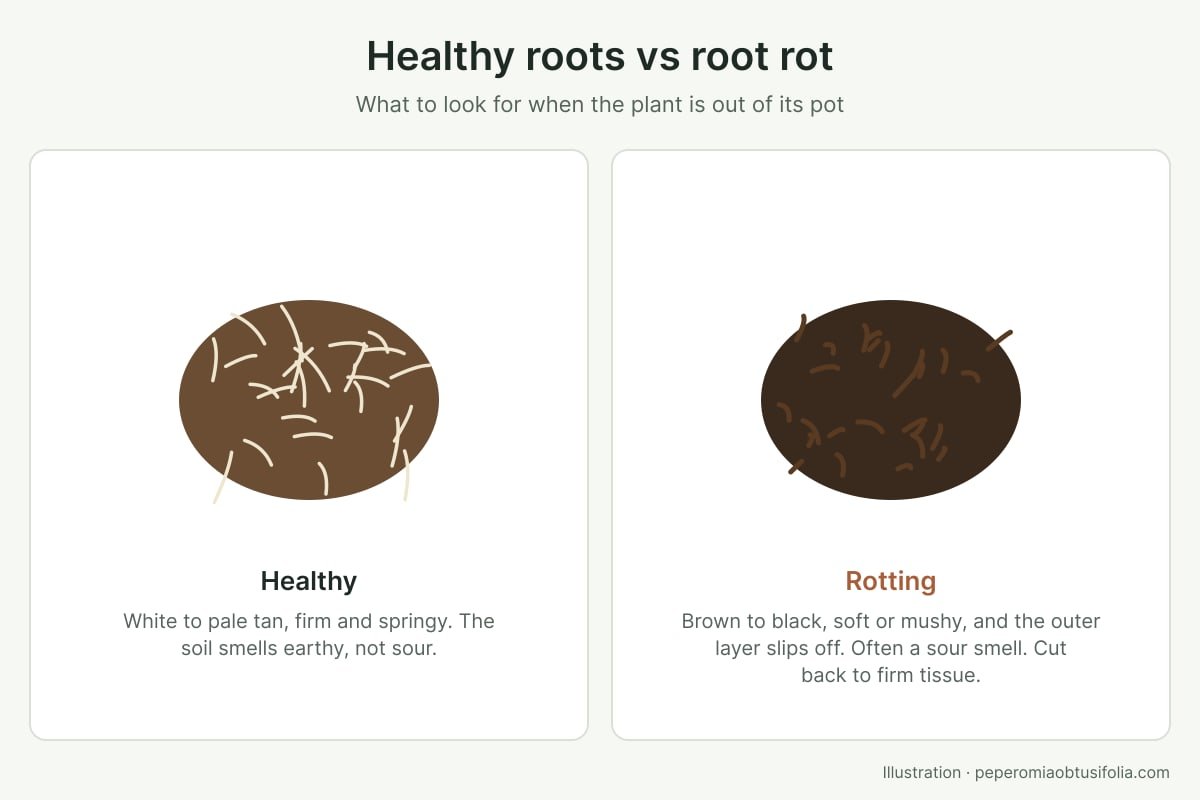
A common situation illustrates why this distinction matters more than most growers expect. A plant shows leaf yellowing starting at the lower whorl and progressing upward; the substrate is moist or wet on inspection; the grower has been watering on a fixed weekly schedule for months. The instinct is to treat this as a nutrient or pest problem. What is actually happening is that soil kept wet for long periods has lost its air spaces, root respiration has failed, and Pythium or Phytophthora has colonised the oxygen-starved roots — both recorded as causes of rot in Peperomia by University of Illinois RPD 653, and NC State Extension warns that wet soil causes root rot. The plant is wilting or yellowing in wet substrate — root failure, not underwatering or a nutrient deficiency — and the diagnostic key is exactly that combination: yellowing or wilting plus moist-to-wet substrate plus, often, a sour smell. Adding water, or a general "tonic" fertiliser, accelerates the failure rather than correcting it.
The standard advice to "keep the soil consistently moist" is the single most damaging instruction this species receives, and it is the root cause behind a disproportionate share of the "problems" this page indexes. P. obtusifolia is a semi-succulent facultative epiphyte adapted to a dry-down cycle between waterings, not continuous moisture. Reflexively watering on a schedule, rather than checking the top 2–3 cm of substrate first, is worth ruling out before any other diagnosis on this list.
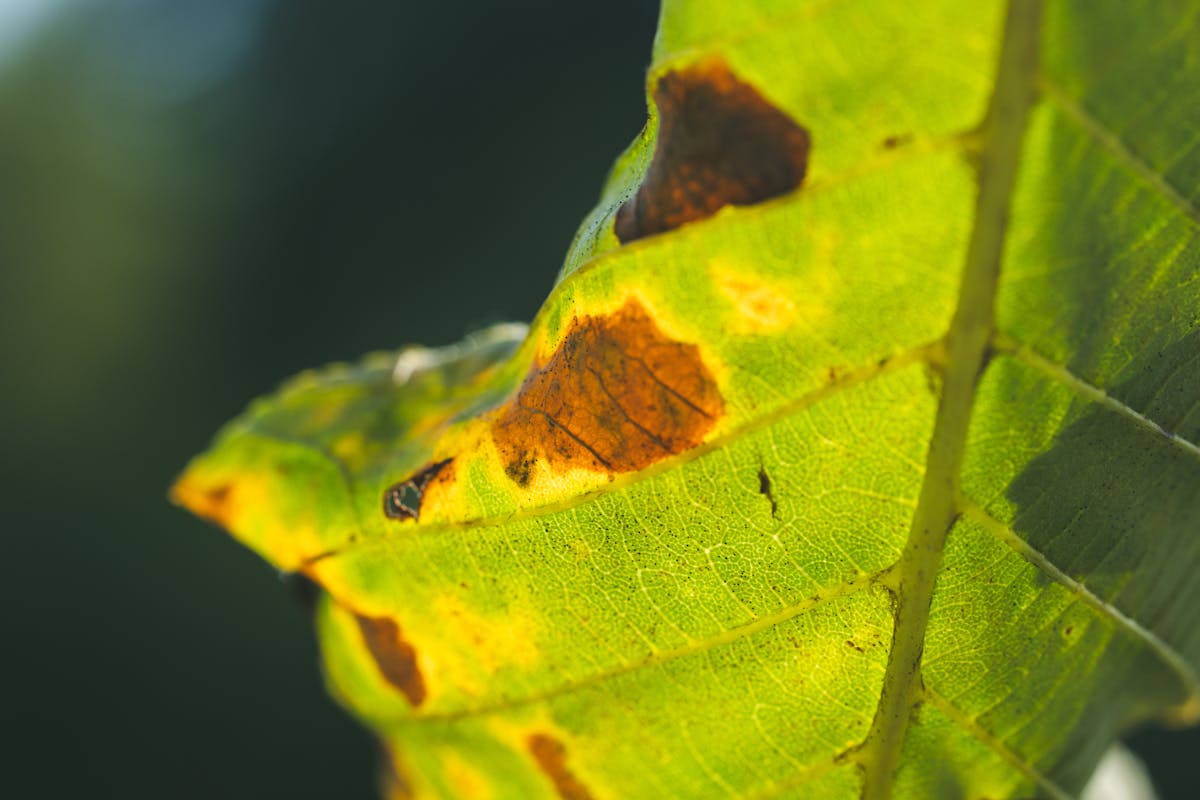
A second, smaller distinction is worth making inside the biotic category itself: pest damage and pathogen damage look different under close inspection. Pest damage (mites, mealybugs, thrips) shows the organism itself, or its residue — webbing, cottony masses, faecal specks — alongside the plant tissue. Pathogen damage (bacterial or fungal leaf spot, stem rot) shows no organism visible to the eye, only the lesion or discolouration the infection produces. Treating a fungal lesion with an insecticide, or a mite infestation with a fungicide, delays the correct treatment by however long it takes to notice the first approach did nothing.
2. Factors That Change the Diagnosis
- Season. Growth slows to near-zero from November to February in most temperate homes. Slow growth, minor lower-leaf yellowing, or a temporary pause in new leaves during this window is often normal metabolic slowdown, not a developing problem — the same symptom in June warrants a closer look.
- Recent repotting or transplant. A plant repotted in the last few weeks has reduced root function and lower vigour; some transient leaf droop or a pause in new growth is expected and does not necessarily indicate a new issue layered on top.
- Humidity band. Below roughly 30% RH sustained, expect margin desiccation and higher spider-mite pressure — spider mites are listed among the pests of this species by the Missouri Botanical Garden and NC State Extension; above roughly 75% RH with stagnant air, expect higher fungal and bacterial leaf-spot risk instead. The same visual symptom (a leaf-surface lesion) points to a different cause depending on which side of that band the room sits on.
- Water source and feeding history. Chronic bottom-watering without periodic top-flushing, or fertilising through winter, both raise substrate salt concentration, which produces tip and margin browning that mimics low-humidity stress but does not respond to a humidifier.
- Pot material and light level together. A terracotta pot in a low-light spot dries faster than the plant's reduced water demand in that light level, which can produce underwatering symptoms even on a normal watering schedule.
3. Practical Actions: How to Diagnose a Specific Case
- Check the substrate first, before anything else, for any wilting, yellowing, or general decline. Push a finger or skewer to 2–3 cm depth. Dry and light: consider underwatering or the specific abiotic causes in the table above. Moist, wet, or sour-smelling: suspect root rot and unpot to inspect the roots before adding any more water.
- Locate the symptom precisely — which leaves (old vs new), which surface (top vs underside), and whether it is confined to one area of the plant or spread across all growth. This single observation is what separates most of the rows in the diagnostic table.
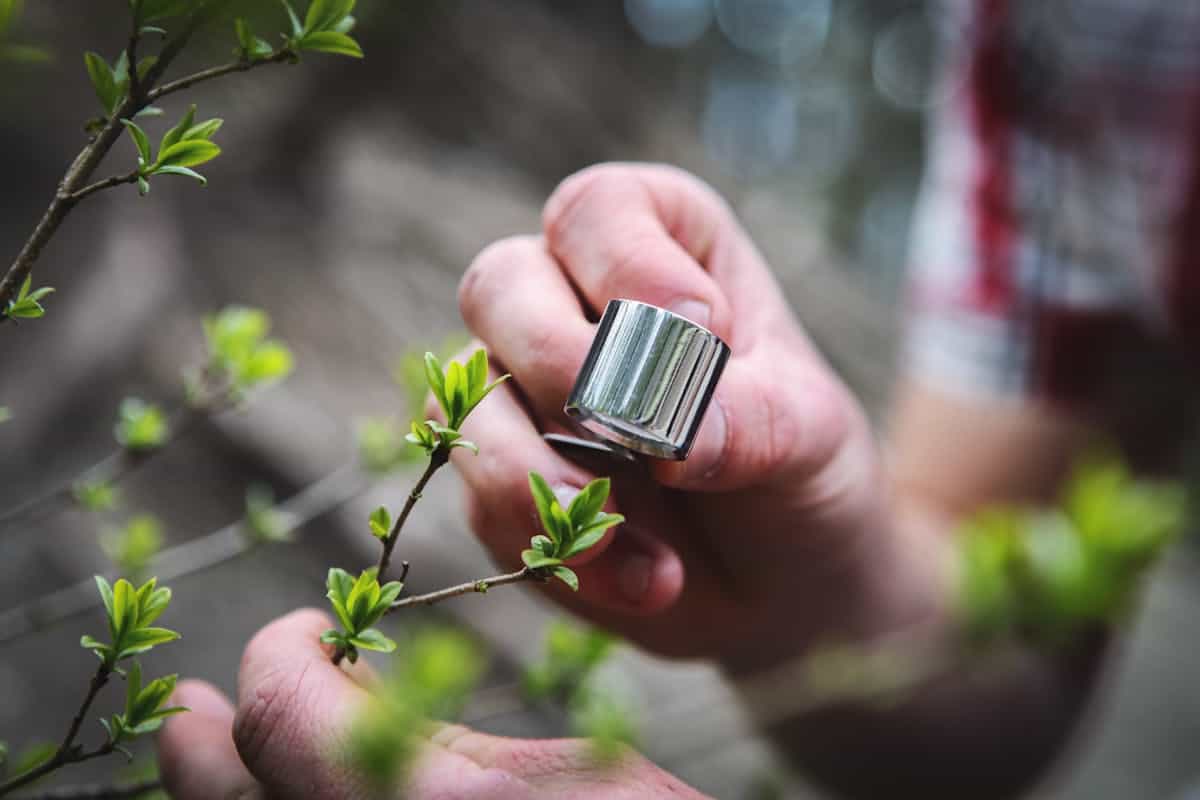
- Look for a living cause with a hand lens or phone camera zoom before assuming an environmental one: webbing, cottony masses in leaf axils, fine moving specks, or a lesion with a sharply defined edge or yellow halo all point to a pest or pathogen rather than a care-level issue.
- Check recent changes: a new location, a new watering routine, a season change, or a new fertiliser regimen in the past two to four weeks. Most abiotic symptoms trace back to something that changed shortly before the symptom appeared.
- Escalate only for active spread. A confirmed pest population, an active fungal or bacterial lesion, or stem tissue that is visibly softening should be treated promptly; a single cosmetic symptom with no progression over one to two weeks of observation does not require intervention.
4. Common Mistakes and Myths
- Treating every yellow leaf as a nutrient deficiency. Lower-leaf yellowing is frequently normal nutrient remobilisation; whole-plant yellowing with wet substrate is root failure. Neither responds to a "tonic" fertiliser, and fertilising an already-stressed, waterlogged plant adds osmotic stress on top of an existing problem.
- Misting to fix brown tips. A spray bottle raises humidity only for a few minutes and does nothing for salt accumulation or cold-draft damage, the two more common causes of tip browning in this species; it also adds standing-water risk for fungal and bacterial leaf spot.
- Assuming pests without inspecting first. Broad-spectrum pesticide applied to an abiotic problem (a nutrient or humidity issue) does not resolve the symptom and adds unnecessary chemical exposure to a plant that was never infested.
- Treating cupped or twisted new growth as a calcium deficiency to be fertilised away. Calcium is phloem-immobile and travels only in the transpiration stream; in still air, low transpiration prevents calcium from reaching the developing meristem even when substrate calcium is entirely adequate. The fix is increased airflow — a gentle fan or repositioning away from a stagnant corner — not added calcium.
- "Rescuing" a wilted plant by watering immediately. Diagnose first. Wilting in wet substrate is root failure; adding water accelerates it rather than reversing it.
5. Related Care Implications
A plant already showing one of these symptoms changes the calculus for other care decisions. Hold off on pruning beyond removing visibly dead or infected tissue until the underlying cause is corrected — cutting a stressed plant back hard compounds the energy deficit it is already managing. A specimen grown in LECA avoids several substrate-moisture-driven problems on this list (root anoxia, fungus gnats) by design, though it introduces its own nutrient-management considerations. And for growers who selected this species partly for its display value — the rounded, glossy-leaved form referenced in the feng shui placement guide — a declining plant undermines that value directly: correcting the underlying cause is the only route back to the compact, glossy form the placement was chosen for. For the plant's full baseline care requirements, see the complete care guide.
A declining plant occasionally raises a separate question in households with pets or children: whether the plant itself, rather than whatever caused the decline, is a safety concern. P. obtusifolia is listed as non-toxic to cats, dogs, and horses by the ASPCA — see the toxicity guide for the full profile. That does not extend to any fungicide, pesticide, or salt-flushing treatment applied while correcting one of the problems above; follow the product label for pet and child safety regardless of the plant's own toxicity status.
Conclusion
Diagnosis on this species is a matter of sequence, not guesswork: check the substrate and roots first, identify whether the symptom is diffuse (abiotic) or localised with a visible organism (biotic), then match the specific pattern against the table above. The majority of cases that reach this page trace back to substrate moisture, light, or airflow — corrected at that level, most symptoms resolve without needing a pest treatment or a fertiliser change at all.
Care FAQ
Why are my Peperomia leaves turning yellow?
The pattern tells you which cause. Yellowing confined to the lower, older leaves is usually mobile-nutrient remobilisation as the plant recycles from older tissue — often harmless. Yellowing across the whole plant, especially with moist or wet substrate, points to root anoxia from overwatering, which stops the roots taking up minerals at all. See the yellow leaves guide.
How do I tell a pest problem from an environmental one?
Biotic (living) problems — mites, mealybugs, thrips, fungal or bacterial spots — usually show a visible organism, webbing, cottony residue, or a lesion with a defined edge or halo, and often start in one location before spreading. Abiotic (environmental) problems — light, humidity, salts, temperature — usually appear as a diffuse pattern across many leaves at once, tied to a recent change in care or season.
Is a wilting plant always underwatered?
No. Check the substrate before adding water. Wilting with dry, light substrate is dehydration. Wilting with moist or wet substrate is more often root rot — the roots have died and can no longer maintain the hydrostatic pressure that keeps the plant upright, and adding more water accelerates the failure rather than fixing it.
What causes corky bumps on the underside of the leaves?
This is oedema: cool temperatures close the stomata while the roots, in wet substrate, continue pushing water into the leaf. Internal pressure ruptures epidermal cells on the underside, leaving corky, raised scarring. It is a hydraulic event, not a pest or fungal disease, and the fix is to let the substrate dry down, not to increase humidity.
Do I need to worry about every brown leaf tip?
Not necessarily. Isolated tip browning on one or two older leaves, especially with a white or chalky surface residue, is usually mineral salt accumulation from tap water or fertiliser and is cosmetic. Widespread crisping across new and old growth alongside consistently dry air below 30% RH is a genuine environmental signal worth correcting.
When does a Peperomia problem need immediate action rather than monitoring?
Act promptly for a soft, black, mushy stem (active rot, which spreads), a sour smell from the substrate (anaerobic root decay), or fine webbing with rapidly spreading stippling (an active spider mite population). Cosmetic issues — isolated tip browning, a little yellowing on one old leaf, a flower spike you find unattractive — do not require urgent intervention.