Best Pot Size for Peperomia: Avoid Root Rot
The best pot for Peperomia obtusifolia is only one inch (2.5 cm) larger in diameter than its current root ball, and shallow relative to its width rather than deep. Sizing up further, or choosing a deep pot over a wide, shallow one, creates a volume of substrate the plant's small root system cannot draw down before it turns anaerobic — the single most common cause of container-grown root rot in this species. The conditions that change this default are pot material and how consistently you tend to overwater, both covered below.
Decision Criteria: What Actually Determines the Right Size
Two mechanisms decide whether a given pot size works for this species, and both come down to how quickly the roots can remove water relative to how much substrate is holding it.
The perched water table. Water in any container is governed by gravity pulling it down and capillary tension holding it at the base — the result is a saturated layer at the bottom of every pot that does not drain away on its own, known as the perched water table. In a pot sized to the root ball, this zone sits below or within reach of enough roots to be drawn down quickly. In an oversized pot, the same saturated zone is larger and surrounded by proportionally fewer roots, so it persists. When soil stays wet for long periods, the roots run short of oxygen and that zone becomes the entry point for root rots such as Pythium and Phytophthora (University of Illinois RPD 653).
Root-to-substrate ratio. A pot with many roots relative to its substrate volume — the state most growers call "root-bound" — empties its water reserve quickly and returns to an oxygenated, dry state between waterings. A pot with few roots relative to a large substrate volume does the opposite: the plant cannot consume water fast enough to keep the rhizosphere aerated, regardless of how correctly it is watered. This is why P. obtusifolia is one of the species that genuinely benefits from being slightly root-bound rather than generously potted.
Root depth versus pot depth. P. obtusifolia is a facultative epiphyte adapted to bark crevices and shallow leaf litter, and its root system reflects that: fine, fibrous, and concentrated near the surface rather than descending as a deep taproot. A tall, narrow pot filled with substrate places a meaningful portion of that column below where the roots actually reach, and that unoccupied lower zone is exactly where the perched water table sits — wet, unused, and slow to dry because no root activity is drawing it down or aerating it.
Comparing Your Options
| Option | Benefit | Limitation | Best for | Avoid if |
|---|---|---|---|---|
| Snug pot, +1 inch, shallow/wide (e.g. azalea-style) | Matches root-to-substrate ratio; fastest dry-down | Needs repotting sooner as the plant grows | Most situations; the default recommendation | You want to delay repotting for several years |
| Snug pot, +1 inch, standard depth | Still workable if width matches the root ball | Slightly more unused substrate below the roots than a shallow pot | Only shallow/azalea options unavailable in the size needed | — |
| Oversized pot (2+ inches larger) | Delays the next repot | Substrate the roots cannot draw down; elevated rot risk | Rarely justified for this species | You tend to overwater, or the room runs humid |
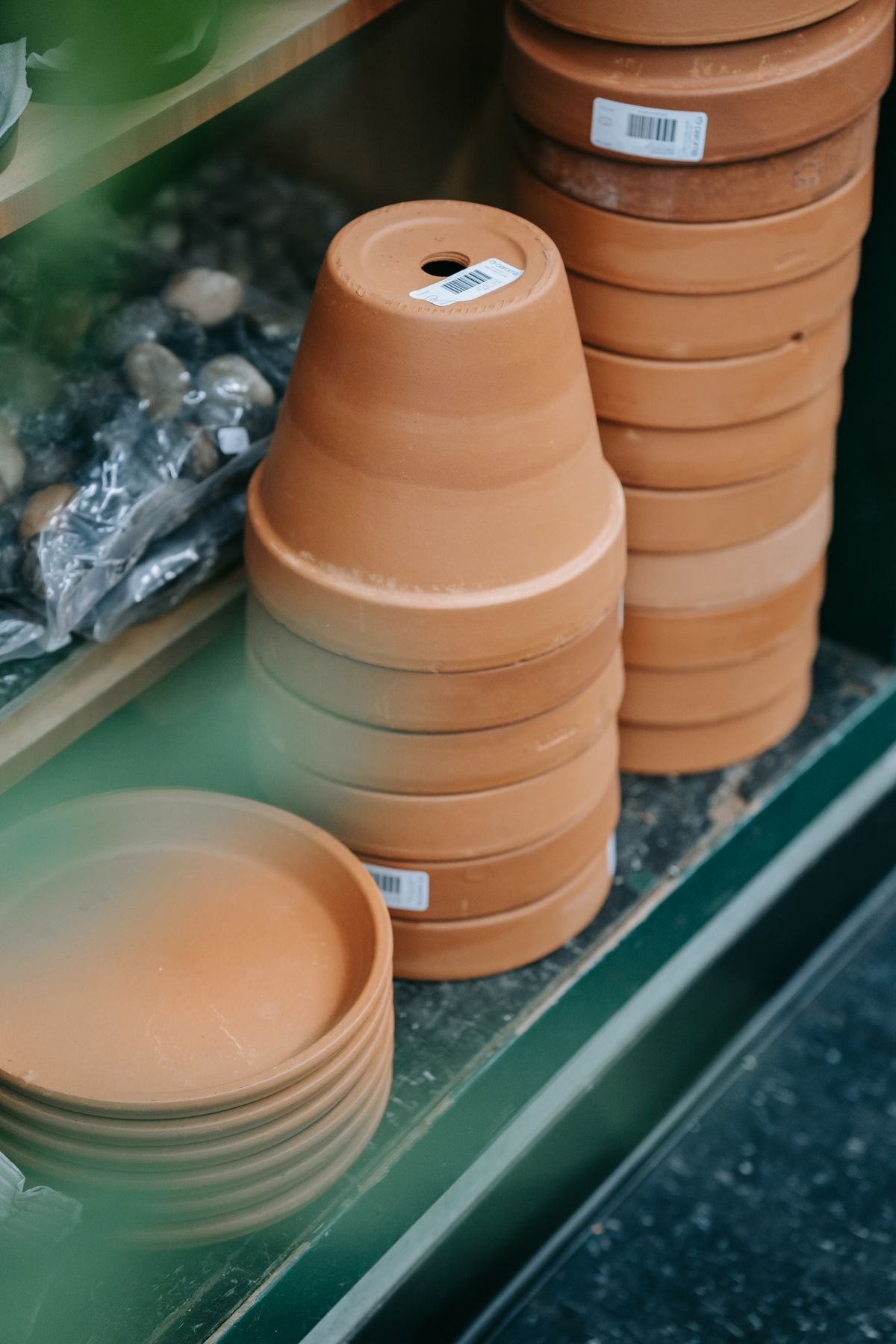
| Unglazed terracotta at the correct size | Wicks moisture through the walls, adding a safety margin | Dries faster in low-humidity rooms; can under-deliver water | Growers prone to overwatering, or higher-RH rooms | Room RH is consistently below 40% |
| Plastic or glazed ceramic at the correct size | Retains moisture longer, useful in dry rooms | No lateral evaporation; relies entirely on the root system and drainage hole | Dry, centrally-heated rooms; growers prone to underwatering | You already overwater — this removes a safety margin |
Size and material interact rather than acting independently: the one-inch rule is the constant, and material is the adjustment layer on top of it. The full material trade-offs, including which finishes and shapes are actually sold as azalea-style pots, are covered in the best pots for Peperomia guide.
Best Choice by Home Situation
- Low light: Growth is already slow, so err toward the smaller end of "snug" rather than sizing up in anticipation of growth that a dim room will not support.
- Dry, centrally-heated room (RH below 40%): Terracotta at the correct size adds a safety margin against overwatering; plastic in the same conditions holds moisture the plant may not need.
- Known tendency to overwater: Terracotta at the correct size, or even a size below "generous," gives the most forgiving margin — the wicking effect through the walls compensates for a heavier hand.
- Small or newly propagated plant: Resist potting directly into a container sized for the plant's expected mature size. A small root system in adult-sized substrate is the most common single mistake behind early root rot in new specimens.
- Variegated cultivars: No change to pot sizing itself, but variegated forms need brighter light than the green form, and a plant already under-lit is doubly vulnerable if its pot is also oversized and slow to dry.
- Frequent travel: A slightly larger reserve of substrate moisture is tempting before a trip, but oversizing the pot is the wrong way to buy that margin — use a self-watering wick system designed for short absences instead of a permanently oversized pot, since the latter stays wet long after the trip ends.
Setting Up the Pot Correctly
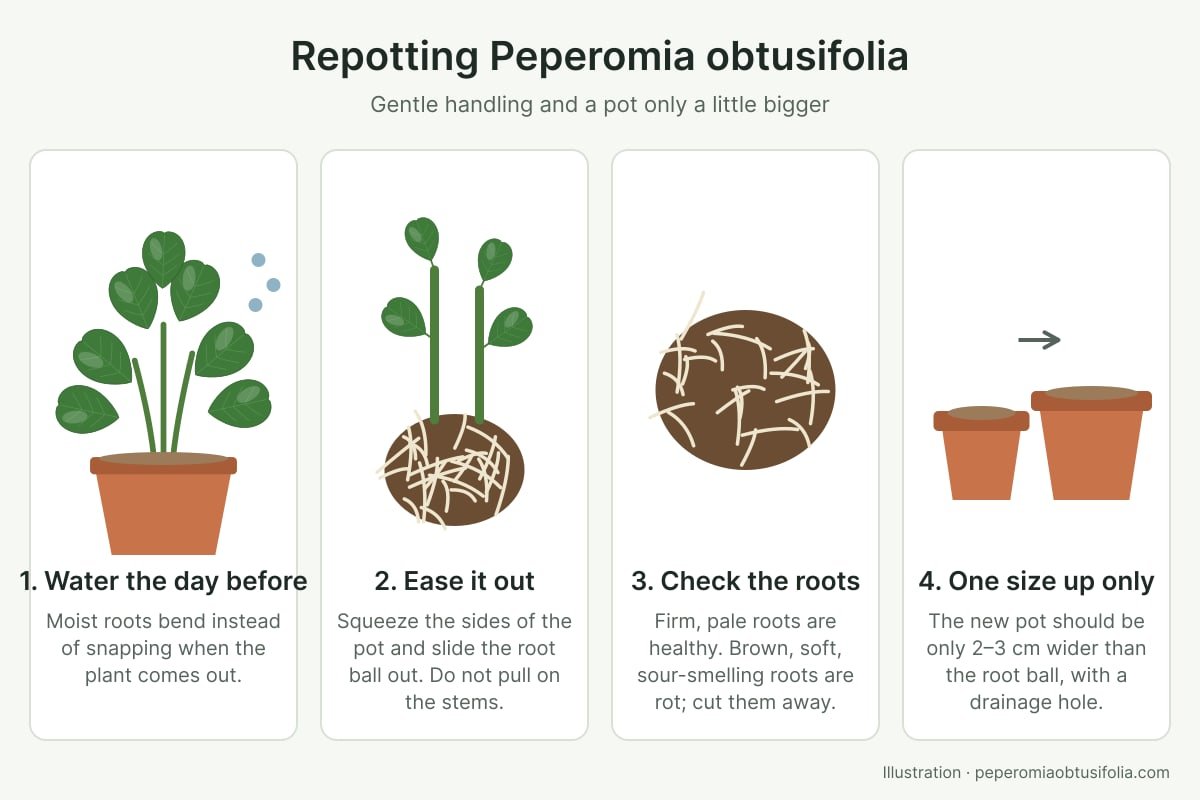
- Measure the current root ball's diameter and choose a new pot exactly one inch (2.5 cm) larger — not more, even if a bigger size is available in the material or style you want.
- Prioritise width over depth. A shallow, wide format (sold as "azalea" or "bulb" pots in some ranges) matches this species' root architecture better than a tall, narrow pot of the same volume.
- Confirm the pot has at least one drainage hole. A single hole and a free-draining substrate — the standard 50/30/20 mix — is the correct configuration; do not add a layer of drainage rocks at the bottom, which raises the perched water table rather than lowering it.
- If using a decorative outer pot with no drainage, keep the plant in its draining nursery pot as a liner (a cachepot arrangement) rather than potting directly into the sealed container.
- Water thoroughly after potting and let it drain fully before returning it to a saucer or cachepot base.
Common Buying and Setup Mistakes
- Sizing up two or more inches "to save on repotting." This is the single most common route to the anaerobic conditions described above.
- Choosing a tall, narrow pot for its appearance without accounting for the unused substrate column beneath a shallow root system.
- Adding gravel or rocks at the base in the belief that it improves drainage — it raises the saturated zone instead of lowering it.
- Potting a small or newly rooted cutting directly into a pot sized for a mature plant, rather than sizing to the plant's current state and repotting again later.
- Ignoring pot material when choosing size — a generously sized plastic pot is a materially different risk than the same size in terracotta, and the two should not be selected on appearance alone.
Signs the Current Pot Is the Wrong Size
Root growth direction also responds to moisture location — a real phenomenon called hydrotropism, in which root tips sense a moisture gradient and grow toward it rather than strictly downward. In an oversized pot, moisture concentrated at the base for extended periods can pull root growth downward into a zone that stays anaerobic between waterings, rather than the reverse problem of a too-small pot, where roots emerging from the drainage holes or a rapidly drying substrate are the more common signals. Either way, the substrate condition — not a fixed schedule — is what confirms which direction the mismatch runs.
Confirm oversizing with a direct check rather than guessing from the calendar: a wooden skewer drawn from mid-pot several days after watering, or the pot-weight comparison described in the watering guide, will show substrate that is still damp well past the point a correctly sized pot would have dried. A pot that is the right size for the current root mass should feel noticeably lighter, and read dry at depth, within the typical 10-14 day summer interval (a rough guide, not a rule).
| Sign | Likely Meaning | Action |
|---|---|---|
| Substrate still wet at depth long after the top has dried | Pot is oversized for the current root mass | Repot into a size matching the one-inch rule |
| Roots visible at drainage holes, watering interval down to every 2-4 days | Pot is now too small | Follow the signs it's time to repot guide before sizing up |
| Sour smell, soft dark roots on inspection | Anaerobic rot already underway | Address as root rot first, then correct the pot size at repotting |
| Plant needs watering weekly in a large pot with no growth to show for it | Root-to-substrate ratio too low to use the water productively | Size down at the next repot rather than adjusting watering alone |
Pot size is a hydraulic decision before it is a matter of appearance or convenience: match the container to the current root ball, favour width over depth, and let the plant's own signals — not the desire to delay the next repot — decide when that changes.
Care FAQ
What size pot is best for Peperomia obtusifolia?
A pot only one inch (2.5 cm) larger in diameter than the current root ball, and shallow relative to its width rather than deep. This species has a small, fibrous, surface-feeding root system, and a pot sized any more generously than that holds substrate the roots cannot draw down before it turns anaerobic.
Why does a big pot cause root rot in Peperomia?
Every container has a saturated layer at the base called the perched water table, held there by capillary tension rather than draining away. In a pot much larger than the root ball, that saturated zone sits below and around roots that are too sparse to absorb it quickly. Soil that stays wet for long periods starves the roots of oxygen and leads to root rot, including Pythium and Phytophthora (NC State Extension; University of Illinois RPD 653).
Should Peperomia be in a deep or shallow pot?
Shallow. As a facultative epiphyte adapted to bark crevices and leaf litter, this species has a wide, fibrous root system rather than a deep taproot, and most of it stays within the upper portion of the substrate regardless of how deep the pot is. A deep pot mainly adds an unused column of substrate below the roots that stays wet far longer than the zone the roots actually occupy.
Does pot material affect what size to choose?
Yes, indirectly. Unglazed terracotta loses moisture through its walls as well as the surface, so it can tolerate being slightly more generously sized than plastic or glazed ceramic, which hold water until it evaporates from the surface or is taken up by the roots. The one-inch rule is still the safer default regardless of material.