
Peperomia Obtusifolia Roots Smell: How to Fix Decay
A sour, sulfurous, or sickly-sweet smell from Peperomia obtusifolia's substrate means root rot has already set in, and appearance alone won't tell you how severe it is — unpot the plant and look at the roots directly before deciding on a fix. The specific smell offers a useful clue to the cause, but the actual severity is judged by root colour and texture, not by odour intensity.
Quick Diagnosis
| Smell | Likely cause | Confirming check | First action |
|---|---|---|---|
| Sulfurous, "rotten egg" | Anaerobic bacteria in waterlogged substrate | Substrate has been consistently wet; roots dark and soft | Unpot, trim rot, repot in airy mix |
| Sour, vinegar-like | Bacterial breakdown of stored sugars in succulent root tissue | Similar wet-substrate history; roots mushy | Same as above |
| Sickly-sweet | Pythium or Phytophthora (water mould) activity | Roots dark, slimy, and detach easily from a light tug | Same as above; discard substrate entirely |
| Faint, earthy, pleasant | Normal — healthy aerobic soil bacteria | No other symptoms present | No action needed |
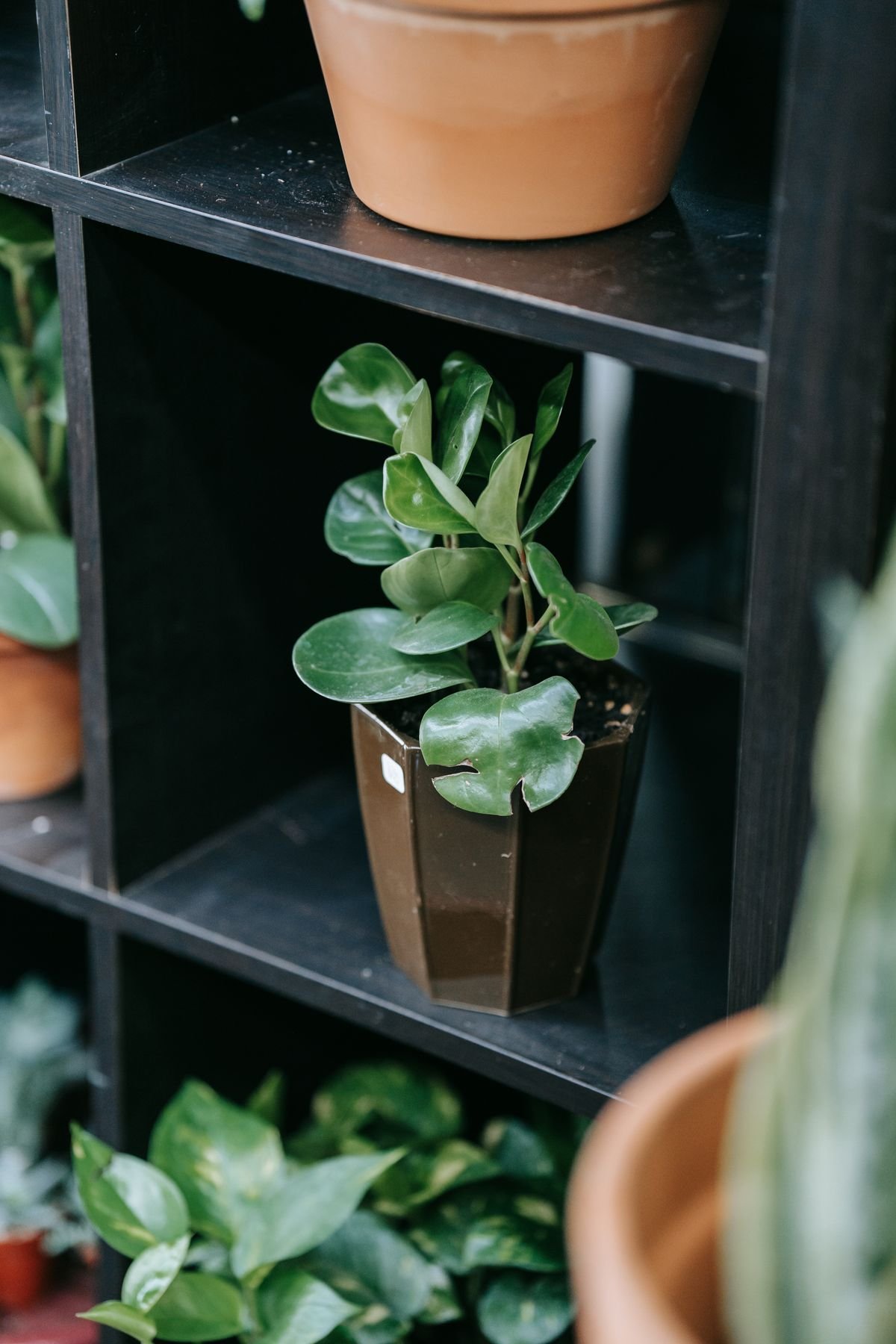
What This Symptom Looks Like
Healthy P. obtusifolia roots are firm, pale tan to white, and the substrate around them carries only a faint, pleasant, earthy note if any smell is noticeable at all. Once continuous saturation eliminates oxygen from the root zone, the aerobic bacteria that produce that mild earthy scent die off and are replaced by anaerobic organisms with a very different metabolic byproduct profile — the shift from odourless-to-pleasant toward sour, sulfurous, or sweetly foul is the practical signal something has gone wrong. Alongside the smell, affected roots typically turn dark brown to black, feel soft or mushy rather than firm, and may slough their outer layer off when handled gently, distinct from the firm, intact feel of healthy root tissue.
Causes Ranked From Most to Least Likely
1. Continuous substrate saturation
By far the most common root cause. Watering on a fixed schedule rather than confirming dry-down first, or a substrate that drains poorly to begin with, keeps the root zone wet beyond this species' roughly five-day saturation tolerance, displacing the oxygen roots need and creating the anaerobic conditions behind both the smell and the rot itself. Confirm it: substrate has felt consistently damp to wet across recent waterings, with no real dry-down between them.
2. A substrate that traps water structurally
Even with reasonable watering habits, a compacted, peat-heavy, or poorly-draining mix can stay wet at the root zone far longer than the surface suggests. Confirm it: the chopstick test shows persistent moisture at depth well past the expected dry-down interval.
3. A pot without adequate drainage
A container with a single small or partially blocked drainage hole, or no hole at all, can hold water at the base indefinitely regardless of watering technique. Confirm it: check the physical drainage path itself, not just the substrate.
4. Secondary pathogen colonisation
Once anaerobic conditions are established, oomycete pathogens like Pythium and Phytophthora — or bacteria producing the sour, fermented smell — colonise the already-weakened tissue, often producing the sweeter or more distinctly foul secondary smells layered on top of the basic sulfurous signature. Confirm it: roots are not just soft but visibly slimy or discoloured, sometimes with the outer root layer sloughing off entirely when touched.
Step-by-Step Recovery Plan
- Unpot the plant and gently remove loose substrate from the root ball to get a clear look at root colour and texture.
- Assess each section of root. Firm and pale: healthy, keep. Dark, soft, or slimy: rot, remove.
- Trim away all affected tissue with sterilised scissors, cutting back into visibly firm, pale root past any discoloured section rather than stopping right at the visible damage.
- Discard the old substrate entirely — it now carries the anaerobic bacteria and pathogen load that caused the problem, and reusing it undermines the rest of the recovery.
- Repot into fresh, free-draining substrate — see the soil mix recipe — in a pot sized only 2-3cm larger than the remaining root mass, with confirmed working drainage.
- Withhold water for about a week afterward to let the cut root surfaces callus before reintroducing moisture.
Recovery Signs and Realistic Timeline
There's no fixed timeline for full recovery, since it depends on how much root mass was lost, but expect the plant to focus on rebuilding root structure before any new top growth appears — a period of apparent stasis after repotting is normal, not a sign of continued failure. New, firm white root growth visible at the pot's drainage holes or at the next check is the clearest sign recovery is underway. Existing damaged tissue does not recover or lose its discolouration; judge success by new growth, not by whether the plant "looks better" superficially in the first few days.
How to Prevent Recurrence
Water strictly on the top-2-3cm-dry trigger rather than a fixed schedule, since schedule-based watering is the single most common root cause behind this whole chain of events. Confirm the substrate genuinely dries at depth, not just at the surface, using the chopstick test periodically. Use a properly free-draining mix and a pot with working drainage from the outset, and avoid sizing a new pot more than 2-3cm larger than the current root mass, since excess substrate volume around a smaller root system stays wet for longer than the plant tolerates.
FAQ
Is charcoal a real fix or just odour control? Odour control at best — it can absorb some smell compounds but does nothing about the anaerobic conditions or existing rot causing them. Should I be worried if there's no smell but the plant looks wilted? Wilting with no smell and dry substrate points toward underwatering rather than rot; check substrate moisture directly before assuming either cause. Can healthy roots ever smell strongly? No — a strong smell of any kind, sulfurous, sour, or sweet, indicates a problem; the only normal smell is faint and earthy, or no smell at all.
Related Diagnoses
If the smell is accompanied by softening at the base of the stem itself rather than just the roots, that's a related but distinct problem — see the stem rot guide for that specific diagnosis and rescue-cutting protocol. For the broader overwatering picture this symptom sits within — yellowing leaves, wilting in wet substrate, and the full triage sequence — see the overwatering rescue guide.
Care FAQ
Why does my Peperomia soil smell like rotten eggs?
A sulfurous, rotten-egg smell comes from hydrogen sulfide gas, produced by anaerobic bacteria that take over once continuous saturation has eliminated oxygen from the substrate. It is a reliable sign that root rot is already underway, not an early warning to catch before rot starts.
Does healthy Peperomia substrate have any smell at all?
A faint, pleasant, earthy smell — similar to fresh rain on soil — is normal and comes from geosmin, a compound produced by ordinary aerobic soil bacteria that only thrive when oxygen is present. Its presence is actually a reassuring sign that the root zone has adequate airflow, not something to be concerned about.
Can I just add charcoal or cinnamon to fix the smell?
No. Charcoal can absorb some odour compounds, and cinnamon has genuine antifungal properties on cut surfaces, but neither addresses the actual cause — anaerobic, waterlogged substrate and already-decaying root tissue. The smell returns once the additive is exhausted unless the underlying saturation and rot are corrected directly.
How urgent is a bad smell from the pot?
Treat it as needing attention within the next day or two, not as an immediate emergency requiring action within hours. Unpot and assess calmly — rushing the diagnosis by skipping a proper look at the roots risks removing healthy tissue unnecessarily or missing rot that needs to be cut back further.