
Allometric Scaling: Root Architecture and Pot Depth
In the anatomy of the Peperomia obtusifolia, the roots are often misunderstood as "weak." In reality, they are highly specialized. As a Facultative Epiphyte, this plant has evolved a Shallow Root Architecture designed for horizontal exploration, not vertical depth.
This guide explores the science of Allometric Scaling—the proportional relationship between the plant's canopy and its roots—and why pot depth is the "Invisible Variable" in your plant's health.
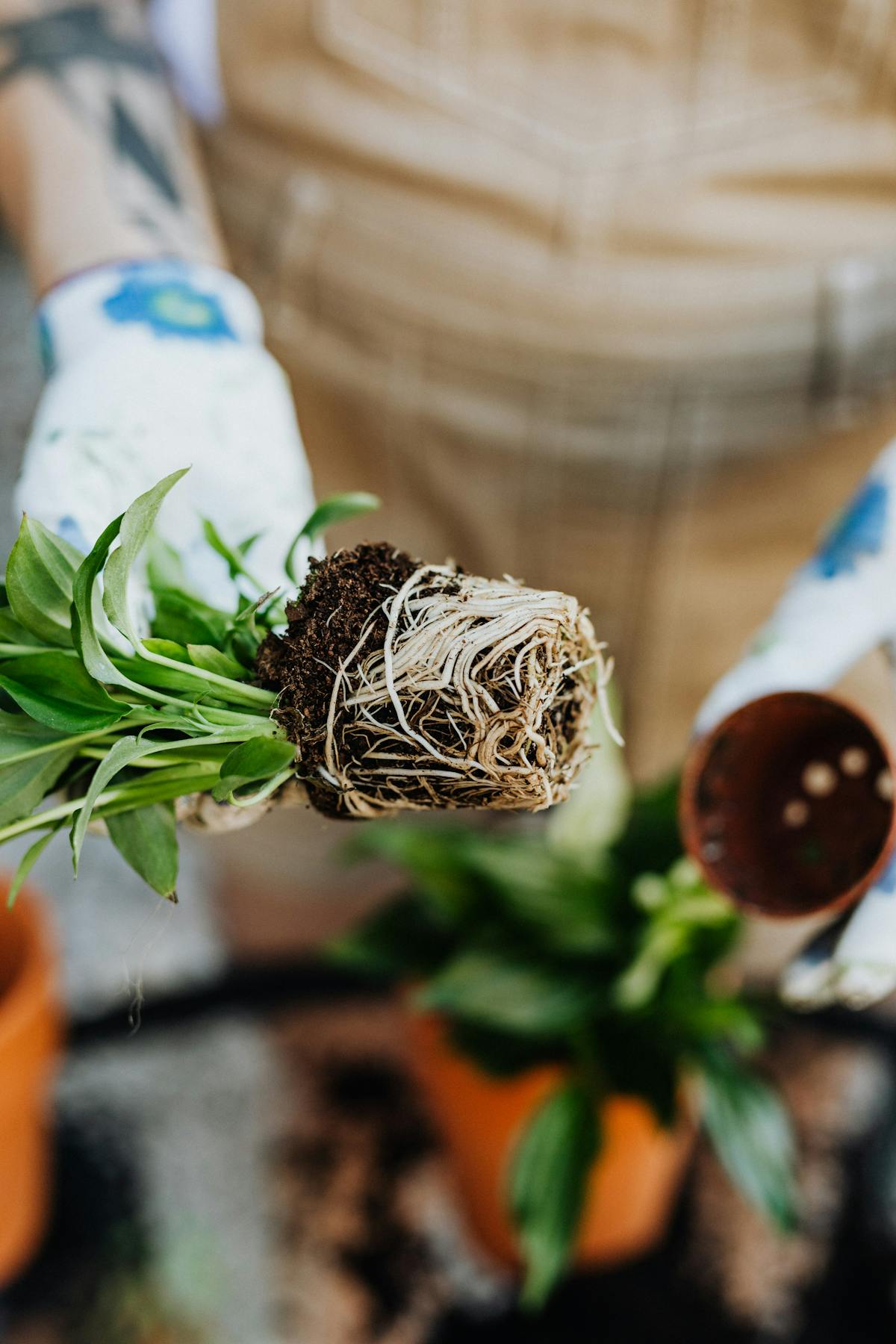
1. Peperomia Root Architecture: The Epiphytic Blueprint
In its native habitat, the Peperomia doesn't live in deep dirt. It lives in the "crooks" of trees or on rocky ledges.
- Fibrous Root System: Instead of a long Taproot that anchors it deep in the ground, it produces a network of fine, fibrous roots.
- Surface Affinity: These roots are optimized to stay near the surface where oxygen levels are highest and where organic debris (leaf litter) is most abundant. They are "Surface Feeders."
2. Allometric Scaling: Height vs. Depth
In botany, Allometry is the study of how different parts of an organism grow in proportion to each other.
- Compact Synergy: The Obtusifolia has a naturally compact growth habit. Its roots scale to this height. A 10-inch plant rarely has a root system deeper than 4 or 5 inches.
- The Disconnect: When we place a 10-inch Peperomia in a 12-inch deep pot, we are violating this allometric balance. The bottom 7 inches of soil are a "No Man's Land" where no roots exist to drink the water.
3. The Oxygen Diffusion Barrier
The deeper you go into a pot of soil, the harder it is for Gas Exchange to occur.
- Anaerobic Micro-climates: In a deep pot, gravity pulls water to the bottom, creating a Perched Water Table. Because there is no wind or light at the bottom of the pot, the water evaporates incredibly slowly.
- The Rot Trap: This stagnant zone becomes an "Oxygen Desert." Even if the top 2 inches of soil feel dry, the bottom is a anaerobic swamp. This is why many Peperomias die of root rot even when the owner thinks they are watering correctly.
4. Selecting the Correct Vessel Geometry
To support the Peperomia's architecture, you must choose a pot that mirrors its roots.
- Azalea Pots: These are pots that are "3/4 height"—wider than they are deep. They are perfect for Peperomias because they eliminate the deep "Dead Zone" of soil.
- The Drainage Ratio: In a shallow pot, the drainage hole is closer to the root mass, ensuring that the entire soil column stays oxygenated. This mimics the fast-drying environment of a tree branch or rocky ledge.
Conclusion
Success with the Peperomia obtusifolia requires respecting its Epiphytic Heritage. By understanding that its Root Architecture is built for horizontal exploration and shallow oxygen access, you can choose a pot that supports its Allometric Scaling. Stop thinking about "room for roots" and start thinking about "access to air." A shallow pot is the secret to a deep jade shine.
Root Health Resources:
Care FAQ
Are Peperomia roots shallow?
Yes. In the wild, Peperomia obtusifolia is a Facultative Epiphyte. Its roots are designed to crawl across surfaces (rocks, tree bark) rather than dig deep into the soil. This results in a wide, shallow Root Architecture.
Why is a deep pot dangerous?
It's a matter of Oxygen Diffusion. Oxygen moves slowly through wet soil. In a deep pot, the bottom layers are so far from the surface that they become an 'Oxygen Desert'. Since Peperomia roots don't grow deep enough to drink that water, it stays stagnant, inviting Root Rot.
Should I use a 'Cactus' pot?
Yes. Short, wide 'Azalea' or 'Bulb' pots are ideal for Peperomias. These pots match the plant's natural Allometric Scaling—where the root depth mirrors the compact height of the foliage.
Can I use a tall decorative pot?
Only if you use a 'Cachepot' system. Keep the plant in a shallow nursery pot inside the tall decorative pot. Never fill a massive, deep pot with soil and plant a Peperomia directly into it, or you will create a permanent Perched Water Table.