Peperomia Obtusifolia Moss Poles: Best Support & Size
A moss pole is worth adding to Peperomia obtusifolia once the stem has grown long and heavy enough to flop under its own weight, or if you want to actively encourage upright, climbing growth rather than letting the plant sprawl. It provides genuine mechanical support and a damp surface for aerial roots to anchor into — a real biological benefit — though claims that climbing reliably produces dramatically larger leaves in this species specifically are plausible but not established.
Quick Facts: When a Pole Helps
| Situation | Pole worth adding? | Why |
|---|---|---|
| Stem has grown long and is starting to flop | Yes | Prevents kinking or snapping under its own weight |
| Young, compact plant with short stems | Not yet | No structural need; add later if it grows long |
| Want a taller, more architectural shape | Yes | Trains growth upward instead of sprawling |
| Prefer a bushy, ground-cover look | No | Sprawling and periodic pruning achieves this instead |
| Aerial roots already visible on the stem | Worth considering | The plant is already showing the anchoring behaviour a pole supports |
Why a Pole Helps: The Mechanism
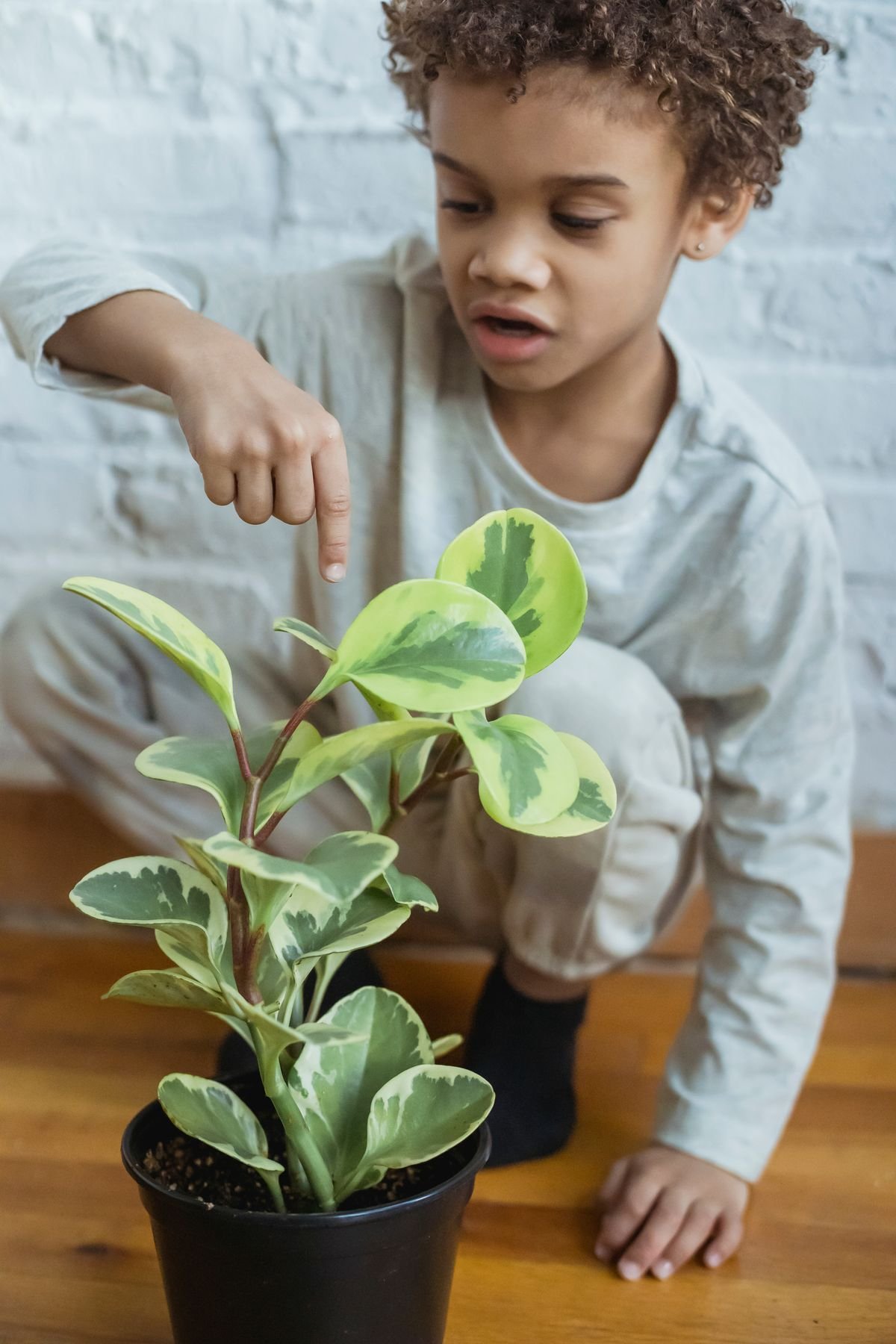
Peperomia obtusifolia is a facultative epiphyte — in its native range it grows equally well rooted in leaf litter or lodged in the crook of a tree branch, using neighbouring vegetation for height rather than as a parasite. When a stem makes contact with a rough, moist surface, it can produce aerial roots, which serve a dual purpose: anchoring the stem mechanically and offering a secondary route for moisture uptake. A moss pole recreates that contact surface indoors.
There is also a structural side to this. The stem has no wood — its rigidity comes mostly from internal water pressure (turgor) in the surrounding parenchyma, covered in the petiole anatomy guide — and a long, mature stem eventually outgrows what that pressure alone can support upright. A pole (or a simple stake) resolves that mechanical limit directly, regardless of whether the plant produces any aerial roots into it at all.
Some climbing aroids are documented to shift toward larger leaf size as they gain height and light exposure, a response tied to changing light competition. Whether P. obtusifolia shows the same shift to a meaningful degree has not been separately measured — it is a reasonable extension of a documented pattern in related climbing plants, not a confirmed finding for this species specifically, and readers should treat "bigger leaves from climbing" as a plausible bonus rather than a guaranteed result.
Comparing Pole Materials
Sphagnum moss poles hold moisture well and are the most likely to encourage aerial roots to anchor in, provided the surface is kept damp rather than left to dry out completely. Coco-coir poles are lower-maintenance and provide the same mechanical support, but typically stay too dry for roots to penetrate readily, so they function mainly as a structural aid rather than a moisture source. Bamboo stakes are the simplest option — they prevent a heavy stem from snapping under its own weight just as effectively as a pole, but offer no moisture and so don't encourage aerial rooting.
Practical Actions
- Introduce support before the stem is fully flopped over, if possible — training a stem upright gradually against a pole is far less stressful to the tissue than trying to correct a stem that has already bent sharply under its own weight.
- Tie loosely with a soft material — wide plant ties or soft velcro strips. Wire or thin string can cut into the succulent stem tissue, creating an entry point for stem rot.
- Keep the pole surface damp, not the foliage, if aiming for aerial-root anchoring — a light misting of the pole itself, not the leaves, keeps that surface receptive without repeating the standing-water risk covered in the humidity guide's misting section.
- Reassess the tie periodically as the stem thickens, loosening it if it starts to constrict growth.
Mistakes, Myths, and Limitations
Treating a moss pole as a guaranteed way to force dramatically larger leaves overstates the evidence for this specific species — a taller, better-lit plant may well show some increase, but don't expect the leaf-size transformation sometimes shown for climbing aroids like Monstera. Letting the pole dry out completely defeats the purpose if aerial rooting is the goal, since a bone-dry surface offers no more biological benefit than a plain stake. Misting the foliage broadly "to help the plant climb" is a separate mistake — the moisture that matters here is at the pole's surface, not the leaves, and general foliage misting doesn't meaningfully raise humidity regardless.
Related Care Implications
A staked or poled specimen still follows the same underlying watering and light thresholds as any other P. obtusifolia — a pole changes growth habit and support, not the plant's fundamental care requirements. If you'd rather manage a long stem by cutting it back instead of staking it, the pruning guide covers that alternative approach to the same flopping problem.
Care FAQ
Does Peperomia obtusifolia need a moss pole?
Not by default. A young or compact specimen has no structural need for one. A pole becomes worth adding once the stem has grown long enough to flop under its own weight, or if you specifically want to encourage a taller, more upright growth habit rather than letting it sprawl.
Will a moss pole make the leaves grow bigger?
Possibly, but this is not a documented, measured effect specific to this species. Some climbing aroids show a genuine shift toward larger leaves with height, and it is plausible Peperomia obtusifolia does something similar, but treat it as a reasonable possibility rather than a guaranteed outcome.
Does the moss pole need to stay wet?
Keep it damp, not saturated, if you want aerial roots to anchor into it — a bone-dry pole functions only as mechanical support. This is a localised, targeted dampness on the pole surface itself, distinct from misting the foliage for humidity, which this site does not recommend as a general practice.
Is a bamboo stake as good as a moss pole?
For pure mechanical support, yes — a stake prevents a heavy stem from snapping just as well. It provides no moisture for aerial roots to anchor into, so if root anchoring and climbing behaviour matter to you specifically, a moss or coir pole is the better choice.