Peperomia Reversion: Why Variegation Fails & the Fix
Peperomia reversion — variegated new growth coming in solid green — is a light-driven shift in the plant's growing tip, not damage or disease. Most variegated cultivars carry two genetically distinct cell layers at the meristem, and under light too low to comfortably support the less efficient variegated layer, the plant increasingly favours the faster, fully green one. The fix is more light for future growth, and pruning back to still-variegated tissue for what's already reverted.
How to Identify It
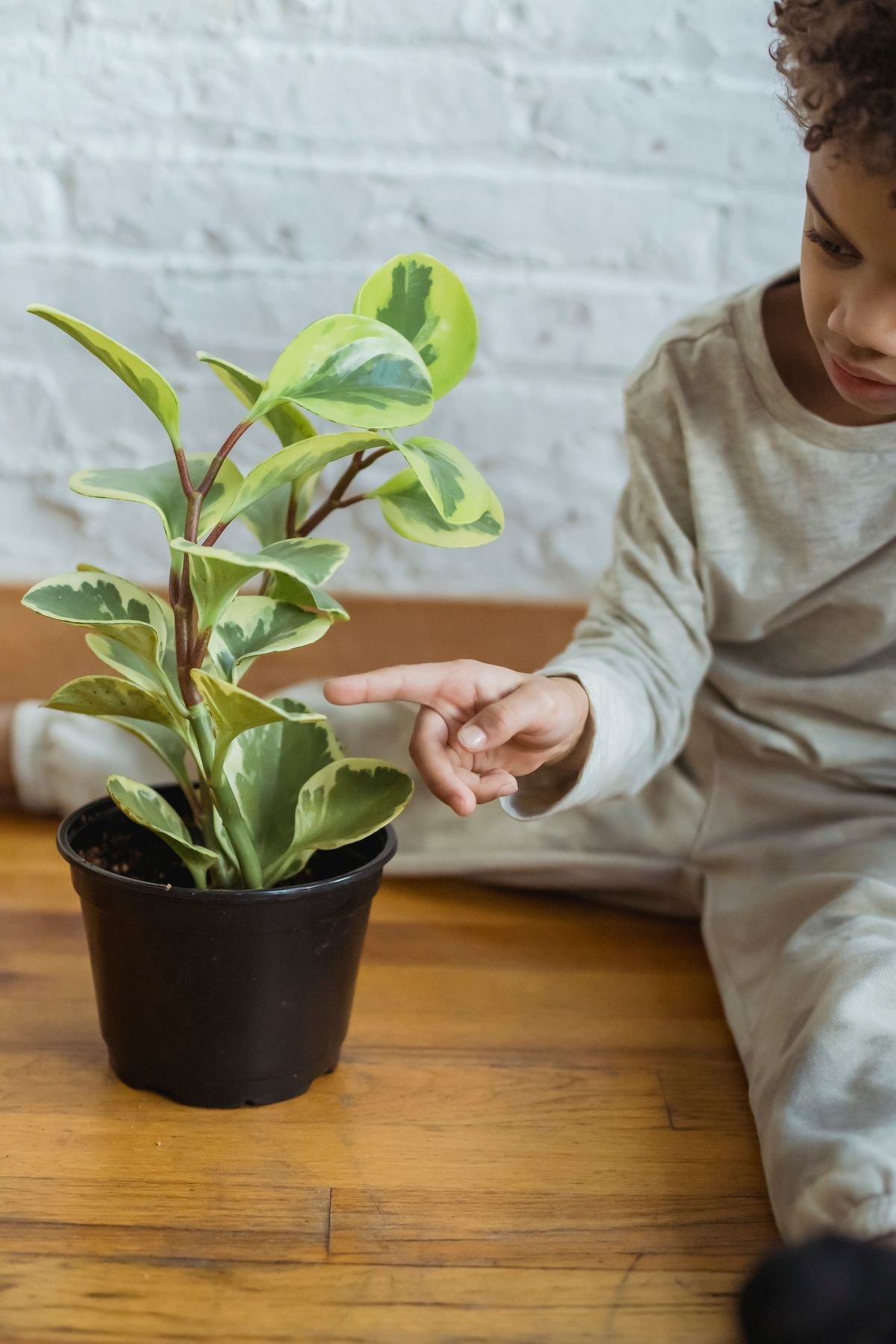
Reversion shows specifically in new growth: leaves emerging progressively greener over weeks to months, while the older, already-variegated leaves lower on the stem stay patterned. Often it traces to one side of the plant — a solid green streak running up part of the stem, with every leaf from that point onward emerging green while the rest of the plant continues producing patterned leaves normally. The key identifying feature is that it is gradual and confined to new growth, not a sudden change across the whole plant, which would point to a different cause such as pest damage or a lighting change everywhere at once.
Why It Happens
Variegated Peperomia obtusifolia cultivars are periclinal chimeras: the growing tip is built from layered cell populations, and in a variegated plant, one of those layers carries a mutation that prevents it from producing chlorophyll normally, which is what creates the cream or white patterning. This arrangement is inherently a little unstable, because the two layers are not equally productive — fully green tissue photosynthesises more efficiently and can support faster cell division than the pattern-carrying layer, which is effectively running at reduced energy output. Under strong light, the plant can support both layers without much competitive pressure between them. Under light too low to comfortably fund the less efficient variegated tissue, the more productive all-green layer increasingly dominates at the growing tip, and new growth from that point onward comes in solid green.
Normal Variation vs a Care Problem
| Observation | Verdict |
|---|---|
| Older leaves stay patterned, only new growth is greener | Reversion — light-driven, expected under marginal light |
| Reversion confined to one stem or one side of the plant | Normal — that specific growing tip has shifted; others may not have |
| Whole plant suddenly changes colour, not just new growth | Not reversion — check for a different cause (light change, pest, chemical) |
| Green leaves already fully formed and mature | Permanent — will not regain pattern regardless of light change |
| Light reading in the room is below roughly 2,500-3,000 lux | Consistent with reversion pressure — confirms the likely driver |
What to Do Now
Increase light for the plant going forward, since this is the lever that actually changes the trajectory of future growth. Variegated cultivars generally need meaningfully more light than the solid green form to hold their pattern — aim toward the upper end of the 2,000-4,000 lux optimum band or above, not the lower end that's adequate for an all-green specimen. For tissue that has already reverted, prune back to the last node that still shows variegation, using sterilised scissors. This removes the now-dominant all-green growing tip and forces a dormant lateral bud — one that still carries the original chimeric cell layers — to take over, giving that new shoot a real chance at producing patterned leaves again under the improved light.
What Not to Do
Don't expect fertiliser or any feeding adjustment to reverse reversion — this is a light-driven competition between cell layers, not a nutrient issue, and no amount of feeding changes which layer dominates at the growing tip. Don't prune reverted stems back into fully green, mature tissue expecting variegation to reappear there — a stem tip that has already gone solid green will keep producing green leaves; only cutting back to tissue that still shows the pattern gives a real chance of recovering it. And don't move a reverting plant into harsh, unfiltered direct sun as an overcorrection — that trades one problem (reversion) for another (scorch), when a bright, filtered, or indirect position at the upper end of the optimum range is what the plant actually needs.
How This Connects to Growth, Light, and Propagation
Reversion sits squarely in the same light-threshold logic covered in the light requirements guide and the feng shui placement guide's light-first positioning approach — a spot that's merely adequate for a green cultivar is often not bright enough to hold pattern on a variegated one. It also matters directly for propagation: a stem cutting taken from already-reverted, solid-green tissue will only ever produce a green plant, regardless of the light it's grown under afterward — always select a cutting node that still shows variegation if preserving the pattern is the goal. For a broader look at symptoms beyond variegation loss, see the problems guide; reversion itself does not cause leaf drop, downward curling, or wrinkled, soft leaves, so if those symptoms appear alongside colour loss, look for a separate cause rather than attributing everything to light alone.
FAQ and Sources
See the frontmatter FAQ block above for direct answers on cause, permanence, and whether more light helps. The chimera mechanism described here is standard horticultural genetics, consistent with RHS and extension-service documentation on variegated cultivar propagation and stability.
Care FAQ
What does Peperomia reversion mean?
It means new growth is emerging solid green instead of carrying the cream or white variegated pattern the plant was bought for. It reflects a shift in which cell layer dominates at the growing tip, not disease, pest damage, or a care mistake beyond light.
Why does my variegated Peperomia keep producing green leaves?
Most variegated cultivars are chimeras — the growing tip carries at least two genetically distinct cell layers, one that produces chlorophyll normally and one that doesn't. The all-green layer photosynthesises more efficiently and grows faster, and under light too low to comfortably support the less efficient variegated tissue, the plant increasingly favours that faster layer.
Can a reverted green leaf turn variegated again?
No. Once a specific stem tip has settled into producing solid green leaves, that particular growing point does not spontaneously regain the pattern. Restoring variegation means pruning back to a node that still shows the pattern and letting a new, still-chimeric shoot take over.
Does more light stop reversion?
Yes, for tissue that hasn't reverted yet. Raising light toward the upper end of the 2,000-4,000 lux optimum band reduces the pressure that favours all-green growth going forward. It does not restore pattern to leaves or stems that have already gone fully green.