Peperomia Light Requirements: Window and Grow Light
Peperomia obtusifolia needs 2,000–4,000 lux of bright, indirect light at the leaf surface for 12–14 hours a day to grow compactly; below roughly 800–1,000 lux it survives without producing meaningful new growth. The trigger for changing anything is a measured reading — or a genuine shadow test — that falls outside that range, not a subjective sense that a room "feels bright enough." The one condition that changes this baseline: variegated cultivars need light at the upper end of the range, or higher, because their reduced chlorophyll content lowers their photosynthetic capacity per leaf.
| Factor | Optimum | Risk threshold |
|---|---|---|
| Light intensity | 2,000–4,000 lux at the leaf | Below 800 lux sustained: etiolation begins |
| Photoperiod | 12–14 hours daily | Below ~10 hours: reduced Daily Light Integral even at good intensity |
| Direct sun exposure | Filtered or brief morning sun only | Above 40,000 lux unfiltered: chloroplast damage |
| Variegated cultivars | 30–40% higher than the green form | Below the higher threshold: progressive reversion to green |
1. The Mechanism: Photon Flux and the Daily Light Integral
Light is the input to photosynthesis, not a matter of visual "brightness." What a leaf actually responds to is photon flux — the number of light particles striking its surface per second — and lux is a practical proxy for that flux, weighted for what the human eye perceives rather than what chlorophyll absorbs. This is why "bright indirect light," a phrase with no attached number, has no diagnostic value: a shaded north-facing room can read under 300 lux while a south-facing window behind a sheer curtain reads well above 10,000, and both get described with the same phrase.
Intensity alone is also incomplete without duration. The Daily Light Integral (DLI) is the cumulative photon count a leaf receives over a full day, combining intensity and photoperiod into a single figure. This species' 2,000–4,000 lux optimum, sustained for 12–14 hours, corresponds to a DLI of roughly 1.3–3.0 mol/m²/day once converted to the photosynthetic units grow-light equipment is rated in — a calculation detailed in the grow light guide. Two hours of intense midday sun does not deliver the same DLI as ten hours of moderate, steady light, even if the peak lux reading is higher in the first case — which is why a short, bright burst near a south window and a longer, gentler exposure near an east window can produce a similar growth response.
2. Quick Decision: Is Your Current Spot Already Enough?
- Measure or estimate the reading at the leaf, not the room in general. A smartphone lux app or a dedicated meter, held where the plant's topmost leaves actually sit, gives the most useful number — a reading taken from across the room, or from memory of how the space looked at a different time of day, is not a substitute.
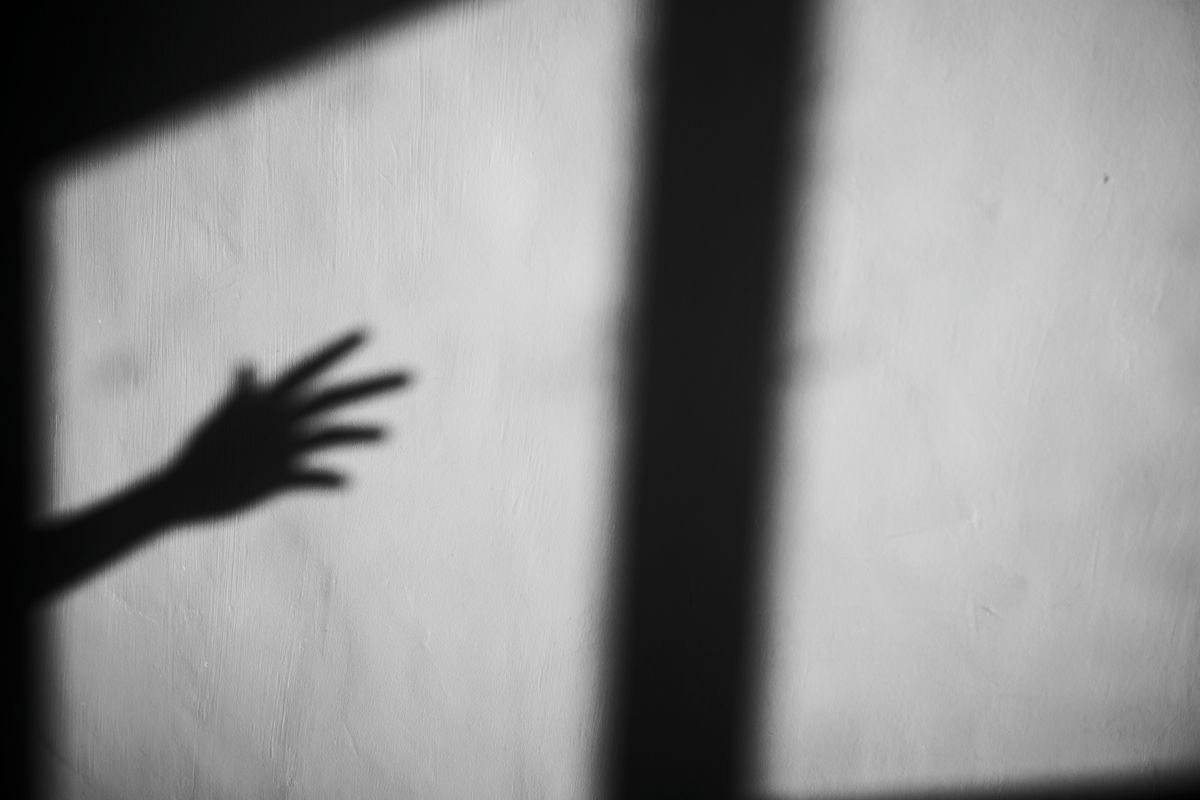
- No meter available: hold a hand roughly 30 cm above a plain white sheet of paper or wall, in that exact spot, at the time of day the plant gets its best light. A sharp, well-defined shadow indicates a reading in or near the optimum band; a soft, diffuse, or barely visible shadow indicates the spot is likely below 1,000 lux.
- Needed: a reading — or a clearly failed shadow test — below 800–1,000 lux, especially alongside stretched internodes or smaller new leaves.
- Optional: a reading already in the 2,000–4,000 lux band with a healthy, compact growth pattern. No action required.
- Harmful: moving the plant into unfiltered direct sun above roughly 40,000 lux to "fix" a low-light problem — this risks chloroplast damage rather than correcting the original issue.
3. Window or Grow Light: Making the Decision
Once the current spot is measured, the decision is straightforward. If a window in the home already delivers 2,000–4,000 lux for most of the day, use it — compass direction, distance from glass, and seasonal adjustment for that window are covered in full in the best window direction guide, which ranks north, south, east, and west exposures against this same lux target. If no available window reaches that range — a north-facing room, an interior wall, a short midwinter day — a grow light is the more reliable fix than continuing to search for a better spot that the home may not have; fixture type, the lux-to-PPFD conversion, correct mounting distance, and photoperiod setup are covered in the grow light guide. The two are not mutually exclusive: a grow light can supplement a window that falls short only during winter or on its dimmer side of the room, rather than replacing it entirely.
4. Light Quality: Which Wavelengths Actually Matter Indoors
Photosynthesis draws primarily on red (approximately 600–700 nm) and blue (approximately 400–500 nm) wavelengths, which drive biomass production and compact vegetative growth respectively. Green light (approximately 500–600 nm) is weakly absorbed by chlorophyll at the leaf surface, which is precisely why it penetrates deeper into leaf tissue than red or blue light and can still contribute to photosynthesis in lower cell layers — a finding documented in leaf-level photosynthesis research (Terashima et al., 2009, Plant and Cell Physiology). In practice, this means a light source does not need to exclude green wavelengths to be effective for this species; "full spectrum" white light that includes red, blue, and green in a balanced mix performs as well as or better than a narrow red/blue-only spectrum for a plant with reasonably thick, layered leaf tissue.
5. Seasonal Adjustment: The Winter Light Drop
Day length shortens and the sun's angle lowers in winter at most temperate latitudes, meaningfully reducing the DLI a window delivers even without a change in the plant's position. A spot that held 2,000–4,000 lux for most of a summer day can fall well short of that by December. Two adjustments address this without introducing a new problem: move the plant closer to the same window during the darkest months, since distance from the glass has a large effect on delivered lux, and reduce watering frequency in step with the plant's slower winter metabolism rather than continuing a summer schedule under lower light — watering on an unchanged schedule while light (and therefore water use) drops is a common route to root anoxia in this season. If moving closer to the window still leaves a clear shortfall, a grow light on a winter-only schedule is a more consistent fix than chasing the shrinking daylight around the room.
6. Adjustments for Variegated Cultivars and Plant Size
Variegated cultivars ('Variegata', 'Albo-Marginata', 'Alba') carry roughly 30–40% less functional chlorophyll than the green form, because their white or cream leaf sections contribute little to photosynthesis. The correct response to this is more light, not less — a widely repeated but backwards piece of advice holds that variegated plants need gentler light to protect their "delicate" colouring, which confuses light-deficit reversion (loss of variegated tissue as the meristem favours all-green growth under insufficient light) with sun bleaching (chloroplast damage from direct, unfiltered sun). These are different failure modes with opposite fixes, and treating a variegated cultivar as more light-sensitive than the green form is the more common and more damaging error of the two.
Smaller or recently propagated specimens have a proportionally smaller root system and lower total leaf area, and tolerate the same lux target without needing a reduced level — light requirement scales with the photosynthetic mechanism itself, not with the size of the plant carrying it out.
7. Warning Signs: Telling Too Little Light from Too Much
The two failure directions produce different symptoms and need opposite corrections, which is why matching the symptom to the mechanism matters before acting.
| Symptom | Likely cause | Correction |
|---|---|---|
| Elongated internodes, plant leaning toward the light source | Sustained light below ~800 lux (etiolation) | Increase light; existing elongation will not reverse, so pruning back to a compact node afterward is usually needed |
| New leaves noticeably smaller than older ones | Chronic low light, energy reserves drawing down | Same correction as etiolation — increase light before addressing leaf size directly |
| Pale, bleached, or papery patches on leaves that faced direct sun | Unfiltered direct sun above roughly 40,000 lux | Filter with a sheer curtain or move back from the glass; damaged tissue does not recover, but new growth will be normal once corrected — see the sunburn treatment guide |
| Variegated cultivar's new leaves emerging progressively greener | Light below the ~30–40% higher threshold this form needs | Relocate to higher light; already-green new growth will not re-variegate, but subsequent growth should |
| No new growth despite an apparently bright room | Room "feels" bright to the human eye but reads low on a meter | Confirm with an actual lux reading or shadow test rather than visual impression |
8. Common Mistakes
- Describing a spot as "bright indirect light" without a number attached. The phrase spans a 30-fold range of actual intensity and has no diagnostic value on its own.
- Judging light by how the room feels to a human eye, which adapts to a wide range of brightness and is a poor substitute for a lux reading or the shadow test.
- Reducing light for a variegated cultivar on the assumption that it needs gentler conditions, when the correct adjustment is more light, not less.
- Keeping a fixed watering schedule through the winter light drop, which produces overwatering as the plant's water use falls with the shorter days.
- Assuming a single "good window" reading in summer holds year-round, without rechecking as day length and sun angle shift.
9. Reading the Shadow Test Properly: Sharp, Soft, and Ghost
The hand-shadow screen introduced earlier is more useful with a finer reading than a simple pass or fail. Test between roughly 11:00 and 14:00 on a clear day, with white paper placed exactly where the plant will sit — not on the windowsill if the plant actually lives further into the room — and hold a hand flat, parallel to the paper, about 30 cm above it.
- Sharp, dark, crisply outlined shadow: usually a near-direct beam, often well above the 2,000–4,000 lux optimum band rather than sitting inside it — confirm with a meter and watch for leaf heat, since this reading is as much a caution about excess as a green light.
- Soft but clearly defined shadow, fingers distinguishable: the most common signature of the optimum band itself — the best candidate reading, though still worth confirming with a meter.
- Ghost shadow, edges indistinct: typically corresponds to light below the useful growth range, commonly in the low hundreds of lux, which produces etiolation over time.
- No visible shadow at all: deep shade, unsuitable for long-term placement regardless of how bright the room looks to the eye.
This corrects a common assumption: a sharp shadow does not automatically confirm the ideal band — in practice it more often signals intensity above it, while the soft-but-clear reading is the better match for the growth target. Retest at the start of winter, since a soft, clear summer shadow in a given spot commonly degrades to a ghost shadow once the sun angle drops, even without the plant moving at all.
10. Filtered Light vs True Indirect Light: Two Different Delivery Paths
"Bright indirect light" collapses two physically different situations into one vague phrase. Filtered light is direct sunlight that has passed through a translucent barrier — a sheer curtain, blinds, or an outdoor canopy — scattering the beam before it reaches the leaf while still delivering high intensity. Indirect light, in the stricter sense, never travelled as a direct beam at all: it arrived after bouncing off walls, floors, or ceilings, or the plant simply sits to the side of where the sunbeam falls. Both delivery modes can supply adequate intensity for this species, but confusing the two is a common reason a "bright room" turns out to be underlit in practice.
Filtered light near a bright window frequently outperforms deep-room bounce, for two reasons. A sheer curtain scatters photons across a wider area while still passing most of the intensity through, so more of the canopy participates in photosynthesis at a usable level. Reflected light, by contrast, loses energy at every bounce — a wall or ceiling absorbs and redirects only part of what strikes it, and pale surfaces do this far more efficiently than dark ones — while intensity from the window itself falls off sharply with distance, roughly with the square of that distance, so a plant twice as far from the glass can receive around a quarter of the usable light rather than half. A specimen positioned 2–3 m back in a room that "feels bright" is not equivalent to the same plant on the sill behind a sheer, even though both are commonly described with the same "bright indirect" label.
The practical takeaway is the same regardless of delivery mode: a filtered south- or west-facing sill and a spot receiving genuinely strong reflected light can both work if the leaf-surface reading lands in the 2,000–4,000 lux band, and the delivery path is secondary to that number once confirmed.
Conclusion
Peperomia obtusifolia light requirements come down to a measurable target — 2,000–4,000 lux for 12–14 hours daily — not a subjective impression of brightness. Test the current spot with a meter or the shadow test before changing anything, and let that reading decide between adjusting window placement and adding a grow light. For the specific compass-direction ranking, see the best window direction guide; for fixture selection and setup, see the grow light guide. If a plant is already showing stretched, leggy growth from a period of low light, correcting the light is the first step, and the fix leggy Peperomia guide covers pruning the existing growth back to a compact node once conditions improve.
Care FAQ
What is the minimum light Peperomia obtusifolia needs to survive?
Roughly 800–1,000 lux. Below that, the plant survives on stored energy reserves without producing meaningful new growth. This is a survival floor, not a target — treat it as the point below which action is needed, not as an acceptable long-term spot.
How do I know if my current spot has enough light without buying a meter?
Hold a hand about 30 cm above a plain white surface in the exact spot the plant occupies, at the time of day it gets its best light. A sharp, well-defined shadow indicates light in or near the 2,000–4,000 lux optimum range; a diffuse, blurry, or absent shadow indicates the spot is below the tolerated minimum.
Does Peperomia obtusifolia need 12 hours of light a day?
Roughly 12–14 hours supports active growth, whether from a window's natural daylength or a grow light on a timer. Duration and intensity both matter — the Daily Light Integral concept below explains why a short burst of bright light does not substitute for a longer period at a lower level.
Do variegated Peperomia cultivars need more light than the green form?
Yes, roughly 30–40% more, because their white or cream leaf tissue contains less functional chlorophyll and contributes less to photosynthesis than an equivalent area of green leaf. A spot that keeps the green form compact will often cause a variegated cultivar to revert toward all-green growth over time.
Should I choose a better window or a grow light?
Test the window first with a lux reading or the shadow test. If it already reaches 2,000–4,000 lux for most of the day, no grow light is needed. If it falls short — a north-facing room, an interior wall, a short winter day — a grow light is the more reliable fix than chasing a better window that may not exist in the home.