Peperomia Obtusifolia 'Marble': Best Variegation Care
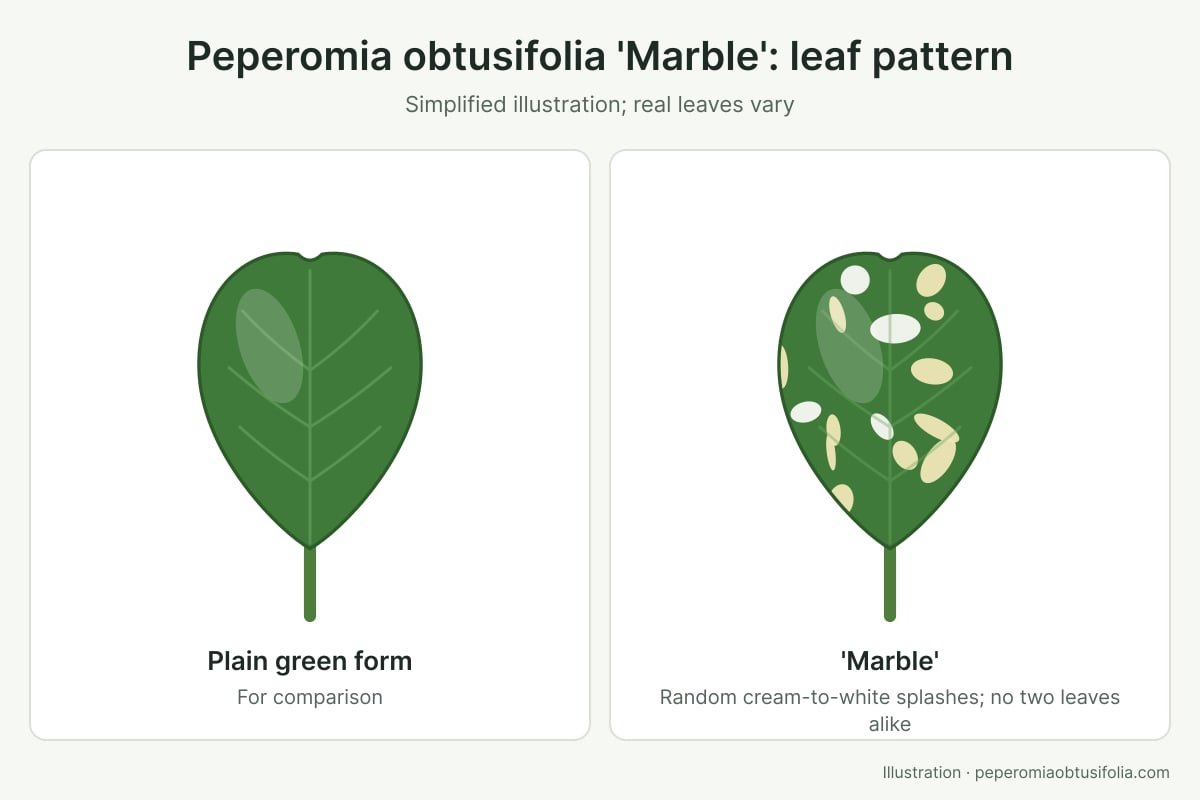
Peperomia obtusifolia 'Marble' is identified by its irregular, randomly splashed pattern of cream-to-white and green — no two leaves show quite the same distribution, unlike the more defined border of 'Variegata'. That randomness comes from a genuine chimeric mix of two cell types in the growing tip, and the white tissue's total lack of chlorophyll means this cultivar needs more light than most to stay looking marbled rather than gradually turning green.
Is This Cultivar Name Verified?
'Marble' is an established trade name in the P. obtusifolia cultivar trade, and the pattern it describes — an irregular, sectoral mix of white-to-cream and green tissue rather than a defined margin — is consistent enough across nursery stock to treat as a real, identifiable cultivar rather than an inconsistent label. Confirm the pattern itself rather than trusting the tag alone, since retail mislabelling between the various white-and-green P. obtusifolia cultivars is common.
Identification Traits
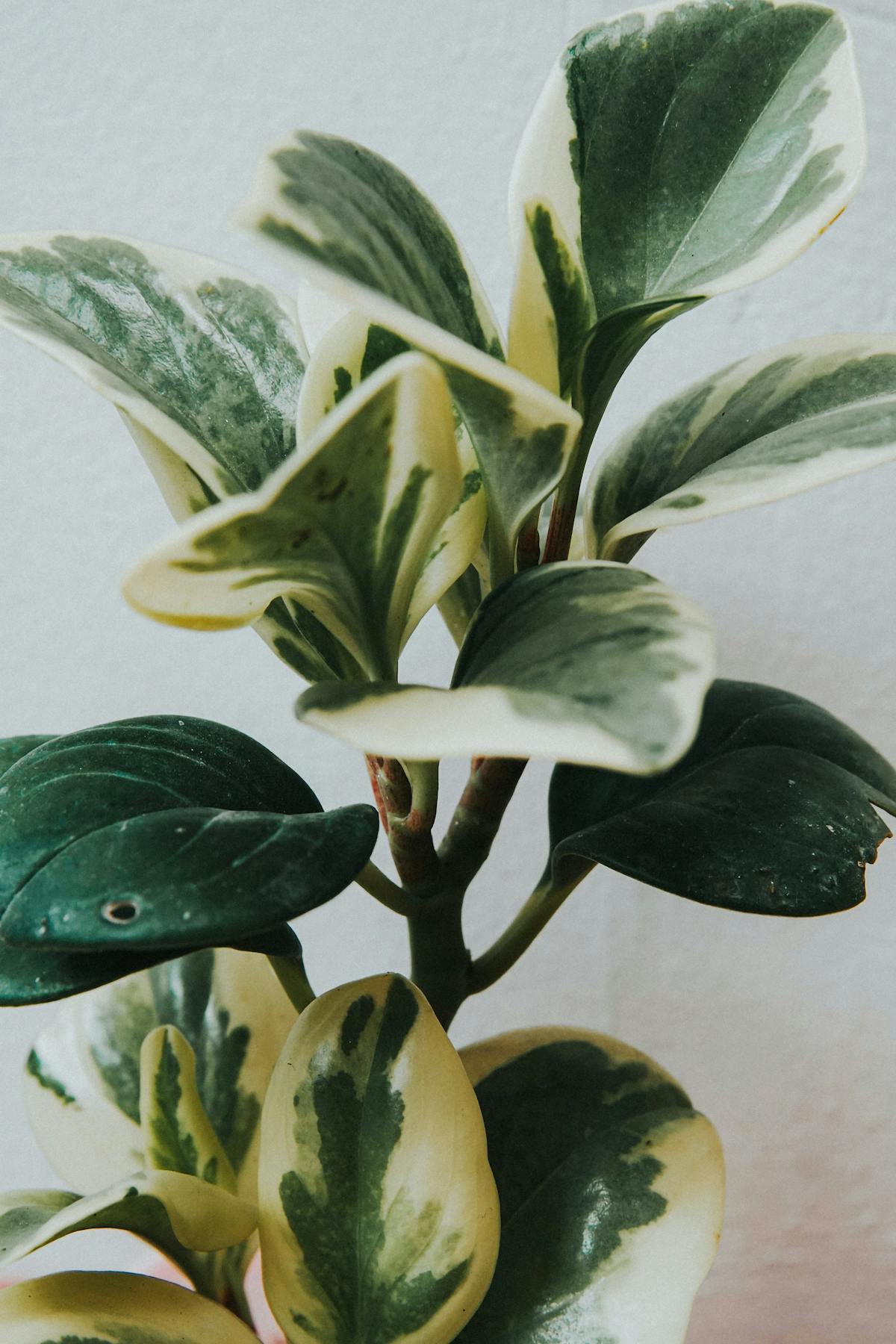
Each leaf shows an irregular mix of cream-to-white and green tissue with no consistent border between them — the split can run anywhere from mostly green with small white flecks to mostly white with green streaks, and this proportion varies noticeably from leaf to leaf on the same plant. This is the key trait separating it from 'Variegata', which shows a comparatively stable, defined green-centre-cream-margin pattern. New leaves emerge showing whatever mix of tissue the meristem happened to carry at that node, which is why the pattern cannot be reliably predicted leaf to leaf.
Quick Care Table
| Factor | Requirement |
|---|---|
| Light | Above the species' 2,000-4,000 lux optimum — toward the upper end, since white tissue needs the green portion to work harder to compensate |
| Watering trigger | Top 2-3 cm of substrate dry, same as the species generally |
| Substrate | Free-draining mix, ~30% perlite or bark by volume |
| Temperature | 18-24°C day; avoid sustained exposure below 10°C |
| Fertiliser | Balanced feed at half strength, monthly, spring-summer only |
| Mature size | Similar to the species generally, though often slower to fill out than the green form |
Light and Colour Stability
The white portions of a Marble leaf carry no functional chlorophyll and generate no energy of their own — the green tissue on the same leaf effectively supports both itself and the non-productive white sections. This makes light the single most important variable for this cultivar: keep it toward the upper end of the species' light range, since the plant genuinely has less total photosynthetic capacity per leaf than a solid green specimen and needs the available light used as efficiently as possible. Below that threshold, new growth increasingly favours solid green tissue — a direct consequence of green cells capturing more of the limited light than partially-white ones can. Filter unfiltered direct sun, since the white sections lack the pigment protection the green portions have against high-intensity light.
Watering, Soil, and Pot Choice
No cultivar-specific adjustment applies — the standard top-2-3cm-dry watering trigger and free-draining substrate recommended for the species generally apply here without modification. There's no reason to water this cultivar differently based on its variegation.
Reversion, Propagation, and Pruning
Because green tissue is more energy-efficient than variegated tissue, a Marble specimen under anything less than ideal light will tend to favour new growth from buds carrying mostly or entirely green cells over time — the mechanism behind reversion in this cultivar, same as in any variegated P. obtusifolia. Once a stem is reliably producing solid green leaves, prune it back to the last clearly variegated node rather than waiting for it to "correct itself," since it typically won't. For propagation, use stem cuttings that include at least one variegated node; leaf cuttings from this cultivar, like most chimeric P. obtusifolia cultivars, typically regenerate as all-green plantlets since the chimeric pattern lives in a cell layer leaf cuttings don't reliably reproduce.
Common Problems and Lookalike Cultivars
The main identification confusion is with 'Variegata', which shares a similar white-and-green palette but shows a defined, more predictable pattern rather than Marble's irregular splash — see the Variegata guide for the comparison. White or cream sections that develop crisp, dry, scorched patches rather than gradually greening are a different problem — sun damage, since white tissue lacks the protective pigment the green portions have — see the brown leaves guide if this is the presentation rather than reversion.
Sourcing and Authenticity Checklist
Look for photos of the actual specimen being sold, not a stock image, since Marble's defining trait — leaf-to-leaf pattern variation — is exactly the kind of detail a generic photo won't show accurately. A listing showing uniformly identical variegation across every leaf is more likely photographed from a single well-lit specimen or, less charitably, a different cultivar entirely, since genuine leaf-to-leaf inconsistency is the expected norm for this cultivar rather than a defect.
Care FAQ
Is Marble the same cultivar as Variegata?
No. Variegata shows a relatively stable, defined pattern — typically a green centre with a cream margin. Marble shows an irregular, randomly splashed pattern with no consistent border, and the proportion of white to green varies noticeably leaf to leaf on the same plant.
Why is my Marble reverting to green?
Insufficient light. The white tissue on a Marble leaf carries no functional chlorophyll and produces no energy of its own, so under low light the plant favours new growth from buds carrying only green cells, since green tissue is more efficient at capturing the limited available light. Once a stem starts producing solid green leaves, that section typically continues to, and pruning it back is the standard correction.
Does Marble grow slower than the plain green form?
Generally yes, since a meaningful portion of each leaf carries no functional chlorophyll and the plant effectively supports that non-productive tissue using energy generated only by the green portions. The exact difference in growth rate has not been measured for this cultivar specifically, but slower growth relative to an all-green specimen under identical conditions is a reasonable and commonly observed expectation.
How do I propagate Marble without losing the pattern?
Use a stem cutting that includes at least one clearly variegated node, not a leaf cutting. The chimeric pattern lives in an outer cell layer of the shoot tip that leaf cuttings typically fail to regenerate, so leaf-only propagation usually produces all-green plantlets.