Peperomia Temperature Range and Cold Damage Signs
Peperomia obtusifolia grows best between 18-24°C (65-75°F). Sustained temperatures below roughly 10°C cause real cellular damage that shows up as mushy, translucent patches rather than a dramatic instant collapse, and it has no frost tolerance at all — ice formation at or below 0°C kills affected tissue outright. On the high end, heat above about 28°C combined with low humidity (under 40%) causes water loss the roots can't keep pace with, leading to scorch and wilting even in moist soil.
The Comfortable Range and Why Growth Slows Outside It
Within the 18-24°C daytime range, the plant's internal chemistry — enzyme activity, water transport through the stem, and the machinery of photosynthesis — runs at a steady, efficient pace, which is why growth is most reliable within this band. Below about 15°C, that internal activity slows noticeably: nutrient and water uptake drop off, and the plant effectively shifts into a lower-activity holding pattern rather than active growth. This is also the practical reason watering frequency should drop in winter — a plant using water more slowly needs it replaced less often, and watering on a summer-paced schedule into cooler air is a common route to root rot. None of this is a hard cutoff; the plant tolerates a degree or two either side of the ideal range without any visible reaction, and short-lived dips are far less consequential than sustained ones.
Cold Damage: What Actually Happens Below 10°C
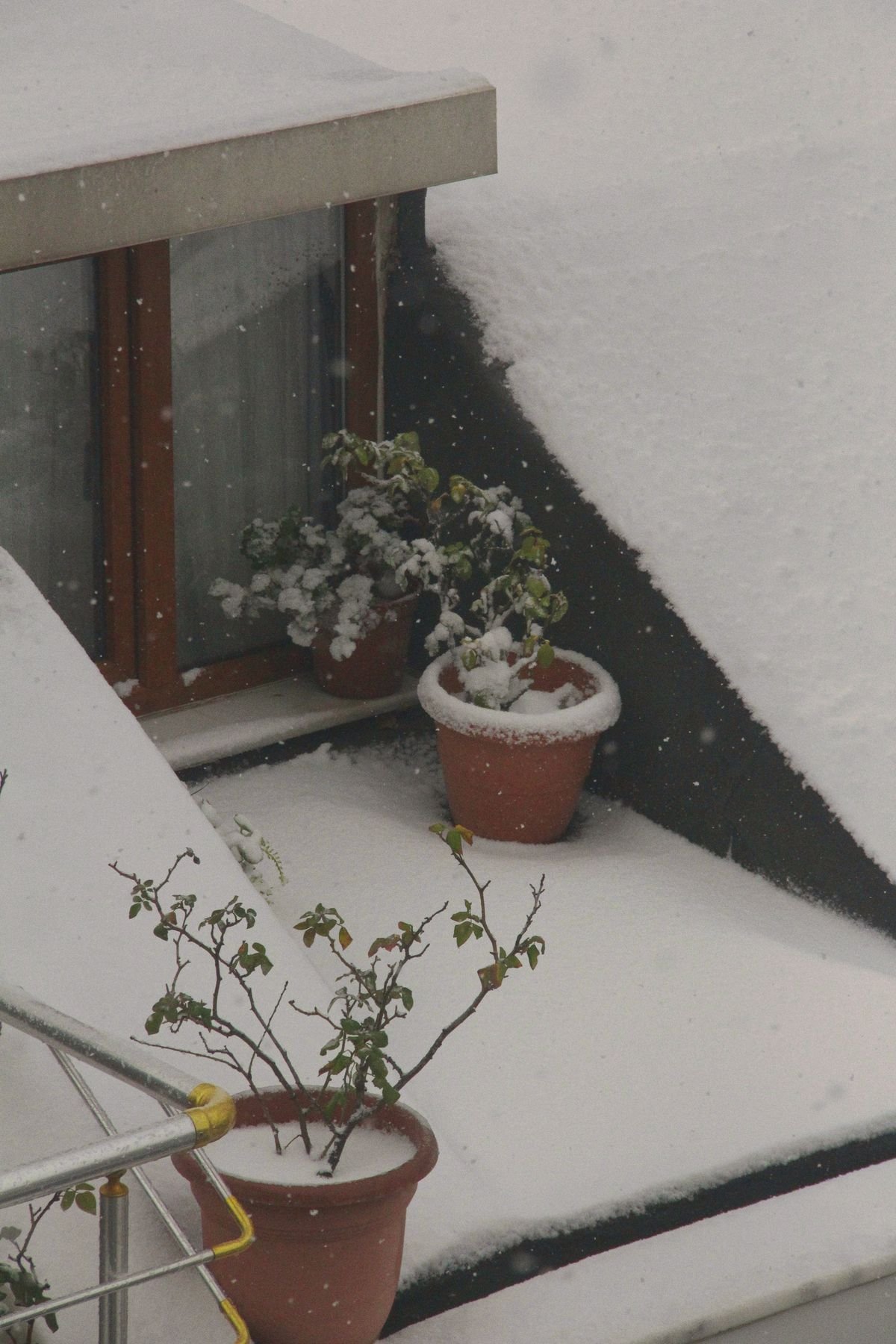
The bigger practical threat to most indoor specimens isn't a hard freeze — it's a sustained cold draught that never actually reaches 0°C. Cell membranes are built from lipids that stay fluid at room temperature but become progressively less flexible as temperature drops; sustained exposure below roughly 10°C pushes membrane function into a degraded state, and as cell integrity breaks down, internal fluid leaks into the surrounding tissue. The visible result is soft, water-soaked, darkening patches — sometimes described as translucent — that don't recover once they appear. This is distinct from the crisp, dry, curling brown patches typical of underwatering or sunburn, and distinguishing the two matters because the corrective action is opposite: cold damage means moving the plant away from the cold source, not adjusting the watering routine.
A specimen kept close to a window in winter is the most common way this happens even in an otherwise warm room, since the air layer directly against cold glass runs noticeably colder than the rest of the room — often enough to cross that 10°C threshold overnight even when the thermostat reads a comfortable temperature a few feet away. Moving the plant back from the glass, or adding a curtain between the plant and the window overnight, resolves this without needing to heat the whole room.
Heat Stress: When High Temperature Becomes a Problem
Heat alone is rarely the issue — this species tolerates warm rooms well into the high twenties Celsius without complaint, provided humidity holds up. The combination that causes trouble is heat above roughly 28°C paired with relative humidity below about 40%: the plant loses water through its leaf surface faster than the roots can resupply it, even in adequately moist soil, since the constraint is the rate of movement rather than the total amount of water available. The visible result is drooping and, with prolonged exposure, crisping at leaf edges — closer in appearance to drought stress than to a sudden collapse. Improving airflow and, where practical, raising humidity slightly reduces this water-loss rate more effectively than watering more heavily, since the substrate usually isn't actually the limiting factor. For the fuller mechanics of how humidity affects the plant's water balance, see the humidity guide.
Growing at High Altitude: UV Intensity and Faster Evaporation
Altitude changes two variables relevant to this species beyond temperature itself: UV exposure and evaporation rate. Thinner atmosphere at elevation filters less ultraviolet-B radiation, so a window position that was safely diffused at sea level can cause leaf bleaching or papery scarring at several thousand metres of elevation — the practical response is heavier diffusion, such as a denser sheer curtain or moving the plant further from the glass, rather than assuming the species' normal light tolerance still applies unchanged. Some specimens respond to the increased UV by producing more anthocyanins, the same red-purple pigments documented elsewhere on this site as a stress-linked response, visible as reddening on stems or leaf undersides. This is a protective response rather than damage in itself, though it typically appears alongside genuine UV stress rather than instead of it.
Lower atmospheric pressure at altitude also increases evaporation from both the leaf surface and the substrate, so a pot that dries on a 10-14 day summer interval at sea level dries measurably faster at elevation. The weight-test method and the top 2-3 cm dryness check remain the reliable triggers regardless of how far the interval shifts, rather than assuming any fixed day count carries over. Terracotta pots, already faster-draining than plastic at sea level, dry substantially faster still at altitude and are worth avoiding in favour of plastic or glazed ceramic where rapid evaporation is already a challenge. Indoor heating in a cold, high-altitude climate compounds this further by dropping relative humidity well below the 40-60% optimum; see the humidity guide for correction options. Reduced atmospheric oxygen at altitude has negligible practical effect on root respiration, since the proportion of oxygen in the air is unchanged regardless of elevation — the evaporation and UV effects above are the altitude factors that actually matter for this species' care.
Practical Temperature Management
Keep the plant back from window glass in winter. A gap of 30-60 cm from the pane is usually enough to avoid the cold microclimate that forms directly against cold glass overnight.
Watch for draughts as much as absolute room temperature. A door that opens onto a cold hallway or an ill-sealed window frame can create a localised cold zone even in a room that reads warm on a thermostat.
Ease off watering frequency as temperatures drop in autumn and winter, since slower internal activity means slower water use — matching the general care guide's seasonal watering adjustment avoids compounding cold stress with waterlogged roots.
If moving the plant outdoors for summer, bring it back in well before night temperatures approach the low end of its comfort range — the outdoor summer guide covers the timing and transition process in detail.
A terrarium or enclosed cabinet setup buffers both cold draughts and low humidity simultaneously, which is part of why it suits temperature-sensitive specimens well — see the terrarium growing guide for setup specifics.
Recognising the Damage After the Fact
Cold-damaged tissue does not recover; the affected portion of the leaf stays soft, discoloured, and eventually dries out, and the practical step is removing the damaged leaf or leaf section once it's clear the affected area has stopped changing, to prevent it becoming an entry point for rot. Heat-stressed leaves that have crisped at the edges similarly won't green back up, though the rest of the leaf usually remains functional and doesn't need removing. In both cases, the plant typically resumes normal growth from unaffected tissue once conditions return to the comfortable range — a cold or heat event is rarely fatal to the whole plant unless exposure was severe or prolonged, even though the individual damaged leaves themselves are a permanent loss.
Care FAQ
What is the ideal temperature range for Peperomia obtusifolia?
18-24°C (65-75°F) during the day. Within this range the plant's enzyme activity and water transport run efficiently; outside it, growth slows or stress symptoms begin to appear, though the plant tolerates brief excursions a few degrees either side without lasting harm.
Can Peperomia obtusifolia survive a freeze?
No. As a tropical species with no frost adaptation, ice formation inside leaf and stem cells at or below 0°C ruptures the cell walls, causing irreversible tissue death in the affected area. Even temperatures well above freezing but sustained below roughly 10°C cause milder but still real cellular damage over time.
Why are my Peperomia's leaves turning mushy and translucent after a cold snap?
This is classic cold damage. Sustained exposure below about 10°C affects the fluidity of cell membranes, and as cells are compromised, internal fluid leaks into surrounding tissue, producing the soft, water-soaked, darkened patches typical of chilling injury. Affected leaves do not recover and should be removed once the damage is confirmed to be spreading no further.
Can it get too hot for a Peperomia obtusifolia?
Yes, particularly when high heat combines with low humidity. Above roughly 28°C with relative humidity under 40%, the plant loses water through the leaves faster than its roots can replace it, and prolonged exposure to this combination causes scorching and wilting even with the substrate adequately moist.