Peperomia Feng Shui: Best Placement and Meaning
Peperomia obtusifolia is placed in the Southeast "wealth" corner in feng shui tradition because its thick, rounded, coin-shaped leaves are read as a symbol of financial accumulation, and its compact habit classifies it as a "Wood" element plant. That placement only works in practice if the corner also receives 2,000–4,000 lux of indirect light — otherwise the plant etiolates and loses the very shape the tradition values. Treat the compass direction as the cultural layer and the light meter as the deciding vote.
| Placement | Feng shui role | Practical requirement |
|---|---|---|
| Southeast corner (Xun) | Wealth and prosperity; Wood element | 2,000–4,000 lux to keep leaves compact and glossy |
| Living room focal point | General vitality; rounded form softens sharp furniture lines | Same light range; avoid a dim corner chosen for symmetry alone |
| Home office, left of desk | Stability and focus ("knowledge" sector) | Desk-lamp or window light; avoid fluorescent-only spots below ~800 lux |
| Bedroom | Calming "Yin" energy | Same light range; keep away from a cold windowpane or draft |
| Entryway | Welcomes arriving Chi | Same light range; hallways and foyers often run darker than expected |
1. Peperomia Feng Shui Meaning: Coin Leaves and Wood Element
In feng shui — the centuries-old Chinese practice of arranging space to influence the flow of Chi — object geometry carries meaning. Sharp, spiked forms (a snake plant, a cactus) are read as producing "cutting" energy, or Sha Chi. Peperomia obtusifolia is read as the opposite case, for two reasons rooted directly in its physical form.
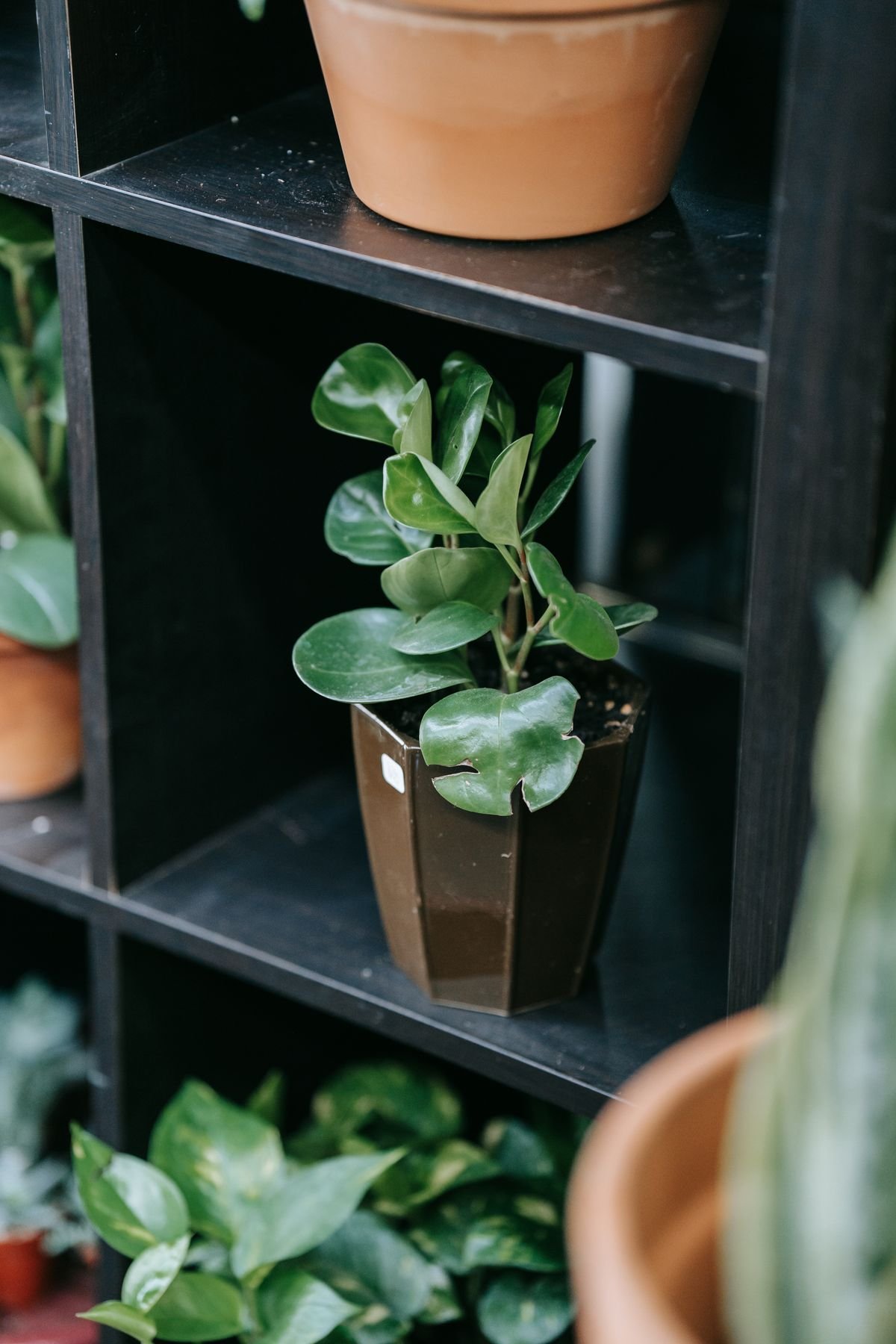
The leaves are thick, blunt-tipped, and broadly circular — a shape practitioners describe as "living coins," which is the basis of the plant's specific association with wealth accumulation, distinct from the general prosperity symbolism attached to many round-leaved houseplants. Its upright, self-branching habit and woody stem base also place it in the "Wood" element category in Five Element theory, which is linked to growth, expansion, and resilience rather than the stillness of "Earth" element plants or the sharpness of "Fire" element ones.
These are descriptions of a cultural framework, not claims this site treats as tested biological mechanisms. What is worth taking seriously is the plant's actual physical form, because that same rounded geometry connects to a body of research that has nothing to do with feng shui.
A separate identification issue is worth clearing up before choosing a spot. Peperomia obtusifolia is frequently confused with Pilea peperomioides, the "Chinese Money Plant," which is the species most often pictured in generic "money plant feng shui" content online. The two share no close relationship — Piperaceae versus Urticaceae, different families entirely — and have different leaf textures, growth habits, and light tolerances. Pilea's thinner, flatter, pancake-shaped leaves on long petioles read differently in the tradition than P. obtusifolia's thicker, glossier, more tightly clustered foliage, and the two species do not share a watering or light regime. Confirm which plant is actually in the pot before applying this guide's numbers.
2. The Part That Is Actually Evidence-Based: Curved Form and Biophilic Design
Separate from feng shui, there is a documented preference in visual perception for curved contours over sharp, angular ones. Bar and Neta (2006) found that sharp transitions in contour trigger a measurable threat-related bias in viewers, while curved forms do not. Vartanian et al. (2013), using fMRI, extended this to architectural interiors: curved-contour rooms consistently produced higher approach (rather than avoidance) responses than angular ones. A Peperomia's rounded leaf silhouette sits on the "curved" side of that research, which is a plausible reason a specimen reads as calming in a room, independent of any energetic claim.
This overlaps with biophilic design — the design principle, grounded in the biophilia hypothesis, that humans have a measurable wellbeing response to visual contact with living plant material, distinct from décor alone. A related and frequently cited demonstration is Ulrich (1984): gallbladder-surgery patients recovering in hospital rooms with a window view of trees had shorter postoperative stays and needed fewer strong analgesics than matched patients whose windows faced a brick wall. That study measured a real clinical outcome from plant-view exposure, not a self-reported mood score, which is why it is treated as a foundational result rather than an anecdote.
Feng shui placement and biophilic design frequently recommend the same spot — a visible, reachable position in a main living, work, or entryway area — for different stated reasons. The overlap is real; the mechanism behind each is not the same thing.
3. Factors That Change the Answer
The Bagua map assumes a room's Southeast corner is available and usable. In practice, three things routinely override that assumption.
- Available light. A wealth corner that is a windowless hallway or interior wall provides nowhere near the 2,000–4,000 lux the plant needs for compact, glossy growth. Below roughly 800–1,000 lux sustained for four to six weeks, internodes stretch and the plant etiolates — a structural change that does not reverse in the affected tissue (see the dormancy and low-light guide and the leggy-growth guide).
- Draft exposure. A bedroom or office placement chosen for its "Yin" calm can still sit directly against a cold single-glazed window or an air-conditioning vent. Sustained exposure below roughly 10 °C causes cellular damage at the leaf margin regardless of the room's symbolic reading.
- Cultivar. Variegated forms such as 'Variegata' need roughly 30–40% more light than the green form to avoid reversion to all-green new growth. A variegated specimen is a poor match for a dim but symbolically correct corner; the green form tolerates that spot better.
- Season. A Southeast corner that clears 2,000 lux in summer can drop well below that in winter as the sun's angle lowers and daylight hours shorten, particularly at higher latitudes. A spot confirmed once in July is not confirmed for January; recheck the same corner with a lux reading at the start of each season rather than assuming a single measurement holds year-round.
4. Practical Placement: What to Actually Do
- Locate the Southeast corner of the room using a compass or map app, not by guessing from the doorway.
- Measure the light there before committing the plant to it. A phone lux-meter app or a dedicated meter reading of 2,000–4,000 lux at leaf height confirms the spot works; see the light requirements guide for how to take the reading.
- If the wealth corner fails the light check, do not force it. Move the plant to the nearest spot that clears 2,000 lux, even if that means a different wall, and treat the Bagua placement as secondary to that constraint.
- For a home office, the traditional position is to the left of the desk, in the "knowledge and skills" sector; confirm it is not lit only by fluorescent overhead lighting, which frequently sits below the plant's tolerated minimum.
- For a bedroom, keep the pot at least 30–50 cm from single-glazed glass in winter and clear of a direct air-conditioning or heating vent, regardless of which corner tradition assigns it to.
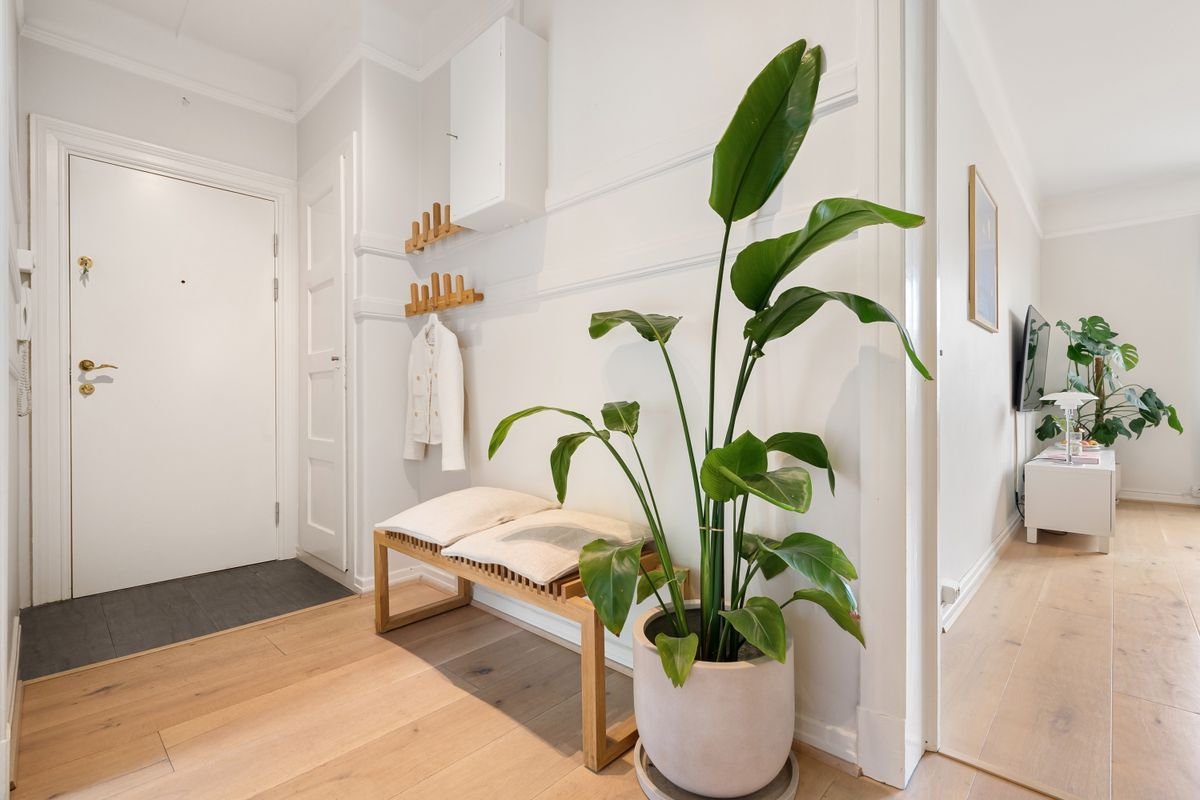
- For an entryway — another common feng shui placement, intended to greet arriving Chi — check the spot against the same 2,000 lux minimum; most hallways and foyers run darker than a living room window and are a frequent source of slow etiolation in an otherwise well-cared-for specimen.
- If the symbolically correct corner genuinely cannot clear 2,000 lux year-round, supplement with a small full-spectrum LED grow light on a timer rather than abandoning either the light requirement or the placement; this keeps the plant compact without relocating it every season.
5. Mistakes and Limits of the Framework
The most common mistake is prioritising the compass reading over the light reading, then treating the plant's decline as an energetic problem rather than a horticultural one. The plant's biological needs override the Bagua map, not the reverse. A Peperomia moved into a dim "wealth corner" for symbolic reasons will etiolate and lose the compact, rounded shape that gave it the wealth association in the first place — the placement decision undermines its own premise. In practice, the entryway and the traditional Southeast corner are the two spots most likely to fail this check, since both are chosen for their symbolic role first and their light levels second, if at all.
It is also worth being direct about scope: no controlled study measures "Chi" or links plant placement to financial outcomes, and this article does not claim one exists. The evidence-backed portion of this topic is the curved-form and biophilic-design research above; the wealth-corner tradition is presented here as cultural context worth knowing, not as a mechanism this site is claiming to validate.
6. Related Care Implications
A plant already in decline changes the calculation. Yellowing leaves, black spots, or an etiolated, leggy stem are read in feng shui as "Sha Chi" from a stagnant or dying specimen. Independent of that reading, each is also a specific diagnostic signal — overwatered roots, a fungal or bacterial infection, or chronic low light — with its own fix. Repositioning the pot within the Bagua does not address any of these; diagnosing and correcting the underlying cause does, and only then is the plant's form worth "reading" for anything.
Before choosing a permanent spot, it is worth confirming general care needs against the complete care guide, particularly if the household also keeps pets — the species is non-toxic to cats and dogs (ASPCA; see the toxicity guide), which matters more for placement in a bedroom or living room than any Bagua sector. Growers who want a fuller, bushier form to match the "abundance" reading, rather than a single leggy stem, should see the pruning guide or consider a LECA setup for consistent growth in a fixed display spot. Persistent structural problems — legginess, sparse growth, repeated yellowing regardless of position — are covered in the general troubleshooting guide.
Conclusion
Feng shui gives Peperomia obtusifolia a specific cultural reading — coin-shaped leaves, Wood element, Southeast wealth corner — built on the plant's real rounded geometry. Separately, and on firmer evidential ground, that same rounded geometry aligns with documented research on curved-form preference and biophilic design. The two can point to the same spot in a room. When they do not — when the symbolically correct corner is too dark — the light requirement wins, because a plant that etiolates in a "wealth corner" satisfies neither the tradition nor the biology behind it.
Care FAQ
Is Peperomia obtusifolia considered a good luck or wealth plant in feng shui?
Yes, within the tradition. Its thick, rounded, coin-shaped leaves are read as a symbol of wealth accumulation, and its compact, upright habit is classified as a "Wood" element plant associated with steady growth. These are cultural and symbolic associations, not claims this site treats as biological fact.
Where should I place my Peperomia for the feng shui wealth corner?
Traditional Bagua mapping puts the Southeast corner of a room in the "Wealth and Prosperity" sector. If that corner also happens to get enough light — 2,000–4,000 lux for compact, glossy growth — it is a reasonable placement on both counts. If it does not, the plant's biology should decide the location, not the compass.
Does feng shui plant placement have any scientific basis?
Not the energy claims themselves — Chi and Sha Chi are not measurable quantities. What is genuinely evidence-based is a related but separate field: biophilic design and the documented human preference for curved over sharp-angled forms (Bar & Neta, 2006; Vartanian et al., 2013). That research explains why a rounded-leaved plant reads as calming, independent of any feng shui claim.
Can I keep a Peperomia in the bedroom under feng shui principles?
Yes, feng shui tradition treats its soft, rounded "Yin" form as suitable for bedrooms. The biological requirement is the same anywhere in the home: at least 2,000 lux of indirect light, and no placement directly against a cold windowpane or air-conditioning vent, which causes cold-draft leaf damage unrelated to any energetic reading of the room.
Does a dying Peperomia really create bad or stagnant energy?
In feng shui terms, yes — a visibly declining plant is read as "Sha Chi" (stagnant energy) rather than a neutral absence. Whatever view one takes of that framework, a yellowing, etiolated, or rotting plant is also a genuine diagnostic signal on this site's terms: it means the position is failing the plant, and the fix is light or watering, not repositioning within the Bagua.
What if my wealth corner does not get enough light?
Do not place the plant there. A Peperomia held below roughly 800–1,000 lux for several weeks etiolates — stretching, thinning, and losing the compact, rounded shape the whole feng shui reading depends on. A supplemented grow light in the correct corner, or a different bright spot altogether, both outperform a symbolically correct but biologically wrong position.