Black Spots on Peperomia: 7 Causes and Fixes
Black spots on Peperomia obtusifolia are not a diagnosis — they are a symptom. Most growers treat them as one problem with one fix: stop misting, apply a fungicide, or cut back on water. Sometimes that works. Often it does not, because seven distinct biological mechanisms produce black spots on this species, and the correct treatment for one can be irrelevant — or actively harmful — for another. Applying a fungicide to oedema does nothing; reducing water for a virus does nothing.
The direct answer: Black spots on P. obtusifolia are caused by fungal leaf spot (Cercospora and relatives), cellular oedema from chronic overwatering, systemic root rot, cold cellular damage, bacterial leaf spot, fertiliser salt accumulation, or ring spot virus. Each has a distinct visual signature — spot size, location, texture, and the presence or absence of a yellow halo or concentric ring — that determines the correct intervention.
(For a broader overview of symptoms across the species, see the complete problems guide.)
Peperomia Black Spots: Quick Diagnostic Table
| Spot Appearance | Location | Texture | Likely Cause | Urgency |
|---|---|---|---|---|
| Small (2–8 mm), circular, yellow halo | Upper surface | Soft, sunken | Fungal leaf spot | Medium — treat promptly |
| Raised, pimple-like, corky bumps | Underside first | Hard, raised | Cellular oedema | Low–Medium — adjust watering |
| Large, irregular, dark patches, mushy | Any surface | Soft, water-soaked | Root rot / vascular decay | High — act immediately |
| Dark patches after cold exposure | Leaves near windows | Papery, dry | Cold cellular damage | Medium — relocate |
| Water-soaked, angular, spreading fast | Lower surface | Soft, translucent | Bacterial leaf spot | High — isolate immediately |
| Brown-black at tips and margins only | Edges only | Dry, crisp | Fertiliser salt burn | Low — flush substrate |
| Concentric dark rings; distorted new growth | Scattered, any leaf | Variable | Ring spot virus | High — isolate and discard |
Cause 1: Fungal Leaf Spot
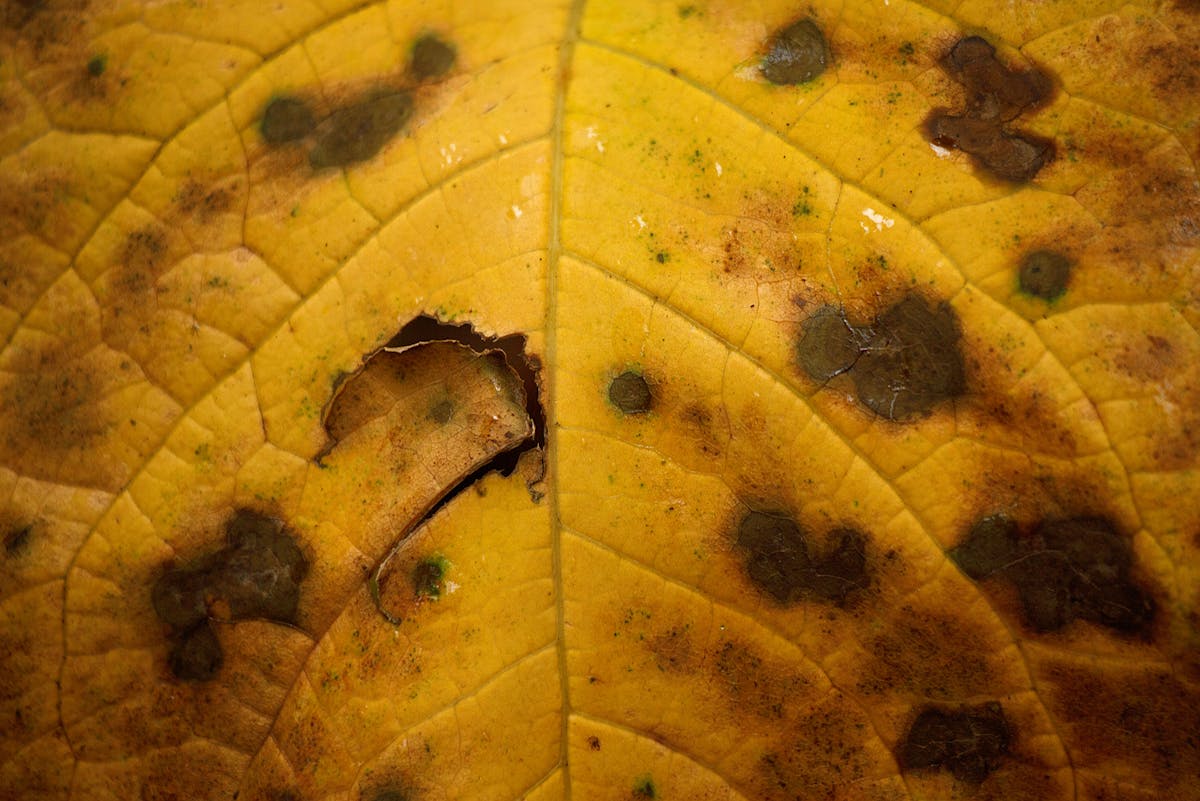
What it looks like: Small (2–8 mm), roughly circular spots, dark brown to black, with a distinct lighter halo of yellowing tissue around the dark centre. Spots often appear on several leaves at once and concentrate on the upper surface.
The mechanism: Fungal spores — most commonly Cercospora, also Phyllosticta and Rhizoctonia — are present in most indoor air at all times. They do not germinate spontaneously. Germination needs three concurrent conditions: standing moisture on the leaf surface, temperature above 18°C, and stagnant air. The yellow halo is not decorative — it is produced by toxins the fungus secretes into surrounding tissue, destroying chloroplasts in adjacent cells before the primary lesion has fully expanded.
The treatment:
- Isolate the plant to prevent spore dispersal.
- Remove heavily spotted leaves with scissors sterilised in 70% isopropyl alcohol. Discard into household waste — do not compost.
- Improve airflow. Fungal spores cannot colonise leaf surfaces in moving air.
- Eliminate overhead watering and misting. Moisture sitting on the surface for more than one hour provides the germination window. Water only at substrate level.
- Apply a dilute neem oil solution (
2 mlper litre of water) or a copper-based fungicide to remaining healthy foliage as a preventive barrier. Established lesions will not reverse — the treatment protects unaffected tissue.
Cause 2: Cellular Oedema
What it looks like: Small, raised, pimple-like bumps on the underside of leaves that harden into dark brown or black corky scabs. The upper surface often stays clean. There is no yellow halo, and the spot borders are crisp.
The mechanism: Oedema is not an infection — it is a pressure failure. P. obtusifolia stores water in its semi-succulent leaves. When the substrate is wet and the surrounding air is cool, humid, or stagnant, the roots absorb water rapidly while the stomata open slowly or stay partially closed. Internal hydrostatic pressure builds until the epidermal cell walls physically rupture. The ruptured cells die, oxidise, and suberise into the characteristic hard corky scar. It is a non-infectious, non-contagious physiological disorder — it poses no risk to neighbouring plants and requires no fungicide.
For the cellular-level breakdown, see the dedicated oedema guide.
The treatment:
- The existing scars are permanent — suberised cells do not recover.
- Switch to a free-draining substrate with at least
30%inorganic component (perlite, pumice, or grit) so the root zone dries more evenly, reducing the pressure differential between root absorption and stomatal transpiration. - Increase airflow to raise the transpiration rate.
- Allow the top
2–3 cmof substrate to dry completely before each watering — roughly every10–14 daysin summer and21–28 daysin winter for a 12 cm pot at18–24°Cand40–60% RH.
Cause 3: Root Rot — The Underground Source
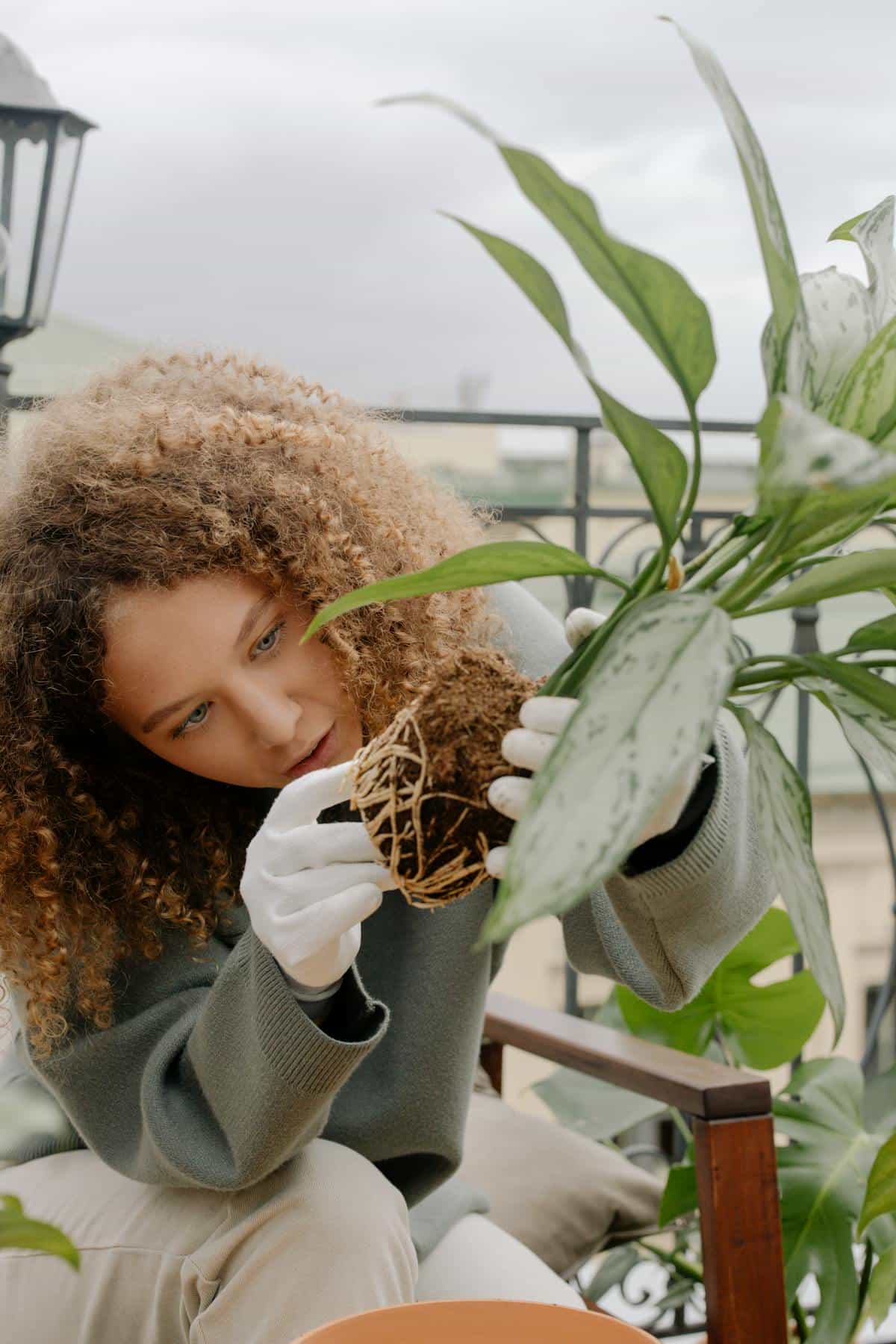
What it looks like: Large, irregular black or very dark brown patches over most of a leaf. The tissue feels soft and mushy, not dry. A sour smell from the substrate and yellowing lower leaves are almost always present at the same time.
The mechanism: Chronic overwatering saturates the substrate and creates anaerobic conditions at the root zone. Root tissue dies from suffocation within roughly five days of continuous saturation; dead roots are colonised by opportunistic bacteria that release cell-wall-degrading enzymes; those enzymes travel upward through the xylem into the leaves. The large soft black patches are not a primary leaf infection — they are the terminal signal of damage that started underground, often weeks earlier.
A recurring diagnostic case illustrates the delay: a specimen in a 14 cm plastic pot of standard multipurpose compost develops soft, wilted leaves, and the grower responds by increasing watering frequency from weekly to every four to five days. Over three weeks the wilting worsens, lower leaves yellow and detach, and a sour odour develops. On unpotting, the fine root hairs are entirely brown and non-functional. The original wilting was caused by root dysfunction, not drought — the extra water accelerated the anaerobic collapse. Repotted into a free-draining mix and left dry for three weeks, the specimen produces new root growth within four weeks and restores full turgor within six.
The treatment:
- Unpot and inspect. Healthy roots are white or pale tan and firm; rotted roots are brown, soft, and malodorous.
- Remove all compromised roots with sterilised shears, cutting back to healthy tissue.
- Repot into a free-draining substrate (
50%peat-free compost,30%perlite,20%fine bark) and a correctly sized pot only 2–3 cm larger than the remaining root ball. If the root loss is severe enough that the plant no longer stands upright unsupported, check it against the signs it's time to repot and follow the full repotting protocol rather than improvising the transplant. - Withhold water for 5–7 days so the wound sites callus, then resume the standard
10–14-daysummer interval.
For cases with more than 60% root loss, see the overwatering rescue guide.
Cause 4: Cold Cellular Damage
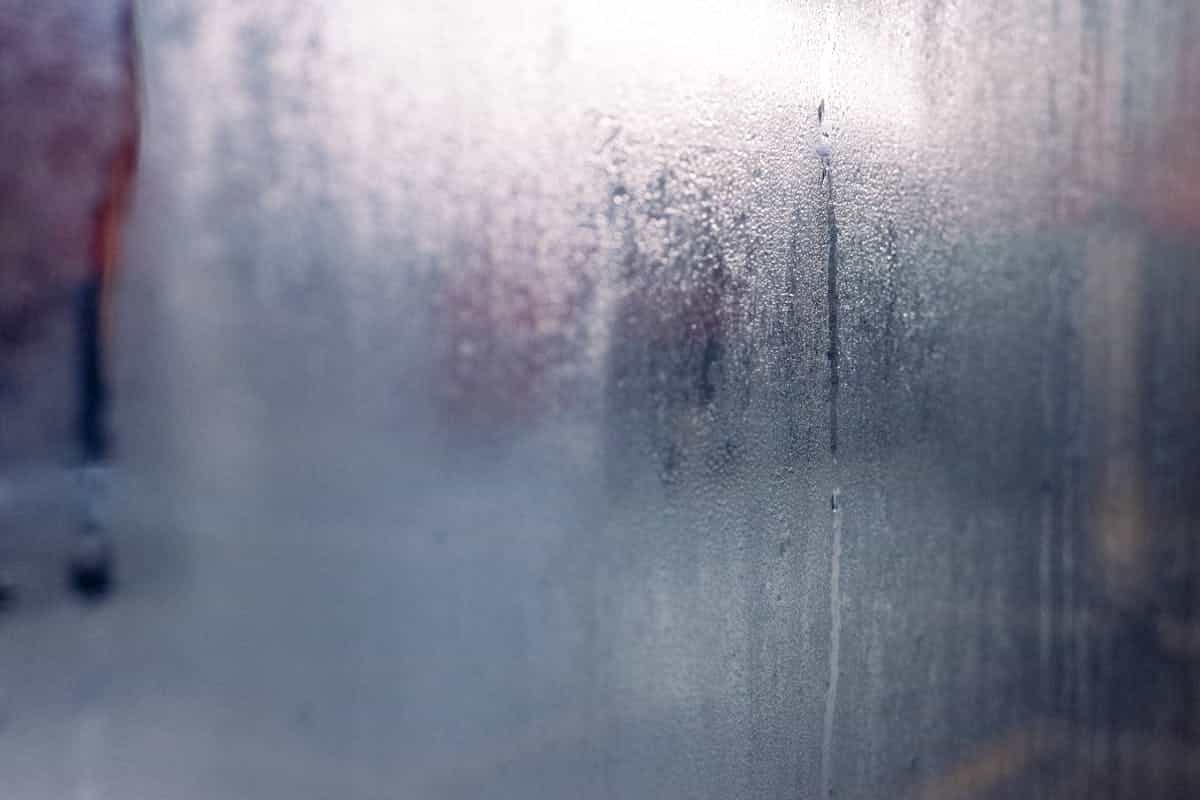
What it looks like: Dark, water-soaked patches appearing within 12–48 hours of cold exposure. Distribution is the diagnostic key: cold damage affects only the leaves closest to the cold source — those pressing against window glass, nearest a drafty gap, or at the canopy edge facing an uninsulated wall. The rest of the plant is unaffected.
The mechanism: P. obtusifolia originates from forest understoreys in Venezuela and Colombia, where temperatures hold between 18–28°C year-round. Its cell membranes are not adapted to sub-10°C conditions. When leaf-surface temperature drops below 10°C — which can happen at night against north-facing glass even when the room thermostat reads adequately — the water within mesophyll cells begins to freeze, and ice crystals shred the membranes from the inside. As the plant warms, the ruptured cells leak, oxidise, and turn black. The damage is irreversible in affected tissue.
The treatment:
- Relocate to a position holding
18–24°Cby day and above15°Cat night, measured at the leaf surface near glass — not at the thermostat. - In winter, move the plant away from the window glass at night. Leaf-surface temperature against north-facing glass can run
4–6°Cbelow the room-centre air temperature. - Remove damaged leaves cleanly — dead tissue is an entry point for secondary fungal or bacterial colonisation.
- Withhold water for five days after cold damage. Cold-stressed roots are compromised and vulnerable to anaerobic conditions.
Cause 5: Bacterial Leaf Spot
Unlike fungal leaf spot, which produces a clean circular lesion with a yellow halo, bacterial leaf spot presents as irregular patches with a water-soaked, translucent, or greasy quality in the early stage. As the lesion expands it becomes angular — the straight edges are formed by leaf veins that contain the bacteria.
The primary pathogens on this species are Xanthomonas campestris and Pseudomonas cichorii, both gram-negative bacteria that require free moisture on the leaf surface to travel and enter through stomata or wounds, consistent with the species profile documented by NC State Extension. The main transmission vector is splashing water from overhead irrigation. Unlike oedema and cold damage, bacterial leaf spot is actively contagious and progresses rapidly in wet, warm conditions.
Treatment uses a copper-based bactericide as a surface preventive, but bacteria that have entered the vascular tissue cannot be eradicated — aggressive removal of all symptomatic leaves and immediate elimination of overhead watering are the most effective controls. Full identification and treatment are in the bacterial leaf spot guide.
Cause 6: Fertiliser Salt Burn
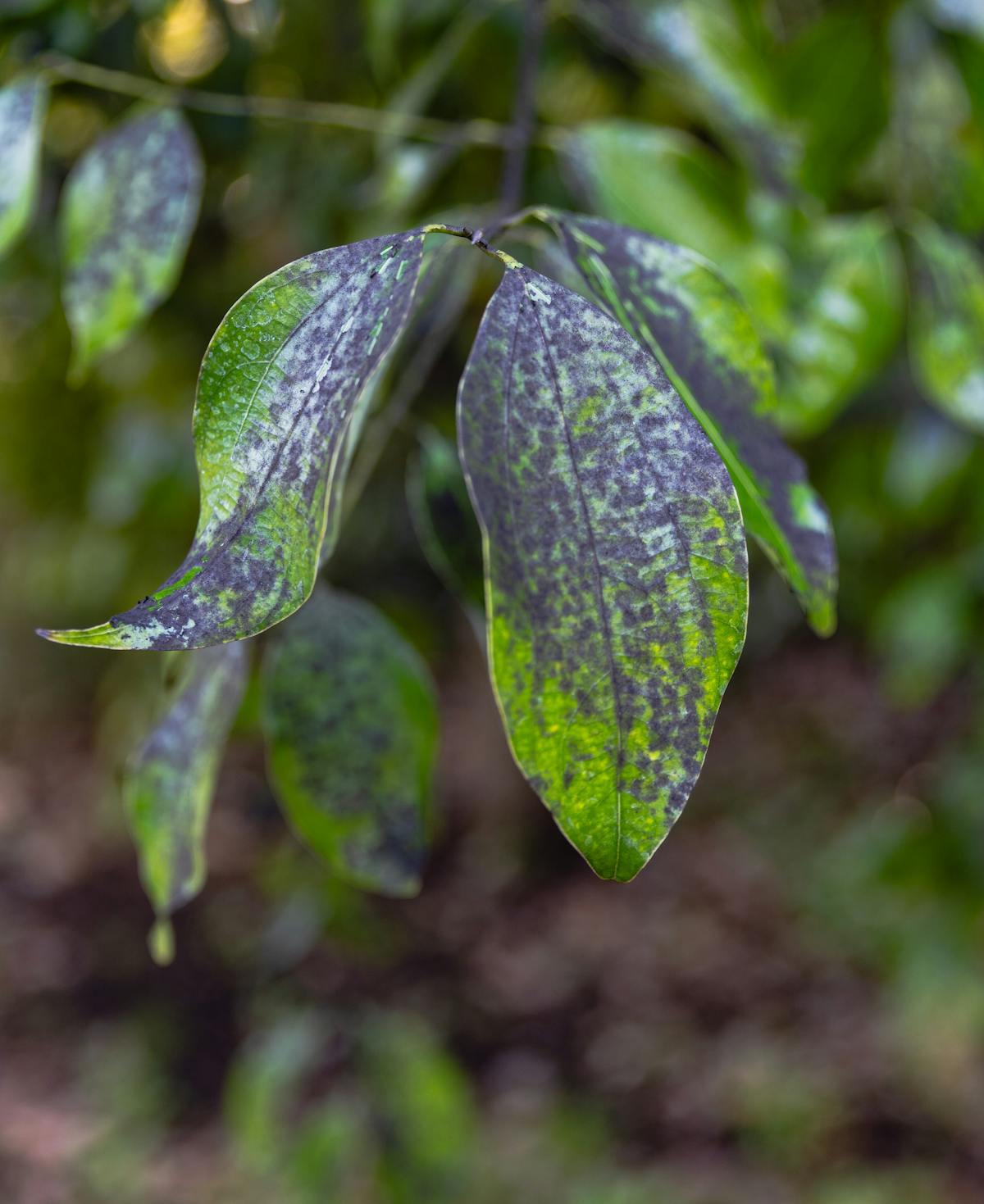
Fertiliser salt burn does not produce spots in the centre of the leaf — it produces dark brown-to-black necrosis at the margins and tips. This is diagnostically specific: the margins and tips are the last points of water delivery in the leaf's vascular network, so they desiccate first when the root system's capacity to absorb water is impaired.
The mechanism is osmotic. Repeated fertiliser applications raise the salt concentration of the soil solution. When it exceeds the tolerance of root-cell membranes, water moves osmotically out of the roots rather than in. The result is edge desiccation that darkens and curls inward, frequently with a white salt crust on the substrate surface.
The treatment is a substrate flush: run low-mineral water through the pot at 3–5× the pot volume, allowing full drainage. Going forward, apply balanced NPK 20-20-20 at 50% of label rate, monthly in spring and summer only, and never in winter. The full protocol is in the fertiliser burn guide.
Cause 7: Ring Spot Virus — The Incurable One
The one cause of dark spotting that no intervention reverses is Peperomia ring spot virus. It presents differently from every mechanism above: concentric dark rings or arcs on the leaf surface, or distorted, stunted, and crinkled new growth rather than discrete lesions. The pattern is the diagnostic — rings rather than filled spots, and deformation confined to developing leaves.
The virus is vectored by thrips and spread mechanically through propagation from infected tissue. The University of Illinois IPM reference on Peperomia diseases documents the ring spot pattern alongside the fungal leaf-spot pathogens. There is no chemical cure — fungicides and bactericides do nothing against a virus. The only responsible action is to isolate the plant from the collection and discard it before thrips or shared tools transmit it to healthy specimens. Where ring spot is suspected, inspect the youngest leaves for thrips (fine silvering and dark frass specks), because the post-import thrips outbreak is the most common entry route for the vector.
Why Switching to Terracotta Is Not the Universal Fix
A widely repeated piece of advice for recurring black spots is to switch the plant into a terracotta pot, on the logic that porous clay wicks moisture away and prevents the overwatering behind oedema and root rot. Terracotta is not universally better than plastic. The wicking claim is correct but context-dependent. In a dry, centrally-heated room (RH below 40% in winter), terracotta dries the substrate faster than the species' optimum interval — producing chronic underwatering and the salt-concentration that drives marginal burn. In a humid room, or for a habitual over-waterer, terracotta is a useful self-correcting tool. Match the pot to the grower's watering tendency and the room's RH, not to a blanket rule. The pot is a moisture-rate adjustment, not a cure for a watering habit.
When to Remove a Leaf: The 20/50 Rule
A leaf that has lost less than 20% of its surface to necrosis is still net-positive — it produces more photosynthetic energy than it costs to maintain. Correct the environmental cause and leave it in place.
Between 20–50% necrosis, removal is indicated for contagious causes (fungal, bacterial, viral) where the damaged tissue actively sheds pathogens. For non-contagious causes (oedema, cold damage, salt burn), removal at this threshold is a practical judgment.
Above 50% necrosis, remove the leaf regardless of cause. Always cut at the petiole base with scissors sterilised in 70% isopropyl alcohol between each cut.
Prevention: The Three Environmental Controls
Most black-spot presentations share three preconditions: excess moisture on leaf surfaces, stagnant air, and a substrate that holds water longer than the roots can process it. Addressing these prevents the majority of causes.
- Substrate drainage: Maintain at least
30%inorganic component. All-purpose compost alone retains moisture at levels that predispose the plant to oedema, root rot, and fungal colonisation simultaneously. - Watering technique: Water at substrate level, never overhead. Allow the top
2–3 cmto dry first — every10–14 daysin summer for a 12 cm pot. - Airflow: A single fan giving gentle room air movement — not aimed at the plant — removes the stagnant conditions fungal spores need and raises the transpiration rate enough to reduce oedema risk.
If the substrate stays wet for more than 10 days after watering and new spots keep appearing, the problem is pot size, substrate composition, or watering volume — not the interval alone. Firm, glossy leaves indicate adequate hydration and no cellular damage; soft or discoloured leaves with dark patches indicate the root-zone conditions need examination before the next watering.
Black spots stop spreading once the moisture and airflow conditions that created them are corrected.
Care FAQ
Are black spots on Peperomia contagious?
It depends on the cause. Fungal leaf spot, bacterial leaf spot, and ring spot virus are all contagious — spores, bacteria, or thrips-vectored virus spread to nearby leaves and other plants through water splashing, shared tools, or pests. Isolate the affected plant and sterilise shears with 70% isopropyl alcohol between cuts. Oedema, cold damage, and fertiliser salt burn are non-contagious physiological disorders and pose no risk to neighbouring plants.
Should I cut off leaves with black spots?
Yes, if more than 20–30% of the leaf surface is affected, or for any contagious cause. A heavily necrotic leaf no longer photosynthesises net-positive and, for fungal, bacterial, or viral causes, actively sheds infectious material. Cut cleanly at the petiole base with sterilised shears. Below 20% on a non-contagious cause, leave it in place and correct the environment.
Can overwatering cause black spots?
Yes — by two separate mechanisms. Chronic overwatering causes oedema, where roots absorb water faster than the leaves can transpire it, rupturing epidermal cells that oxidise into hard black corky scabs. Sustained saturation also causes root rot: anaerobic root death lets bacteria release enzymes that travel up the vascular system and produce large, soft black patches on the leaves.
Is ring spot on Peperomia curable?
No. Peperomia ring spot virus produces concentric dark rings or distorted, stunted new growth, and there is no chemical cure. The virus is vectored by thrips and spread by propagation from infected tissue. The only responsible action is to isolate the plant from the rest of the collection and discard it to protect uninfected specimens.