
Peperomia Obtusifolia 'Bicolor': How to Fix Red Stems
A Peperomia obtusifolia 'Bicolor' with fading red stems needs more light, not different watering or feeding. The red pigment is produced in direct proportion to light intensity, so a plant moved to a dimmer spot will gradually produce green stems and less contrast in its splashed cream variegation on new growth — check the light level first before assuming anything else is wrong.
Quick Decision Checklist
- Worth doing: move the plant to a brighter indirect spot if new stems are emerging green rather than red, or if the cream leaf patches look increasingly muted.
- Optional: bottom-water rather than top-water, since it avoids wetting the coloured stems and reduces standing-moisture risk around them specifically.
- Not needed: adjusting fertiliser or watering frequency in response to stem-colour fading alone — neither addresses the actual light-dependent mechanism.
- Harmful: moving a low-light-acclimated plant abruptly into strong direct sun to "fix" the fading, which risks scorch on the leaf's cream sections, which carry less protective chlorophyll than solid green tissue.
What to Inspect First
Confirm the light level with a meter or phone app rather than judging by eye — a spot that looks reasonably bright can still read below this species' 2,000-4,000 lux optimum, and variegated cultivars generally need toward the upper end of that range to maintain contrast. Check the stem base and substrate at the same time: a fading-red-stem complaint that also shows softness or mushiness at the base is a different problem — stem rot — not a pigment issue, and needs the opposite response (isolate and inspect, not relocate for light).
Why the Red Stem Colour Appears — and Fades
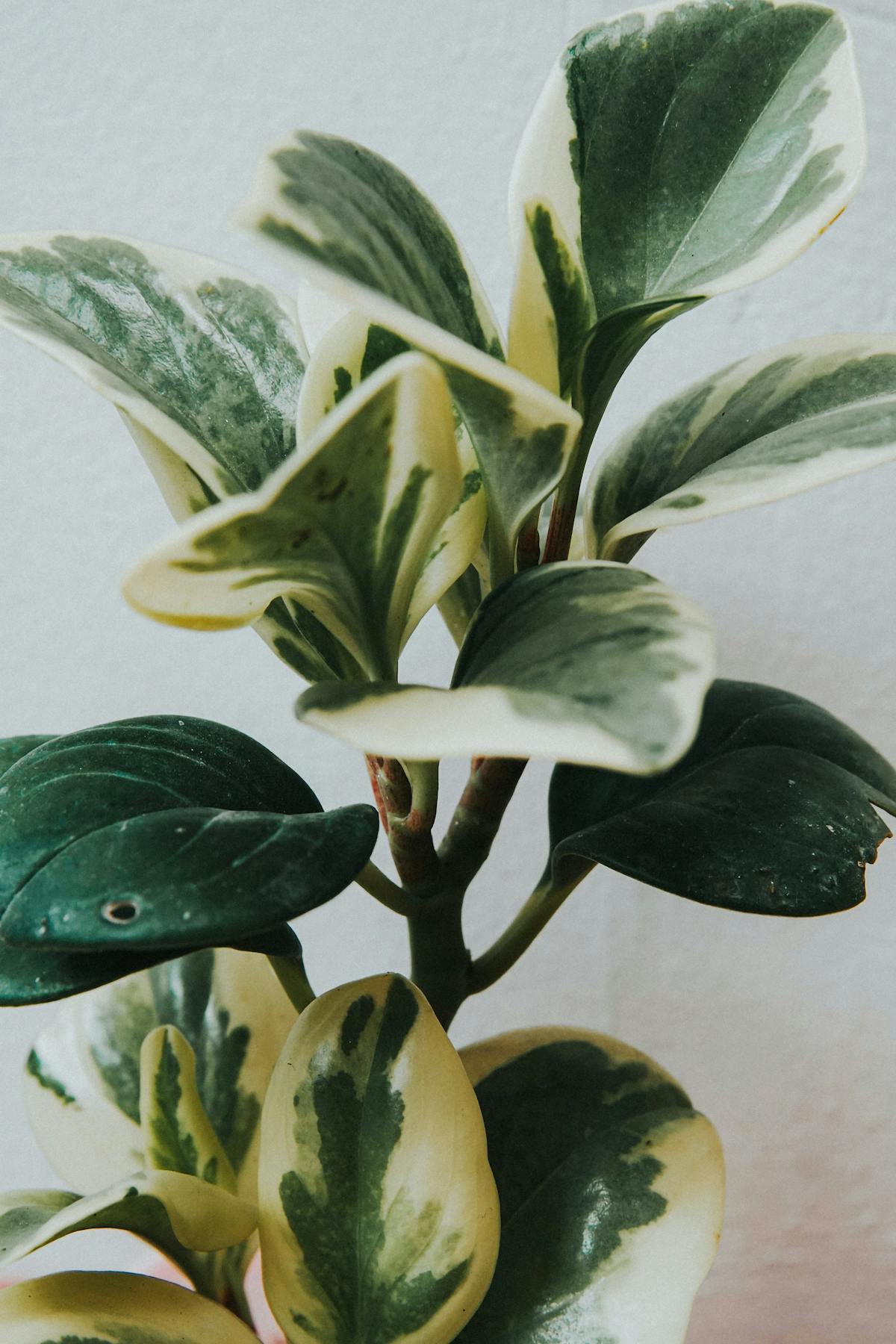
The red tint comes from anthocyanins, the same class of water-soluble pigments responsible for autumn leaf colour, stored in the cell vacuole rather than the chloroplasts that hold chlorophyll. Producing them is energetically costly, and that cost is why the response is conditional on light: anthocyanins absorb a portion of high-energy light and act as a mild antioxidant, buffering the photosynthetic tissue underneath. In good light that trade-off is worthwhile and stems stay reddish. In a dimmer spot, the plant redirects that energy toward chlorophyll instead, since chlorophyll captures far more of the limited available light — so new stem growth increasingly comes in green. This mirrors the light-dependent reversion pattern seen in this cultivar's cream leaf variegation, just expressed in the stem rather than the blade.
Step-by-Step Method to Restore Colour
- Measure the current light level at the plant's actual position rather than assuming. Anything below roughly 2,000 lux is a plausible explanation for fading.
- Relocate to brighter indirect light gradually, over a few days if the difference is significant, to avoid shocking a plant acclimated to lower light.
- Wait for new growth — existing green-stem sections will not turn red retroactively; judge success by the colour of stem tissue produced after the move.
- Reassess after several weeks. New stem growth under corrected light should show visibly more red than what it replaced, continuing to intensify as the plant fully adjusts.
Adjustments for Watering and Substrate
No cultivar-specific change applies to the standard top-2-3cm-dry watering trigger or the species' usual free-draining substrate requirement. Bottom-watering is a reasonable default specifically for this cultivar, since it keeps water off the coloured stems and petioles, reducing the standing-moisture conditions that favour stem and crown rot — but it is a preference, not a requirement, and periodic top-flushing is still needed to prevent salt buildup regardless of method.
Warning Signs and Troubleshooting
| Symptom | Likely cause | First action |
|---|---|---|
| New stems emerging green rather than red | Light deficit | Relocate to brighter indirect light |
| Cream leaf patches looking muted or greening | Same light-deficit mechanism, expressed in the leaf | Same fix — more light, not less |
| Yellowing lower leaves, substrate wet | Root anoxia from overwatering | Unpot and inspect roots — see the overwatering rescue guide |
| Soft, mushy stem base | Stem rot, a separate problem from colour fading | See the stem rot guide for the rescue-cutting protocol |
Aftercare and Monitoring
Once repositioned, don't judge the outcome by existing stems — they keep whatever colour they already had. Check new growth every few weeks and confirm the light reading periodically, since a spot's effective lux can drift as furniture or the season changes. If colour hasn't improved in new growth after several weeks of confirmed brighter light, rule out root health or a fertiliser issue before assuming the light correction failed.
Common Mistakes
- Adjusting fertiliser or watering instead of light when stems fade — neither addresses the underlying anthocyanin mechanism.
- Moving the plant abruptly into strong direct sun to force more red, risking scorch on the lower-chlorophyll cream sections of the leaf.
- Judging the fix by existing stems rather than new growth, since already-green stem tissue does not revert to red.
- Treating a soft, mushy stem base as a light problem rather than recognising it as stem rot, which needs isolation and a rescue cutting, not relocation.
Sources
Mechanism references: anthocyanin pigment biology. Species reference: Missouri Botanical Garden Plant Finder.
Care FAQ
Why is my Peperomia Bicolor losing its red stem colour?
Almost always insufficient light. Red stem colour comes from anthocyanins, produced in direct response to light intensity as a photoprotective pigment. Under sustained low light, the plant redirects resources toward chlorophyll instead, and new stems emerge green rather than red. Existing red stem sections do not regain colour — only new growth under corrected light does.
Is Peperomia obtusifolia Bicolor the same as Variegata?
No. Both carry cream variegation, but Bicolor shows an irregular, "splashed" pattern along with red-tinted stems, while Variegata typically shows a more defined green-centre, cream-margin pattern with green stems. The red-stem trait is what distinguishes Bicolor specifically.
Does Bicolor need different watering from other Peperomia obtusifolia?
No. The same top-2-3cm-dry trigger applies regardless of cultivar. Bottom-watering is a reasonable default for this cultivar specifically since it avoids wetting the coloured stems and petioles, which reduces standing-moisture risk around them, but it is not a requirement.
Why is my Bicolor developing soft, mushy stems?
This is stem rot, not a light or colour problem, and needs a different response entirely — remove affected tissue and propagate a clean healthy cutting rather than adjusting light. See the stem rot guide for the full diagnosis and rescue steps.