Peperomia Variegation Light: Avoid Reversion
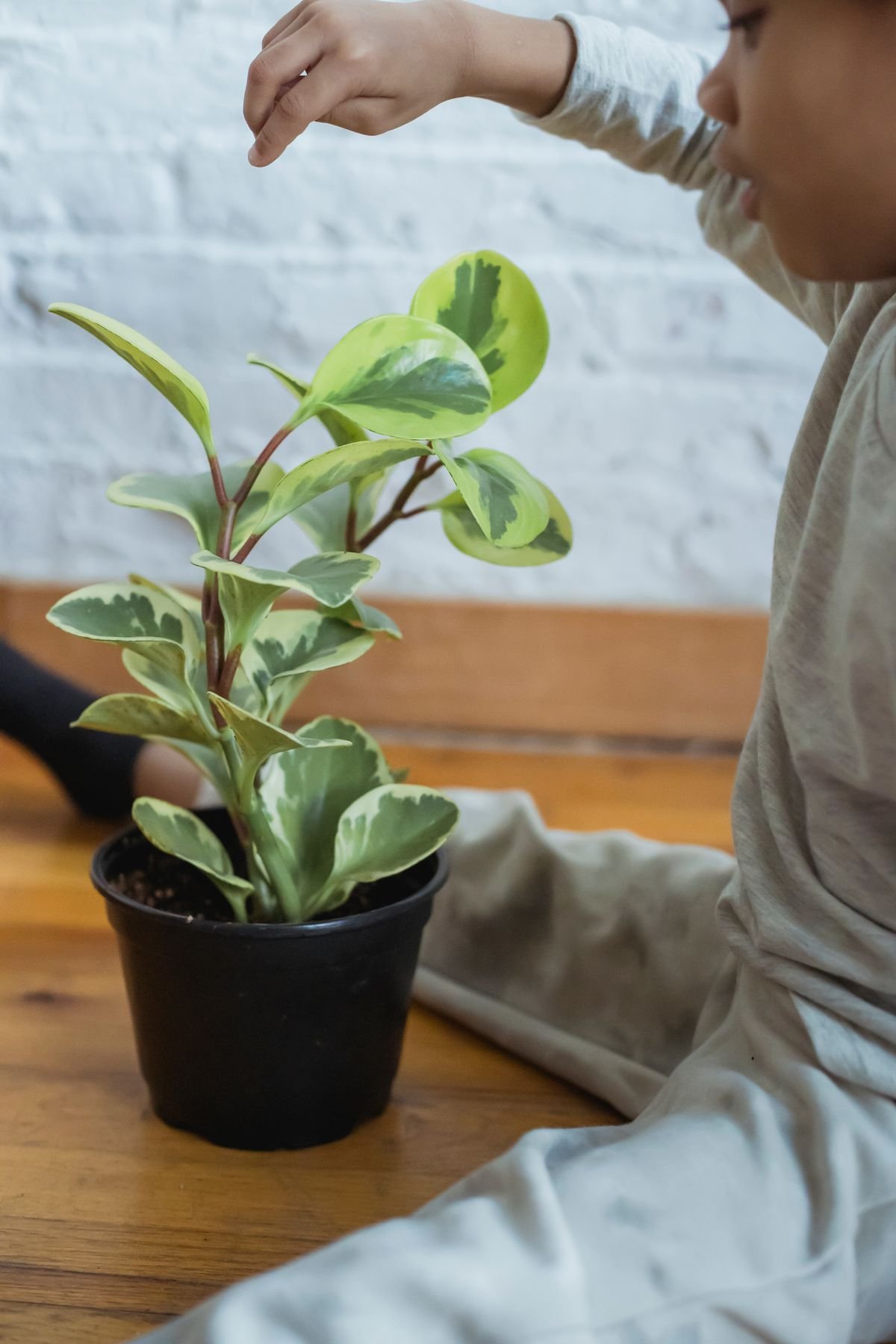
Variegated Peperomia obtusifolia cultivars need brighter light than the plain green form, because their white and cream leaf sections carry no chlorophyll and produce no energy — the green tissue alone has to cover the entire plant's photosynthetic needs. In practice this means aiming for the upper part of the site's working target of roughly 2,000-4,000 lux, and making sure that light is diffused rather than direct, since white tissue scorches more readily than green tissue under the same direct sun exposure.
Quick Reference
| Factor | Green form | Variegated cultivars |
|---|---|---|
| Light need | Roughly 2,000-4,000 lux (working target) | Brighter; the upper half of the range |
| Tolerated minimum | Survives below about 800 lux but barely grows | In low light, new growth trends toward reversion |
| Direct sun tolerance | Strong direct sun can scorch the leaves | White sections scorch more readily than green tissue |
| Consequence of a light deficit | Etiolation, slowed growth | Reversion — new leaves increasingly green — alongside the same etiolation risk |
Why Variegated Cultivars Need More Light
White and cream leaf tissue contains no functional chlorophyll and cannot photosynthesise; it survives purely as a metabolic dependent, kept alive by sugar the green tissue produces and transports to it. A leaf that is substantially white is not simply operating at reduced efficiency — the plant is actively subsidising tissue that contributes nothing to its own energy budget, and that subsidy is what raises the light requirement above the green form's. This is the same underlying mechanism covered in more depth in the variegation increase guide; this page focuses specifically on the light-level decision that follows from it.
Factors That Change the Target
Cultivar variegation density matters. A lightly speckled cultivar carries a smaller energy penalty than a heavily cream cultivar such as 'Alba' or a heavily marbled 'Marble', so denser-variegation cultivars sit toward the higher end of the adjusted range rather than just past the green-form optimum.
Diffusion matters as much as intensity. The correct response to this species' higher light need is more diffused light, not more direct light. White tissue lacks the carotenoids and other protective pigments that help green tissue dissipate excess light energy, so it scorches into brown, crispy patches under direct sun at an intensity a solid green leaf would tolerate without issue. A sheer curtain or a few metres further back from unfiltered south- or west-facing glass delivers high diffuse intensity without that risk.
Season changes what's achievable from a window alone. Shorter days and a lower sun angle in winter commonly drop natural light below the variegate band even in a spot that was adequate in summer, which is when a full-spectrum grow light run for several hours daily becomes worth adding — see the grow lights guide for setup specifics.
Practical Actions
- Measure, don't estimate. A phone light-meter app or dedicated lux meter at leaf height is the only reliable way to confirm a position is actually delivering the target range rather than just looking bright to the eye — see the light meter guide.
- Choose window direction deliberately. An east-facing window, or a south- or west-facing window filtered through a sheer curtain, typically delivers strong diffuse light without the direct-sun scorch risk — see the best window direction guide for a fuller comparison of exposures.
- Judge results only on new growth. Existing leaves don't change their pattern once formed — a corrected light position shows its effect over the next several new leaves, not immediately on the current canopy.
- Watch for the low-light double bill. A position dim enough to cause reversion is often also dim enough to cause etiolation (stretched internodes); if a specimen is both greening and visibly stretching, treat it as one light-deficit problem rather than two separate ones — see the leggy-growth guide.
Mistakes and Limitations
Assuming more light always helps without limit. Past a certain point the constraint shifts from "not enough light" to "too much unfiltered direct sun," and the white sections take that damage first and worst. The goal is the upper part of the optimum band delivered diffusely, not maximum possible intensity.
Expecting light correction to restore an already-green leaf. Light only influences what the meristem produces going forward. A leaf that has already emerged solid green stays that way regardless of any subsequent light increase.
Treating this as a separate problem from the general light framework. The lux figures here are the same working figures covered in the light requirements guide, shifted upward for the reason explained above — not a different rule set.
Related Care Implications
A variegated specimen kept correctly lit also tends to need slightly more frequent watering during active growth than an identical green-form plant in the same spot, since higher light drives higher transpiration — check substrate dryness rather than assuming the green form's exact interval applies unchanged. For the complete light-and-care framework this fits within, see the complete care guide.
Sources
General light guidance (bright indirect light, no strong direct sun) comes from the RHS and NC State Extension. The lux figures are the site's working target, based on the indoor light categories in UGA Extension B1318; they are approximate, not measurements on this species.
Care FAQ
Do variegated Peperomia obtusifolia cultivars need more light than the green form?
Yes. Because white and cream leaf sections contain no functional chlorophyll, they produce no energy of their own and rely entirely on the green tissue to supply it. Variegated cultivars need brighter light than the solid green form to sustain that extra cost — in practice, aiming for the upper part of the site's working target of roughly 2,000-4,000 lux.
Can too much direct sun help a variegated Peperomia hold its pattern?
Higher light does reduce reversion pressure, but unfiltered direct sun causes a different problem: white tissue lacks the protective pigments green tissue has, so it scorches faster and more severely than a solid green leaf would under the same direct exposure. The goal is more diffused light, not more direct light.
What happens if a variegated Peperomia doesn't get enough light?
The meristem shifts new growth toward solid green tissue, since green tissue is more energy-efficient and the plant is responding to a light deficit by favouring photosynthetic capacity over pattern. This is reversion — existing cream leaves don't change, but every new leaf trends greener until light is corrected.
Should I use a grow light for a variegated Peperomia in winter?
It is a reasonable option if the room's natural winter light regularly falls below the variegate light band, which is common with shorter days and lower sun angle. A full-spectrum grow light run for several hours daily maintains a consistent light budget through the season rather than leaving the plant to draw down reserves.