
Hydrogel Crystals for Peperomia: Hidden Root Risks
Hydrogel crystals are not a recommended addition to Peperomia obtusifolia substrate — the water-holding property that makes them appealing for reducing watering frequency is the same property that displaces the air-filled pore space this species' roots depend on. A well-draining substrate and a correct watering trigger address the same convenience problem without the added oxygen risk.
Quick Facts
| Question | Answer |
|---|---|
| What are they? | Water-absorbing polymer beads (commonly sodium polyacrylate) added to substrate to extend time between waterings |
| Do they work as advertised? | They do hold substantial water, but "working" for this species means more than just holding water |
| Main risk | Reduced oxygen availability at the root zone from displaced air pockets |
| Worth using for this species? | Generally no — the risk outweighs the convenience for a plant that already tolerates real gaps between waterings via its own leaf tissue |
| Better alternative | A correctly free-draining mix plus the standard top-2-3cm-dry watering trigger |
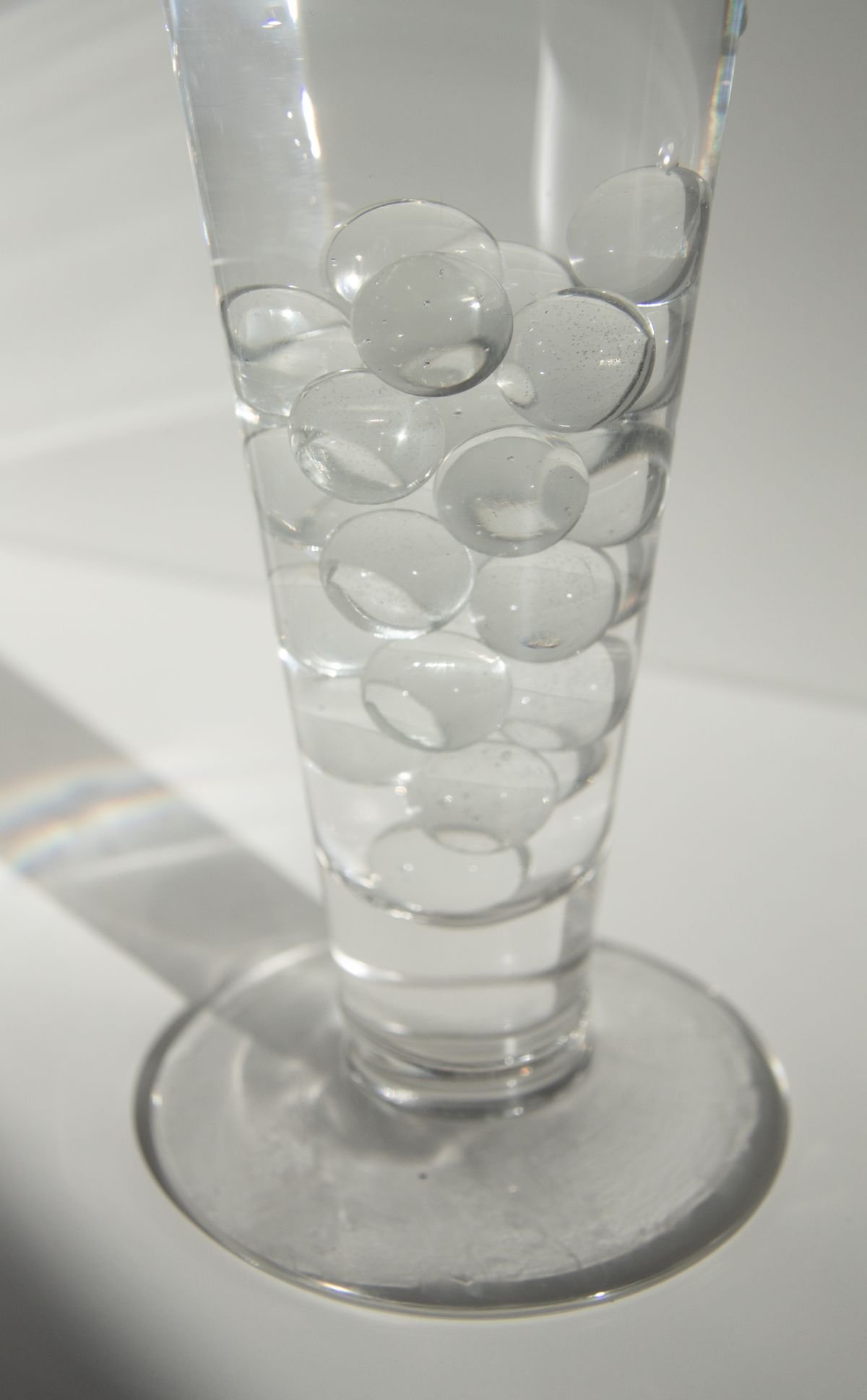
Why Hydrogel Crystals Work Against This Species' Needs
Peperomia obtusifolia is a facultative epiphyte whose roots, in native conditions, are frequently exposed to air rather than continuously submerged substrate — the same ecology behind this species' preference for a free-draining mix and a genuine dry-down cycle between waterings. Hydrogel polymers work by absorbing many times their weight in water and swelling to fill the void spaces within a substrate — precisely the air-filled pore space that would otherwise supply oxygen to the root zone. Filling those voids with water-saturated gel creates conditions similar to a substrate that never fully dries, raising the same root anoxia and Pythium/Phytophthora risk documented for chronic overwatering generally, regardless of how the excess moisture got there.
There is a secondary effect worth noting: because hydrogel holds water so tightly within its own polymer structure, it can compete with the substrate's normal dry-down cycle, keeping the root zone in an intermediate damp state rather than reaching the genuine dryness this species' watering trigger depends on. A substrate that never fully signals "dry" removes the reliable cue the top-2-3cm-dry method relies on.
Factors That Change the Risk
The degree of risk scales with how much hydrogel is used and how it's incorporated — a small amount blended thoroughly through an otherwise well-draining, chunky mix displaces less air-filled space proportionally than a substrate dominated by expanded gel. Pot drainage matters too: a pot with excellent drainage and airflow tolerates a poor decision better than one already prone to staying wet. None of this changes the basic mechanism, though — even a modest addition works against, rather than with, this species' preference for a genuine dry-down cycle.
Practical Alternatives
If the underlying goal is reducing how often the plant needs watering, the more reliable options work with this species' biology rather than against it: a properly free-draining substrate that still holds adequate moisture between waterings, a slightly larger pot (within the usual 2-3cm sizing guidance) that holds more total substrate volume, or simply accepting the standard 10-14 day summer and 21-28 day winter interval as already reasonably low-maintenance for a houseplant. Coarse orchid bark and horticultural charcoal both hold some moisture within their own porous structure without displacing air-filled space the way an expanding polymer does, making either a reasonable moisture-buffering addition to the mix if genuinely needed, without the same oxygen trade-off. For a specific known absence — a one- to three-week trip — the travel care guide covers a single thorough watering plus reduced light as the better-suited approach, rather than introducing a substrate additive for a temporary need.
Mistakes, Myths, and Limitations
Assuming "holds more water" straightforwardly means "better for the plant" is the core misconception — this species fails toward rot far more often than toward drought, so anything that extends how long substrate stays wet works against its actual failure mode rather than protecting against it. Hydrogel products are also not permanent: most are polyacrylamide or polyacrylate polymers that degrade over roughly two to five years, and as they break down they can leave residue that clogs pore space in perlite or bark, compounding the original drainage problem rather than resolving cleanly on their own.
Related Care Implications
The core issue here is the same root-oxygen dependency covered throughout this species' care: the soil mix recipe explains why aeration is a non-negotiable substrate property, the overwatering rescue guide covers root anoxia symptoms and recovery, and the white crust and salt buildup guide covers a separate but related substrate-chemistry issue worth knowing about regardless of whether hydrogel is involved.
Care FAQ
Are hydrogel crystals safe to use with Peperomia obtusifolia?
Not recommended as a routine addition. Hydrogel polymers expand by absorbing water into the same pore spaces that would otherwise hold air, and this species' roots depend on reasonably high oxygen availability at the root zone — the same dependency that makes overwatering this species' most common failure mode generally.
What is the main risk of using hydrogel crystals in Peperomia substrate?
Reduced oxygen availability at the root zone. As the polymer expands with water, it physically displaces the air-filled pore space roots need to respire, creating conditions similar to an overwatered, poorly-draining substrate even if the total water added seems reasonable.
Can hydrogel crystals help if I travel frequently?
It is not the recommended solution for this species. A better approach for a one- to three-week absence is a single thorough watering combined with slightly reduced light to slow water loss, covered in the travel care guide — this avoids introducing a substrate additive that raises rot risk for a convenience this species doesn't particularly need.
Do hydrogel crystals break down over time?
Yes. Most are polyacrylamide or polyacrylate polymers that degrade over roughly two to five years, losing structure and potentially leaving residue that can affect substrate drainage as they break down — a longer-term maintenance concern on top of the immediate oxygen-displacement issue.