Peperomia Obtusifolia Hanging Baskets: Best Care Tips
Peperomia obtusifolia works well in a hanging basket because its natural growth habit is decumbent — upright at first, then arching and cascading as stems lengthen and the weight of the thick leaves overtakes the stem's rigidity. It is not a true vining or trailing species, but the cascade effect looks similar in an elevated display. The main adjustment elevated placement requires is checking substrate moisture more often, since airflow around a suspended pot typically increases evaporation compared to a shelf or floor position.
How to Identify Decumbent Growth
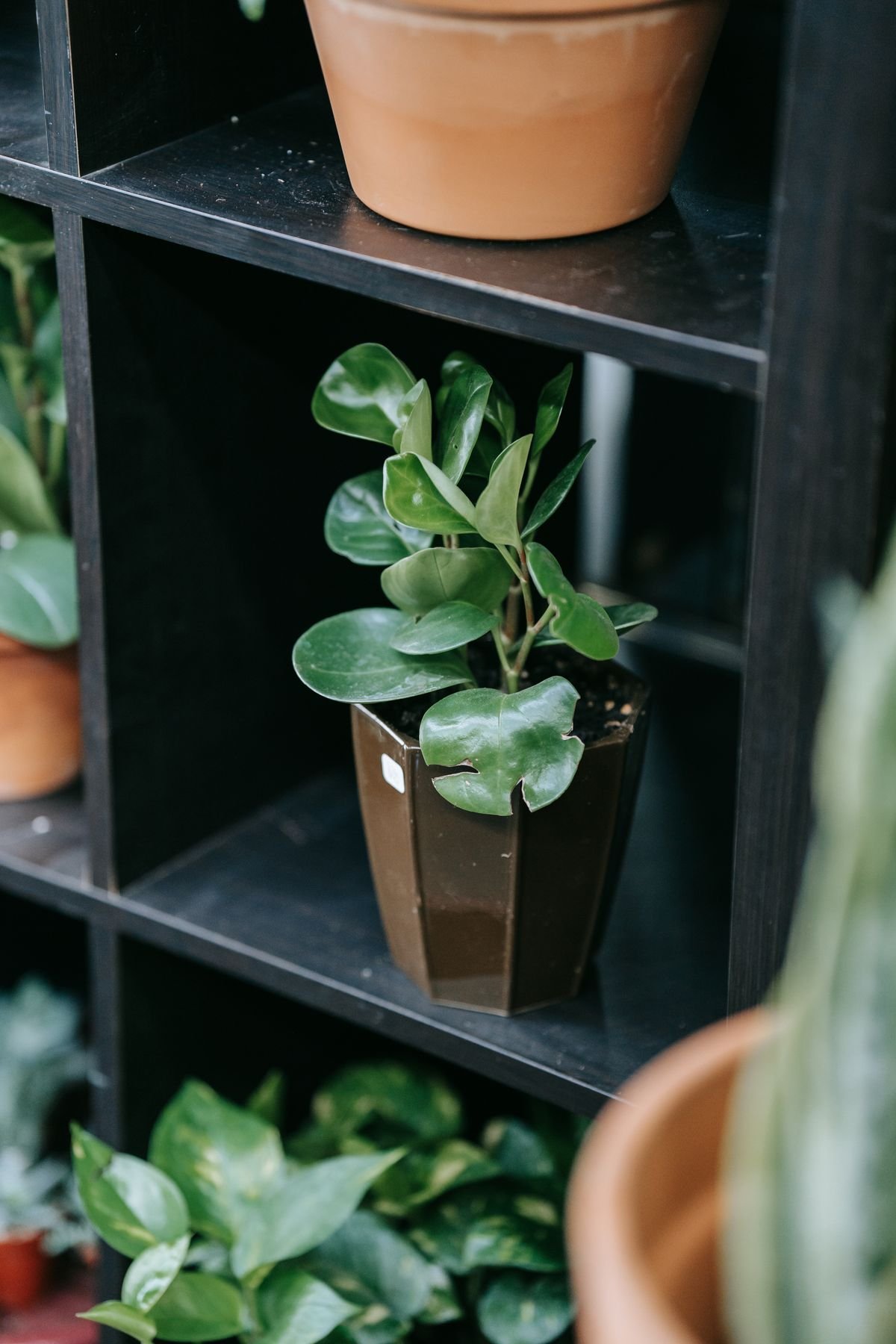
A young P. obtusifolia grows upright from a basal crown, with stems rising vertically toward the light source. As stems lengthen — typically past 25-30 cm — the accumulated weight of the thick, semi-succulent leaves exceeds what the stem tissue can hold rigid, and the stem begins to arch downward under its own weight rather than continuing to stand upright. This is decumbent growth, distinct from true vining species like Pothos or Philodendron, which climb or trail using specialised structures. Even as a Peperomia stem arches and cascades, the growing tip typically curves back toward the light source, so a mature hanging specimen shows a characteristic gentle upward hook at the end of each cascading stem.
Why It Happens: Epiphytic Origins
In its native range, P. obtusifolia grows as a facultative epiphyte, rooting in leaf litter, moss, and bark pockets on tree branches rather than in deep terrestrial soil. A stem cascading downward from a branch crevice toward available light is a normal growth pattern in that habitat, which is why the species adapts comfortably to an elevated basket indoors — the arrangement isn't unnatural for this plant the way it would be for a strictly upright terrestrial species.
Normal Cascade vs an Actual Care Problem
| Observation | Normal | Needs adjustment |
|---|---|---|
| Long arching stems with leaves along their length | Yes — expected decumbent habit | — |
| Only 2-3 long, sparse stems with little foliage | — | Needs pinching to encourage branching |
| Bare or thinning crown at the pot surface, lush trailing tips | — | Light differential — see below |
| Substrate drying faster than the same plant did on a shelf | Yes — elevated airflow effect | Only a problem if watering interval hasn't been adjusted |
| Wilting despite recent watering, basket feels heavy | — | Check for root rot; heavy + wilting means saturated substrate, not dryness |
What to Do Now
Check substrate moisture on the same top-2-3cm-dry basis used for any placement, just more frequently at first until you know how the elevated spot behaves — an exposed basket in a draughty spot can dry noticeably faster than a sheltered shelf position, while a basket in a still corner may barely differ. Bottom-watering at the sink rather than watering in place avoids drips and makes it easier to fully saturate and then fully drain the root ball, which matters more for a hanging pot than a floor-level one since messy overflow is harder to manage overhead.
Hang the basket so the crown sits level with the brighter part of the window rather than well above the frame, to avoid the light differential described below. Prune the tips of the longest stems back to a node if the basket looks sparse, which redirects growth into lateral branching from nodes further down the stem — see the pruning guide for technique.
What Not to Do
Don't assume a hanging basket automatically needs watering on a shorter fixed schedule. Airflow varies enormously by room and season — the correct trigger is still substrate dryness or pot weight, checked more frequently until the pattern for that specific spot becomes familiar, not a blanket rule like "water twice as often."
Don't hang the basket well above the window frame expecting the whole plant to colour evenly. The trailing stems will reach adequate light regardless, but the crown at the pot surface will lag behind and can thin out over time if left in comparative shade indefinitely.
How This Connects to Watering, Light, and Propagation
Elevated placement doesn't change this species' underlying light requirements — the same 2,000-4,000 lux optimum applies whether the plant sits on a shelf or hangs from the ceiling, which is why crown positioning relative to the window matters as much as it does. The long stems a hanging basket produces are also a convenient source of propagation material: cascading stems that have grown past the point you want them are well suited to becoming stem cuttings, which doubles as the pruning a sparse basket needs anyway. Substrate choice is worth a second thought for a hanging setup specifically: semi-hydroponic LECA removes the substrate-drying guesswork but adds meaningful weight for a suspended pot, so a standard free-draining soil mix is usually the more practical choice overhead even though LECA works fine at floor or shelf level. For the general watering and substrate framework underlying all of the above, see the complete care guide, and for where to actually hang the basket for display purposes, see the feng shui placement guide.
Care FAQ
Is Peperomia obtusifolia a trailing plant suited to hanging baskets?
It is a decumbent grower rather than a true trailing vine. Young stems start upright, but once they reach roughly 25-30 cm, the weight of the thick, water-storing leaves causes them to arch over and cascade, which is what makes the species work well in an elevated basket despite not being a climber or vine.
Do hanging Peperomia obtusifolia baskets need more frequent watering?
Often yes. Elevated positions typically have more airflow around the pot than a shelf or floor position, which increases evaporation from the substrate surface. Check by the same top-2-3cm dryness or pot-weight method used anywhere else — an elevated basket may simply reach that dry point sooner.
Why does the top of my hanging Peperomia basket look bare?
This is usually a light-differential problem, not a care failure. If the basket hangs above the window frame, the cascading stems reach the light while the crown at the pot surface sits in comparative shade, and the plant favours the better-lit trailing growth. Lowering the basket so the crown sits level with the brighter part of the window usually resolves it over several months of new growth.
How do I get a fuller, bushier hanging Peperomia instead of a few long stems?
Pinch or prune the growing tips of the longest stems back to a node. This breaks apical dominance and pushes the plant to branch from lower nodes, producing a denser cascade rather than a small number of long, sparse stems.