Baby Rubber Plant vs Rubber Tree: Key Differences
Baby rubber plant vs rubber tree is a naming accident, not a small-and-large version of the same species. Peperomia obtusifolia (baby or American rubber plant) belongs to Piperaceae; Ficus elastica (the true rubber tree) belongs to Moraceae — different families entirely, with different sap, different growth ceilings, and a meaningful difference in pet safety. Choose P. obtusifolia for a compact, forgiving, pet-safe tabletop plant; choose Ficus elastica if you want a tall architectural specimen and don't have pets that chew foliage.
Side-by-Side Comparison
| Trait | Baby Rubber Plant (P. obtusifolia) | Rubber Tree (F. elastica) |
|---|---|---|
| Family | Piperaceae | Moraceae |
| Indoor mature size | Compact, soft stems, roughly 20-30 cm | Woody trunk, often 1-3 m indoors |
| Sap | Clear, watery | White, sticky latex |
| Toxicity (ASPCA) | Non-toxic to cats, dogs, horses | ASPCA lists Ficus benjamina ("Indian rubber plant") as toxic to cats and dogs; it has no F. elastica entry |
| Watering trigger | Top 2-3 cm dry before rewatering | Prefers more consistent moisture; less tolerant of extended dry-down |
| Light | Roughly 2,000-4,000 lux; avoid unfiltered direct sun | Typically placed brighter; more sun-tolerant once acclimated |
| Growth | Slow, stays compact without becoming woody | Fast, vertical, woody growth indoors |
How to Tell Them Apart
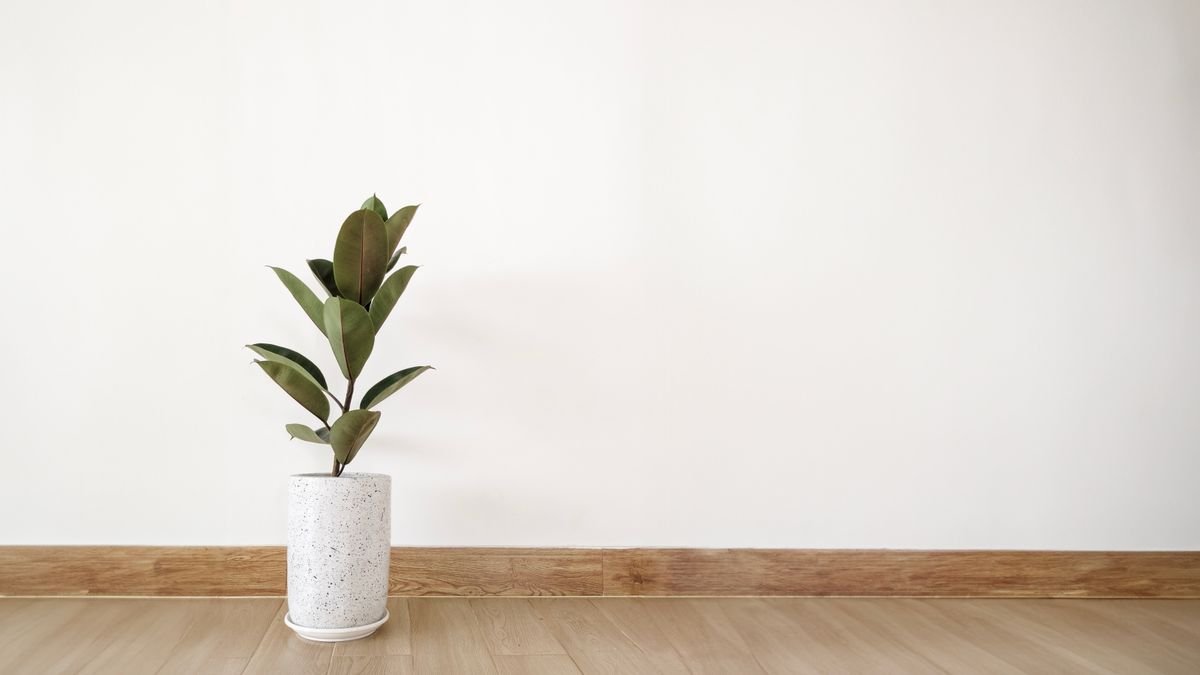
Size and stem. Soft, bushy, compressible stems under about 30 cm, with no trunk, points to Peperomia. A single woody trunk on a specimen already 50 cm or taller points to Ficus — a "baby rubber plant" tag on a metre-tall woody specimen is simply wrong.
Sap. Nick a discreet section of stem. White, sticky latex appearing within seconds confirms Ficus elastica. Clear watery fluid, or nothing visibly obvious, confirms Peperomia.
Growth habit. Short petioles and a rosette or bush habit growing from the base is Peperomia. Longer petioles and alternate leaves climbing a vertical woody trunk is Ficus.
Any single one of these three tests is decisive on its own — retail mislabelling is common enough that the hang-tag should never be the deciding factor. For the parallel mix-up with a completely different genus, see the Peperomia vs Hoya comparison; for verifying P. obtusifolia's identity on its own terms, see the identification guide.
Care Differences That Actually Change the Outcome
The two plants' care converges on almost nothing beyond "keep it in bright, indirect light," so treating one like the other is where most failures start.
- Watering is the classic failure point. P. obtusifolia needs the top
2-3 cmof substrate fully dry before the next watering and soil that stays wet for long periods leads to root rot (NC State Extension). F. elastica tolerates and generally prefers more consistent moisture. Applying Ficus watering habits to a Peperomia is the single most common way an owner rots a misidentified specimen; applying Peperomia's dry-down interval to an actual Ficus shows up as leaf drop and stress instead. - Growth ceiling. Peperomia stems stay herbaceous for the plant's whole life — there is no woody trunk stage to grow into, and a specimen that stays under
30 cmindefinitely is not stunted, it has simply reached its species design. Ficus elastica builds genuine wood via a vascular cambium and will keep gaining height and girth for years, eventually needing significantly more floor space and a larger, heavier pot. - Light tolerance. Peperomia leaves can scorch in strong, unfiltered direct sun (RHS); Ficus elastica acclimates to considerably stronger light and is often placed in a brighter position without issue.
- Sap handling. Ficus latex is an irritant on skin contact and should be handled with care during pruning or propagation; Peperomia's clear sap has no comparable irritation history.
- Feeding demand. P. obtusifolia's slow growth rate needs only light, seasonal fertilising — a balanced feed at
50%label strength, monthly, spring and summer only. Ficus elastica's faster woody growth and larger leaf area draw on more nutrients over a season, and a feeding schedule sized for the Peperomia will typically under-supply an actively growing Ficus.
Shared glossy foliage is a convergent cuticle strategy — both species independently evolved a thick, waxy leaf surface to manage water loss in bright, humid conditions — not evidence of shared vascular biology. Peperomia stems store water directly in succulent parenchyma tissue; Ficus relies on true wood and a much larger root system to buffer the same stress. The resemblance stops at the leaf surface.
Which Is Easier for a Specific Home
- Small apartment or shelf display: P. obtusifolia — it never outgrows a compact footprint the way a maturing Ficus trunk eventually will.
- Wanting a tall, architectural statement plant: Ficus elastica is built for this; Peperomia will never provide it regardless of care.
- Households with pets that chew houseplants: P. obtusifolia is the meaningfully safer choice given its ASPCA non-toxic status, against the ASPCA's toxic listing for Ficus benjamina.
- Inconsistent watering habits: P. obtusifolia's water-storing semi-succulent tissue tolerates a missed cycle better than Ficus elastica, which responds to prolonged dryness with leaf drop.
- A room with only moderate, filtered light: P. obtusifolia grows well at roughly
2,000-4,000 lux; a Ficus kept in the same conditions will tolerate it but grow more slowly than it would in brighter light.
Common Misidentification and Buying Mistakes
- Trusting a "baby rubber plant" tag on a tall, woody specimen — the name describes Peperomia obtusifolia specifically, not a young Ficus.
- Watering a newly bought plant before confirming which species it actually is, since the correct interval is opposite for the two.
- Assuming glossy leaves alone settle the identification — both plants share a waxy cuticle through convergent evolution, not shared ancestry, and glossiness alone proves nothing.
- Skipping the sap test out of squeamishness — it takes seconds and is the single most decisive check available.
Final Decision Guide
Choose Peperomia obtusifolia if you want a compact, low-growing plant that tolerates inconsistent watering, stays pet-safe by ASPCA listing, and never needs repotting into progressively larger floor-standing containers.
Choose Ficus elastica if you want a tall, architectural specimen with genuine woody growth, can commit to more consistent watering, and don't have pets prone to chewing foliage.
For related buying-safety context, see buying Peperomia at big-box stores, and for houseplant claims that apply to neither species reliably, see the air purification myths guide and the humidifier comparison if humidity management is part of your decision between the two.
Care FAQ
Are baby rubber plant and rubber tree the same plant?
No. Baby rubber plant is the common name for Peperomia obtusifolia (Piperaceae). Rubber tree usually refers to Ficus elastica (Moraceae) or a related Ficus species. The shared glossy leaf is convergent evolution and retail marketing, not kinship — one will never grow into the other.
Does the baby rubber plant produce real rubber?
No. Peperomia obtusifolia has clear, watery sap and no latex at all. Commercial natural rubber comes mainly from Hevea brasiliensis; Ficus elastica also produces a milky latex, which is the historical source of the "rubber tree" name applied to the wrong plant.
Which one is safer for cats and dogs?
Peperomia obtusifolia is ASPCA non-toxic to cats, dogs, and horses. Rubber trees are Ficus, an unrelated plant: the ASPCA lists Ficus benjamina, which it calls Indian rubber plant, as toxic to cats and dogs, causing gastrointestinal and skin irritation. It has no separate entry for Ficus elastica. Confirming which plant you actually own — via the sap test — has real welfare consequences if pets have access to it.
How do I tell them apart at the nursery?
Three fast checks: mature size and stem (compact, soft stems under about 30 cm vs. a woody trunk that can reach a metre or more indoors), sap (clear and watery vs. white sticky latex), and leaf habit (short-petioled rosette from the base vs. alternate leaves climbing a vertical woody trunk). Any one of these settles it — ignore the tag if it conflicts.