
Fungus Gnats on Peperomia obtusifolia: Eradication Guide
Small, dark, slender flies hovering over Peperomia obtusifolia's substrate are almost always fungus gnats, and the visible adults are only a fraction of the actual infestation. Contain them immediately by moving the pot away from other plants, then treat the substrate itself — not just the flies you can see — since the eggs and larvae doing the real feeding live in the top couple of centimetres of the mix.
Identification Checklist
- Adults: slender, mosquito-shaped, dark grey to black, roughly 2-4mm, weak erratic flight, usually found hovering near the substrate surface or resting on nearby leaves rather than actively feeding on the plant.
- Larvae: small, translucent, with a visibly dark head, living in the top centimetre or two of moist substrate — visible if you gently disturb the surface.
- Where to inspect: the substrate surface itself, especially if it has stayed damp for several days, rather than the leaves or stems.
- Feeding damage: primarily on decaying organic matter and fungal growth in the substrate; root-hair nibbling is a secondary, less certain effect that matters more on a stressed plant than a healthy one.
Lookalikes
Fruit flies are stouter, often tan or brown with reddish eyes, and cluster around ripening fruit or fermenting kitchen waste rather than houseplant substrate — a fly problem centred on the kitchen counter, not the plant shelf, is more likely this. Shore flies have a more robust, boxy body and dark wings with light speckling, and their larvae feed on algae rather than plant roots — common where a damp surface (a saucer, a humidifier tray) supports algae growth nearby. If the fly specifically hovers around a pot's substrate when disturbed, fungus gnats are the most likely explanation of the three.
Isolate and Clean the Plant
Move the affected pot away from other plants immediately — adults disperse readily between nearby pots, and treating one specimen while an untreated neighbour sits close by invites reinfection before treatment finishes. Empty any saucer or cachepot of standing water, since a tray that holds water for more than a day becomes a secondary breeding site independent of the main pot. Wash hands and any tools used on the affected plant before handling others, though the pest itself spreads mainly by flight rather than by contact.
Treatment Ladder
- Mechanical first: yellow sticky traps placed at substrate level, not canopy height, intercept adults and give you a rough read on whether the population is rising or falling — useful for monitoring, but traps alone only catch the flying adults, not the eggs and larvae still developing in the substrate.
- Substrate-directed biological treatment: a BTI drench. Bacillus thuringiensis israelensis (BTI) is a naturally occurring bacterium, sold as substrate granules or "mosquito dunks," that produces a protein toxic specifically to fly larvae when ingested and harmless to the plant, pets, and beneficial insects. Steep the product in water per the label, strain out any solids, and use the resulting liquid as your normal watering source for about three weeks, reapplying on your usual watering schedule.
- Optional knockdown: a dilute hydrogen peroxide drench. A weak hydrogen peroxide solution (roughly one part standard 3% peroxide to four parts water) applied to the substrate gives a one-off contact kill to larvae near the surface and decomposes quickly into water and oxygen, leaving no residue. Useful as a single early treatment alongside BTI, not as a daily routine.
- Repeat consistently, not just until adults disappear. Visible adults often drop within the first week or two of treatment, but eggs and pupae already present continue developing regardless — stopping early is the single most common reason gnats "come back."
The reason a single treatment rarely finishes the job is straightforward: a fungus gnat population exists across several life stages at once — eggs, larvae, pupae, and adults — and each stage sits in a slightly different place and responds to a different intervention. BTI kills feeding larvae but does nothing to eggs or pupae. Sticky traps catch adults but do nothing to the stages still developing in the substrate. A single application, however effective at the moment it's applied, only ever removes the fraction of the population vulnerable to that specific method at that specific moment — which is why sustained, repeated treatment across several weeks outperforms any one-off intervention, no matter how strong.
When to Discard, Prune, or Repot
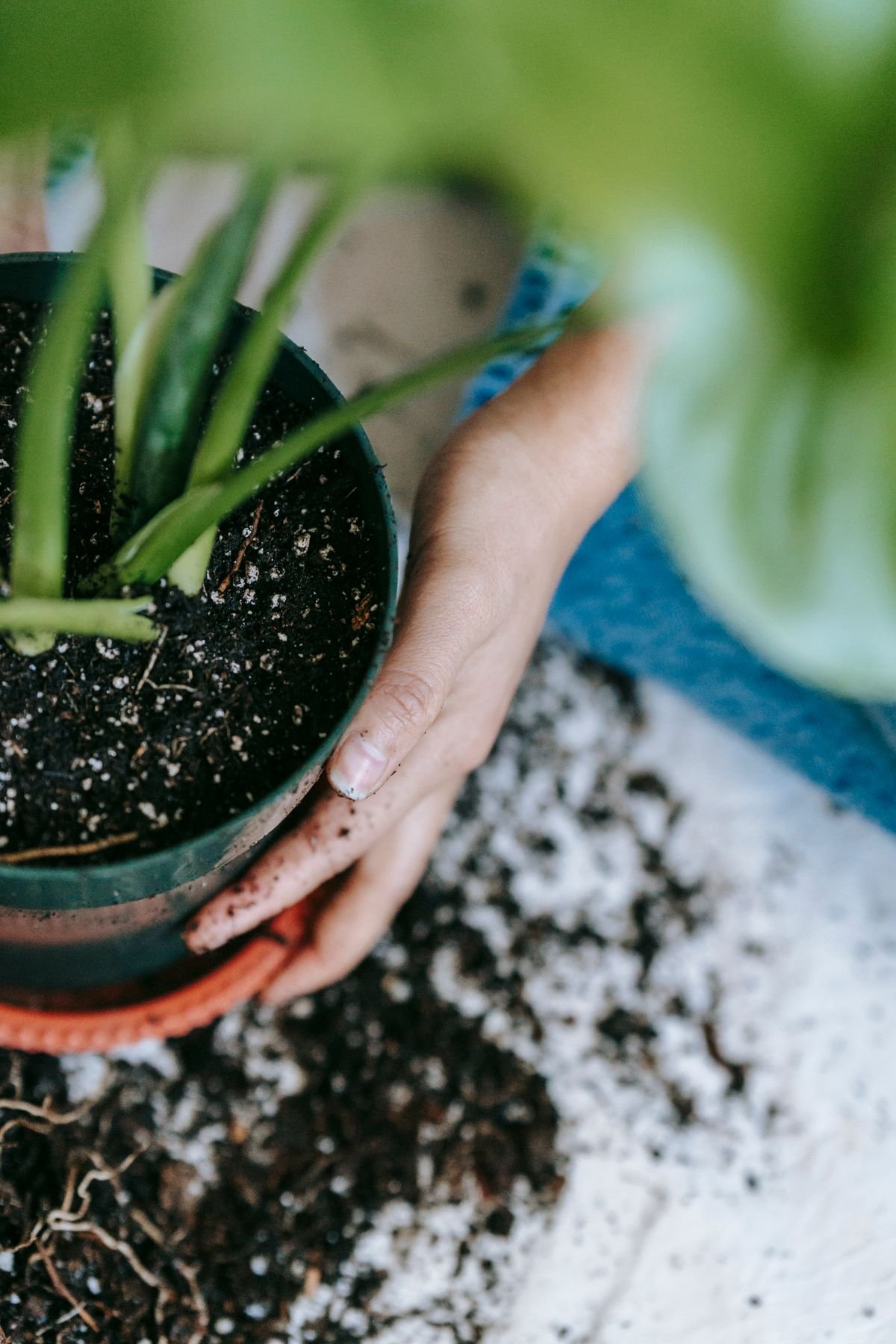
A vigorous plant with a mild larval presence rarely needs anything beyond the treatment above — there's no reason to discard or aggressively prune a plant that's otherwise healthy over a gnat problem alone. Repotting into fresh substrate is worth doing if the current mix is old, compacted, or peat-heavy and staying wet longer than it should regardless of the gnat issue, since that same substrate condition is what let the population establish in the first place. Discard bagged compost that has been open and stored damp for an extended period rather than reusing it, since contaminated compost is one of the more common introduction routes.
Prevention and Monitoring
The single most effective long-term control is keeping the top few centimetres of substrate dry between waterings, since gnats need a moist surface to lay eggs successfully. Shifting toward bottom-watering as the default achieves this directly — the lower substrate hydrates by capillary action while the surface stays dry, and this species draws water from the mid- and lower-substrate zone anyway, so the plant isn't shortchanged. A free-draining substrate that doesn't hold excess moisture at the surface reduces the risk further, and a thin top-dressing of coarse grit or pumice makes the surface structurally inhospitable to egg-laying. Quarantine new plants for a couple of weeks with a sticky trap in the pot before introducing them to an existing collection, since a new arrival's nursery substrate is a common source of an initial infestation.
Safety Notes
BTI products are targeted specifically at fly larvae and are considered safe around pets and people when used as labelled — always follow the product's specific dilution and application instructions rather than guessing at concentration. Hydrogen peroxide at the dilute strength described is not injurious to this species' roots at normal contact time, but avoid using it daily or at full strength, since repeated strong applications can disturb the substrate's normal microbial balance without added benefit. Never combine different pest treatments in the same application unless the product labels explicitly permit it — mixing products is more likely to cause unpredictable results than to speed up control.
Sources
Mechanism reference: Bacillus thuringiensis and Sciaridae (the fungus gnat family). For the root-rot risk that heavy larval feeding can compound, see the overwatering rescue guide; for the substrate that resists gnat establishment in the first place, see the soil mix recipe.
Care FAQ
How do I get rid of fungus gnats on my Peperomia obtusifolia?
Treat the substrate, not the adult flies. A BTI (Bacillus thuringiensis israelensis) drench, applied as your watering source for about three weeks, kills the larvae feeding in the top few centimetres of substrate. Pair this with yellow sticky traps to intercept adults and a switch toward bottom-watering so the surface stays dry, since eggs need a moist surface to survive.
Do fungus gnat larvae actually damage Peperomia roots?
Indirectly, yes. The larvae mainly feed on decaying organic matter and fungal growth in the substrate, but in a crowded pot they also nibble fine root hairs. The resulting wounds are a plausible entry point for root-rot pathogens, which is more of a concern on an already-stressed or recently repotted plant than on a vigorous one.
How long does it take to eradicate fungus gnats?
Expect roughly three to four weeks of consistent treatment, matched to how long it takes eggs present at the start of treatment to hatch, develop, and be caught by ongoing intervention. Stopping as soon as visible adults disappear — often within the first week or two — leaves eggs and pupae untouched and invites the population to rebound.
Are fungus gnats different from fruit flies?
Yes. Fungus gnats are slender and mosquito-shaped and hover near the substrate surface of houseplants. Fruit flies are stouter, often reddish-eyed, and cluster around ripening fruit or food waste rather than potting substrate. Misidentifying one as the other leads to the wrong trap and the wrong treatment.