Peperomia vs Pothos: Toxicity & Care Compared
Peperomia obtusifolia is safer than Pothos for cats and dogs. Pothos (Epipremnum aureum) contains calcium-oxalate raphides that the ASPCA lists as toxic to cats, dogs, and horses; Peperomia obtusifolia contains no raphides and is ASPCA non-toxic to all three. The two are routinely sold side-by-side as "easy beginner plants," but for a household with chewing pets, that framing obscures the one difference that actually matters.
What Reliable Sources Say
The ASPCA Animal Poison Control database lists Pothos as toxic to cats, dogs, and horses, caused by calcium-oxalate raphides — needle-shaped crystal bundles stored in specialised cells that eject into oral tissue when the leaf is chewed. The same database lists Peperomia obtusifolia as non-toxic to the same three species. Both listings come from the same authoritative source and are directly comparable — this is not a case of one verified listing against a repeated internet claim; both sides of this comparison are independently documented.
The mechanism explains the difference rather than just asserting it. Pothos leaves and stems contain idioblast cells housing bundles of microscopic calcium-oxalate crystals. Mechanical disruption from chewing fires these crystals into the mouth, tongue, and throat, producing immediate oral irritation, drooling, and swelling. Peperomia obtusifolia has no idioblast cells and no comparable crystal defence — its Piperaceae family did not evolve this chemistry. Its own defence against being eaten is mechanical: a thick, waxy cuticle and dense, water-storing leaf tissue that most animals find unappealing to chew through, not a chemical irritant.
What Exposure May Look Like
A pet chewing Pothos typically shows rapid-onset oral pain: pawing at the mouth, drooling, and reluctance to eat, sometimes with visible mouth or lip swelling — consistent with the raphide mechanism above. A pet chewing Peperomia obtusifolia is not expected to show that acute reaction, since the chemical trigger simply isn't present; at most, a large mouthful of fibrous leaf tissue might produce mild stomach upset from bulk alone, unrelated to toxicity.
What to Do After Exposure
If a pet has chewed a Pothos leaf, remove remaining plant material from reach, rinse the mouth gently with water if the animal tolerates it, and watch for continued drooling, pawing at the face, or difficulty swallowing. Contact a veterinarian or animal poison control promptly if these signs appear or persist, since raphide-related irritation can worsen before it improves. If the plant chewed is confirmed to be Peperomia obtusifolia rather than Pothos, standard monitoring for any mild digestive upset is sufficient, and escalation is rarely needed — but confirming the identification matters, since the two are easy to mix up at a glance.
Why 'Non-Toxic' Does Not Mean Edible or Risk-Free
Even Peperomia obtusifolia's non-toxic status does not make it a food item. Large amounts of any fibrous plant material can cause mechanical stomach upset in a small pet regardless of chemistry, and choking risk from a torn-off leaf piece is unrelated to toxicity entirely. Retail specimens of either species may also carry pesticide residue or leaf-shine product from nursery treatment, which is a separate hazard from the plant's own chemistry and applies to both species equally.
How to Tell Them Apart at a Glance
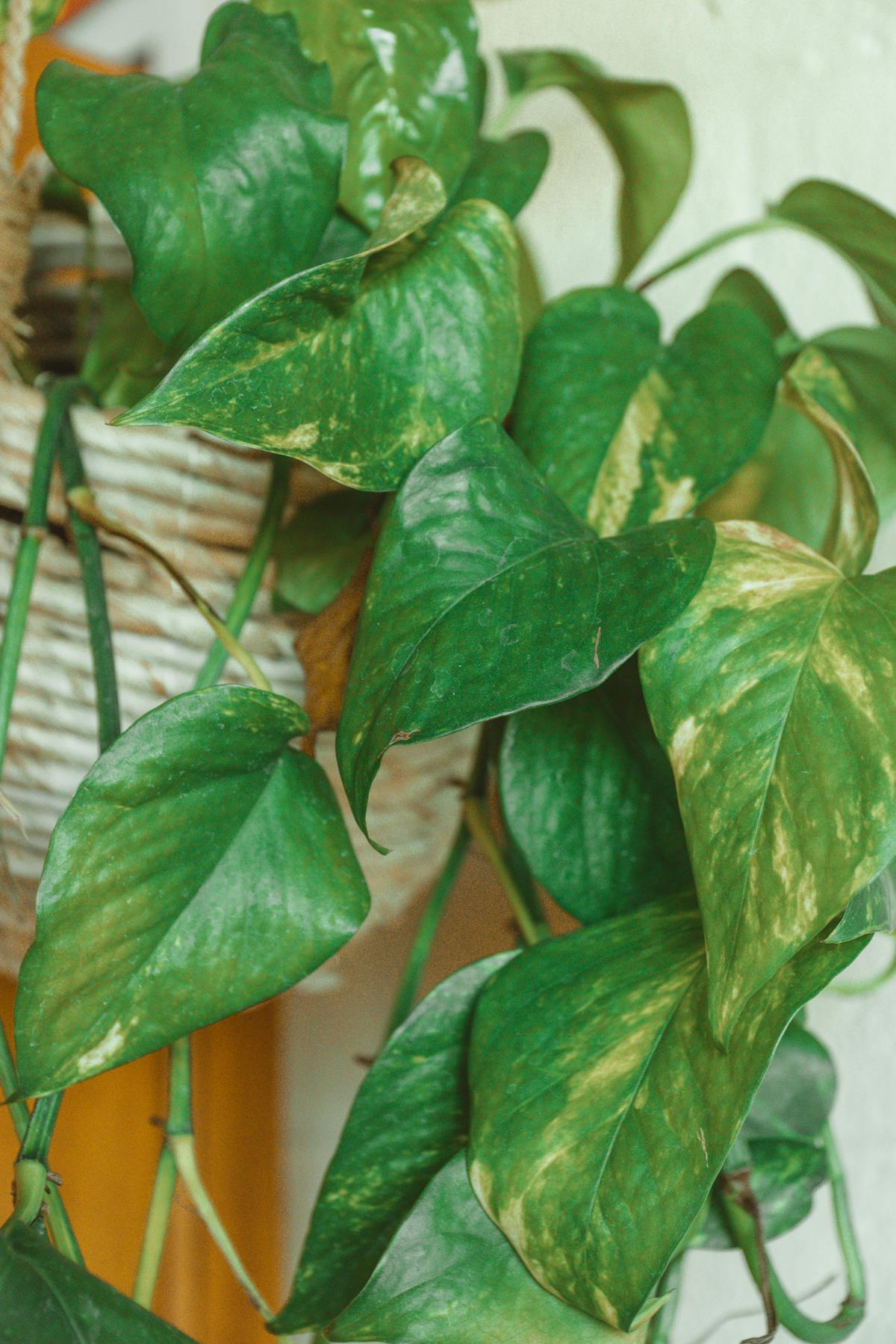
Two checks resolve almost any confusion. Aerial roots: Pothos shows small brown protrusions at every node along the stem; P. obtusifolia shows none. Leaf shape: Pothos leaves are heart-shaped (cordate) with a pointed tip; P. obtusifolia leaves are broadly oval (obovate) with a rounded tip. Growth habit is the third confirming check — Pothos trails or climbs from a central crown, while P. obtusifolia grows upright with multiple stems from the base. Any one of these three settles the identification without ambiguity, and it is worth doing before assuming a nursery label is correct — retail mislabeling between similar-looking tropical houseplants happens often enough that visual confirmation is the more reliable route, particularly when the identification carries a genuine safety consequence rather than just an aesthetic one.
The two species are also unrelated taxonomically, which explains why no care shortcut transfers safely between them. Peperomia obtusifolia belongs to Piperaceae, the pepper family; Pothos belongs to Araceae, the aroid family that also contains Monstera, Philodendron, and Peace Lily — most of which share the same raphide-based toxicity mechanism Pothos does. A household already avoiding Araceae species for pet safety reasons should note that P. obtusifolia's different family placement is exactly why it doesn't carry the same risk, rather than assuming all "similar-looking tropical houseplants" fall into one safety category.
Safer Placement and Prevention
In a household with chewing cats, dogs, or other pets, the safest approach is placing Pothos entirely out of reach — a hanging basket well above jump height, or a room the pet doesn't access — rather than relying on the plant simply being unappealing. P. obtusifolia does not carry the same urgency, but sensible placement still applies: keeping any plant away from constant pet access reduces both the (mechanical, non-toxic) stomach-upset risk and the damage a chewing pet does to the plant itself. If the household's priority is removing the toxicity question entirely, choosing P. obtusifolia over Pothos for pet-accessible spots is the more straightforward solution than managing placement around a toxic species.
Related Animal-Specific Guidance
This page compares Pothos and P. obtusifolia on toxicity specifically. For the fuller picture on P. obtusifolia's safety profile across species, see the general toxicity overview covering cats and dogs, the birds and reptiles guide, and the rabbit-specific guide. If the question is whether the plant is safe for a person to eat rather than a pet, see is Peperomia obtusifolia edible.
Sources and Review Date
Toxicity classifications are sourced directly from the ASPCA Animal Poison Control database: the Pothos listing and the Peperomia obtusifolia listing. Taxonomic family placement is documented on Wikipedia: Raphide and Wikipedia: Epipremnum aureum for definitional reference. This page does not constitute veterinary advice — contact a veterinarian or poison control centre directly for an actual exposure event. Reviewed and citations verified as of the update date shown above.
Care FAQ
Is Peperomia obtusifolia safer than Pothos for cats and dogs?
Yes. Pothos (Epipremnum aureum) contains calcium-oxalate raphides that the ASPCA lists as toxic to cats and dogs, causing oral irritation, drooling, and vomiting if chewed. Peperomia obtusifolia contains no raphides and is ASPCA non-toxic to cats, dogs, and horses.
How do I tell Peperomia obtusifolia and Pothos apart quickly?
Check the stem base and the nodes. Pothos trails or climbs and shows small brown aerial roots at every node; Peperomia obtusifolia grows upright from a basal crown with no aerial roots anywhere on the stem. Leaf shape also differs: Pothos leaves are heart-shaped with a pointed tip, Peperomia obtusifolia leaves are broadly oval with a rounded tip.
Are Peperomia and Pothos related botanically?
No. Peperomia obtusifolia belongs to Piperaceae (the pepper family); Pothos belongs to Araceae (the aroid family, which also contains Monstera, Philodendron, and Peace Lily). The visual similarity is convergent adaptation to tropical understorey conditions, not shared ancestry.
Can I grow Peperomia obtusifolia and Pothos in the same pot?
Not recommended. Pothos grows far faster and will out-compete Peperomia for light within a season, and it tolerates substrate moisture levels that cause root anoxia in Peperomia within one to two weeks. If displaying both together, keep them in separate pots rather than sharing substrate.