Baby Rubber Plant vs True Rubber Tree: Peperomia vs Ficus elastica
The "Baby Rubber Plant" (Peperomia obtusifolia) and the true Rubber Tree (Ficus elastica) are unrelated species from different botanical families — Piperaceae (pepper family) vs Moraceae (mulberry and fig family). They share a common name purely because of mid-20th-century commercial marketing that exploited their visual similarity. The actual biological similarities are convergent evolution: both species independently evolved thick, waxy-cuticle leaves adapted to tropical understorey light and water-stress conditions. The differences are extensive and operationally consequential: Peperomia reaches 30 cm and is pet-safe; Ficus reaches 30 m in the wild and is toxic to cats and dogs via latex sap containing ficin. Care requirements are inverted — Peperomia needs strict dry-down between waterings, Ficus tolerates and prefers consistent moisture. Applying one species' care to the other is the most common failure mode for the misidentified plant.
The misidentification is consequential, not cosmetic. A household with cats or dogs that purchases an "American Rubber Plant" expecting the non-toxic Peperomia and receives a misidentified Ficus elastica has introduced a documented toxin into the environment. A grower who applies the watering interval of a Ficus to a Peperomia will produce a saturated substrate that triggers root anoxia within 5 days, followed by Pythium and Phytophthora colonisation. The taxonomic distinction is the practical one — without it, every downstream care decision is potentially wrong.
| Parameter | Peperomia obtusifolia | Ficus elastica |
|---|---|---|
| Family | Piperaceae | Moraceae |
| Order | Piperales | Rosales |
| Native range | Mexico, Caribbean, S. Florida, N. South America | Northeast India, Southeast Asia |
| Habit | Semi-succulent epiphyte | Woody banyan tree |
| Mature height (indoor) | 20–30 cm | 100–300 cm |
| Mature height (native) | 30 cm | 30 m |
| Sap | Clear, watery, non-toxic | White latex with ficin — toxic |
| Pet toxicity | Non-toxic (ASPCA) | Toxic to cats and dogs (ASPCA) |
| Light optimum | 2,000–4,000 lux | 5,000–20,000 lux |
| Direct-sun tolerance | <40,000 lux briefly | >40,000 lux tolerated |
| Watering trigger | Top 2–3 cm fully dry | Top 1–2 cm dry |
| Saturation tolerance | <5 days continuous | 7–14 days continuous |
| Annual growth rate | 2–5 cm | 30–60 cm |
| Stem structure | Soft, scattered vascular bundles | Woody, continuous cambium |
| Propagation | Stem and leaf cuttings (80–95%) | Air-layering or woody cuttings (50–70%) |
1. Why the Common Name Misleads — Marketing, Not Science
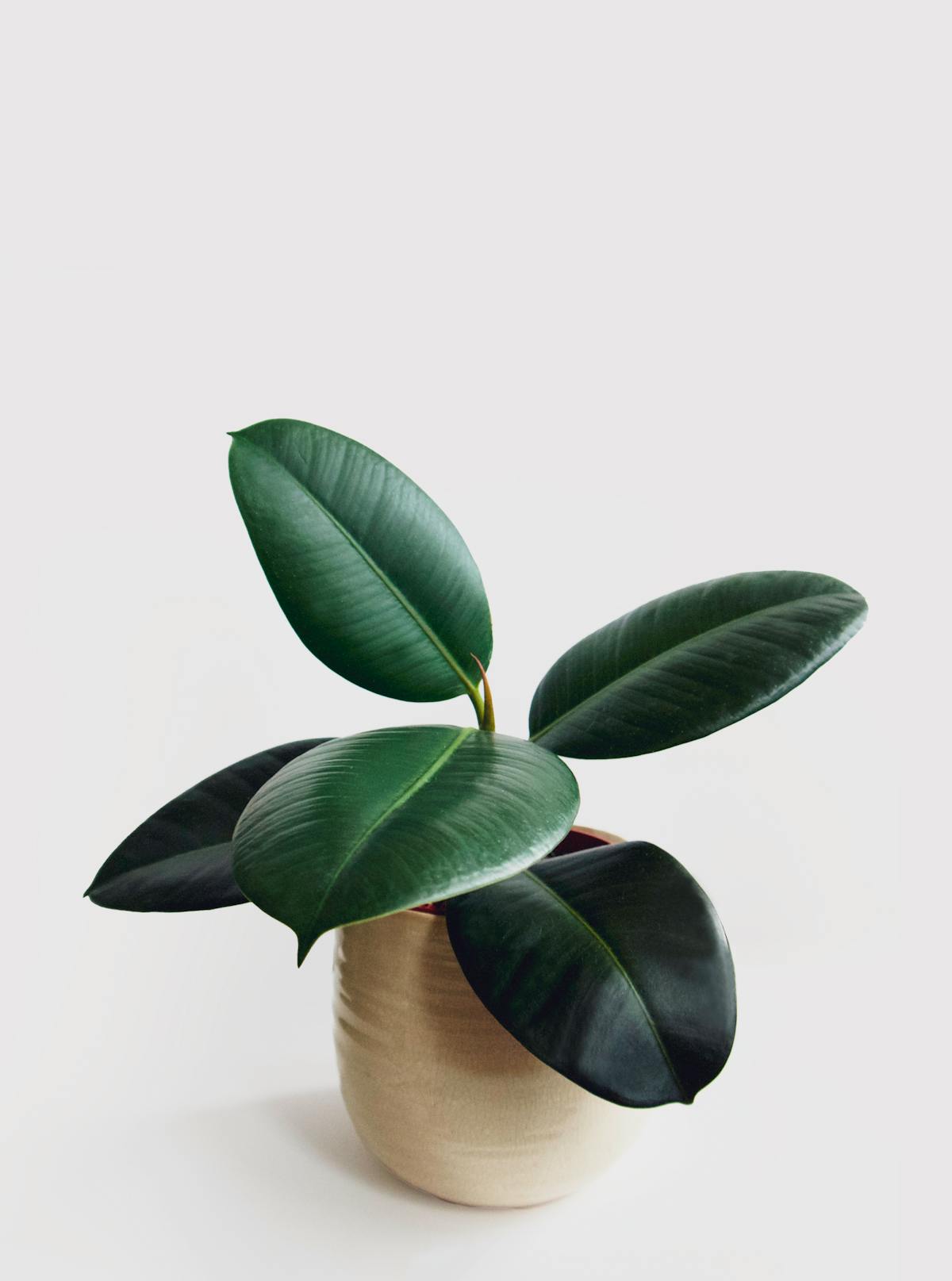
The "Baby Rubber Plant" label originates from mid-20th-century horticultural commerce. Ficus elastica became a cultural fixture of mid-century interior design — large, glossy, architectural foliage for living rooms and offices. Commercial growers noticed that Peperomia obtusifolia, a smaller and unrelated species, had a similar thick-leaved appearance and could be marketed as a "miniature" version of the trendy Ficus. The "Baby Rubber" moniker attached to the compact plant at the nursery counter and never came off.
This is the site's editorial position, stated without softening: the common name is a marketing label, not a taxonomic relationship. P. obtusifolia is not a baby Ficus elastica, has never been related to it, and will never grow into it. Crucially, P. obtusifolia is non-toxic to cats and dogs (ASPCA), while F. elastica is toxic to both; misidentification has welfare consequences.
The two species can be distinguished without botanical equipment using four physical tests:
- Mature size. A specimen above 50 cm tall with a single woody stem is F. elastica; a compact bushy specimen below 30 cm with multiple soft stems is P. obtusifolia.
- Stem texture. Press a fingernail gently into a stem segment. A F. elastica trunk is rigid and woody; a P. obtusifolia stem is soft and slightly compressible.
- Sap test. Make a small nick with a sterile blade on a discreet stem. F. elastica exudes white sticky latex within seconds. P. obtusifolia exudes clear watery fluid that may not be visible at all on a single nick.
- Leaf petiole and arrangement. F. elastica has elongated petioles and a distinct alternate-leaf vertical growth pattern up a central trunk. P. obtusifolia has short petioles and a rosette or bushy habit with multiple stems from the base.
Any one of these tests is decisive. The sap test in particular is unambiguous — there is no condition under which a Peperomia produces white latex or a Ficus elastica does not.
2. Taxonomic Divergence — 100 Million Years of Separation
The two species are not closely related at any taxonomic level above Angiosperms (flowering plants). The phylogenetic separation is documented in the Wikipedia Ficus elastica article and in standard angiosperm phylogeny:
- Peperomia obtusifolia: Order Piperales → Family Piperaceae → Genus Peperomia. The pepper family includes ~3,600 species, mostly herbaceous tropical understorey plants. The closest relatives at family level are Piper nigrum (black pepper) and Piper methysticum (kava).
- Ficus elastica: Order Rosales → Family Moraceae → Genus Ficus. The mulberry and fig family includes ~1,100 species in the genus Ficus alone, all sharing the characteristic milky latex sap, syconium-type inflorescence, and obligate fig-wasp pollination relationships.
The orders Piperales and Rosales diverged in the Cretaceous period — both are angiosperms but they have shared no common ancestor for approximately 100 million years. Asking whether Peperomia and Ficus are related is comparable to asking whether a cat and a kangaroo are related: both are mammals, but they are in entirely different lineages and share no recent ancestry.
The visual similarity that produced the shared common name is convergent evolution — the independent evolution of similar traits in unrelated lineages under similar selection pressures. The thick waxy cuticle, fleshy oval leaves, and tropical-understorey ecology are not inherited from a common ancestor; they are independent solutions to the same set of environmental constraints. The phenomenon is documented in detail in the Wikipedia convergent evolution article and is the same mechanism by which whales and fish evolved similar streamlined body shapes despite belonging to different vertebrate lineages.
3. The Sap and Toxicity Divide — Latex vs Clear Fluid
The single most consequential biological difference between the two species is their sap chemistry. The difference is also the easiest to test and the most decisive for pet-owning households.
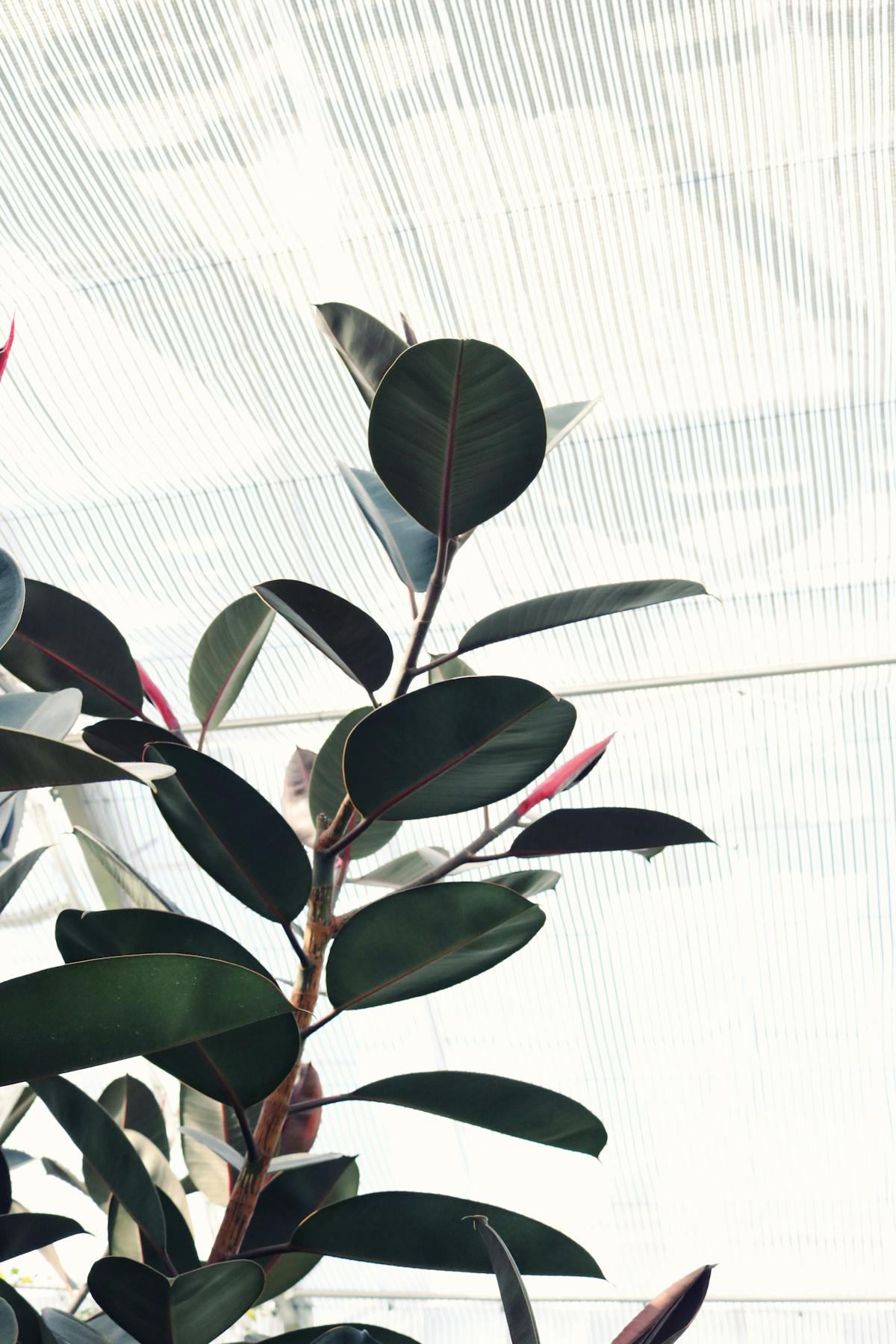
Ficus elastica produces latex — a milky-white suspension of polyisoprene rubber particles, proteins, alkaloids, and proteolytic enzymes including ficin. Latex is produced in specialised cells called laticifers that run throughout the plant; any mechanical wound triggers visible white exudation within seconds. The latex serves the plant as both a wound-sealing fluid and a chemical defence against herbivores. In humans, contact with latex sap causes irritant contact dermatitis on sensitive skin and severe oral irritation if ingested. In cats and dogs, ingestion causes drooling, oral inflammation, vomiting, and gastrointestinal distress; the ASPCA classifies Ficus elastica as toxic to both species. Historically, the same latex was harvested commercially to produce natural rubber — the species' role in early-20th-century rubber industry is the origin of the "Rubber Tree" name.
Peperomia obtusifolia produces no latex. The species lacks laticifer cells entirely; its vascular system contains only the standard xylem-phloem fluids common to most flowering plants. A cut stem exudes clear, watery fluid that contains no significant defensive compounds. The ASPCA confirms the species as non-toxic to cats, dogs, and horses — see the pet-safety guide for the full toxicity profile.
The procedural conclusion for households with curious pets is direct: a misidentified Ficus elastica sold as a "Baby Rubber Plant" presents a documented toxin to the household, while a correctly identified Peperomia obtusifolia does not. The sap test is the definitive screening tool at the point of purchase.
4. Vascular and Structural Differences — Why One Stays Small
The two species follow completely different growth programmes, dictated by their vascular anatomy.
Peperomia obtusifolia is a herbaceous semi-succulent with scattered vascular bundles. The stem contains discrete bundles of xylem and phloem distributed throughout the parenchyma matrix, with no organised cambium ring. The species cannot produce secondary xylem (wood) and cannot increase stem diameter beyond the initial primary growth. Structural support comes from turgor pressure in the parenchyma cells and from the modest internal water-storage tissue. The species' mature indoor height of 20–30 cm is a hard ceiling — no care intervention will produce additional height because the stem lacks the structural anatomy to support more biomass above the substrate line.
Ficus elastica is a woody dicot tree with a continuous vascular cambium. The cambium produces secondary xylem (wood) inward and secondary phloem outward, thickening the trunk indefinitely. This is the same anatomy that produces the woody trunks of oaks, maples, and most other temperate trees. In its native northeast India and Southeast Asia, F. elastica grows to 30 m as a strangler-banyan species, often beginning as an epiphyte on another tree and eventually overgrowing the host. Indoors, with restricted root volume and lower light, growth tops out at 2–3 m over many years, but the structural mechanism — continuous wood production — is the same.
The corollary care difference: P. obtusifolia's scattered-bundle anatomy means the plant has limited mechanical capacity to recover from severe stem damage. Each stem is structurally independent, and a damaged stem is typically pruned rather than expected to regenerate. F. elastica's woody cambium means damaged branches can be pruned aggressively and the plant will produce new growth from latent buds along the remaining trunk.
5. Light, Water, and Temperature — Inverted Operating Ranges
Across every primary care parameter, the two species operate in different ranges. Applying one set of thresholds to the other is the most common cause of failure on misidentified specimens.
Light. P. obtusifolia optimum is 2,000–4,000 lux at the leaf surface — bright filtered light typical of the forest understorey. Above 40,000 lux unfiltered direct sun the species suffers chloroplast damage and develops bleached papery patches on the upper leaf surface (irreversible). F. elastica tolerates and benefits from 5,000–20,000 lux and can be acclimated to direct sun above 40,000 lux. The two species cannot share the same window position — what is ideal for Ficus burns the Peperomia.
Water. P. obtusifolia requires the top 2–3 cm of substrate fully dry between waterings; its saturation tolerance is <5 days continuous before root anoxia begins. F. elastica prefers consistently moist substrate, with the top 1–2 cm dry as the watering trigger and saturation tolerance of 7–14 days. Watering the Peperomia on the Ficus schedule produces predictable root failure within 1–2 weeks; watering the Ficus on the Peperomia schedule produces leaf drop and stress flowering on the larger plant.
Temperature. P. obtusifolia optimum is 18–24 °C day / 15–18 °C night with cellular damage below 10 °C sustained. F. elastica tolerates a wider range, with the lower limit closer to 12 °C and the species' acclimation to cooler indoor conditions documented across the tropical-houseplant literature.
Fertiliser. P. obtusifolia's annual growth of 2–5 cm corresponds to a nitrogen demand approximately one-fifth that of Ficus elastica, which grows 30–60 cm per year indoors. The site standard for P. obtusifolia is balanced NPK at 50% strength monthly during spring and summer only; F. elastica tolerates fortnightly applications at standard strength. Applying Ficus fertiliser rates to Peperomia produces salt accumulation and osmotic stress within 2–3 months.
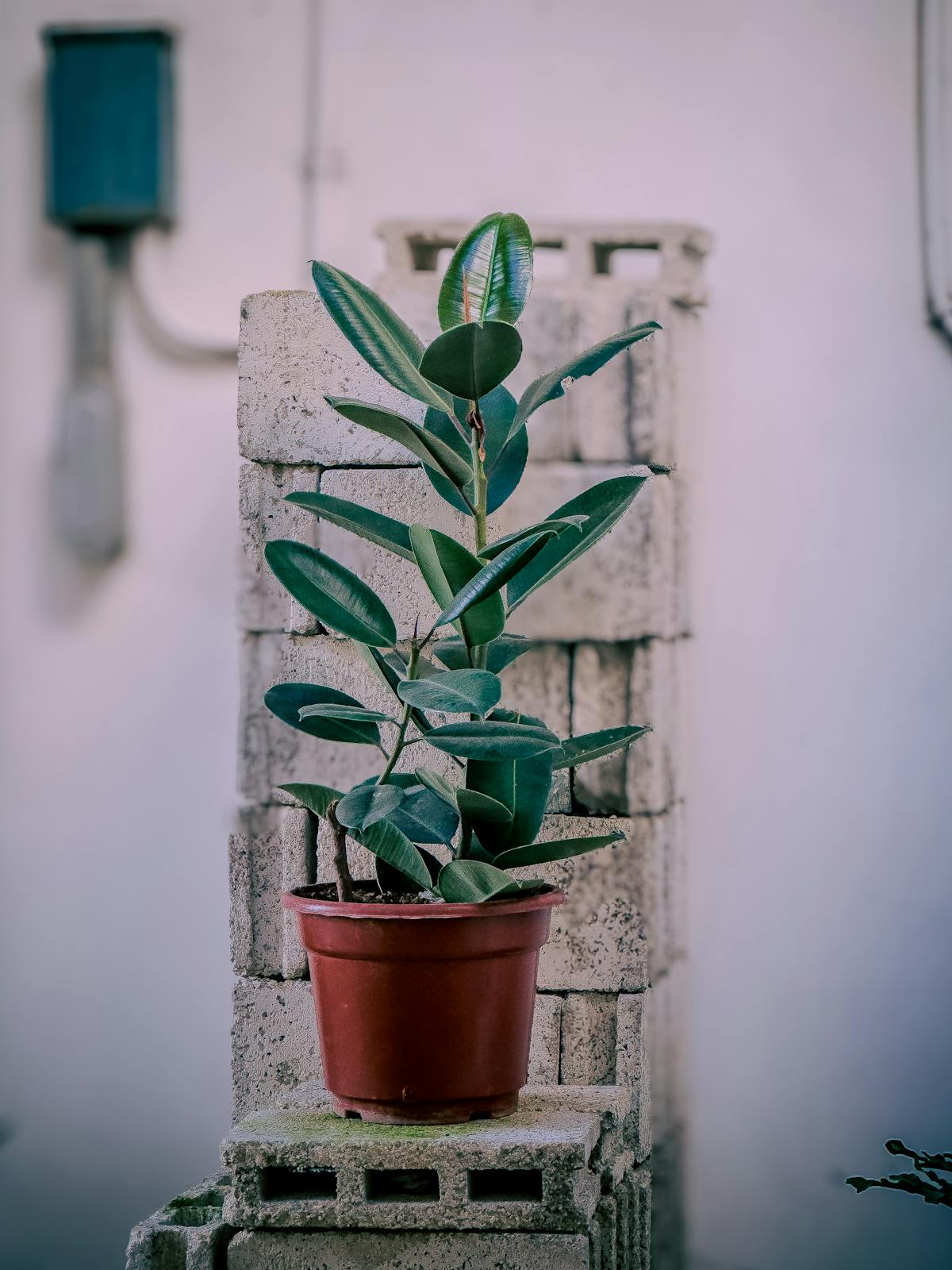
6. The Convergent-Evolution Reason for the Confusion
Both species evolved independently in tropical understorey environments and arrived at the same morphological solution for the same set of selection pressures. The shared traits are:
- Thick waxy cuticle of cutin polymer, 2–4 μm thick on the upper leaf surface, that reflects high-energy photons (UV-B and blue light) before they can damage the underlying chloroplasts.
- Fleshy leaf parenchyma with hydrenchyma cells that store water reserves for periods of substrate dry-down.
- Oval to elliptic leaf shape that minimises edge-to-area ratio, reducing transpirational water loss relative to a more divided leaf.
- Dark green pigmentation with high chlorophyll concentration per unit leaf area, optimising the limited photon flux available in understorey light.
These are independently-evolved adaptations in two different lineages — Piperaceae and Moraceae — not features inherited from a common ancestor. The phenomenon is the same that produced similar streamlined body shapes in unrelated marine vertebrates (whales, dolphins, ichthyosaurs, sharks) and similar succulent rosettes in unrelated dryland lineages (cacti, Euphorbia, Agave). Convergent evolution is the rule rather than the exception when similar environments select for similar solutions.
The practical consequence for the houseplant grower: visual similarity is not evidence of relatedness, and shared common names are not evidence of shared biology. P. obtusifolia and F. elastica look similar because both species solved the same understorey-light problem with the same waxy-cuticle solution; the rest of their biology — cellular anatomy, vascular structure, growth pattern, sap chemistry, toxicity profile — is entirely different.
7. Buying the Right Plant — The Retail Identification Problem
Big-box retail labelling routinely conflates Peperomia obtusifolia, P. magnoliifolia, and several Ficus elastica cultivars under the generic "Rubber Plant" or "Baby Rubber Plant" tag. The site's editorial position on retail identification is to ignore the label and test the specimen directly:
- Check the size. A 60 cm specimen with a woody trunk is F. elastica regardless of what the label says.
- Press a stem. Soft, slightly compressible: Peperomia. Rigid, woody: Ficus.
- Scratch a discreet stem segment. White latex within 5 seconds: Ficus elastica — return the specimen if you wanted a Peperomia. Clear watery fluid or no visible exudation: Peperomia obtusifolia — proceed.
- Check the leaf petiole arrangement. Short petioles, multiple stems from the base, bushy form: Peperomia. Long petioles, single vertical trunk, alternate leaf arrangement: Ficus.
The four tests take less than 60 seconds at the nursery counter and prevent every downstream care problem caused by the wrong identification. For households with cats or dogs the test is non-optional; for households without pets, the test still determines which set of care parameters applies.
Conclusion
The "Baby Rubber Plant" and the true "Rubber Tree" share a common name as a historical artefact of mid-20th-century horticultural marketing — they share no botanical relationship. Peperomia obtusifolia (Piperaceae) is a herbaceous semi-succulent epiphyte that reaches 30 cm, produces clear non-toxic sap, and operates at narrow water and light thresholds matching its native understorey ecology. Ficus elastica (Moraceae) is a woody dicot tree that reaches 30 m in the wild, produces white latex containing ficin (toxic to cats and dogs), and operates at wider thresholds matching its native canopy habit. Visual similarity is convergent evolution of the waxy-cuticle leaf morphology, not shared ancestry. At purchase, the size, stem texture, sap, and leaf arrangement tests distinguish the two species in under a minute; relying on the label produces predictable misidentification. For care purposes the species are unrelated, and applying one set of operating parameters to the other is the single most common failure mode on the misidentified plant.
Related identification and care resources:
- Peperomia obtusifolia Identification Guide — Cultivar and Species Distinction
- Pet Safety — Why Peperomia is Non-Toxic and What That Means
- Stem Anatomy — The Scattered-Bundle Architecture That Limits Mature Height
- Leaf Anatomy and Succulence — The Hydrenchyma That Stores Water
- Waxy Cuticle Science — The Reflective Layer That Both Species Share
- Wikipedia: Ficus elastica — The True Rubber Tree
- Wikipedia: Convergent Evolution — Why Unrelated Species Look Similar
- ASPCA: Baby Rubber Plant (Peperomia obtusifolia) — Non-Toxic Listing
Care FAQ
Are baby rubber plants and rubber trees the same plant?
No. Peperomia obtusifolia (the "Baby Rubber Plant") and Ficus elastica (the true Rubber Tree) belong to entirely different botanical families — Piperaceae (the pepper family) vs Moraceae (the mulberry and fig family). They are in different orders of flowering plants and last shared a common ancestor approximately 100 million years ago. The shared "Rubber" common name is a mid-20th-century marketing label, not a taxonomic relationship. Their visual similarity — thick glossy oval leaves — is convergent evolution: both species independently evolved a waxy-cuticle morphology suited to tropical understorey light and water-stress conditions.
Does the baby rubber plant produce real rubber?
No. Commercial rubber is produced from the white latex sap of Hevea brasiliensis (Para rubber tree) and historically also from Ficus elastica. Peperomia obtusifolia contains no latex — its severed stems exude only clear, watery sap. The species lacks the laticifer cells in which latex is produced and stored. It cannot be used as a rubber source, and it never could have been; the name is purely cosmetic.
Is the baby rubber plant toxic to cats and dogs?
No. Peperomia obtusifolia is listed as non-toxic to cats, dogs, and horses by the ASPCA Animal Poison Control. The true rubber tree Ficus elastica is toxic to cats and dogs — its latex sap contains ficin (a proteolytic enzyme) and proteolytic compounds that cause oral irritation, drooling, and gastrointestinal distress on ingestion, plus contact dermatitis on human skin. This is the single most consequential difference between the two species for households with pets.
How can I tell them apart at a nursery?
Four reliable diagnostic differences. (1) Size: P. obtusifolia is sold as a 15–30 cm specimen in a 10–15 cm pot; F. elastica is sold as a 30–200 cm specimen in a 15–30 cm pot. (2) Stem: P. obtusifolia has soft, semi-succulent green stems with visible nodes every 2–3 cm; F. elastica has a single woody trunk and obvious leaf scars. (3) Sap test: a tiny scratch on a discreet stem of P. obtusifolia exudes clear watery fluid; the same on F. elastica exudes white sticky latex within seconds. (4) Leaf attachment: P. obtusifolia has short petioles and a rosette habit; F. elastica has elongated petioles and leaves arranged alternately along a vertical trunk.
Can I care for them the same way?
No — and this is the failure mode that causes most misidentified-plant deaths. F. elastica requires consistently moist substrate, tolerates direct sunlight up to 40,000 lux, grows actively year-round indoors, and consumes nitrogen at a high rate. P. obtusifolia requires top 2–3 cm of substrate fully dry between waterings, is damaged above 40,000 lux unfiltered, slows nearly to a halt below 15 °C, and consumes nitrogen at one-fifth the rate of Ficus. Applying F. elastica care to P. obtusifolia produces root anoxia and Pythium-driven root rot within 6–10 days.
Why do they look so similar if they are unrelated?
Convergent evolution. Both species evolved independently in tropical understoreys where the operating constraints — bright filtered light, intermittent water availability, herbivore pressure — favoured the same morphological solution: thick fleshy leaves protected by a heavy waxy cuticle. The cuticle reflects high-energy photons that would damage the chloroplasts, reduces non-stomatal water loss during dry periods, and presents an unappetising waxy surface to leaf-chewing insects. The same solution evolved separately in Crassula (jade plant), Hoya, and several aroid genera — none of which are related to each other or to Peperomia or Ficus. Shared morphology does not indicate shared ancestry.
Will a Peperomia obtusifolia grow into a rubber tree if I keep it long enough?
No. The two species follow entirely different growth programmes. P. obtusifolia is a herbaceous semi-succulent with scattered vascular bundles and no cambium — it cannot produce wood, cannot grow a trunk, and cannot exceed approximately 30 cm in mature height under any care conditions. F. elastica is a dicot tree with a continuous vascular cambium that produces secondary xylem (wood) indefinitely; it grows into a 30 m banyan in the wild and 2–3 m indoors. A specimen labelled "Baby Rubber Plant" that does not grow taller after several years is not failing — it has reached its species ceiling. The label, not the plant, is the problem.