
Buying Peperomia Big Box: Home Depot, Lowe’s, IKEA Checklist
Buying peperomia big box succeeds when you select turgid, glossy Peperomia obtusifolia with clean leaf axils, reject pots sitting in stagnant water or smelling sour, then quarantine for 14 days before integrating the plant. During quarantine — not the car ride home — swap dense nursery peat for a free-draining mix and check the root ball for mesh propagation sleeves that can strangle fine roots.
Home Depot, Lowe’s, and IKEA are volume channels, not specialist greenhouses. Price is often lower than boutique nurseries (online nursery comparison; price guide). The trade-off is triage: you are auditing a supply-chain survivor, not collecting a finished specimen.
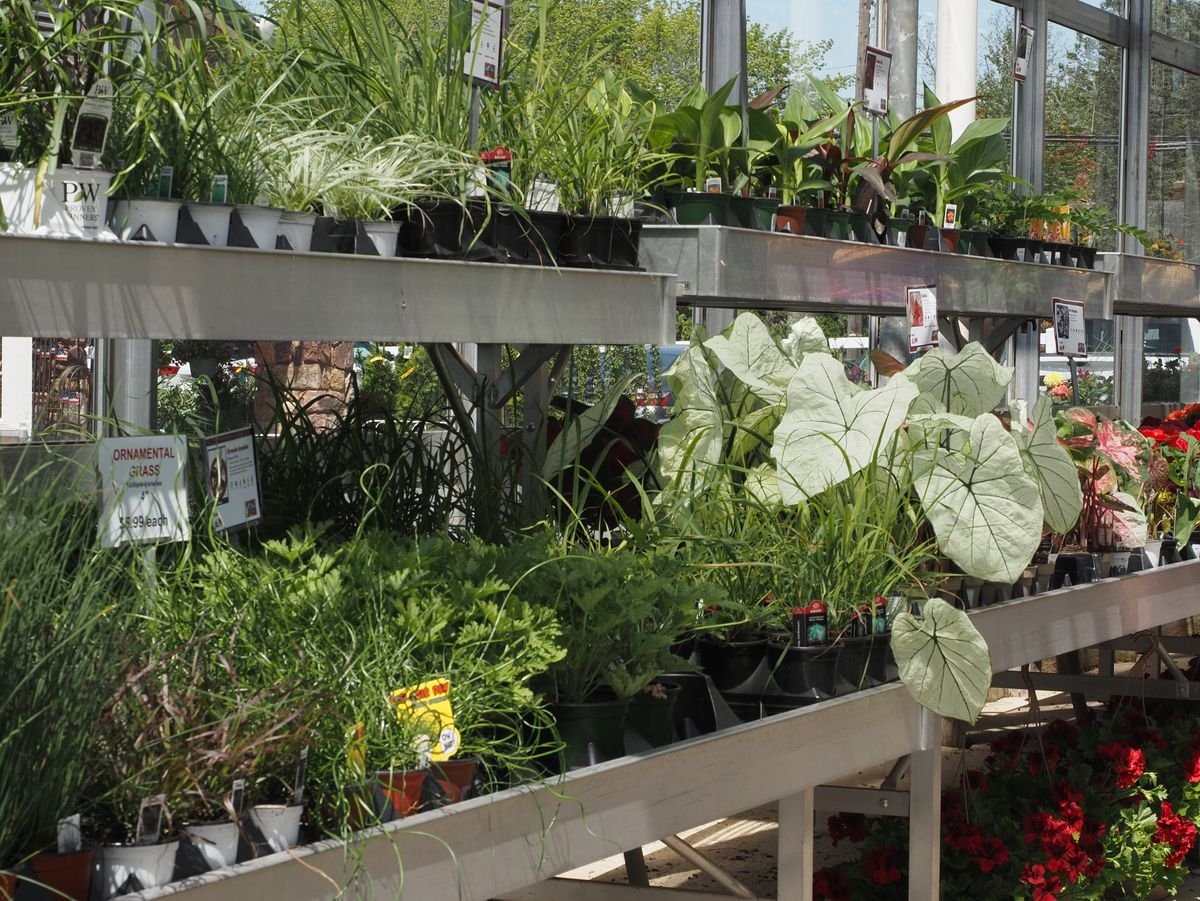
Quick Reference: Buying Peperomia Big Box Checklist
| Check | Pass | Fail / walk away |
|---|---|---|
| Leaves | Firm, glossy, even colour for the cultivar | Soft, yellowing lower whorl, papery scorch |
| Axils / undersides | Clean | Cottony mealybug masses, webbing, stippling |
| Pot weight / smell | Moderate weight; earthy smell | Waterlogged heavy pot; sour/pond odour |
| Bench neighbours | Mostly clean | Infested pots sharing a tray |
| Label | Binomial or clear cultivar | Vague “tropical” only — verify morphology |
| After purchase | 14-day isolation | Direct placement into the main collection |
Species context: facultative epiphyte, Piperaceae; non-toxic to cats and dogs per the ASPCA Baby Rubber Plant listing. Profile: NC State Extension.
1. Buying Peperomia Big Box: The In-Store Vigor Audit
Shop the indoor houseplant benches, not outdoor patio stock hardened for full sun. Ask staff which weekday restocks arrive — fresher carts often show less prolonged saucer-sitting.
Leaves and turgor. Press a mature leaf gently. It should feel thick and cool, like firm rubber. Thin, floppy, or leathery leaves usually signal root dysfunction or chronic drought-then-flood cycles. Prefer plants with intact older leaves and some compact new growth; stretch with tiny new leaves suggests chronic low light on the store floor.
Axils and undersides. Mealybugs hide where petiole meets stem. Spider mites leave stippling and fine webbing under leaves. One cottony cluster on a crowded big-box table is enough reason to reject the pot — infestation rarely stays unique. Full ID/treatment: mealybugs, spider mites.
Soil sniff and weight. Lift the pot. Extreme heaviness plus a sulfur or pond smell indicates anaerobic roots. Bone-dry peat that has pulled from the pot wall may channel water later; still buyable if foliage is firm, but plan a careful rehydration and quarantine. Rot triage: overwatering rescue.
Optional root peek. Only tip a pot you intend to buy. Healthy roots are firm and light tan/white; mushy dark roots with a foul smell fail the audit.
The standard advice — any green plant on sale is fine — fails here. Shelf price does not buy pest-free status.
2. Labels, Lookalikes, and Cultivar Honesty
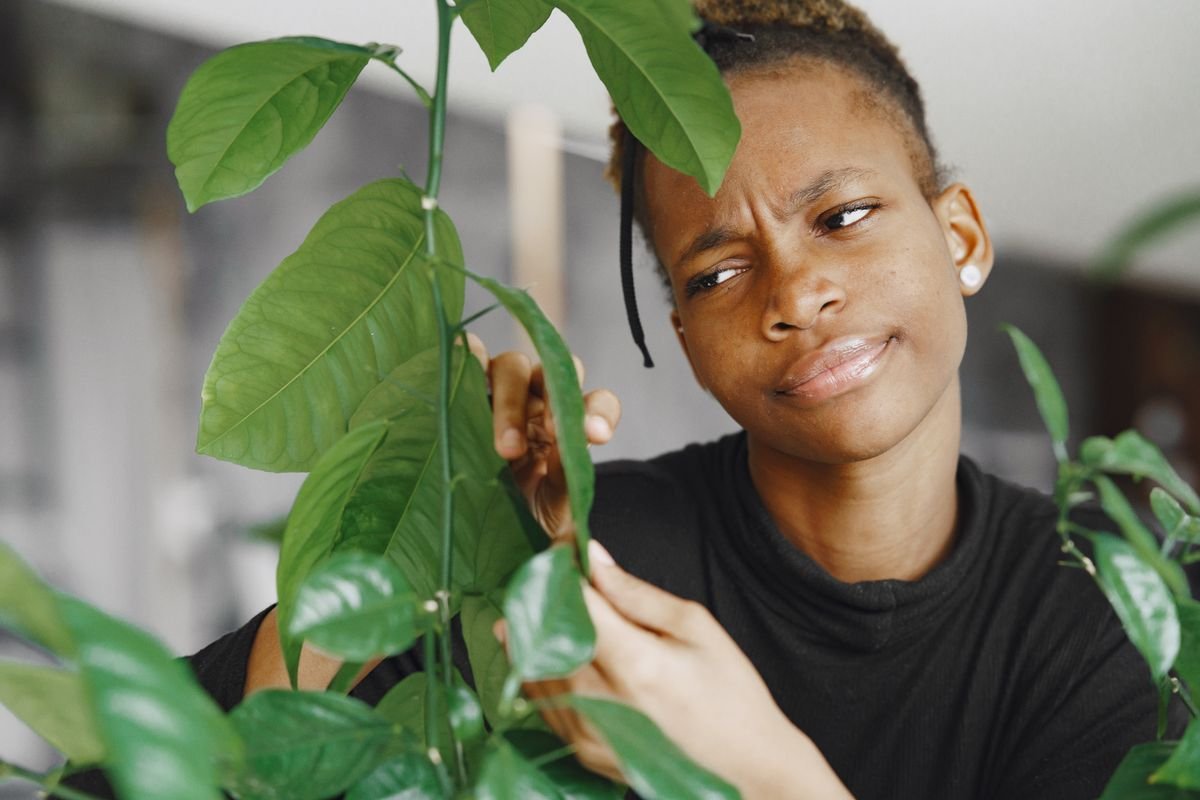
Retail tags routinely conflate P. obtusifolia with P. magnoliifolia and intermediates. “Baby rubber plant” is a common name, not a voucher. Prefer listings that name the binomial and cultivar ('Jade', 'Variegata', 'Marble'). Extreme variegation claims at commodity prices deserve skepticism — see rare cultivar identification.
Big-box stock concentrates on forms that propagate fast. Rare chimeras and sports remain better sourced from specialist sellers when identity matters more than price.
3. The 14-Day Quarantine (Non-Negotiable)
Assume hitchhikers until proven otherwise — the same biosecurity logic used after online shipping, applied to retail carts.
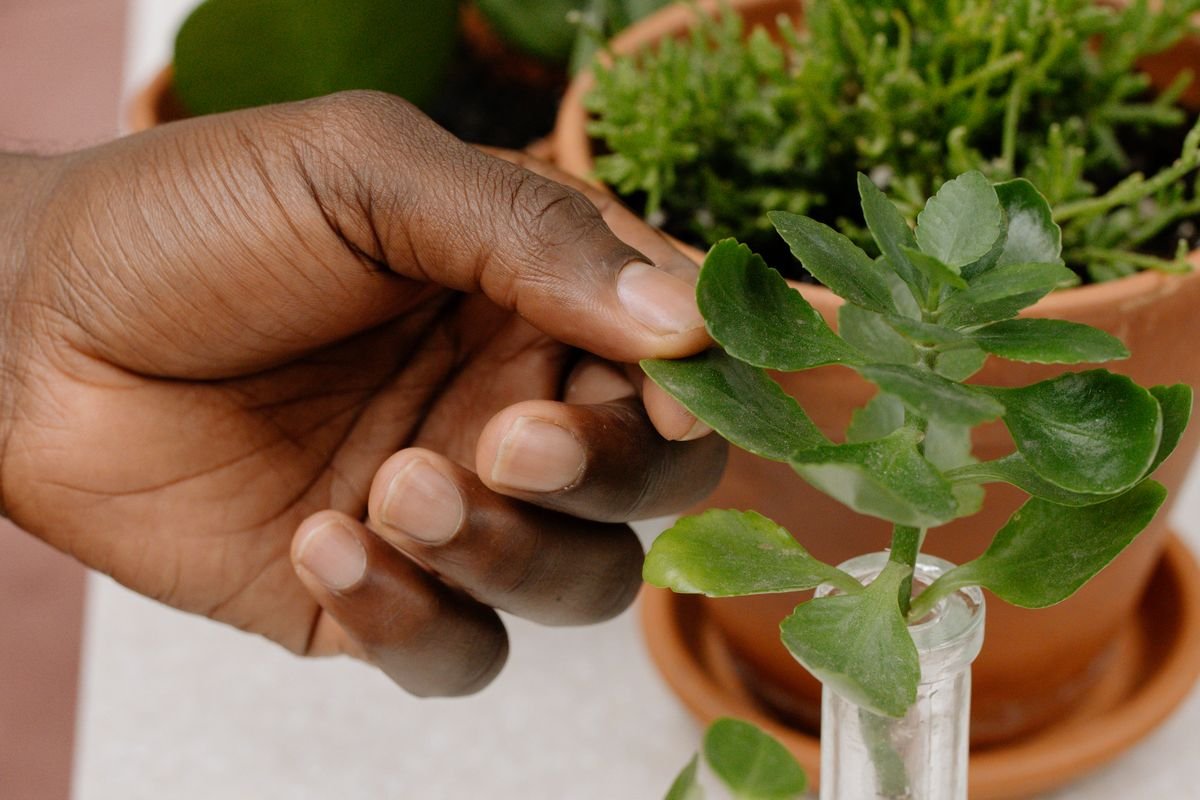
- Isolate in a separate room or on a dedicated tray at least a few feet from other plants for 14 days (toward 30 if stressed or from a dense display).
- Day-one clean — rinse foliage if dusty; wipe leaves; inspect axils with a light. Alcohol swabs for visible mealybugs; sticky traps if gnats appear.
- Inspect every few days — new distortion on youngest leaves can signal thrips after the plant resumes growth (a recurring post-purchase pattern).
- Water on dry-down only — greenhouse peat stays wet longer in low-airflow homes; do not water on a store-receipt schedule.
Do not place the new pot on a shared humidity tray or into a closed cabinet with the collection. Quarantine is observation time, not decoration time.
What “pass” looks like. No new cottony masses, no expanding stippling, no soft stem bases, and substrate that dries on a semi-succulent schedule rather than staying cold and wet for a week. If pests appear on day 10, restart the clock after treatment — do not “almost quarantine” into the main shelf.
4. Substrate Swap and the “Death Plug”
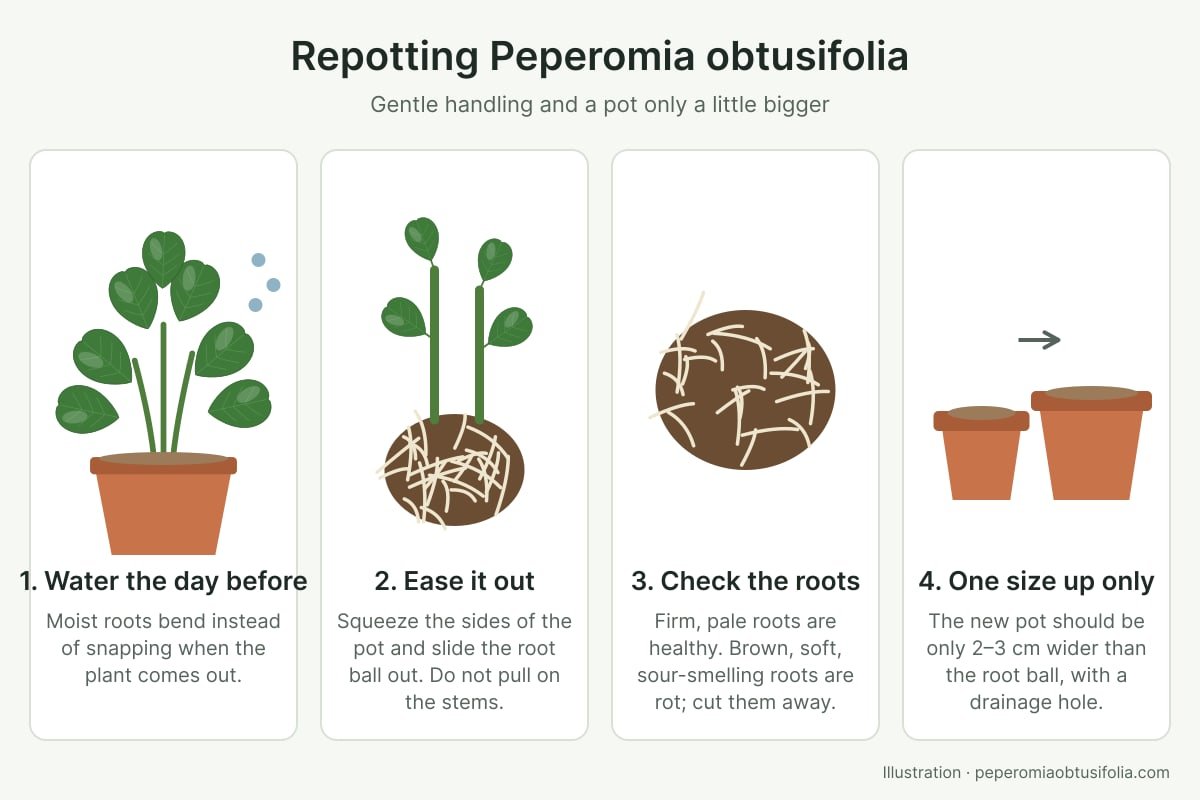
Big-box Peperomia often ships in dense peat blends tuned for greenhouse heat and irrigation, not for typical indoor airflow. That mix holds water past the species' ~5-day saturation tolerance and raises Pythium / Phytophthora risk.
Timing. Do not rip the plant apart in the parking lot. Let it settle several days in quarantine. Then, within the first 1–2 weeks — sooner if the mix smells foul — shake off nursery peat and pot into the site standard 50% coir / 30% perlite / 20% fine bark (soil mix recipe). This matches the “inspect roots during quarantine” rule without contradicting the longer wait used after multi-day dark shipping trauma (shipping guide).
Death plug. Some retail plants hide a non-biodegradable mesh or fabric sleeve from plug propagation. As roots thicken, the sleeve acts like a tourniquet. During the substrate swap, probe the centre of the root ball; if mesh is present, snip it away with sterilised scissors and tease roots gently free. Specimens that “mysteriously decline” months after purchase often carry this constriction.
5. After Integration: Light, Water, and Expectations
Once quarantine ends with clean inspections:
- Place at 2,000–4,000 lux leaf surface (east window default in northern-hemisphere homes — window direction guide).
- Water only when the top 2–3 cm is dry; bottom-water as default with periodic top-flush (bottom-watering guide).
- Expect some lower-leaf drop while the plant adjusts from store light and humidity — not automatic failure if new growth stays firm.
- Choose a pot to match the new substrate rather than reusing an oversized nursery pot — see the best pots guide for material and sizing.
- Watch new growth over the following weeks for black spots, which can surface once a stressed retail plant is settling into a new environment, and check when it's actually time to size up rather than repotting again out of habit once the quarantine repot is done.
Common post-purchase mistakes. Watering the day you arrive because the surface looks dry while the peat core is still saturated. Fertilising a stressed retail plant in week one. Parking the pot against cold glass in winter while chasing “more light.” Skipping quarantine because the plant “looked clean” under store fluorescents — mites and mealybugs are often missed under that lighting.
Pet households gain a species that is ASPCA-listed non-toxic, unlike many showy big-box alternatives (true lilies, sago palm). That is a selection advantage, not a licence to skip pest quarantine.
Conclusion
Buying peperomia big box is a protocol, not a gamble: audit vigor and pests on the bench, isolate for 14 days, then correct nursery peat and any mesh sleeve before the plant joins the shelf. Mass retail remains the practical source for common 'Jade' and standard variegates at commodity prices; use specialists when you need verified rare cultivars. Treat the receipt as the start of restoration — inspection, quarantine, substrate — and the bargain specimen has a fair chance of becoming stable indoor stock.
Care FAQ
Is it safe to buy Peperomia from big box stores?
Yes, if you inspect before purchase and quarantine for at least 14 days. Mass retailers move high volume with less individual care, so overwatering cycles and hitchhiking pests are common. Treat every store plant as potentially infested until isolation proves otherwise.
How do I check for pests at the store?
Inspect leaf axils for white cottony mealybug masses, leaf undersides for stippling or webbing (spider mites), and the substrate surface for fungus gnats when the pot is tapped. Soft stems, sticky honeydew, or neighbouring pots covered in webs are reasons to walk away.
Should I repot a Peperomia immediately after buying from a store?
Not on day one unless the substrate is foul or roots are mushy. Isolate first, let the plant settle for several days, then swap dense nursery peat for a free-draining mix during quarantine (typically within the first 7–14 days) so you can inspect roots and remove any mesh propagation sleeve.
How long should I quarantine a new big-box Peperomia?
Minimum 14 days; extend toward 30 if the plant arrives stressed or from a crowded bench. That window covers hatch cycles for many hitchhikers before the specimen joins the main collection.
Why do big-box Peperomias decline after looking fine in the store?
Common causes are waterlogged peat adapted to greenhouse airflow, hidden pests, strangling propagation mesh (“death plugs”), and mislabelled species. The store environment masks problems that appear once the plant faces drier indoor air and lower airflow.