Fix Leggy Peperomia: 5 Proven Steps
To fix leggy peperomia (Peperomia obtusifolia), prune elongated stems back to a compact node and move the plant to 2,000–4,000 lux at the leaf surface. Legginess is etiolation — shade-avoidance — not “happy fast growth.” Stretched internodes never shorten. Light alone leaves a permanent scaffolding; pruning alone grows new tips that stretch again in the same dim spot. Both interventions are required.
Full compass placement belongs in the best window guide; general shaping cuts belong in the prune guide. This article is the etiolation protocol only.
| Symptom | Threshold / sign | Meaning |
|---|---|---|
| Internode length | Sustained >3 cm gaps | Chronic light below ~1,000 lux |
| New leaf size | Smaller than older leaves | Energy shifted to stem elongation |
| Colour | Pale / lime new growth | Chloroplast under-development |
| Lean | Tip toward window | Phototropism (auxin asymmetry) |
| Soft mushy base | Foul, collapsing crown | Root/stem rot — not etiolation |
1. Fix Leggy Peperomia: What Etiolation Actually Is
In the understorey, a depressed red-to-far-red ratio signals overhead competition. Phytochrome signalling raises gibberellin activity at the meristem; cell walls elongate; chlorophyll investment drops. Indoors the same programme runs when leaf-surface light sits below the tolerated minimum of 800–1,000 lux for weeks — a common outcome 2–3 m from a window in an office that “feels bright.”
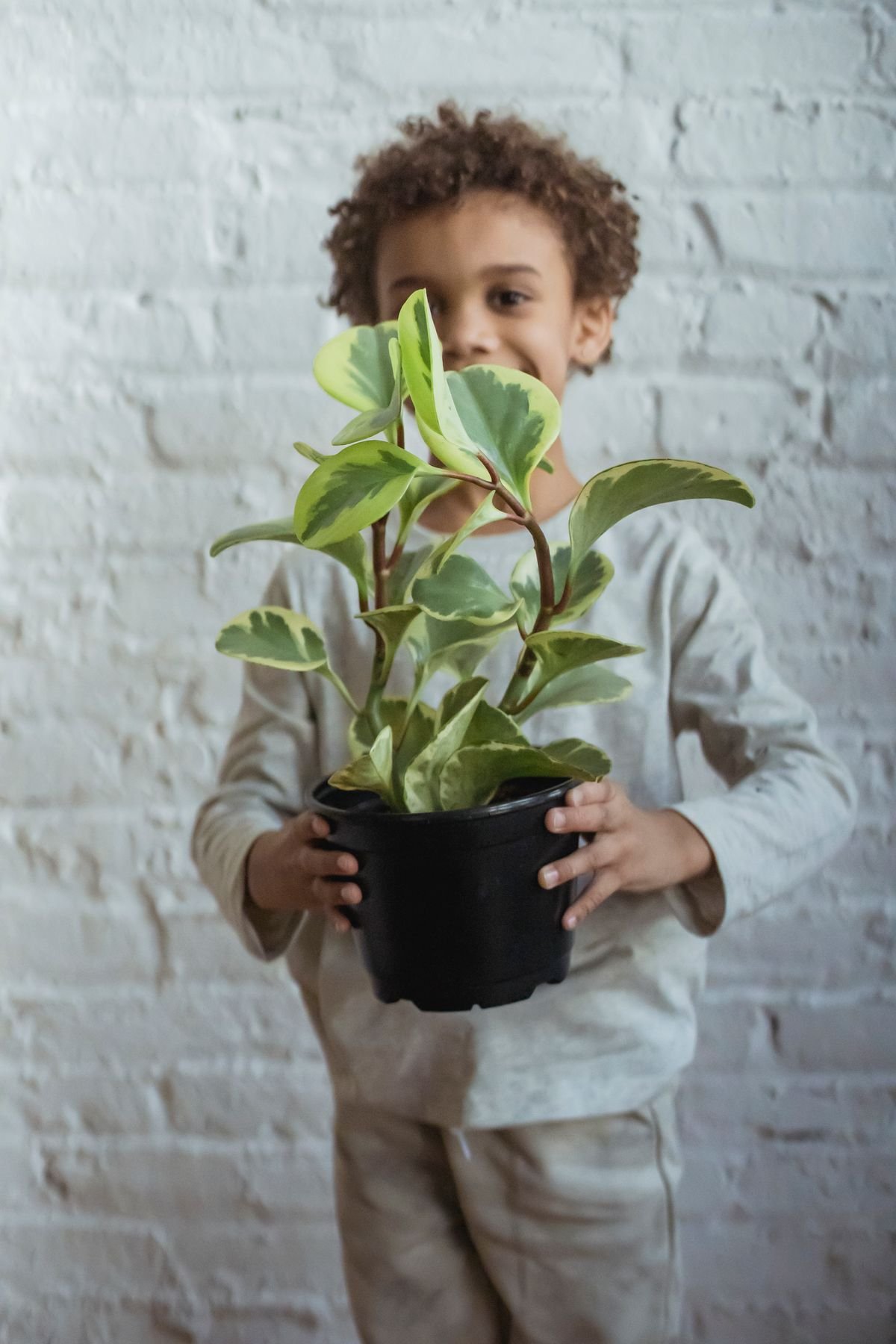
Opinion: “Bright indirect light” without a lux number is useless here. The phrase spans ~300 lux (failure) to several thousand lux (success). The site standard for compact P. obtusifolia is 2,000–4,000 lux at the leaf (light requirements; filtered vs indirect definitions). Species context: NC State Extension, RHS.
Watering and fertiliser errors can stress a plant, but they do not produce the classic stretched-internode signature of etiolation. Soft, foul stem bases point to anoxia and rot — treat that pathway separately (falling / weak stems).
2. Why Light Alone or Pruning Alone Fails
Apical dominance keeps most lateral buds dormant while the tip exports auxin down the stem. Cytokinins from the roots can activate those buds only after the tip is removed. Relocating a leggy specimen without cutting leaves a single elongated leader that may firm slightly but will not “fill in.”
Conversely, tip-pruning in the same sub-1,000 lux corner produces new laterals that etiolate on the next flush. The architecture problem and the light problem must be solved together.
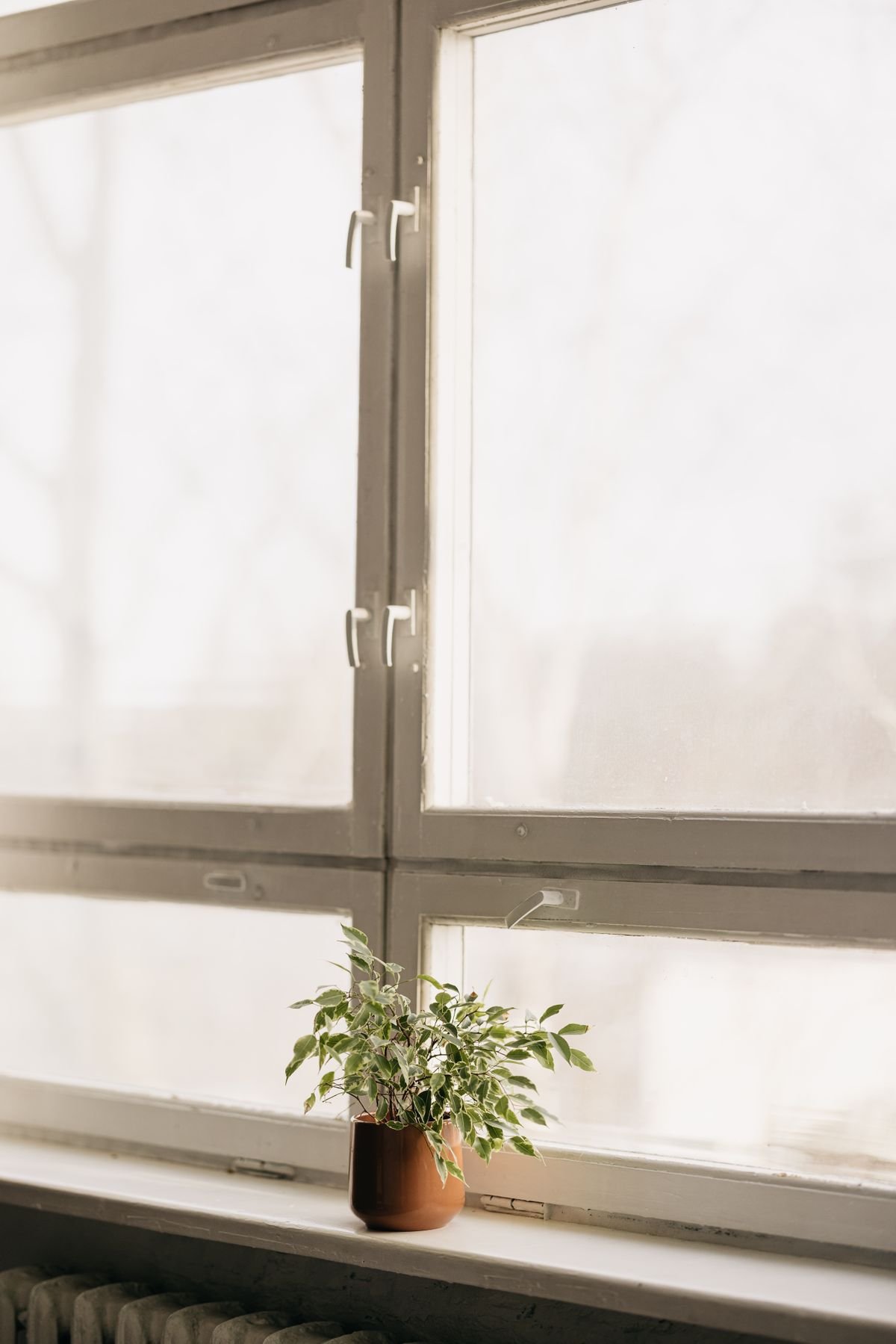
Recurring pattern (office specimen). Plant 2–3 m from glass under fluorescent ambient light for years; internodes 4–6 cm; lean toward the window; canopy flops. Mechanism: chronic shade-avoidance plus phototropic auxin redistribution. Existing cells stay elongated. Fix: hard prune to the lowest firm, compact nodes and move to ≥2,000 lux (east sill or sheer-filtered bright window, or supplemental LED). Laterals usually show in ~14 days; a fuller canopy takes 6–10 weeks.
3. Fix Leggy Peperomia in 5 Proven Steps
-
Measure, then move. Read lux at the upper leaves (meter method). Target 2,000–4,000 lux. Avoid dumping a deep-shade plant into unfiltered noon south/west sun on day one — step intensity up over several days to limit bleaching of shade-adapted tissue (Illinois houseplant lighting). Overcorrecting straight into harsh direct sun trades one problem for another — see the sunburn treatment guide if bleached or papery patches appear after the move.
-
Acclimatise 7–10 days (optional but useful). Let chlorophyll adjust in the new spot before a heavy cut. Mild yellowing during the shift can occur and usually settles within two weeks if watering stays on dry-down, not schedule.
-
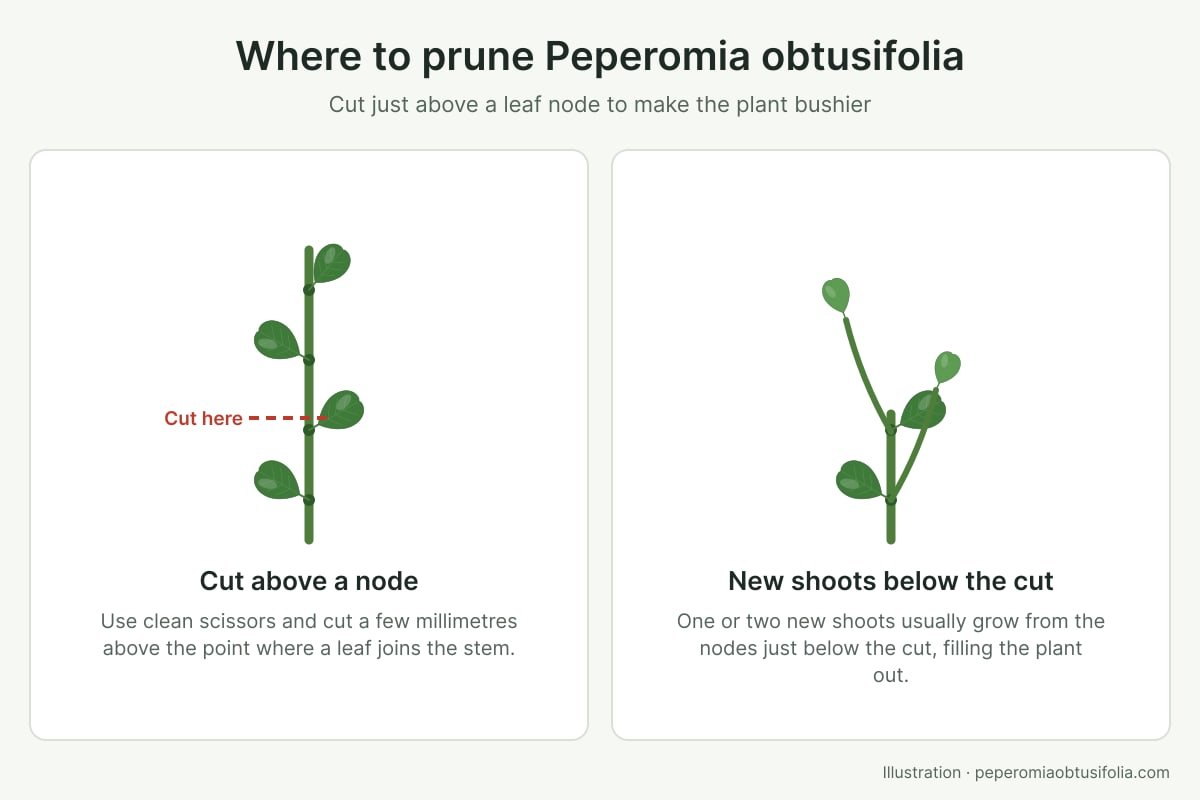
Prune to a compact node. Sterilise scissors with 70% isopropyl. Cut ~0.5 cm above a healthy node where prior internodes were still ≤2 cm. Flush cuts damage the node; long stubs die back. A 30 cm etiolated stem can go to 5–10 cm if the base is firm and green. Prefer early spring; winter recovery is slower. Skip fertiliser for about four weeks post-cut.
-
Hold the lux and rotate. New growth must stay in band. Turn the pot 90° every 7–10 days to limit one-sided lean. In winter, ambient intensity often collapses — a modest full-spectrum LED 30–40 cm above the canopy can hold the target (grow lights). Variegates: aim toward the upper end of the band (~2,800–5,000 lux).
-
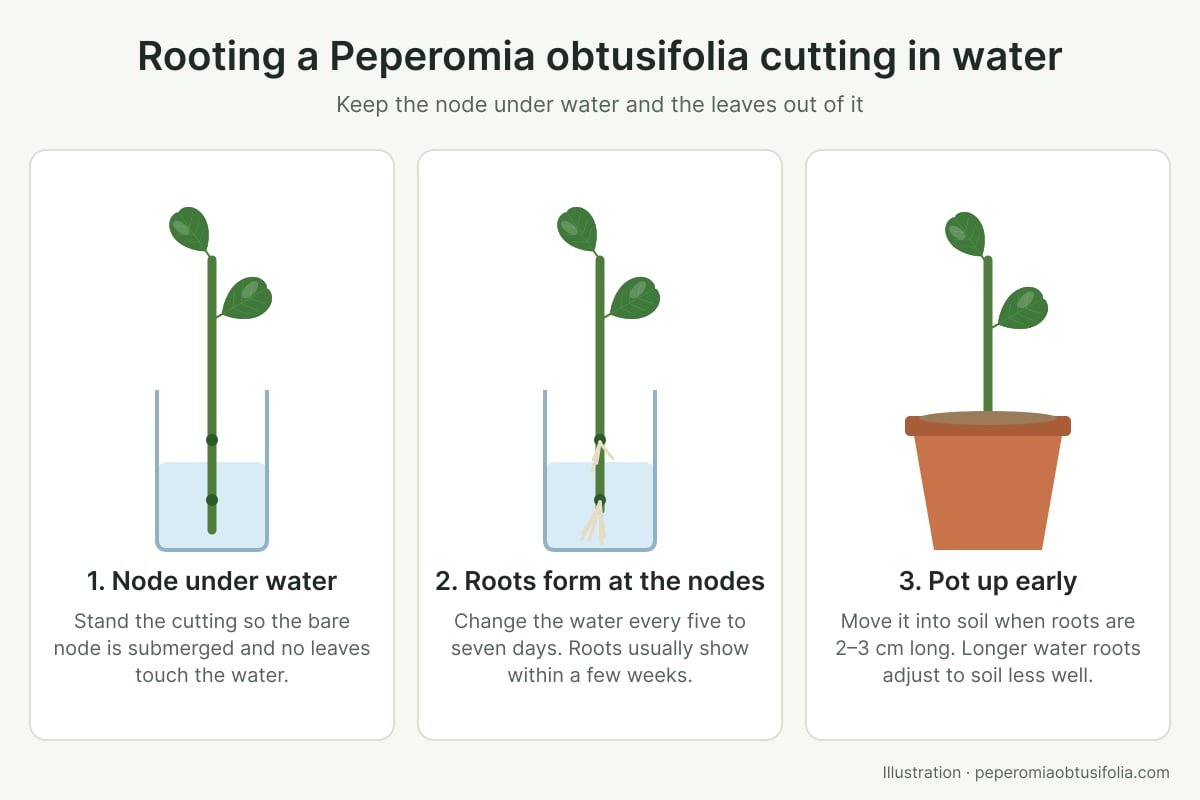
Salvage the tops. Root 5–10 cm stem pieces with ≥1 node in water (often 14–28 days to roots) or moist perlite under the same lux rules. Variegated material needs a variegated node — leaf cuttings usually regenerate all-green tissue. Procedure detail: stem-cutting propagation.
4. How Much to Remove — and What Not to Confuse
Cafe-style “never cut more than one-third” is a useful stress guard for a first session on a weak plant. P. obtusifolia also tolerates harder resets when roots are healthy. If the specimen is already thin-leaved and stressed, stage cuts 3–4 weeks apart: first the longest leaders, then remaining stretch after new laterals have two to three leaves. Don't discard what you remove — a long leggy leader sections into several usable cuttings rather than a single one; see the long-vine propagation guide for turning the prunings into a full tray of new plants.
Do not confuse etiolation with:
- Natural lean without long internodes — phototropism in adequate light; rotate and verify lux (see the mechanism and rotation protocol below).
- Collapse with mushy base — rot; prune into sound tissue and fix substrate oxygen, not “more light only.”
Pinching soft tips every few weeks in spring on already-compact stems is prevention, not a substitute for correcting a fully etiolated scaffold.
5. Phototropism Alone: When Rotation Fixes the Lean Without Pruning
A specimen that leans toward the window but shows normal internode spacing — roughly 1–2 cm, not the 4–6 cm stretch of etiolation — is exhibiting phototropism without etiolation, a distinct and milder situation that rotation alone can correct. Auxin, produced at the growing tip, migrates toward the shaded side of the stem when light arrives predominantly from one direction; the shaded side's cells then elongate faster than the sun-facing side, and the stem physically bends toward the light as a result. It is the same hormonal machinery behind etiolation's internode stretch, but acting laterally across the stem rather than lengthening it overall.
Weekly rotation prevents this from becoming permanent: turning the pot 90° at each watering redistributes which side of the stem receives direct light, so auxin doesn't concentrate on the same side for more than a week at a time, keeping new growth close to vertical rather than letting a one-sided lean compound.
For a specimen already leaning significantly, a 180-degree pivot — turning the plant so the bent side now faces the light source — can partially correct it while the stem is still flexible, since shifting auxin to that side accelerates its growth and pulls the tip back toward centre over several weeks. This only works while the stem tissue is still soft; once a stem has thickened and lignified at the base, it no longer responds to this hormonal correction, and the only remaining fix is the same pruning step covered above — cutting back to a compact node and letting new, straight growth replace it.
6. Extra: Prevention Beats Repeat Pruning
Once you fix leggy peperomia once, recurrence is almost always the same gap: leaf lux drifted below threshold for >3–4 weeks. Recheck after furniture moves, winter sun-angle change, or sheer curtains added without verifying the new reading. Pale walls help bounce; they do not invent photons at 3 m from glass.
Seasonal trap. In temperate winters, the same sill that held 3,000 lux in June may drop below 1,000 lux for weeks while the room still “looks fine.” That is when new laterals stretch again and growers blame pruning. Log a midday leaf reading in December as well as in May. If ambient cannot hold the band, extend photoperiod with a low-heat LED rather than chasing hotter, closer glass that risks scorch on shade-adapted leaves.
What competitors underplay. Watering schedules, pot size, and fertiliser appear in many leggy posts; they matter for overall health but do not rewrite internode length. Treat them as supporting care after light and the cut are correct — not as primary cures.
Conclusion
Fix leggy peperomia by treating etiolation as permanent tissue plus a light deficit: cut above a compact node, hold 2,000–4,000 lux, rotate, and root the tops. Anything less — hope, fertiliser, or “brighter room” without a meter — leaves either the old stretch or a new one.
Care FAQ
Why is my Peperomia obtusifolia getting so tall and thin?
Etiolation — shade-avoidance under chronic low light. Below about 800–1,000 lux for 4–6 weeks, internodes stretch from the usual 1–2 cm toward 4–6 cm, leaves shrink and pale, and the stem leans. Existing stretch is permanent; prune plus relocate to 2,000–4,000 lux.
How do I make my Peperomia bushy again?
Remove the growing tip to break apical dominance. Auxin from the tip suppresses lateral buds; after the cut, cytokinin-driven buds activate at nearby nodes within about 10–14 days if light is adequate. Without the prune, most stems stay single-leader.
Where exactly should I cut a leggy Peperomia stem?
Make a clean cut about 0.5 cm above a healthy node (leaf or leaf-scar junction). Prefer the last region where internodes were still under ~2 cm. Sterilise blades with 70% isopropyl alcohol between plants.
Can I fix a leggy Peperomia without pruning?
No for architecture. Better light stops new stretch but does not shorten committed internodes. Pruning is required to reset shape; the removed tops can be propagated as compact plants under correct lux.
What lux level prevents future legginess?
Optimum is 2,000–4,000 lux at the leaf surface. Tolerated minimum is roughly 800–1,000 lux. Variegated cultivars need about 30–40% more usable light than the green form.
When is the best time to prune a leggy Peperomia?
Early spring, as daylength and growth rate rise. Visible laterals often appear within ~14 days under 2,000–4,000 lux. Winter cuts recover more slowly (often 6–8 weeks) because energy and light are limited.
Can I propagate the leggy stems I cut off?
Yes. Stem pieces 5–10 cm with at least one node root readily in water or moist perlite. For variegated cultivars, keep at least one variegated node — leaf cuttings usually revert to green.