
Thrips on Peperomia Obtusifolia: Stop the Damage
Metallic silvering paired with black frass specks confirms thrips on Peperomia obtusifolia, but appearance alone doesn't tell you why treatment often fails — check first whether new growth is also twisted or cupped, since that confirms an established infestation rather than a fresh one, and changes how aggressively to treat it.
Quick Diagnosis
| Symptom pattern | Likely cause | Confirming check | First action |
|---|---|---|---|
| Metallic silver/grey patches with black specks | Active thrips feeding | Paper-tap test dislodges fast-moving slivers | Begin the 3-phase protocol below |
| Twisted, cupped new growth alongside silvering | Established infestation feeding on the meristem | Same paper-tap test; check leaf axils | Same protocol, expect a longer timeline |
| Fine stippling with webbing, no frass | Spider mites, not thrips | Check for silk webbing in axils | See the spider mite guide |
| Concentric rings or bullseye lesions alongside thrips | Possible Tospovirus infection | Compare lesion shape — circular and discrete, not irregular | Isolate and discard; no treatment reverses a plant virus |
What Thrips Damage Looks Like
Silvering is usually the first visible sign: a metallic silver, grey, or bronze sheen on the upper leaf surface, often starting near the leaf base. A thrips scrapes away the waxy cuticle with its mouthparts and drains the cytoplasm from the cells beneath; the drained, air-filled cells refract light differently from intact tissue, producing the metallic look. Unlike a fungal leaf spot, silvering has no water-soaked margin and doesn't spread further once the insect responsible is gone.
Frass appears as tiny black or dark-green varnish-like specks sitting directly on or beside the silvered patches — it doesn't wipe away like dust. Silvering plus frass on the same leaf is a reliable combination confirming active feeding rather than old, healed damage. On an established infestation, new leaves emerge twisted, cupped, or asymmetric, since thrips concentrate in the tightly folded, unfurling apex where two young leaves press together, and cells damaged at that meristematic stage never expand normally.
The paper-tap test confirms identification when adults are hard to spot directly: hold white paper beneath a suspect leaf and tap it firmly several times. Dislodged thrips fall onto the paper and crawl in fast, jerky bursts, distinct from the slower, steadier movement of spider mites.
Why a Single Treatment Fails, Ranked by Life Stage
1. Eggs sealed inside the leaf tissue
Female thrips use a saw-like ovipositor to cut a slit in the leaf and deposit eggs beneath the epidermis, entirely out of reach of any contact spray. Confirm it: if visible adults disappear after one spray but silvering resumes within one to two weeks, this is almost always the cause — the eggs simply hadn't hatched yet.
2. Pupae buried in the substrate
Second-instar larvae drop from the foliage into the top 1-2 cm of substrate to pupate, where they don't feed and are inaccessible to both contact sprays and most foliar systemics during that stage. Confirm it: relevant to every infestation by default; this is why the substrate itself needs to stay part of the treatment plan, not just the foliage.
3. Stopping treatment too early
Western flower thrips, a common indoor species (not specifically confirmed on Peperomia), completes a generation from egg to reproductive adult in roughly two weeks at room temperature, slower in cooler rooms. Confirm it: if treatment stopped as soon as visible adults vanished (commonly week 1-2), the eggs and pupae present at that point had not yet completed their cycle.
4. Substituting the wrong product
Household pyrethroid sprays are a common substitution, but western flower thrips populations widely show resistance to pyrethroids. Confirm it: if a pyrethroid-based spray was used and the population didn't decline at all, resistance is the likely reason, not application error.
Step-by-Step Recovery Plan
Phase 1 — Systemic uptake. Apply a labelled systemic drench (such as imidacloprid) to the substrate at label rate. The root system absorbs and distributes it through the sap, so larvae hatching from leaf-sealed eggs ingest it while feeding and die before completing development. Apply once at the start of treatment and again around week 4.
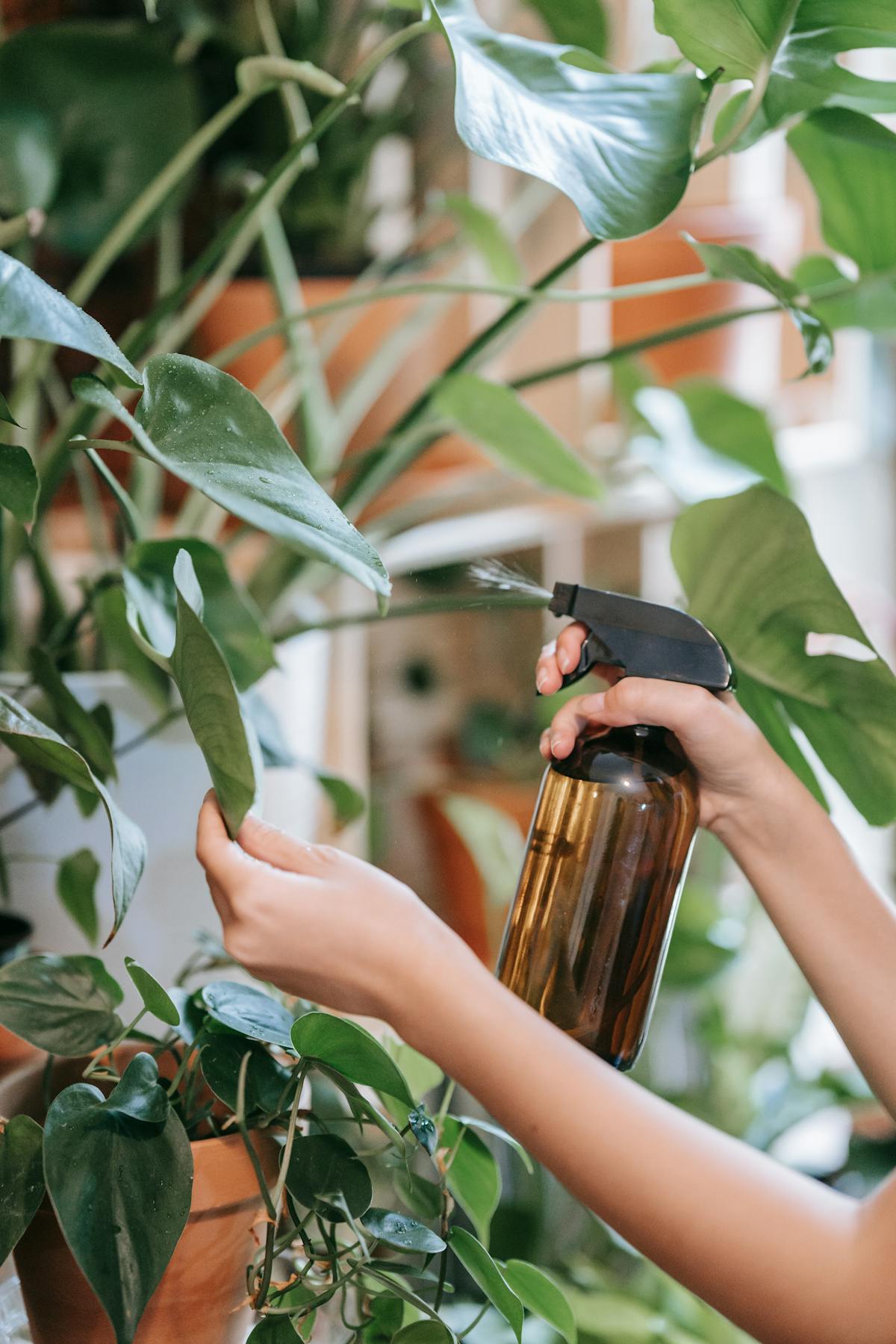
Phase 2 — Foliar contact kill. A day after the systemic drench, spray the entire plant — both leaf surfaces, petioles, axils, and stem — with a labelled potassium fatty-acid insecticidal soap. A labelled azadirachtin (neem) product applied a couple of days later adds growth-disruption coverage for surviving nymphs. Repeat the soap and neem applications weekly for four weeks, following label rates rather than a stronger improvised mix.
Phase 3 — Blue sticky traps. Thrips are strongly attracted to blue wavelengths specifically (unlike fungus gnats, which respond to yellow). Place one blue sticky trap at the substrate surface per pot, replacing it every two weeks. A falling weekly count on the trap is the clearest sign the protocol is working.
What not to do: don't prune heavily damaged leaves during the first one to two weeks — dislodged adults simply fly to nearby plants and start secondary colonies. Wait until adult numbers have visibly dropped, typically around week three, before removing the most heavily silvered leaves; each one removed at that point also strips away any eggs still sealed inside it.
Recovery Signs and Realistic Timeline
Plan for a minimum of four weekly treatment cycles rather than judging success by the first week's results — stopping as soon as visible adults disappear is the most common reason thrips seem to "come back." The reliable sign of success is clean new growth: each new leaf that unfurls without silvering or twisting, confirmed over several consecutive weeks, is what indicates the population is actually gone, not the disappearance of existing damage, which never reverses. A falling sticky-trap count week over week is a useful secondary confirmation alongside the leaf inspections.
How to Prevent Recurrence
Quarantine every new plant for a full four weeks before introducing it to an existing collection — this is the single most effective prevention, since new or recently shipped stock is the most common source of an outbreak. Keep new arrivals physically separated from other plants during this period, place a blue sticky trap in the quarantine pot, and inspect new growth twice weekly for silvering or twisting. Specimens returned indoors after a summer outdoors should go through the same quarantine before rejoining the main collection. Adjusting humidity is not a useful control measure here — unlike spider mites, thrips tolerate a wide range of indoor humidity levels, so the systemic-and-trap protocol above is what actually matters, not the room's RH.
When to Discard Rather Than Treat
Thrips themselves are treatable with the protocol above, but they are also a documented vector for Tospoviruses, including Tomato Spotted Wilt Virus and Impatiens Necrotic Spot Virus. A plant showing concentric ring patterns or bullseye lesions — circular and discrete, distinct from the irregular, spreading shape of ordinary feeding silvering — alongside an active thrips infestation should be isolated and discarded rather than treated. No fungicide, insecticide, or cultural fix reverses a plant virus, and an infected specimen acts as an ongoing reservoir that can reinfect any replacement plant nearby.
Sources
Identification and life-cycle mechanism are consistent with RHS thrips guidance and UC IPM thrips guidance. For related pest and disease protocols, see the guides for spider mites, mealybugs, powdery mildew, and aphids, and the complete problems guide for the full diagnostic reference.
Care FAQ
How do I identify thrips on my Peperomia obtusifolia?
Three signals together confirm thrips: metallic silver, grey, or bronze patches on the upper leaf surface; small black or dark-green varnish-like frass specks clustered on those silvered patches; and twisted or cupped new growth on established infestations. The paper-tap test — tapping a suspect leaf firmly over white paper — confirms it further if slender, fast-moving slivers fall out.
Why are thrips so hard to kill with a single spray?
Female thrips cut a slit in the leaf and lay eggs inside the tissue, sealed beneath the epidermis where contact sprays cannot reach them. Second-instar larvae then drop into the top of the substrate to pupate, equally out of reach of foliar treatment. A single spray only kills the adults and larvae exposed on the leaf surface at that moment — the sealed eggs and buried pupae continue developing untreated.
Will silvered patches on my Peperomia recover once thrips are gone?
No. Silvering marks cells whose chloroplasts and cytoplasm have already been drained by feeding; the cell walls remain but are air-filled, which is what produces the metallic look, and photosynthetic capacity in that tissue is permanently lost. Treatment success is judged by the absence of new silvering on new growth, not by the disappearance of existing patches.
Do thrips on Peperomia spread plant viruses?
Yes. Thrips are a documented vector for Tospoviruses, including Tomato Spotted Wilt Virus and Impatiens Necrotic Spot Virus. In plants generally, viral infection often shows as concentric ring patterns or bullseye lesions distinct from the irregular, spreading silvering of ordinary feeding damage. A plant showing both an active thrips infestation and ring-pattern symptoms should be isolated and discarded, since no treatment reverses a plant virus.