
Peperomia Near AC: Draft and Humidity Fixes
Peperomia obtusifolia handles a well-conditioned room without issue — the risk is not air conditioning itself but two specific things it produces: direct cold airflow from the vent, and a drop in ambient humidity below this species' comfortable range. The two problems need different fixes, and neither is solved by simply watering more, which is the instinctive but usually wrong response to a wilting plant in an air-conditioned room.
Quick Suitability Checklist
| Factor | AC-room risk |
|---|---|
| Ambient temperature | Fine at 18-24°C — AC cooling itself is not the problem |
| Direct vent airflow | High risk — can deliver air far colder than the room reading |
| Ambient humidity | Often drops well below normal household levels; AC actively removes moisture from the air |
| Watering interpretation | Unreliable at the surface — dry air dries the top of the substrate faster than the root zone |
| Light | Unaffected by AC directly, but a dim AC-cooled room compounds the humidity problem |
The Main Risks, Ranked
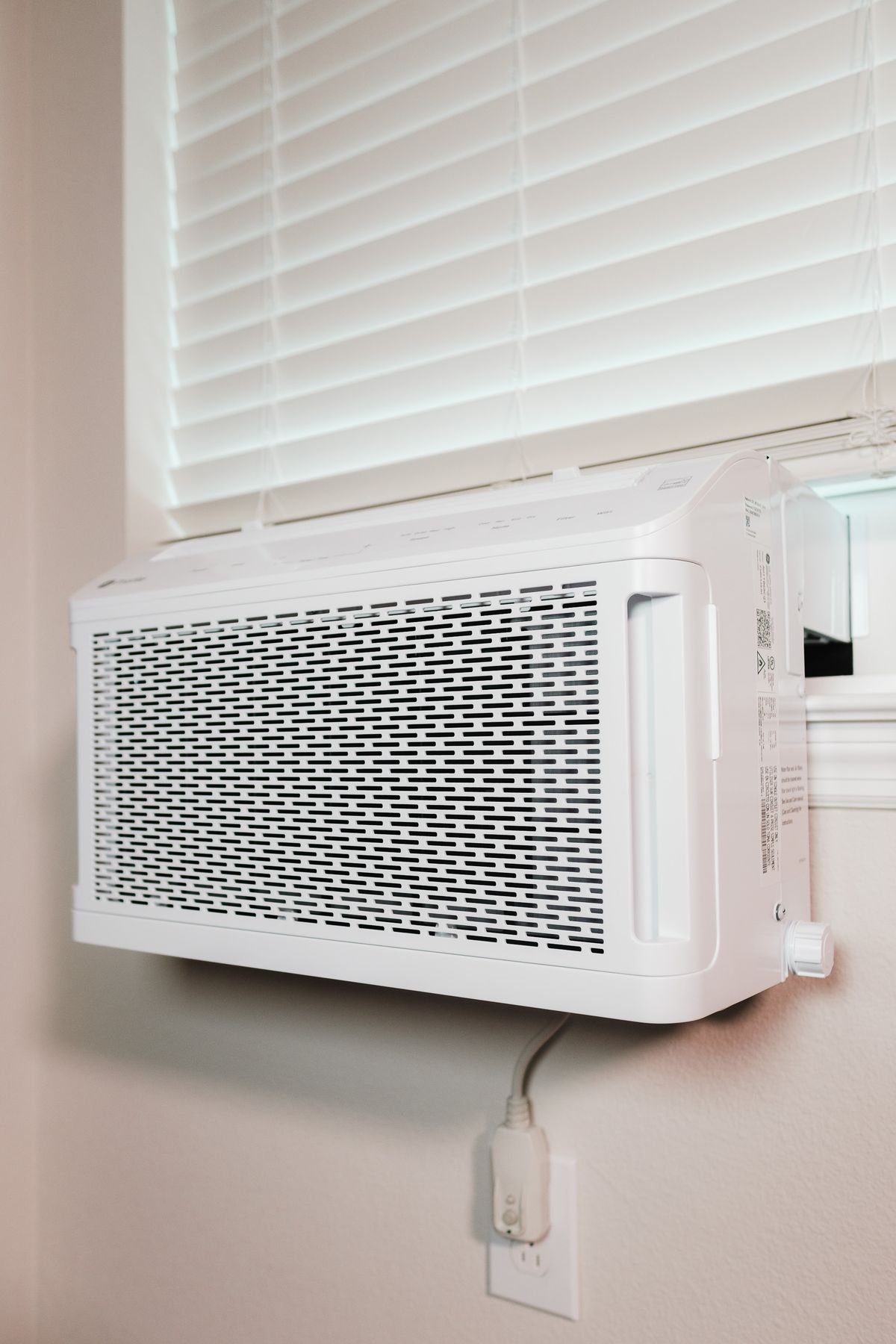
- Localised cold shock from direct vent airflow. A vent can output air noticeably colder than the thermostat setting, and a leaf sitting directly in that stream experiences a temperature the rest of the room never sees. This is the most damage-prone risk because it can cause sudden green leaf drop even when the room as a whole feels perfectly comfortable.
- Ambient humidity dropping well below normal household levels. Cooling air below its dew point strips moisture from it, and a room can swing from a comfortable ~50% RH down toward 20-30% once the AC has been running for a while. Low humidity increases the vapour pressure deficit between leaf and air, pulling moisture out of the leaf faster than the plant can replace it — the mechanism behind crisp, brown leaf-tip damage.
- Misreading substrate moisture and overwatering in response. Moving, dry air dries the top few centimetres of substrate noticeably faster than the root zone beneath it, which tricks a surface check into suggesting the plant needs water when the deeper substrate is still wet — the actual overwatering risk here, ironically triggered by air that looks like it should cause drought.
Best Placement and Setup
Keep the plant at least a metre from any direct AC vent, and ideally outside the direct airflow path entirely rather than just at a distance — a plant a metre away but still in the direct stream is not meaningfully safer than one closer but off to the side. If repositioning either the plant or the vent isn't practical, a simple vent deflector redirecting airflow upward or sideways removes the localised cold-blast risk without requiring a room rearrangement. Keep the plant at roughly 2,000-4,000 lux regardless of the AC — a dim, air-conditioned room compounds the humidity problem, since a plant already under light stress has less capacity to compensate for additional water loss.
How Watering and Humidity Must Change
Confirm substrate moisture with a skewer at mid-pot or a pot-weight check rather than a surface glance — the standard 10-14 day summer interval for a 12 cm pot still applies, but the surface will look dry well before that interval is actually up in an air-conditioned room. For humidity specifically, this site's usual interventions apply in the normal order of preference: a room humidifier paired with a hygrometer is the only intervention that reliably holds a steady humidity; a pebble tray adds only a little humidity right around the pot and is a supplement, not a primary strategy. The full mechanism and setup guidance for both live in the humidity guide.
Warning Signs the Setup Is Failing
- Sudden drop of otherwise green, healthy-looking leaves — the signature of a cold-draft shock event, not typically a watering or light problem.
- Brown, crisp leaf tips or margins developing over days to weeks — consistent with humidity below the desiccation-risk threshold rather than an acute event.
- Wilting despite a recent watering — check the substrate at depth before assuming more water is the fix; this is often the surface-drying illusion described above, and adding water on top of an already-wet root zone accelerates root rot rather than solving the wilt.
- A watering interval that has crept down to every four or five days because the surface consistently looks dry — a sign the schedule is being driven by surface appearance rather than an actual substrate check.
Step-by-Step Correction Plan
- Check the actual airflow path — stand where the plant is and confirm whether it sits in the direct vent stream, not just its rough proximity to the unit.
- Move the plant, or deflect the vent, whichever is more practical, aiming for at least a metre of separation from any direct airflow.
- Confirm substrate moisture at depth with a skewer or the pot-weight method before changing anything about the watering schedule.
- Add a hygrometer to the room if you don't already have one — it removes the guesswork about whether humidity has actually dropped.
- Introduce a humidifier if the room reads consistently below
40%RH, rather than relying on a pebble tray alone, and re-check with the hygrometer after a few days to confirm it's holding steady.
Seasonal Adjustments
AC-related stress is heaviest during the months of continuous cooling — peak summer in most climates — when both the humidity drop and vent output are most extreme. Outside that window, if the same room is later exposed to a completely different seasonal risk, such as a summer outdoor placement or a sealed, humidity-stable terrarium setup, treat each environment on its own terms rather than assuming the AC-specific fixes here still apply — the risks in each case are frequently the opposite of each other. For the general care thresholds this guide adjusts around, see the complete care guide, and if the plant has already gone into a watering-cycle overwatering error from the surface-drying illusion above, the overwatering rescue guide covers recovery.
Care FAQ
Does air conditioning harm Peperomia obtusifolia directly?
Not the cooling itself — this species tolerates a stable 18-24°C room comfortably. The damage comes from two specific things air conditioning produces: direct cold airflow hitting the leaves, and a sharp drop in ambient humidity well below normal household levels.
Can Peperomia get cold shock from an AC vent even in a warm room?
Yes. A vent can output air considerably colder than the room's thermostat setting, and a leaf directly in that airflow experiences a localised temperature far below the ambient reading. This is why a plant can show sudden green leaf drop in a room that feels comfortable to a person standing a few metres away.
Why does the soil surface dry out but the plant still seem overwatered?
Moving, dry air from an AC unit dries the top few centimetres of substrate faster than the root zone below it, so a quick surface check can suggest the plant needs water when the deeper substrate is still wet. Confirm with a skewer at mid-pot or the pot-weight method rather than judging by the surface alone.
How far should a Peperomia be kept from an AC vent?
At least one metre, and out of the direct airflow path entirely if possible. If repositioning isn't practical, a vent deflector redirecting the airflow up or away from the plant achieves the same result without needing to move either the unit or the plant.