
Does Music Help Peperomia Grow? Vibration Science Explained
Does music help peperomia grow? Not in any way you should treat as care advice. Peperomia obtusifolia can respond to mechanical vibration the way other plants can — through mechanoreceptors, not ears — but playlist experiments are poorly controlled, rarely replicated, and do not replace light, water, or temperature. Fix 2,000–4,000 lux and a proper dry-down first; treat sound as optional curiosity, not a growth lever.
This is the same class of claim as other marketing myths: emotionally sticky, biologically half-true, horticulturally weak. For a parallel pattern on oversold plant benefits, see the air-purification myth. Baseline culture sits in the care guide.
| Claim | Evidence status | Practical takeaway |
|---|---|---|
| Plants “like” classical music | Unsupported / poorly controlled | Ignore genre folklore |
| Plants detect vibration | Supported in phytoacoustics | Mechanoreceptors, not taste |
| Playlists raise houseplant growth | Not reliably replicated | Do not build a protocol on it |
| Talking helps via CO2 | Transient at room scale | Attention confound dominates |
| Loud continuous noise | Can stress some species | Keep volume moderate; distance speakers |
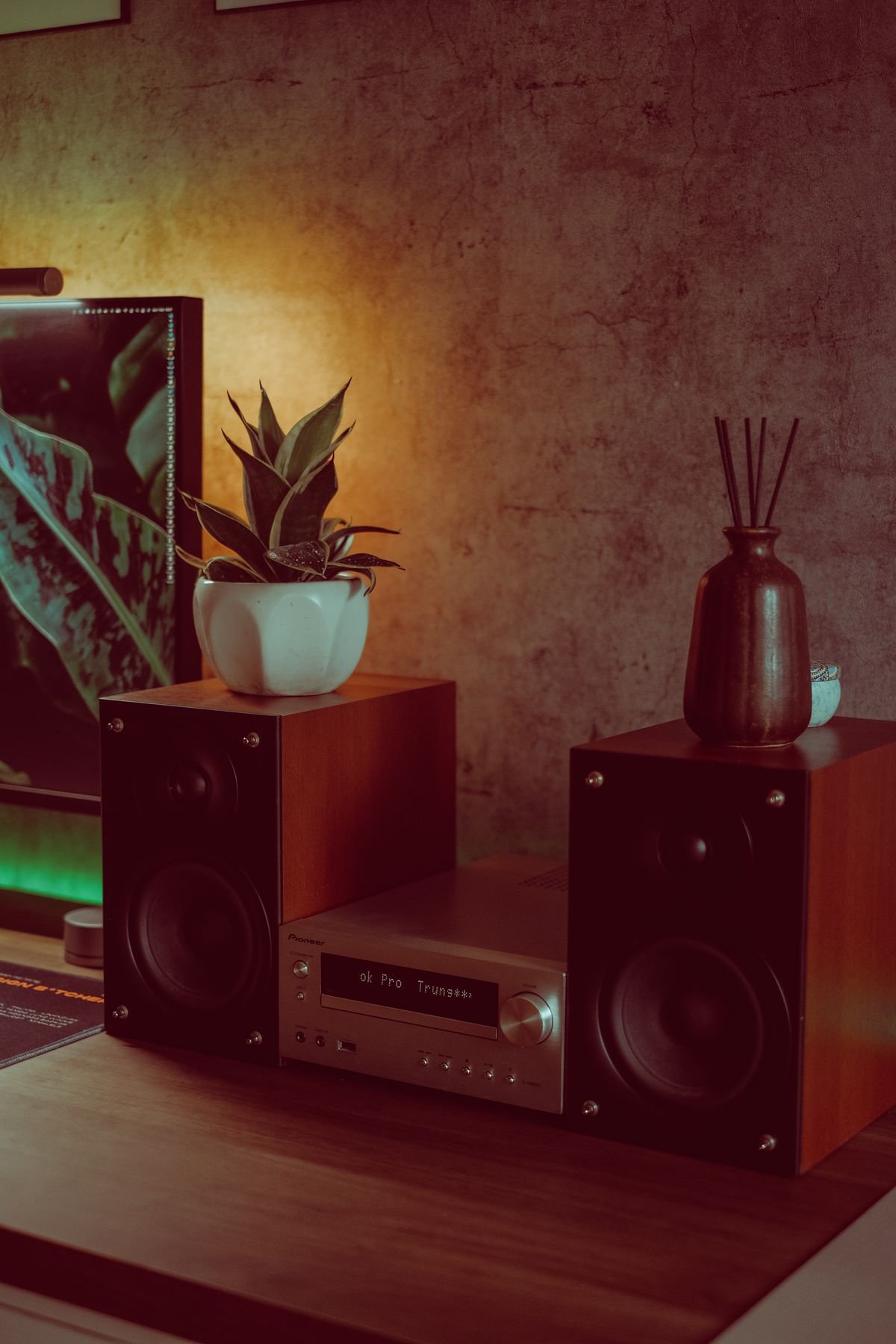
1. Does Music Help Peperomia Grow? The Direct Verdict
The standard influencer answer — “play classical for three hours and watch it thrive” — fails the mechanism test.
Plants do not parse melody, harmony, or lyrics. When growth differences appear in music trials, confounders usually explain them: unequal light, uneven watering, temperature drift, small sample size, and the fact that people who play music for plants often check them more carefully. The Elisabeth C. Miller Library summary of botanical consensus is blunt: no botanist has demonstrated a beneficial music or sound effect on growth that is reliably repeatable and statistically significant under proper controls.
Opinion held here: classical-versus-rock playlist advice is not horticulture. It is folklore dressed as protocol. Vibration biology is real; musical taste in plants is not.
2. Where the Music-and-Plants Myth Came From
Three sources still feed search results:
- 1960s–1970s growth claims (e.g. classical or raga exposure, violin sonatas over fields) reported large yield jumps without modern environmental locking.
- The Secret Life of Plants (1973) popularised plant “consciousness” narratives that professional botanists rejected as evidence.
- Dorothy Retallack’s The Sound of Music and Plants — classical/jazz “good,” rock “bad” — became internet canon despite weak design and fringe framing (reviewed as a case study in bad science by horticulture educators).
Television and lifestyle sites sometimes cite MythBusters-style greenhouses where death metal outperformed silence. That is entertainment methodology, not a Peperomia dosage table. Genre rankings that reverse between studies are a warning sign: if the independent variable is “playlist,” the experiment is measuring vibration spectra plus uncontrolled room effects — not plant aesthetics.
Idaho State’s CETRAIN overview reaches the same practical end point: music alone will not make plants healthy; watering and fertilising dominate outcomes (dubious music–plant connection).
This is a documented-versus-undocumented problem, not just a music one. The genus's own naming history is a matter of herbarium record — Ruiz and Pavón formally published Peperomia in 1794, a dated, citable event covered in the genus history guide — while Retallack's playlist rankings have no comparable paper trail. The same gap separates mechanism from folklore in the species' spiritual symbolism: both are sincerely held, and neither is evidence of a growth effect.
3. What Science Does Support: Vibration, Not Melody
Modern work separates phytoacoustics (sound vibration as a physical stimulus) from music appreciation.
Scientific American summarises the credible line: plants lack ears, yet some species detect ecologically meaningful vibration — for example, water-related cues in root-foraging contexts, or the mechanical signature of chewing. A 2014 Arabidopsis study showed leaves can distinguish caterpillar feeding vibrations from wind-like vibration and upregulate chemical defences accordingly (Frontiers in Plant Science / Appel et al.; also indexed on PubMed).
That paper is about defence signalling, not stomatal “concert mode” for houseplants. Stretching it into “play lo-fi to open Peperomia stomata for faster growth” overclaims the evidence. Possible secondary effects discussed in broader sound-wave reviews (germination priming, hormone shifts under specified frequency and sound-pressure level) remain species-, dose-, and setup-dependent — and almost never validated on P. obtusifolia in a living room.
Mechanism that is fair to state: air-borne vibration can deform tissues enough to engage mechanoreceptors and change signalling. Mechanism that is not fair: Peperomia prefers Mozart.
For a semi-succulent with a waxy cuticle and moderate stomatal density, any stimulus that truly increased stomatal aperture would also raise transpiration. That is a water-budget problem, not a free growth bonus — especially under dry indoor RH below 40%. Do not run continuous high-volume audio next to the pot as a DIY “growth hack.”
4. Talking to Plants: CO2 vs Caregiver Attention
Two mechanisms get conflated:
- Breath CO2. Exhaled air is CO₂-rich relative to ambient ~400 ppm, but a brief lean-in dilutes instantly in a ventilated room. It is not a substitute for photosynthesis drivers (photon flux and leaf area).
- Attention. People who talk to plants notice pests, dry substrate, and etiolation earlier. Growth “from talking” is often growth from better observation.
Low-frequency voice vibration is a weak mechanical stimulus compared with wind or continuous appliance noise. If you enjoy talking to the plant, keep doing it — then verify progress with a lux reading and pot weight, not with anecdotes.
5. Extra Topics Most Music Posts Skip
Caretaker confound. Any home trial that changes music without locking light, water, and temperature is uninterpretable. If you want a personal test, run matched pots at the same window, same mix, same water schedule, music vs silence, for ≥8 weeks — and expect noise, not revelation. Confirm both pots are actually P. obtusifolia and not a similar-looking relative before you start; the identification guide covers the traits that separate them.
Noise as stress, not soundtrack. Continuous traffic-like noise has reduced growth in some herb studies. Thigmomorphogenesis — growth alteration under repeated mechanical disturbance — is a real developmental response, and it acts on the same turgor-pressure stems described in the petiole anatomy guide: a structure held rigid by water pressure rather than wood responds to sustained mechanical stress differently than a woody stem would. Chronic high dB near the crown is more risk than benefit.
What to prioritise instead. For P. obtusifolia, growth rate tracks light and water far more than audio:
- Light: 2,000–4,000 lux (window direction or grow light vs sun)
- Water: top 2–3 cm dry before irrigating (watering guide)
- Climate: ~18–24 °C days; 40–60% RH
Playlist hours do not correct sub-800 lux etiolation or five-day root anoxia.
Conclusion
Does music help peperomia grow? Treat the honest answer as a limit, not a tip: vibration sensing exists; musical preference does not; playlist growth claims fail controlled horticulture. Spend calibration time on lux and dry-down, keep speakers at a respectful distance if you play audio for yourself, and leave genre folklore off the care card.
Care FAQ
Does music actually help Peperomia grow?
There is no reliable, replicated evidence that Spotify-style playlists raise Peperomia growth rates once light, water, temperature, and substrate are controlled. Plants can detect some vibrations, but that is not the same as musical taste or a proven indoor growth protocol.
What is the best music for plants?
None is established for horticulture. Early classical-vs-rock claims come from poorly controlled experiments and popular books, not from a consensus protocol with specified frequency, SPL, distance, and duration for Peperomia obtusifolia.
Can plants hear music?
Plants have no ears or auditory cortex. They can sense mechanical vibration through mechanoreceptors. Ecological cues studied so far include insect chewing sounds and, in some work, water-related vibration — not melody appreciation.
Does talking to my Peperomia help it grow?
Any small CO2 puff from breath near leaves is transient in a ventilated room. The stronger effect is usually human: people who talk to plants tend to check them more often. Measure care outcomes by lux, dry-down, and RH — not conversation minutes.
Can loud music or noise hurt houseplants?
Continuous high-level noise is a mechanical stressor in some crop and traffic-noise studies and can suppress growth relative to quieter controls. Keep speakers away from the pot rim; do not use volume as a substitute for environmental control.
What matters more than music for Peperomia growth?
2,000–4,000 lux at the leaf, a dry-down watering trigger (top 2–3 cm dry), 18–24 °C days, and 40–60% RH. Sound is at best a secondary curiosity after those thresholds are met.