
Peperomia Grow Tent: Controlled Light, VPD & Airflow
A peperomia grow tent works when you hold leaf light at 2,000–4,000 lux, keep vapour pressure deficit near 0.8–1.2 kPa (typically ~20–24 °C and 50–60% RH), and force air across the canopy so axils stay dry. The tent’s value is control — not higher humidity for its own sake. Peperomia obtusifolia is a semi-succulent facultative epiphyte; sealed, stagnant, fern-level RH is the common failure mode.
Fixture spectrum and board choice belong in the grow lights guide. Bag/dome rooting belongs in the humidity tent propagation guide. This article is the enclosed vegetative environment only.
| Factor | Tent target | Risk if ignored |
|---|---|---|
| Leaf light | 2,000–4,000 lux (~80–150 µmol/m²/s) | Etiolation or bleaching |
| Day temperature | 18–24 °C | Slow growth / heat stress |
| RH (with airflow) | ~50–60% | Tip crisp (<40%) or leaf spot (>75% stagnant) |
| VPD | ~0.8–1.2 kPa | Closed stomata or pathogen risk |
| Photoperiod | 10–12 h | Stretch from darkness, not from “more hours” alone |
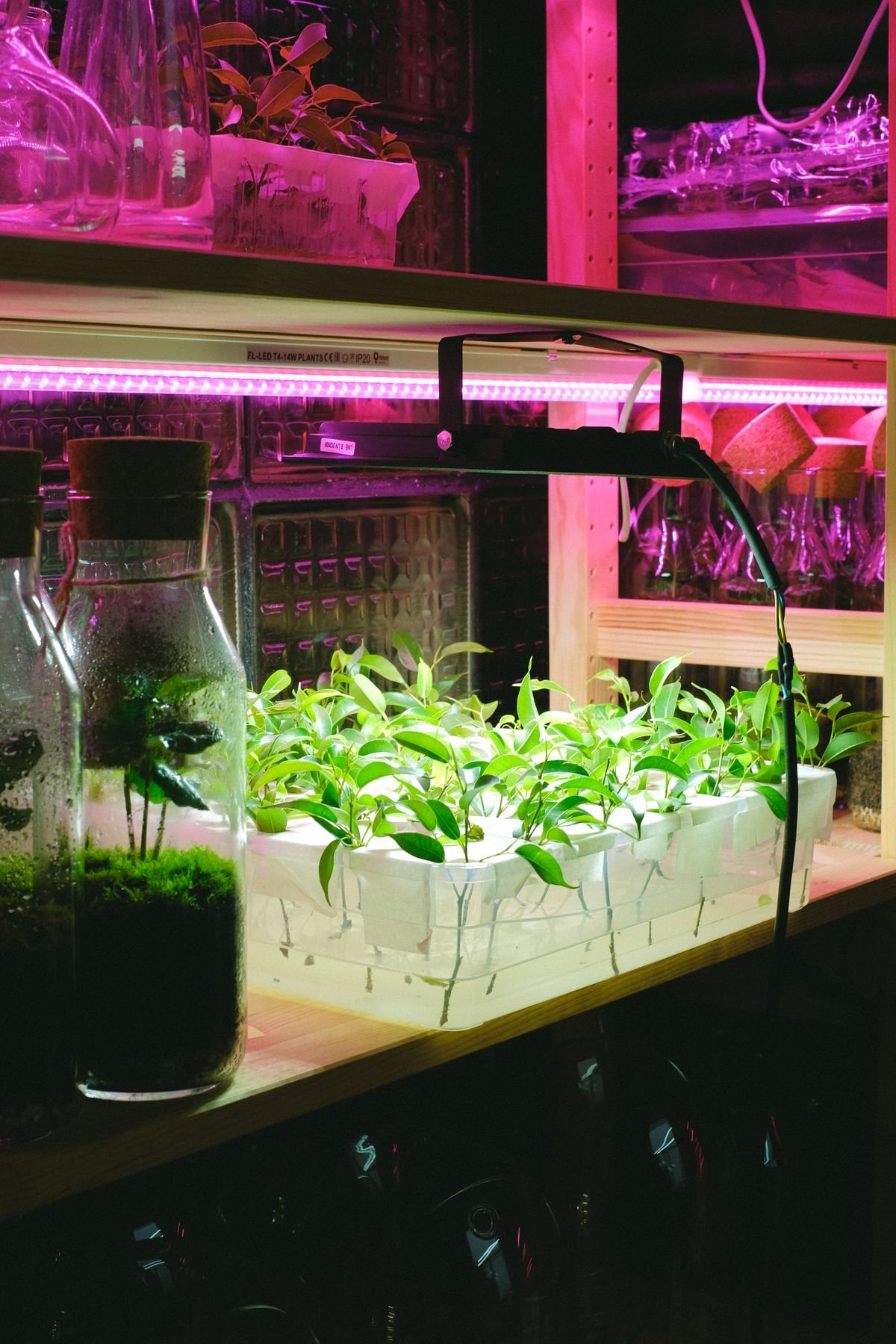
1. Peperomia Grow Tent: When It Is Worth Using
Windowsills fail when winter DLI collapses, AC dries the room, or the only bright spot is an unfiltered west beam. A tent shrinks the controlled volume so a small humidifier, exhaust fan, and LED can hold setpoints without conditioning the whole flat (AC impact on rooms).
It is not required for species survival. NC State Extension and the RHS profile describe ordinary indoor culture — the general light requirements guide and best window direction guide cover what a well-chosen windowsill can achieve without any tent at all. Use a tent when you need repeatable lux and RH — variegated cultivars, winter production, or rooms that cannot hold 40–60% RH.
Opinion: Copying cannabis “veg at 70% RH / 18-hour lights” into a peperomia grow tent is the wrong template. Match understorey physiology and site thresholds, not flowering schedules.
2. VPD Before “More Humidity”
Vapour pressure deficit is the drying pull of the air — the gap between saturation vapour pressure at leaf/air temperature and the actual vapour pressure. RH alone misleads: the same 55% RH at 18 °C and at 26 °C produces different VPD and different stress.
- Too low VPD (air nearly as wet as the leaf): transpiration slows; nutrient flow and gas exchange weaken; stagnant films in axils favour pathogens. Site fungal risk rises above ~75% RH with still air (humidity guide).
- Too high VPD (hot + dry): leaves lose water faster than roots replace it; tip crisp; stomata close and growth stalls. Heat-stress threshold on this site includes >28 °C with RH <40%.
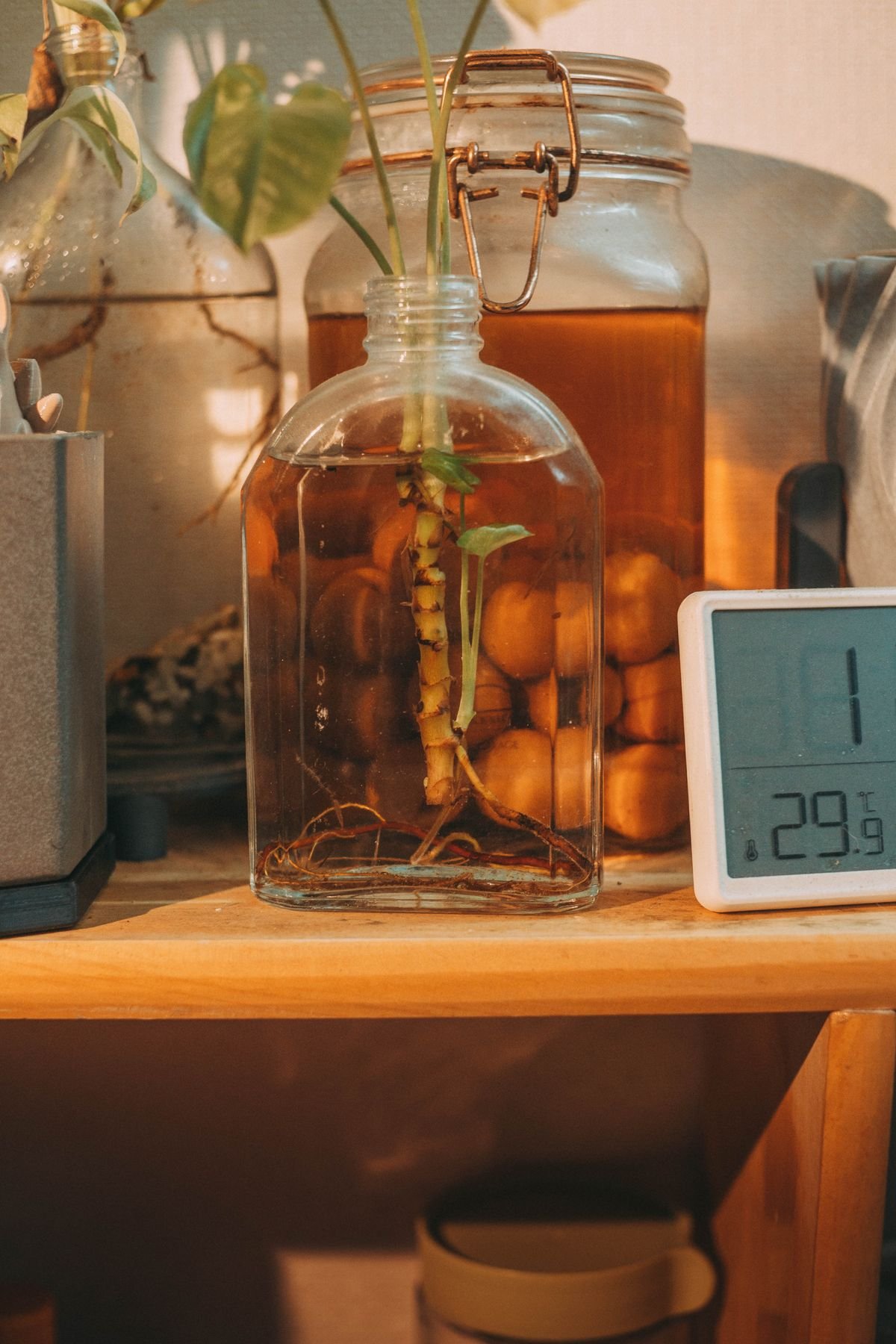
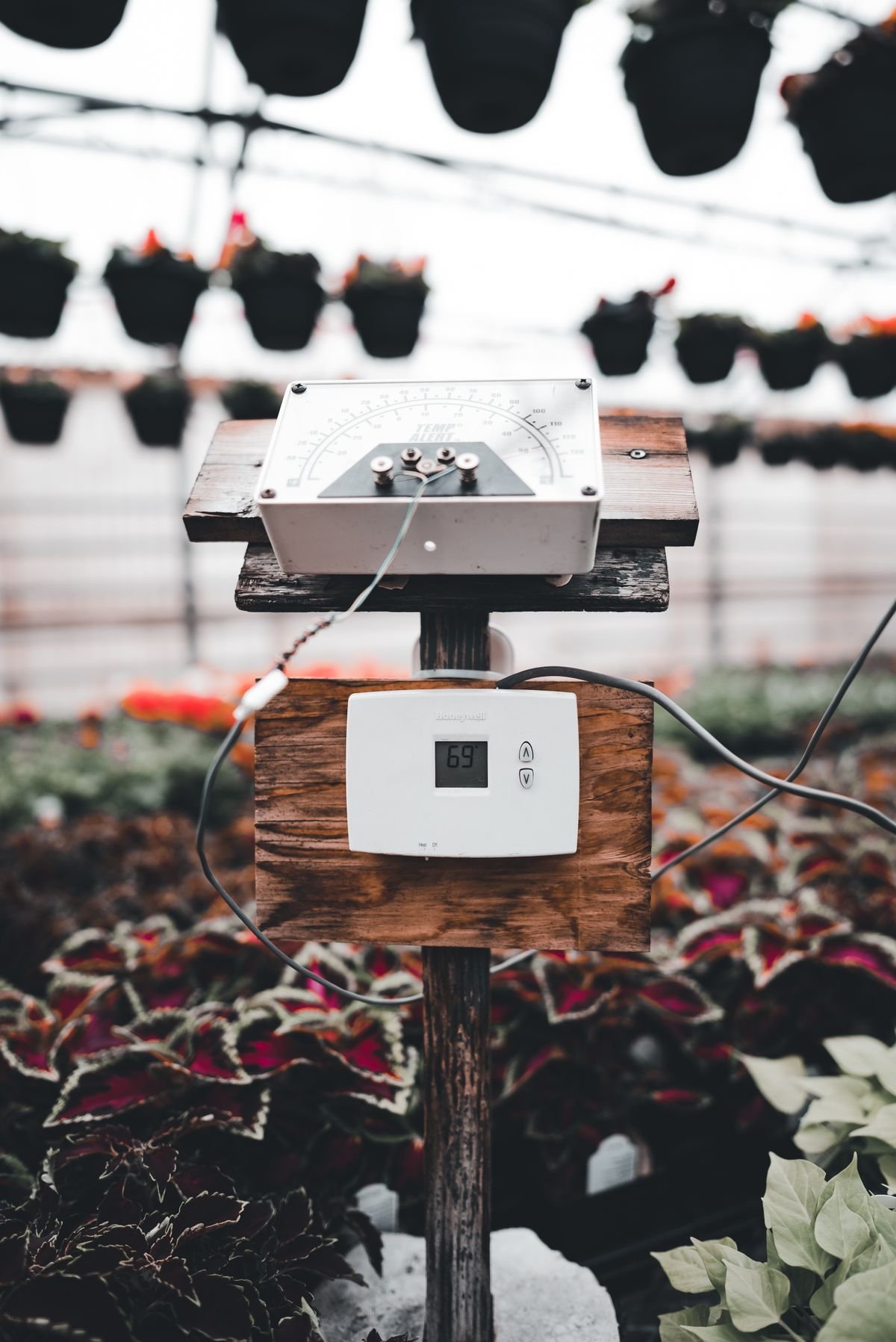
Practical tent band for vegetative P. obtusifolia: ~0.8–1.2 kPa, usually landing near 50–60% RH at 20–24 °C. Measure temperature and RH at canopy height with lights on — LED heat raises local VPD even when the tent floor feels cool.
3. Light in a Peperomia Grow Tent: Lux First
Drive photosynthesis with 2,000–4,000 lux at the upper leaves. Under common white LEDs that maps roughly to 80–150 µmol/m²/s PPFD — aligned with the site grow-light range, not high-PPFD crop recipes. Measure at the leaf (lux meters); reflective walls raise lower-canopy light but do not replace hanging height.
Keep leaves warm, not hot, under the fixture. Raise or dim if tissue bleaches. Photoperiod: 10–12 hours is enough for vegetative growth; stretching is usually intensity deficit, not a missing 18-hour clock (Illinois houseplant lighting).
Variegated cultivars need the upper end of the lux band — less functional chlorophyll means the same PPFD delivers less usable energy. If new growth reverts or pales while green siblings stay compact, raise intensity before raising RH. Insufficient intensity in a tent produces the same stretched, leggy growth a dim windowsill does — a tent does not exempt the plant from the same etiolation threshold that applies everywhere else.
4. Airflow: The Rule That Prevents Tent Rot
Dense petiole bases trap moisture. In a closed volume, a quiet humidifier without canopy movement recreates the bacterial leaf-spot / soft-axil failure pattern.
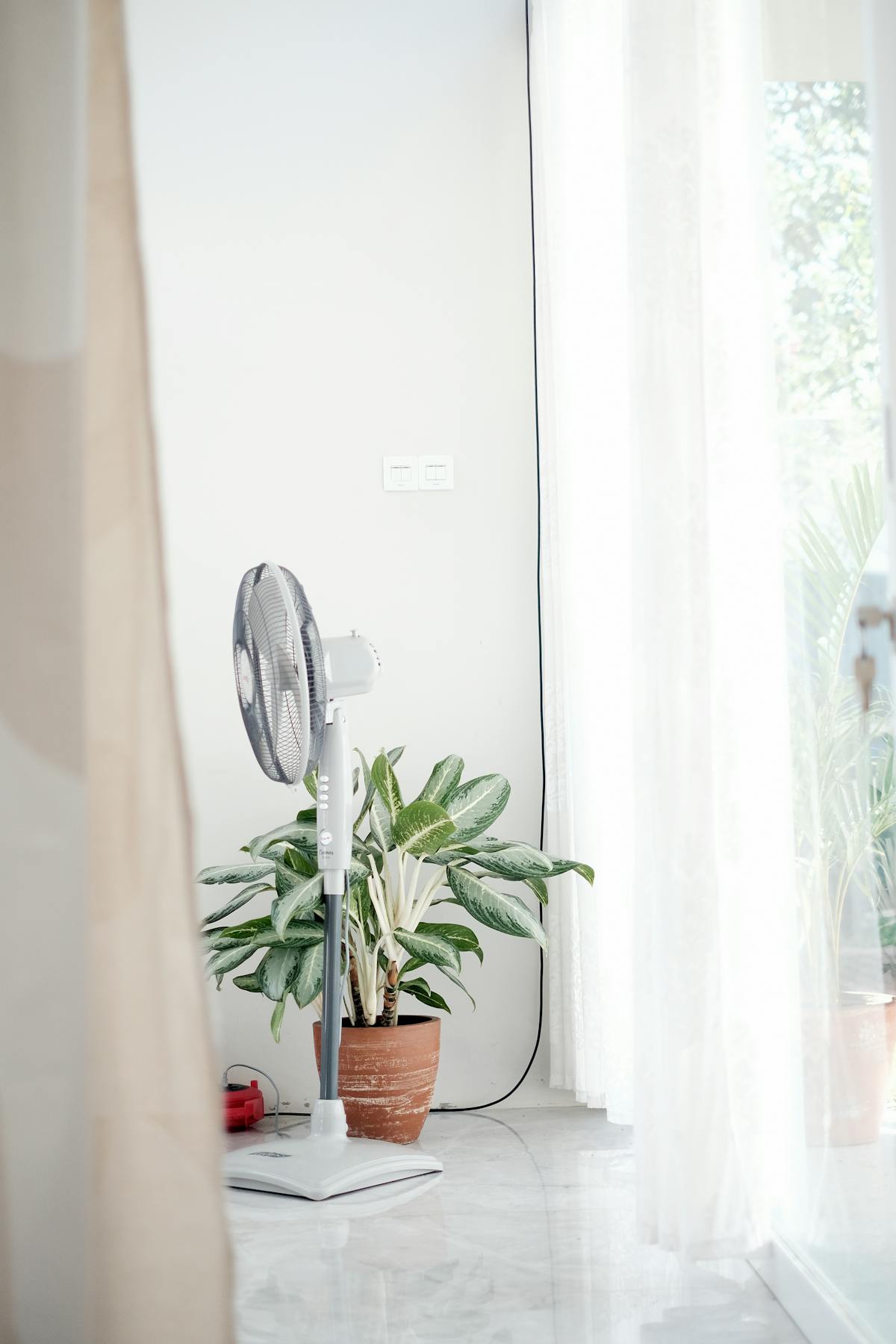
- Oscillating fan — gentle “foliar scrubbing” that thins the boundary layer; leaves should flutter slightly, not thrash.
- Exhaust / intake — exchange roughly one tent volume every 1–3 minutes when lights run, then tune to hold temperature and RH.
- Dry leaf surfaces — if panes or leaves stay beaded for hours, RH is too high or exchange too low. Condensation is a warning, not a goal.
5. Peperomia Grow Tent Substrate and Watering
Higher ambient RH slows pot dry-down. The same 50/30/20 coir–perlite–bark mix that works in a dry room may stay wet past the ~5-day saturation risk window if you water on a room calendar. Use the site’s free-draining recipe (soil mix), prefer terracotta or well-holed liners, and water only when the top 2–3 cm are dry — often less often than outside the tent.
Recurring pattern. A grower moves a healthy windowsill plant into a humid tent, keeps the old 10-day water schedule, and sees soft stems within three weeks. Light and VPD look fine on paper; the rhizosphere does not. Pot weight and the finger/skewer test override the humidifier’s RH display. Bottom-watering still needs a full drain — standing saucers in a warm tent accelerate anoxia.
6. Extra Topics Most Tent Guides Skip
Not a propagation dome. Cuttings under a sealed bag need near-zero VPD briefly; established plants need open stomatal economics and pathogen control. Do not leave mature plants in a fogged mini-greenhouse without exhaust (humidity tent for cuttings).
Acclimatise out. Moving a tent-grown plant to a dry, dim room causes tip burn and stretch. Step RH down and lux toward the destination over 7–14 days before permanent relocation.
Cleanliness. Enclosed spaces concentrate fungus-gnat pressure if the top centimetre stays wet; prefer dry-surface watering habits and quarantine new stock.
Conclusion
Run a peperomia grow tent as a measured microclimate: 2,000–4,000 lux, ~0.8–1.2 kPa VPD, 10–12 h photoperiod, and continuous canopy airflow. Skip cannabis humidity folklore. When those four stay in band, the tent outperforms a chaotic windowsill; when they do not, it only concentrates the same failure modes in a smaller box.
Care FAQ
Can I grow Peperomia obtusifolia in a grow tent?
Yes. A tent stabilises temperature, RH, and photoperiod so leaf lux and vapour pressure deficit stay in band year-round. It is optional, not required — most specimens grow well on a measured windowsill. Use a tent when ambient rooms are too dry, dark, or drafty to hold targets.
What VPD should I use for Peperomia in a tent?
Aim for about 0.8–1.2 kPa during vegetative growth, which usually means roughly 20–24 °C with RH near 50–60%. Below ~0.8 kPa (very humid, cool air) transpiration and disease risk both worsen if air is stagnant. Above ~1.5 kPa with low RH, leaves tip-crisp and stomata close.
How much light does Peperomia need in a grow tent?
Target 2,000–4,000 lux at the leaf (roughly 80–150 µmol/m²/s PPFD under typical white LEDs). Hang fixtures so canopy leaves stay cool to the touch; raise the light or dim if bleaching appears. Measure at the leaf, not at the tent wall.
Is high humidity dangerous for Peperomia in a closed tent?
Sustained RH above ~70–75% with still air raises fungal and bacterial leaf-spot risk in leaf axils. Pair any humidity bump with oscillating canopy airflow and timed exhaust. Peperomia is a semi-succulent understorey plant — it is not a fern that needs 80% RH.
How often should the tent air exchange?
As a starting rule, move roughly one full tent volume of air every 1–3 minutes via intake/exhaust when lights are on, plus a gentle oscillating fan across the canopy. Exact CFM depends on tent size and heat load — adjust until leaf surfaces stay dry and canopy temperature stays in the 18–24 °C day band.
Is a grow tent the same as a humidity tent for cuttings?
No. A humidity dome or bag for unrooted cuttings deliberately collapses VPD so tissue does not desiccate before roots form. A grow tent for established plants needs measurable VPD, light, and continuous airflow. See the humidity-tent propagation guide for cuttings.