Increase Peperomia Variegation: 3 Proven Light Rules
Increase peperomia variegation only in the sense of holding and expressing an existing chimera — you cannot spray or feed white tissue into an all-green plant. For Peperomia obtusifolia cultivars such as 'Variegata', 'Albo-Marginata', and 'Alba', raise leaf-surface light into about 2,500–4,000 lux (roughly 30–40% above green-form needs), prune solid-green reversions back to the last variegated node, and keep nitrogen moderate (variegation; chimera; species context: NC State).
Deep meristem competition belongs in the reversion guide; photon-budget detail in variegation and light. This article is the practical three-lever protocol.
| Lever | Target | Failure mode |
|---|---|---|
| Light | ~2,500–4,000 lux at leaf | <~2,500 lux → progressive greening of new leaves |
| Pruning | Remove solid-green shoots | Green axis outgrows and shades the chimera |
| Nutrition | Dilute balanced feed | High-N flush favours green vigour |
1. Increase Peperomia Variegation: What You Can and Cannot Change
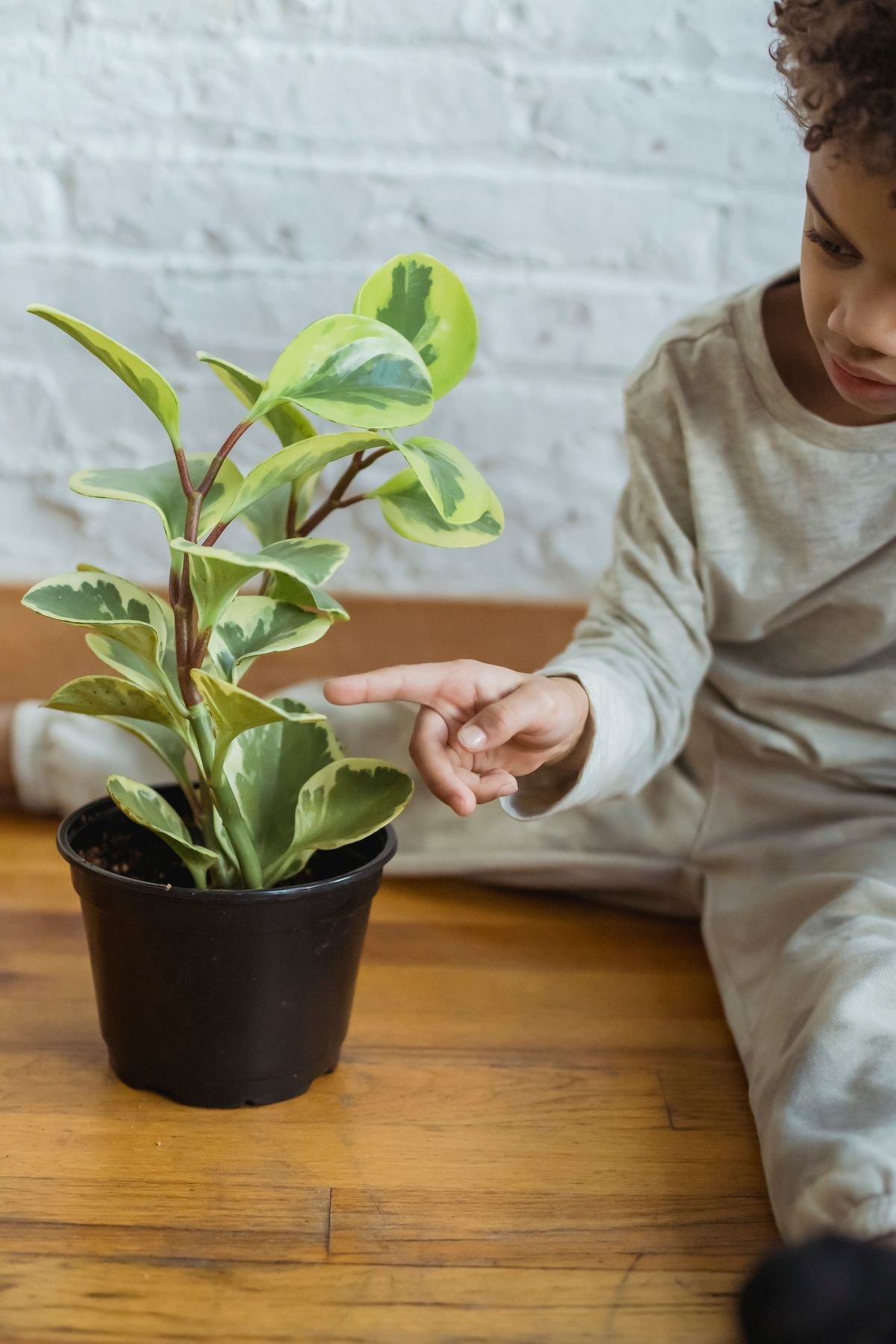
Chimeral variegation is organised layers in the shoot tip: mutated sectors without functional chlorophyll sit beside green photosynthetic tissue. White and cream patches carry no chloroplasts and cannot photosynthesise at all; they survive purely as heterotrophic tissue, kept alive by sucrose the green tissue produces and shunts to them through the phloem. A leaf that is roughly half white is not simply "half as productive" in a strict sense, but it is carrying a real, ongoing energy cost that the green tissue alone has to cover — which is the direct reason variegated cultivars grow more slowly than the solid-green form and need more light to sustain that subsidy. The same lack of chlorophyll and protective pigment also leaves white tissue more vulnerable to sunburn and pest damage than green tissue on the same leaf, so variegated cultivars scorch and show pest damage on their cream sections first even under conditions the green form tolerates without issue.
Occasionally a stem produces leaves that are entirely white rather than patterned — an "Albo" sport. This tissue is completely dependent on the rest of the plant for sugar, and the phloem transport cost of supplying a distant all-white branch often exceeds what the plant can sustain long-term; these stems commonly brown and die back on their own. Pruning a fully white stem back to a patterned or green node is usually the better long-term choice for the plant's overall vigour than leaving it to fail on its own timeline.
Opinion: Variegated Peperomias need more light than green forms, not less. “Keep variegates in shade so white does not bleach” confuses harsh unfiltered sun damage with low-light reversion.
You cannot recolour an already-green leaf. Success is judged on new leaves after conditions improve — often weeks to months. If every new leaf is solid green for a full growth flush after you raise light and prune, treat that axis as lost chimera and propagate from remaining patterned nodes instead of waiting for a miracle flush.
| Goal | Possible? | How |
|---|---|---|
| Stronger cream on new leaves of an existing chimera | Yes, often | Lux + prune + dilute N |
| More white on already-green mature leaves | No | Physiology is fixed at expansion |
| Turn an all-green plant into 'Alba' | No | Wrong genotype / no organised chimera |
| Keep a cream-heavy plant from reverting | Partially | Upper lux band + ruthless green-shoot removal |
2. Three Proven Light Rules to Increase Peperomia Variegation Expression
Rule 1 — Measure lux at the leaf. Site green optimum is 2,000–4,000 lux; variegates run toward the upper end / about 30–40% higher demand. Below ~2,500 lux, new growth commonly greens (filtered vs indirect). Phone apps and cheap meters are good enough to catch “window looks bright but leaf reads 800 lux.”
Rule 2 — Prefer bright indirect / filtered intensity. East or sheer-filtered south/west often works; unfiltered hot afternoon sun can scorch cream sectors that lack protective pigment density. Direct-sun tissue kill for this species sits at extreme unfiltered levels in site stats — still treat cream patches as more burn-prone than green tissue. Rotate the pot every 1–2 weeks so one flank does not sit in a permanent shade pocket.
Rule 3 — Fix winter DLI. Short days drop indoor lux; add a full-spectrum lamp if the meter falls below the variegate band for weeks. A lamp that holds leaf-surface lux in band for 10–12 hours beats a “bright” room that only peaks at noon.
3. Prune Reversions and Propagate the Right Tissue
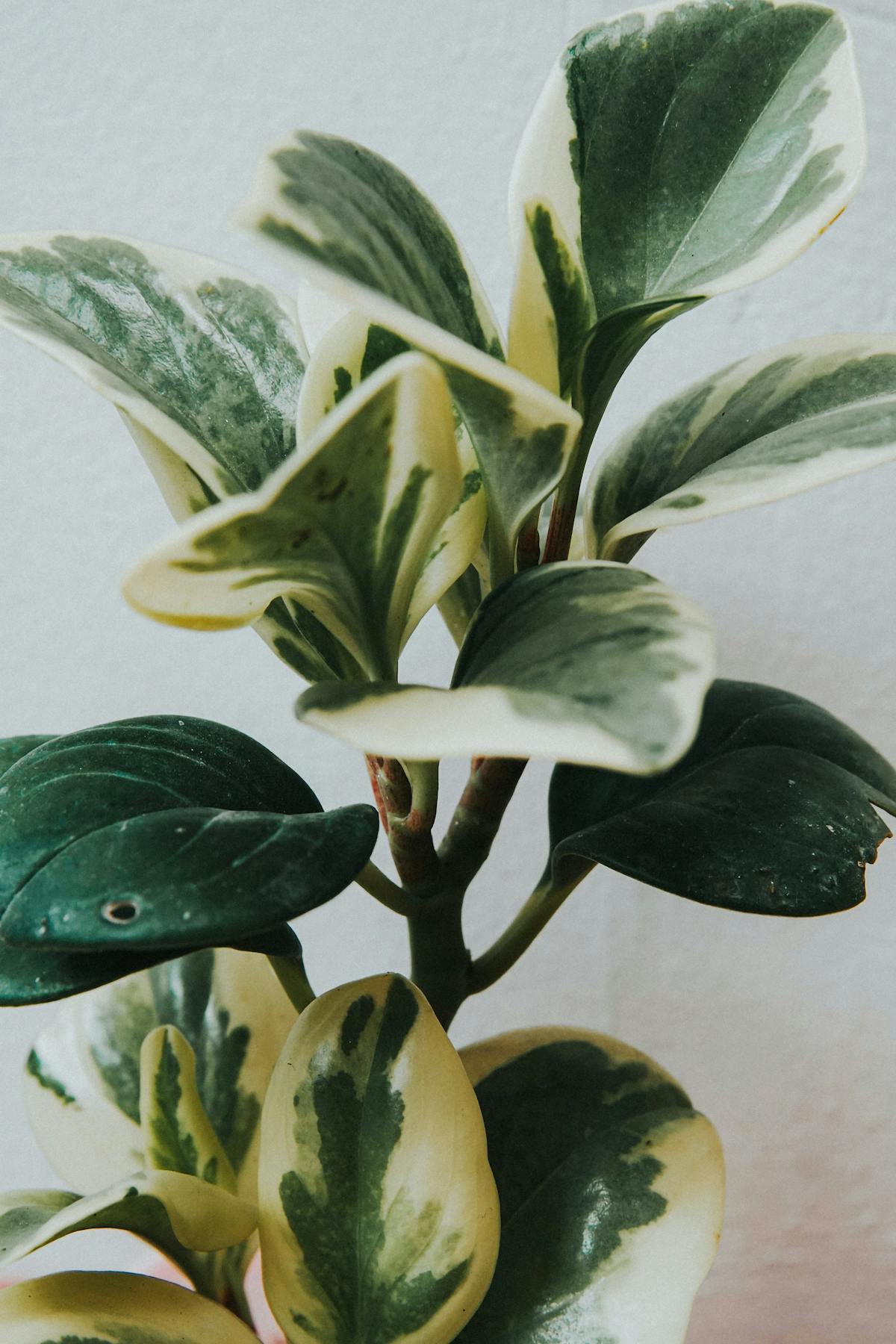
When a shoot emerges fully green, the green lineage has captured that apex. Cut back to the last clearly variegated node so an axillary bud with chimeric layers can push (prune guide). Leaving the green leader lets it outcompete patterned stems for light and assimilate.
Propagation. Take stem cuttings that include at least one variegated node. Leaf cuttings of these chimeras regenerate all-green plantlets in the large majority of cases (variegated leaf guide). Discard fully green cuttings if your goal is patterned stock; they root well and then sell you false hope.
A recurring pattern: new growth greens over months while older cream leaves remain. That is light-driven meristem bias, not “the plant is dying” — raise lux and prune green shoots; do not starve the plant expecting white to return on old tissue. Low light produces a second, related symptom worth ruling out at the same time: elongated, stretched internodes. If the plant is both greening and visibly stretching toward the light source, the light deficit is more severe than a variegation problem alone — see the leggy-growth guide for correcting that structural issue alongside the light increase described here.
Timeline to judge results. After correcting lux and removing green leaders, wait for 2–4 new leaves before calling the protocol a failure. One pale or mottled flush is progress; a solid-green flush after correction means that meristem has already lost the chimera layers.
4. Extra: Nitrogen, Cultivar Extremes, and Honest Limits
Use a dilute balanced fertiliser in spring–summer only (fertilizer). High-nitrogen formulas accelerate green cell division without creating white tissue. Skip “bloom boosters” and any product marketed as a variegation enhancer — there is no credible home chemistry for that claim.
Extremely cream-heavy cultivars ('Alba', heavy 'Marble') need the upper lux band more urgently — they have less functional green area (RHS species profile; Missouri Botanical Garden). Expect slower absolute growth than green obtusifolia; that is the photosynthetic tax of cream tissue, not a nutrient deficiency. Confirming the actual light source matters here too — a bright window with the right direction or a properly positioned grow light makes the difference between hitting the variegate lux band and merely feeling bright to the eye; see the general light requirements guide for the full window-and-grow-light framework this article's lux targets sit within.
There is no reliable home hormone or “variegation booster” product. Stability is light + selection pressure (pruning/propagation), not a bottle. If the plant arrived weakly patterned and every node has already greened, buy or trade for a strongly chimeric specimen rather than trying to coerce pigment that the meristem no longer carries.
Conclusion
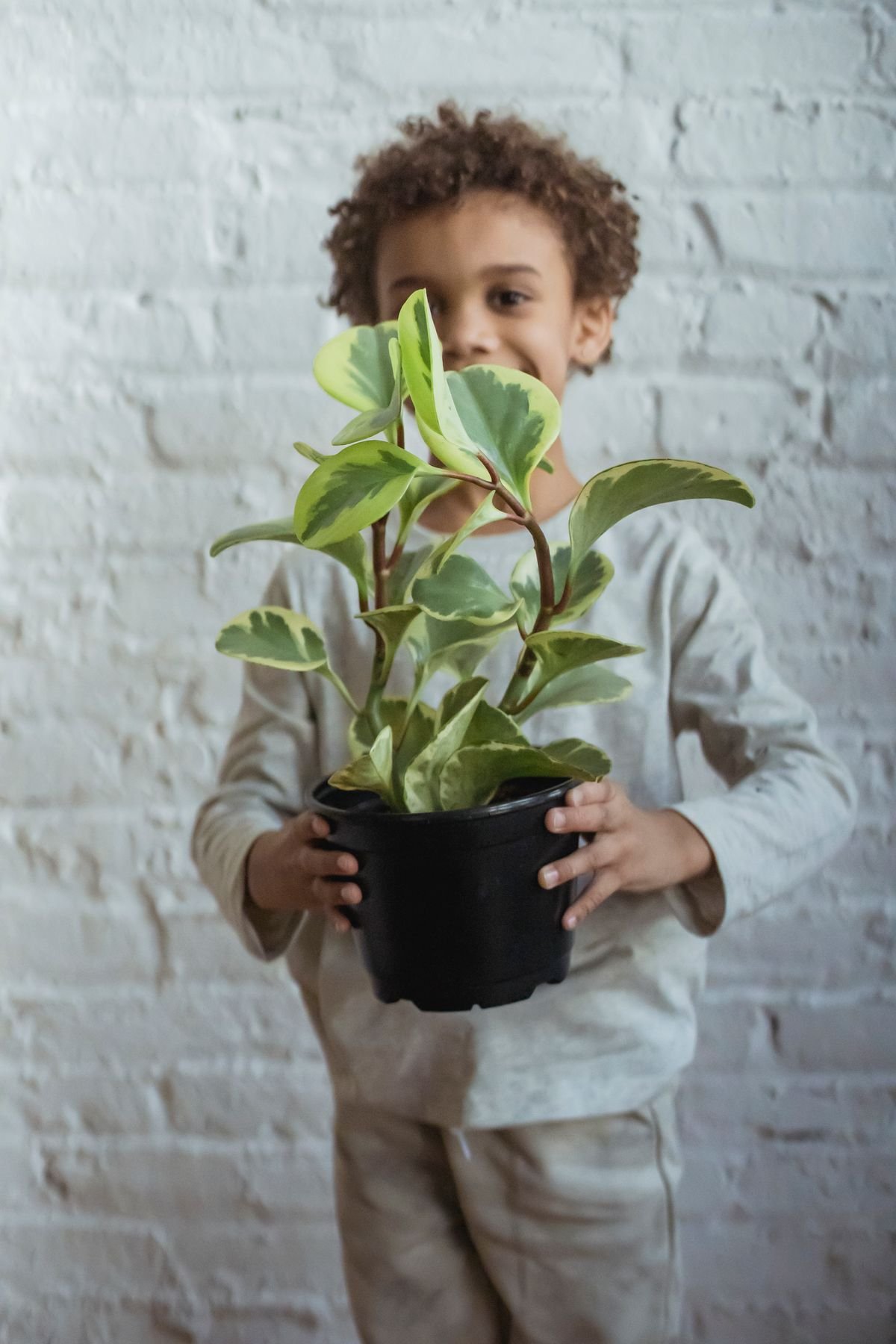
Increase peperomia variegation by protecting the chimera you already have: lux in band, green shoots removed, nitrogen restrained, variegated nodes for cuttings. White tissue is expensive biology — pay the light bill, or the plant will economise by going green.
Care FAQ
Can I increase the white variegation on my Peperomia?
You cannot chemically invent new chimeral white tissue. You can improve expression and stability of an existing chimera by holding 2,500–4,000 lux at the leaf, pruning solid-green reversions promptly, and keeping nitrogen moderate.
Why is my variegated Peperomia turning all green?
Reversion: under light deficit the meristem favours all-green tissue with more chlorophyll. Existing cream leaves do not re-variegate; correct light and prune green shoots so new growth can hold the pattern.
Does more light increase variegation?
More light reduces pressure to revert — that is why variegates need roughly 30–40% more lux than green forms. Unfiltered harsh sun can bleach cream sectors. Aim for the upper indirect band, not desert sun.
Will a green cutting from a variegated Peperomia stay variegated?
No. A fully reverted green stem lacks the organised chimeric layers. Propagate stem cuttings that include a variegated node; leaf cuttings of these cultivars usually regenerate all-green plantlets.
Does fertiliser make variegation stronger?
Not by boosting white tissue. Excess nitrogen can favour fast green growth. Use a dilute balanced feed in active months only.
How long until new leaves look variegated again after I fix light?
Only new leaves can show restored patterning. Expect several weeks to a few months of corrected lux before the canopy reads clearly variegated again.