Peperomia Obtusifolia Toxic to Cats? 3 Critical Facts
Peperomia obtusifolia is not toxic to cats. The ASPCA lists the species — sold as baby rubber plant, pepper face, or American rubber plant — as non-toxic, based on the absence of the toxic principles (such as insoluble calcium oxalate crystals) that make many other common houseplants dangerous. Non-toxic is a specific toxicology classification, though, not a statement that the leaves are safe to eat in quantity or that every plant labelled "peperomia" at a nursery is correctly identified.
What Reliable Sources Say
The ASPCA Animal Poison Control database is the standard reference for pet-plant toxicology in the US, and its listing for Peperomia obtusifolia (under the common name Baby Rubber Plant) states non-toxic to cats, with no toxic principle attributed to the plant. This is a directly verified listing from an authoritative source, not a repeated internet claim without an underlying reference — a distinction worth making, since houseplant safety claims online are inconsistently sourced. For contrast, true lilies (Lilium and Hemerocallis species) can cause acute kidney failure in cats from a tiny exposure, and golden pothos (Epipremnum aureum) is separately ASPCA-listed as toxic due to insoluble calcium oxalate crystals — P. obtusifolia sits in a different, much lower-risk category from both.
Retail plants sold as watermelon peperomia, ripple peperomia, or red-edge peperomia are listed separately by ASPCA, and several Peperomia species appear on its non-toxic list, but confirming the exact species against the database is worth doing rather than assuming every "peperomia-like" nursery label is accurate — see the general toxicity overview for the fuller picture across species and other pets.
What Exposure May Look Like
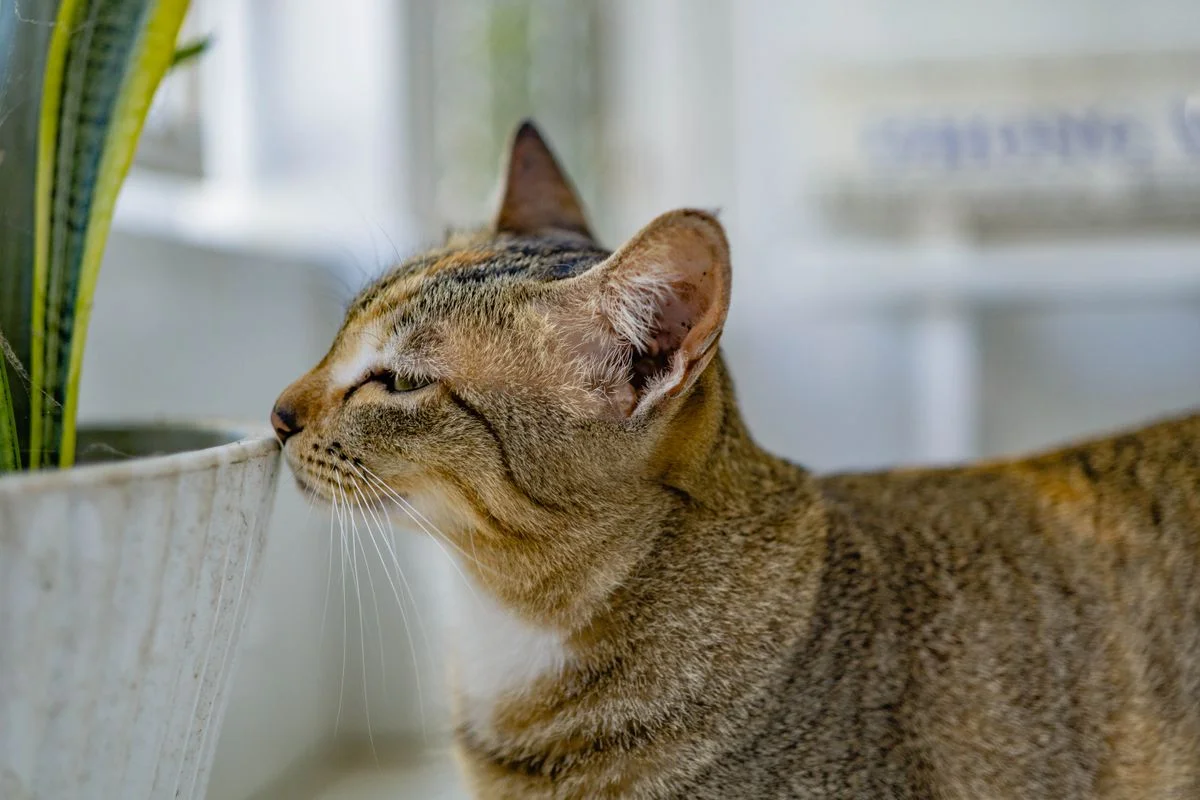
Cats are obligate carnivores, and cellulose-heavy leaf tissue is poorly digested regardless of the plant's toxicity status. A few exploratory bites typically produce no reaction at all. A larger, shredded mouthful can trigger mild, self-limiting vomiting or loose stool — a mechanical digestive response to fibre bulk, not a sign of oxalate or alkaloid poisoning, since this species carries neither. This is a meaningfully different presentation from true toxic-plant exposure: pothos or true-lily ingestion produces oral pain, drooling, or (in the case of lilies) systemic illness, none of which is expected from P. obtusifolia chemistry specifically.
The distinction matters most in a household where several visually similar glossy-leaved plants sit near each other. P. obtusifolia's thick, oval leaves attach singly at each stem node, while golden pothos has heart-shaped leaves and small aerial roots at every node, and the true rubber tree (Ficus elastica) leaks a thick, sticky, milky-white latex when nicked, versus P. obtusifolia's clear, watery sap. If a cat has vomited after chewing an unidentified plant among several lookalikes, confirming which species was actually involved changes the urgency of the response far more than the vomiting episode itself does.
Why Peperomia Is Comparatively Low-Risk Among Common Houseplants
Non-toxic status on the ASPCA database reflects an absence of documented toxic principles specific to this species — no insoluble calcium oxalate raphides of the kind found in aroids like pothos, Philodendron, and Monstera, and no alkaloids or glycosides of the kind found in true lilies or Dieffenbachia. This absence is consistent with the plant's chemistry and defensive strategy generally: P. obtusifolia relies on a thick, waxy cuticle and dense, water-storing leaf tissue as a mechanical deterrent to being eaten, rather than a chemical one — see the leaf anatomy guide for the underlying structure. That mechanical-rather-than-chemical defence is part of why exposure in cats tends toward mild fibre-related digestive upset rather than the oral pain or systemic signs seen with chemically defended houseplants.
What to Do After Exposure
Confirm the plant's identity first, especially if the household has multiple similar-looking plants — "baby rubber plant" is Peperomia obtusifolia (non-toxic), not a rubber tree (Ficus), a different, unrelated plant; the ASPCA lists Ficus benjamina ("Indian rubber plant") as toxic to cats and dogs, and the two are frequently confused due to the shared common name. Remove remaining plant material from reach to prevent further ingestion while monitoring the cat. Watch for mild, brief vomiting or loose stool as the expected reaction to a fibre-heavy meal, without needing to treat it as an emergency on its own. Contact a veterinarian or ASPCA Animal Poison Control — (888) 426-4435, a fee may apply — if vomiting persists beyond a single episode, if the cat shows lethargy or distress, or if there is any doubt about which plant was actually chewed, since a lookalike toxic species is the more urgent possibility to rule out.
Why 'Non-Toxic' Does Not Mean Edible
A non-toxic classification describes the plant's own chemistry, not the safety of everything associated with a retail specimen. Newly purchased plants may carry systemic insecticide residue or a leaf-shine product from nursery treatment, both of which are a separate hazard from the plant itself — washing foliage and considering a substrate change for a recently purchased plant reduces this risk before letting a cat near it unsupervised. Large amounts of any fibrous plant material can also cause mechanical stomach upset or, in an extreme case, a choking risk from a torn-off piece, entirely independent of toxicity. None of this contradicts the ASPCA's non-toxic classification — it simply means "non-toxic" answers the poisoning question, not the general safety-around-pets question.
Safer Placement and Prevention
Redirect rather than rely on chemistry alone. Cat grass (wheat or oat) or a bitter, pet-safe deterrent spray gives a cat something else to chew, which is a more reliable prevention than counting on non-toxic status to make unsupervised access harmless for the plant or the cat's digestion. Elevated placement helps, but account for cats' jumping ability — a shelf that requires no launch point nearby is more effective than a simply "high" surface a cat can still reach by jumping from furniture. A hanging basket positioned away from climbable furniture is a reasonable option for a household with a persistent chewer.
Related Animal-Specific Guidance
This page covers cats specifically. For dogs, see the toxicity to dogs guide; for birds and reptiles, see the birds and reptiles guide; for rabbits, see the rabbit-specific guide, which covers a species the ASPCA database does not directly list. For the broader safety overview across all commonly kept pets, see the general toxicity guide. If the question is whether a person can eat the plant rather than a pet, see is Peperomia obtusifolia edible.
Sources and Review Date
Toxicity classification is sourced from the ASPCA Animal Poison Control database and the ASPCA cats plant list. Species identification reference: Missouri Botanical Garden Plant Finder and NC State Extension. This page does not constitute veterinary advice — contact a veterinarian or poison control centre directly for an actual exposure event. Reviewed and citations verified as of the update date shown above.
Care FAQ
Is Peperomia obtusifolia toxic to cats?
No. The ASPCA lists Peperomia obtusifolia (baby rubber plant) as non-toxic to cats, dogs and horses. It is not classed with insoluble calcium-oxalate irritants such as golden pothos or true lilies.
What should I do if my cat ate a Peperomia leaf?
Expect no systemic poisoning from the plant's own chemistry. Monitor for brief, mild vomiting or loose stool from fibre alone. Persistent vomiting, lethargy, or distress warrants a veterinary call, and confirming the plant's identity matters, since a lily or other toxic lookalike could be the actual cause if the wrong plant was chewed.
Are all Peperomia species safe for cats?
The genus is widely treated as non-toxic to cats across common houseplant species on ASPCA listings, but verify the exact cultivar name against the ASPCA database directly rather than assuming every plant sold under a "peperomia" label is correctly identified.
Is baby rubber plant the same as the toxic rubber tree?
No. Baby rubber plant is Peperomia obtusifolia, family Piperaceae, and is non-toxic. Rubber trees (Ficus, family Moraceae) are a different, unrelated plant, and the ASPCA lists Ficus benjamina ("Indian rubber plant") as toxic to cats and dogs. The shared common name causes real confusion with welfare consequences.