Peperomia Edema: Blisters, Causes and Treatment
Peperomia edema (UK: oedema; this URL keeps edema for search continuity) is a physiological disorder, not a pathogen. Roots absorb water faster than the stomata can release it; turgor pressure ruptures mesophyll cells; the plant seals the wounds with corky suberin. The result is hard, sandpaper bumps — usually 0.5–1 mm, tan to brown — on the underside of older leaves (plant edema overview; Wisconsin Horticulture; UConn oedema factsheet). The University of Illinois RPD 653 lists oedema among the recorded problems of Peperomia.
The short answer: existing scars do not reverse. Restore a transpiration gradient with gentle airflow (fan 1–2 m away, low, 4–6 hours/day), keep humidity at normal household levels rather than damp and still, water in the morning when the top 2–3 cm of mix are dry, keep light at roughly 2,000–4,000 lux, and use a free-draining mix (≥30% aeration by volume). New growth should emerge smooth. White-mark lookalikes (mealybugs, mildew, cystoliths) belong in the white spots guide.
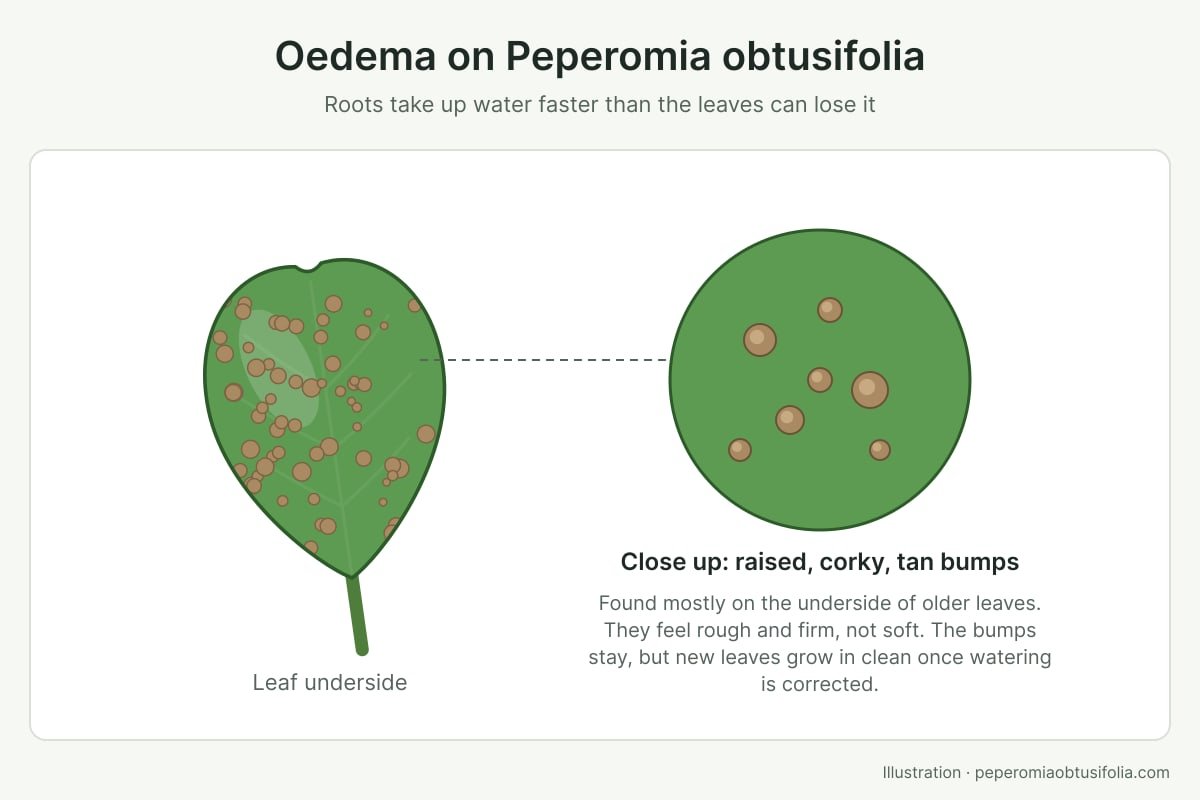
1. What Peperomia Edema Is — and What It Is Not
Peperomia obtusifolia stores water in thick parenchymal tissue — useful in a neotropical understorey dry-down, risky indoors when the exhaust valve (stomata) closes while the root pump stays on (NC State; Missouri Plant Finder). For the broader symptom-first picture beyond this specific hydraulic disorder, see the problems guide.
| Feature | Peperomia edema | Scale | Bacterial leaf spot |
|---|---|---|---|
| Texture | Hard, corky, sandpaper | Waxy turtle-shell | Soft, then necrotic |
| Detachable? | No — tears epidermis | Yes — fingernail lift | Lesion expands |
| Site | Underside, along veins | Random / along veins | Random; spreads days |
| Honeydew | None | Often yes | None |
| Contagious | No | Yes | Yes (wet-leaf entry) |
If marks progress with yellow halos, treat as disease — see brown leaves. Static corky scars that fail the scrape test as insects = edema.
2. Four Critical Myths About Peperomia Edema
Myth 1 — “It is a fungus or pest; spray it.” Chemicals do nothing to ruptured cells. Wrong sprays, including heavy oil films that block stomata, can worsen water-loss failure.
Myth 2 — “Too much water alone caused it.” Wet mix is necessary but not sufficient. The catalyst is low vapour pressure deficit (VPD) at the leaf — stagnant, very humid air, cool lamina — while roots still absorb.
Myth 3 — “Bone-dry cycles prevent bumps.” Drought-then-flood drives aggressive rehydration into contracted tissue. Water when the top 2–3 cm are dry — consistent dry-down, not multi-week desiccation (watering guide).
Myth 4 — “Cut every scarred leaf and it will stop.” Scars are cosmetic seals. Mass pruning shrinks the transpiring canopy and can raise risk. Fix climate; score recovery on new leaves.
Opinion: Naming “overwatering” as the whole story is the wrong diagnosis. Low VPD and stagnant air with active roots are the real gate; drying harder without airflow often recreates the rupture on the next soak.
3. Mechanism: Uptake Exceeds Transpiration
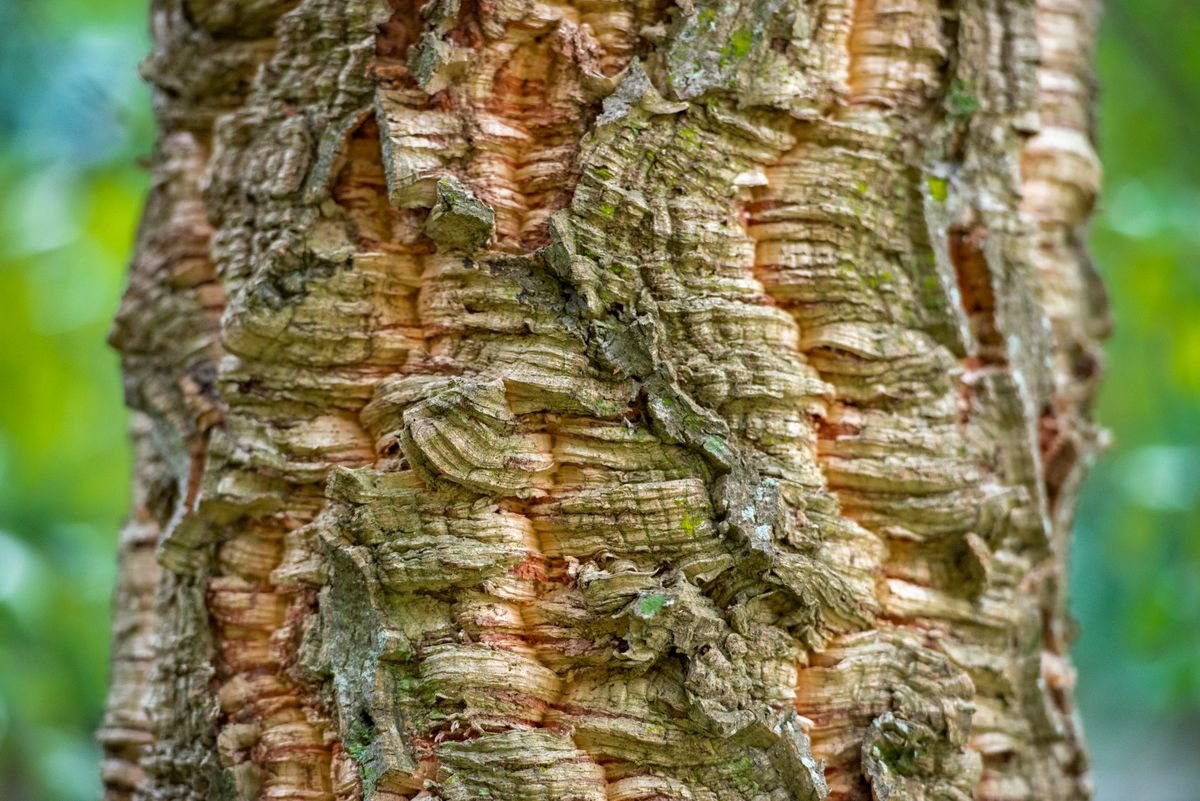
- Substrate wet; roots absorb.
- Cool, humid, or still air suppresses stomatal release.
- Turgor exceeds cell-wall limits → translucent water-soaked patches (early).
- Cells rupture; suberin seals wounds → hard corky bumps (permanent).
Transpiration is the exhaust. Same stagnation that slows calcium delivery to new tips also predisposes mature leaves to edema during a watering event — different tissue, same still-air problem (deformed leaves / calcium delivery).
4. Two Stages of Peperomia Edema
Stage 1 — Water-soaking (about 24–72 hours). Underside patches look darker, soft, smooth — not corky yet. Immediate airflow and lower RH can still decompress cells before rupture.
Stage 2 — Suberisation (after ~72 hours). Hard tan-to-brown sandpaper bumps along secondary veins. Intervention from here only protects future leaves.
5. Winter Cold-Snap Pattern
A frequent case: windowsill plant, recent water, overnight cold (radiator off, single-glazed glass). Stomata close; pot stays warmer; roots keep absorbing; underside blisters appear within 24–72 hours, then cork.
Fix: keep leaf-level nights above ~15 °C; hold days near 18–24 °C; sit ≥50 cm from cold glass; water in the morning. Detail on bathroom high-RH rooms: bathroom placement. RH band: humidity guide.
6. Environmental Fix Protocol for Peperomia Edema
- Airflow. Oscillating fan on low, 1–2 m away, 4–6 hours/day — break the leaf boundary layer. Pebble trays add only a little humidity right around the pot and can worsen surface moisture; do not use them as an edema fix.
- RH. Normal household humidity is fine. Sustained, stagnant, very humid air is the risk.
- Watering rhythm. Top 2–3 cm dry before irrigating; avoid night watering; empty saucers. Soil that stays wet for long periods keeps the root pump pressurised.
- Mix. ≥30% inorganic aeration (soil recipe).
- Light. Roughly 2,000–4,000 lux at the leaf — low light dulls stomatal drive and raises risk in humid rooms.
Cultivar note: thick all-green ‘Jade’-type lamina holds a larger reservoir; variegated zones with less chlorophyll often scar first. Same protocol; variegated forms also need brighter light than the green form.
Conclusion
Peperomia edema is hydraulic failure under low VPD, not a disease to spray and not a reason to strip every leaf. Confirm with the scrape test, leave functional scarred leaves, restore airflow and a stable morning dry-down, and judge success on clean new growth. For white surface marks that wipe off or sit flush in the epidermis, use the white spots differential instead of this blister protocol.
Edema is easy to confuse with other symptoms that share the same low-airflow, high-RH root cause: a plant prone to underside blistering is often also prone to sudden leaf drop once the same stagnant conditions persist, and the same still, cool-leaf environment behind edema can produce downward curling or soft, wrinkled leaves on nearby foliage that never actually rupture. Checking all four together, rather than treating each as an isolated symptom, usually points faster to the shared airflow-and-watering-rhythm fix.
Care FAQ
What are the tiny hard bumps on my Peperomia leaves?
Hard, raised, sandpaper-textured bumps on the underside of Peperomia obtusifolia leaves — usually 0.5–1 mm, tan to corky-brown, often along secondary veins — are peperomia edema (also spelled oedema). They are suberised scar tissue after mesophyll cells ruptured when root water uptake exceeded stomatal release. They are not a pest, fungus, or contagious disease.
Is Peperomia oedema contagious?
No. Edema is a physiological disorder. It cannot spread plant to plant. Several plants in the same low-airflow, high-RH, cool-leaf microclimate may all show bumps at once, which is sometimes mistaken for contagion.
Should I cut off leaves with oedema bumps?
Generally no. Corky scars are permanent but the surrounding lamina still photosynthesises. Heavy pruning reduces canopy transpiration and can worsen the hydraulic imbalance. Remove a leaf only if scarring has destroyed its structure or it is already senescing at the lowest whorl.
How do I tell oedema apart from scale insects?
Fingernail scrape: edema is part of the leaf and will not lift without tearing tissue; scale lifts as a turtle-shell cover. Edema sits along underside veins with no honeydew. Scale and aphids leave sticky residue on leaves below. Broader white-mark differentials (mealybugs, mildew, cystoliths) live in the white-spots guide.
Does high humidity cause oedema?
High RH is a catalyst when airflow is stagnant. In very humid, still air, a humid boundary layer forms at the leaf, stomata close, and turgor has nowhere to exit while roots still absorb. The fix is moving air and normal household humidity, not misting or packing pebble trays against the pot.
Will oedema scars heal if I fix the environment?
No. After rupture the plant seals wounds with suberin. Scabs stay. Recovery is judged on new leaves: smooth, glossy, scar-free after airflow and watering are corrected.
Why did oedema appear right after a cold night?
Cold air closes stomata and stalls transpiration. If the mix was recently watered and roots stay active in a warmer pot, uptake exceeds loss for 24–72 hours and underside cells rupture. Damaged tissue is permanent; stable 18–24°C days and morning watering prevent repeats.