
Aphids on Peperomia: Stop Them in 3 Steps
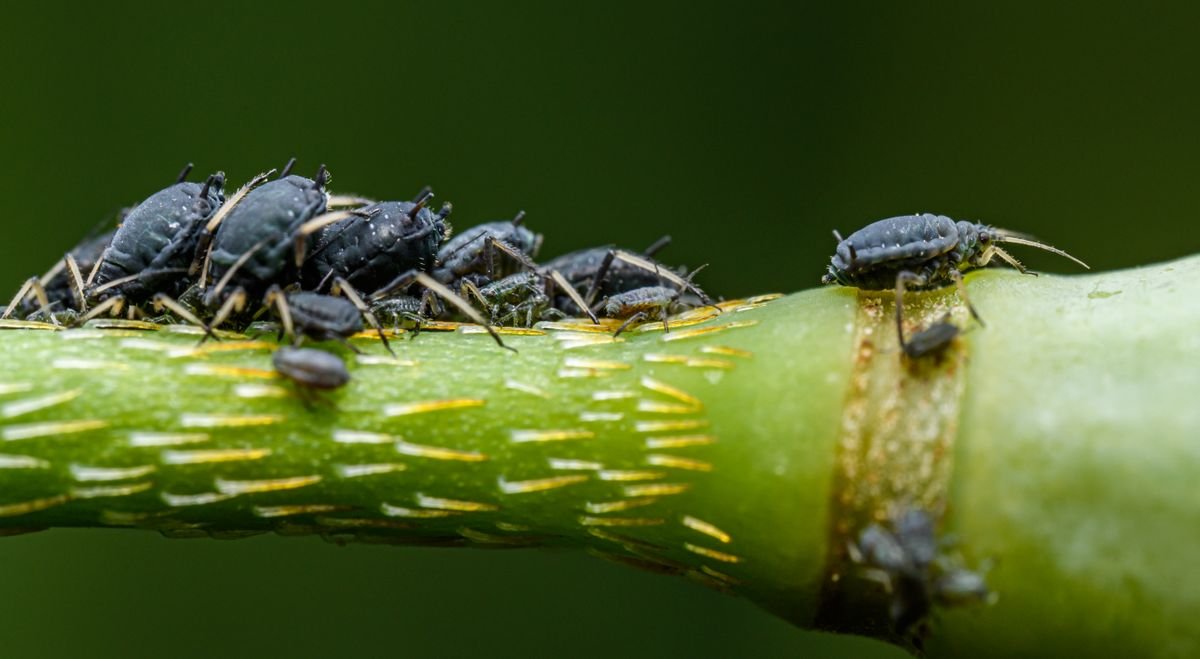
Aphids on Peperomia obtusifolia are soft-bodied phloem feeders that cluster on new shoot tips and leave sticky honeydew behind. The first containment step is isolating the plant and inspecting every neighbouring plant on the same shelf the same day, since aphids spread readily between plants placed close together and honeydew alone is often noticed before the insects themselves.
Identification Checklist
- Appearance: soft-bodied, pear-shaped insects roughly 1-3 mm long, coloured green, yellow, or black.
- Location: shoot apices, the shaded side of tender stems, and the undersides of the youngest leaves — older, thicker obtusifolia leaves are a secondary site at most.
- Feeding damage: distorted, cupped, or puckered new growth is the clearest feeding clue on this species' otherwise smooth, flat leaves.
- Residue: a sticky, shiny honeydew film on leaves below a tip colony, sometimes noticed before any insect is actually spotted.
- Confirming signs: white, flake-like cast skins from recent moulting, and ants patrolling the pot rim, which are often farming the honeydew rather than being a separate pest.
Winged adults (alates) arrive on clothing, through open windows, or on new plants, and indoors, females typically produce live nymphs without mating — populations climb within days rather than months once established.
Lookalikes to Rule Out First
| Sign | Aphids | Lookalike |
|---|---|---|
| Body type | Soft-bodied, pear-shaped, mobile | Mealybugs: cottony white masses, less mobile |
| Residue | Sticky honeydew, sometimes sooty mould | Powdery mildew: dry, dusty white coating that wipes off |
| Feeding sign | Cupped, distorted new growth | Spider mites: fine stippling and webbing, favoured by dry air |
| Damage pattern | Concentrated on soft new tips | Thrips: twisted, silvered new growth with black faecal specks |
Black sooty mould growing on top of honeydew is not a leaf infection in its own right — it is a separate, secondary fungus feeding on the sugary residue, and it clears once the honeydew source is gone. See the dedicated guides for mealybugs, powdery mildew, spider mites, and thrips if the signs above point toward one of those instead.
Isolate and Clean the Plant
Quarantine the affected plant away from others immediately, and inspect every plant on the same shelf or tray the same day, since aphids move readily between neighbouring plants and a colony is often already established on a second plant by the time the first is noticed. Don't share water trays between pots during an outbreak, since standing water can help transfer insects and residue between plants.
Treatment Ladder
Step 1 — Mechanical removal first. Support the thick leaves and rinse tips, axils, and undersides with a firm, lukewarm water stream to physically strip aphids and honeydew off the plant. If colonies are dense on a particular tip, prune it into a bag rather than trying to rinse it clean.
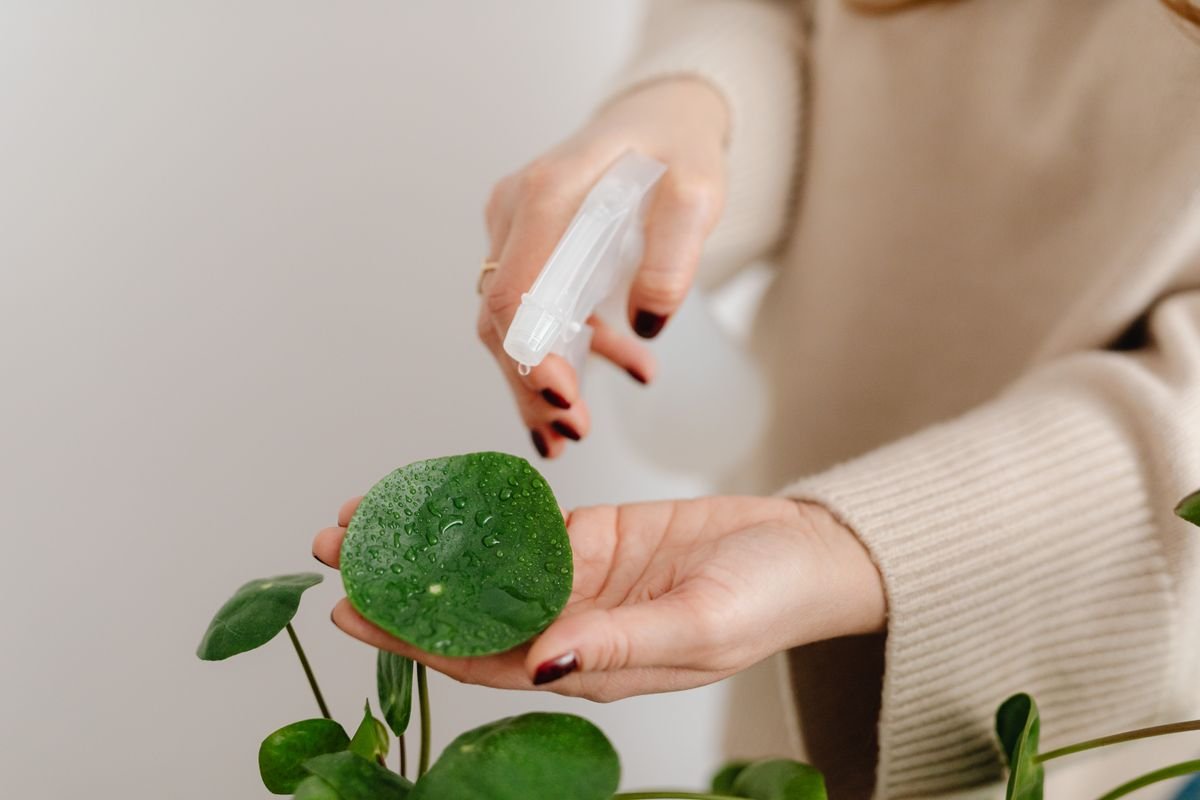
Step 2 — Contact kill with a labelled insecticidal soap. Apply a labelled insecticidal soap, horticultural oil, or emulsified neem until all surfaces are wet — these are contact agents and only kill what they directly touch. Repeat every 5-7 days. Patch-test on one leaf for 24 hours first if the plant is a variegated cultivar or recently stressed, since these treatments can occasionally mark sensitive tissue.
Step 3 — Growth disruption for persistent outbreaks. Azadirachtin (neem) primarily disrupts moulting, so nymphs fail to mature into reproductive adults — use it as a follow-up after the water blast and soap treatment have already reduced the active colony, not as a single-application cure. Pyrethrin is a faster-acting botanical contact option for heavy outbreaks; apply it in cool, shaded conditions rather than hot direct sun, and follow the label exactly.
| Agent | Role | Limit |
|---|---|---|
| Water blast | Immediate physical removal | Misses eggs and hidden nymphs |
| Insecticidal soap or oil | Contact kill | No residual effect; must directly wet the insects |
| Azadirachtin | Disrupts juvenile moulting | Not a reliable way to clear existing eggs |
| Systemic neonicotinoid | Escalation for severe, unresponsive cases | Last resort; follow the label exactly |
When to Discard, Prune, or Repot
Pruning is appropriate for individual heavily crusted tips during the first treatment pass, but discarding the whole plant is rarely necessary for aphids specifically, since they are a surface-feeding pest that responds reliably to the treatment ladder above. Repotting has no role here, since this is a foliar pest issue rather than a root or substrate problem. Consider discarding only if the plant was already in poor health for an unrelated reason and the combined stress of a heavy infestation pushes it into terminal decline.
Prevention and Monitoring
Quarantine new plants for 2-3 weeks and inspect shoot tips weekly during that period, since aphids frequently arrive on new stock. Recheck tips weekly for a full 4 weeks after the last live aphid is seen, since live-bearing females can re-establish a colony from a single missed individual. Inspect soft new growth first after any spring feeding, since fresh, nitrogen-rich tissue is the highest-risk target. Humidity in the standard 40-60% band is fine for general plant health, but unlike spider mites, aphids are not primarily a dry-air pest — don't rely on raising humidity as a control method here.
Honeydew and Sooty Mould Cleanup
Wipe sooty mould away with a damp, soft cloth only after the aphid colony has been eliminated, not before — cleaning while aphids are still actively feeding just invites a fresh coat of honeydew within days. Ants on the pot rim are a signal to inspect the shoot tips for an active colony, not a separate pest requiring their own treatment.
Troubleshooting persistent cases:
| Symptom after treatment | Likely cause | Action |
|---|---|---|
| Sticky tips return within 5-7 days | Missed hatch or a skipped spray cycle | Resume the weekly soap treatment; check leaf undersides specifically |
| Leaf spotting appears after spraying | Phytotoxicity from too strong a mix | Rinse the leaves; switch to a labelled product and treat in shade |
| Colony confined to one tip | Likely a single winged-adult landing site | Still inspect the entire shelf, not just that one plant |
| Sticky film remains with no live insects | Old honeydew residue | Confirm no live aphids first, then wipe clean |
Safety Notes
Always follow the product label for any insecticidal soap, oil, or systemic treatment, including how long to keep pets away from treated foliage. Wear gloves when handling concentrated product, and avoid skin or eye contact. Never combine a soap or oil treatment with a systemic pesticide or fertiliser application unless the label explicitly permits it. For the full diagnostic reference across all symptom types, see the complete problems guide.
Sources
Identification and treatment guidance are consistent with UC IPM, RHS, and Missouri Botanical Garden guidance on indoor aphid management.
Care FAQ
What do aphids look like on Peperomia obtusifolia?
Soft-bodied, pear-shaped insects roughly 1-3 mm long, usually green, yellow, or black, clustering on shoot tips, tender stems, and the undersides of the youngest leaves. Sticky honeydew, white cast skins, ants on the pot rim, and black sooty mould on lower leaves are the secondary signs that usually appear alongside an active colony.
Why do aphids target new Peperomia growth specifically?
New tissue has thinner cell walls and higher amino-acid content relative to older leaves. Aphids are phloem feeders that need nitrogen for protein while the sap they extract is sugar-rich, so they concentrate on soft new tips and excrete the excess carbohydrate as honeydew.
Is dish soap safe to use against aphids on Peperomia?
A labelled insecticidal soap is the safer choice. Household dish detergents vary considerably in formulation and can damage this species' waxy cuticle. If a labelled product isn't available, patch-test a mild dish soap solution on one leaf for 24 hours before treating the whole plant, then switch to a labelled product for the ongoing weekly cycle.
How long does it take to fully eradicate aphids from a Peperomia?
Plan on contact treatments every 5-7 days for at least 3-4 weeks. Aphid females commonly give birth to live nymphs indoors without mating, so stopping treatment as soon as visible adults disappear leaves the next generation to re-establish. Treat every plant on the same shelf, not just the first one showing honeydew.