
Move Peperomia from Soil to LECA Safely
Moving Peperomia obtusifolia from soil to LECA safely means treating it as a root-system rebuild, not a repotting: the plant has to shed roots built for soil and grow a new water-adapted root system over several weeks. The single most common cause of failure is incomplete soil removal — any organic matter left on the roots decomposes in the reservoir and triggers the same anaerobic rot risk that kills overwatered soil-grown specimens.
Quick Decision Checklist
| Situation | Verdict |
|---|---|
| Healthy, established soil plant, willing to do a full root scrub and monitor for weeks | Transition is workable |
| Valuable or hard-to-replace specimen | Transition a cutting instead, keep the parent in soil |
| Time-pressed, wants a quick weekend project | Reconsider — this is a multi-week commitment, not a same-day repot |
| Already struggling plant with root problems in soil | Address the underlying issue first; a transition adds stress it may not tolerate |
What the Transition Actually Involves
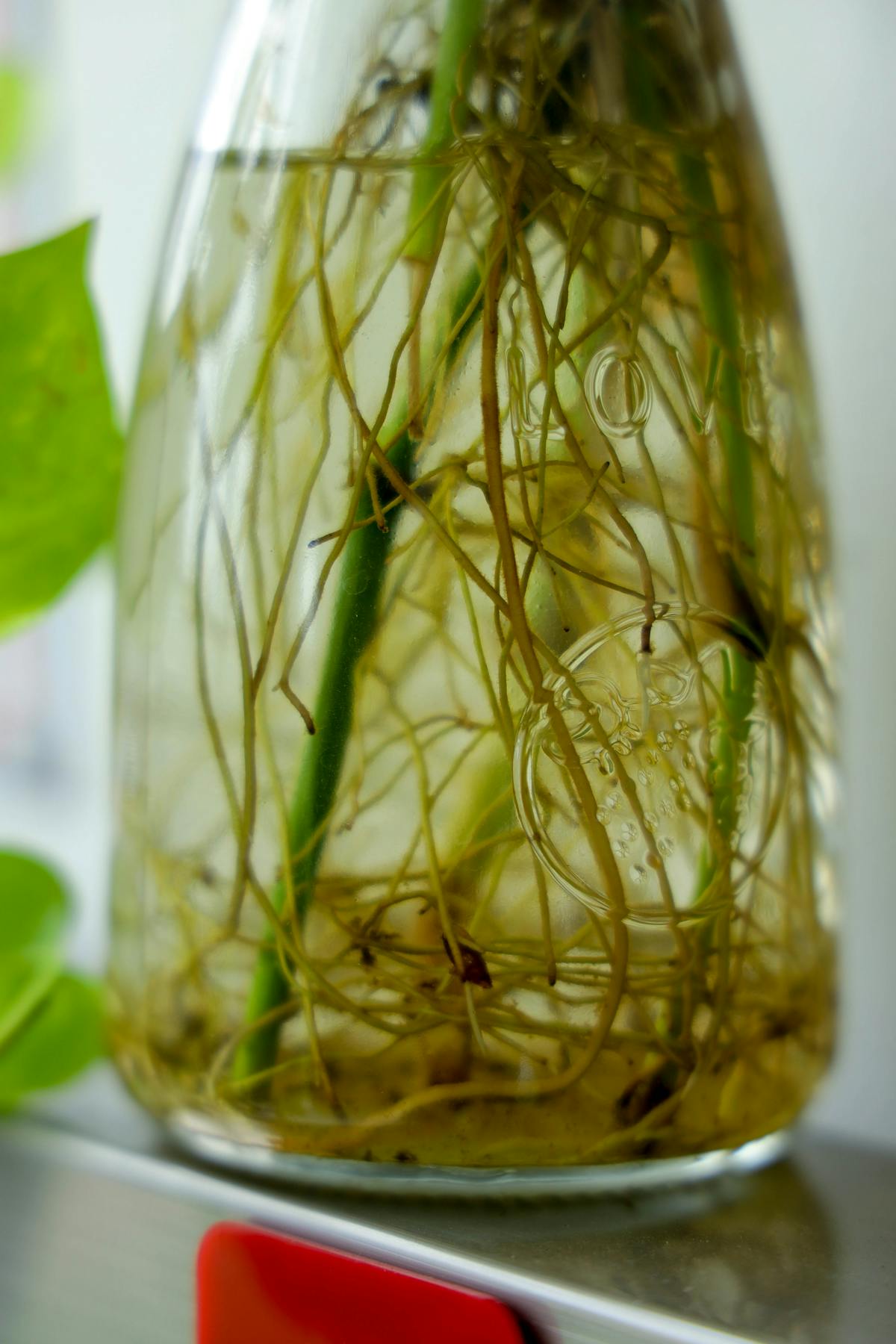
Soil roots and LECA-grown "water roots" are not the same tissue. Soil roots take up oxygen directly from air pockets in the substrate. Roots that develop in a LECA reservoir rely on aerenchyma — internal air channels that carry oxygen down from the leaves to the submerged root tips — a structural adaptation that takes time to grow, not something an existing soil root can simply switch on. This is why a soil root system cannot just be rinsed and dropped into a wet reservoir: it will suffocate before the plant has built the tissue that would let it survive there.
Risks Ranked from Most to Least Likely to Cause Failure
- Incomplete soil removal. Residual peat, bark, or coir particles decompose in the reservoir within days, lowering dissolved oxygen and creating the conditions Pythium and Phytophthora need to attack root tissue. This is the dominant cause of transition failure.
- Nutrient solution introduced too early. Freshly scrubbed roots have damaged surfaces; adding nutrient concentration before the plant has begun root recovery adds osmotic stress at the worst possible time.
- Crown sitting in standing water. If the water level in the reservoir reaches the point where stem meets root, sustained contact there is a direct route to stem rot.
- Mistaking normal turgor loss for failure and abandoning the process early. Some leaf softening in the first couple of weeks is a resource-reallocation response, not a sign the transition has failed — see the recovery-timeline section below before concluding it hasn't worked.
Step-by-Step Method
- Unpot the plant, supporting the crown rather than pulling on the stems.
- Soak the root ball in lukewarm water for about an hour to soften the surrounding soil and make it easier to remove.
- Scrub thoroughly under running water, using a soft-bristle brush to work every trace of substrate out of the root crown and root mass. Work outward from the crown.
- Inspect the cleaned roots — any visible dark patch is residual organic matter and needs to come off before proceeding.
- Trim roots that won't come clean with sterile scissors rather than leaving contaminated tissue attached — a smaller, genuinely clean root system is safer than a larger, contaminated one.
- Pot into pre-soaked, pH-adjusted LECA with the crown resting at the surface, never buried.
- Fill the reservoir with plain, pH-adjusted water only for the first two weeks — no nutrient solution yet. Flush the system every few days during this period to clear away any decaying root tissue.
- Introduce nutrient solution at reduced strength once the plain-water period is over, following the same dosing schedule used for LECA propagation: a low starting strength, increasing gradually over the following weeks as new roots establish.
Recovery Signs and Realistic Timeline
Mild leaf turgor loss in the first one to two weeks is a normal part of the process — the plant is reallocating resources toward building new roots rather than maintaining every leaf at full firmness, not a sign of failure on its own. New white root growth becoming visible at the crown is the first confirming sign that the transition is progressing; leaves typically re-firm once this new root system begins functioning. Resumption of new leaf growth is the clearest overall signal that the plant has successfully rebuilt a functioning root system and is no longer investing everything below the surface. If leaves continue declining well beyond this window with no visible new root growth at the crown, the transition has likely failed, and a stem cutting taken from a still-healthy section and rooted fresh in clean LECA is the more reliable path forward than continuing to wait.
How to Prevent Recurrence and Improve Success
Root out every trace of soil before the plant ever touches the reservoir — this single step accounts for most of the difference between a transition that succeeds and one that doesn't. Resist the temptation to add nutrient solution early "to help it along"; the plain-water settling period is doing necessary work, not wasting time. Use an opaque outer cachepot to prevent algae growth in the reservoir, and keep the water level low enough that the crown never sits in standing water. For a valuable or irreplaceable specimen, transition a cutting rather than the whole plant — a cutting rooted directly in LECA never has soil roots to shed in the first place, which removes the riskiest part of the process entirely.
FAQ
See the frontmatter FAQ block above for direct answers on method, timing, and the cutting-versus-mature-plant decision. For the general reservoir, pH, and feeding routine once a specimen is established in LECA, see the complete LECA guide; for the substrate the plant is leaving behind, see the soil mix guide and the pot material guide; if the plant showed dark spotting before the move, check the black spots guide first, since an unresolved problem is better addressed before adding the stress of a substrate change; and if root or crown symptoms suggest the plant needed a size-up rather than a medium change, the repotting signs guide covers that separate decision.
Care FAQ
How do I transition Peperomia obtusifolia from soil to LECA?
Unpot the plant, soak the root ball to soften the soil, then scrub every trace of substrate off the roots under running water using a soft brush. Trim any roots that will not come clean. Pot into pre-soaked, pH-adjusted LECA and fill the reservoir with plain water only for the first two weeks before introducing a dilute nutrient solution.
Why does every trace of soil have to come off the roots?
Any organic matter left in a continuously moist LECA reservoir decomposes and creates low-oxygen conditions that favour Pythium and Phytophthora root-rot pathogens — the same organisms responsible for root rot in overwatered soil pots. Even a small clump at the root crown is enough to compromise the whole reservoir.
How long does the soil-to-LECA transition take?
Plan for several weeks before the plant resumes visible above-ground growth. The plant is prioritising new root development over leaf production during this period, which is a resource-allocation response, not decline, provided the roots are progressing.
Should I transition a mature plant or start a fresh cutting in LECA instead?
A cutting rooted directly in LECA never has soil roots to shed, so it reaches normal growth sooner and with less risk than transitioning an established root system. For a valuable or hard-to-replace specimen, transitioning a cutting rather than the whole plant is the lower-risk option.