Peperomia vs ZZ Plant: Best Care & Water Storage
Peperomia obtusifolia and the ZZ plant (Zamioculcas zamiifolia) are both marketed as "hard to kill," but they store water through completely different mechanisms, tolerate different light ranges, and differ sharply on pet safety — the two are not interchangeable "low-maintenance" substitutes for each other. Choose Peperomia for a compact, pet-safe plant that still wants reasonably bright light; choose ZZ plant if the space is genuinely dim and there are no pets with access to it.
Side-by-Side Comparison
| Factor | Peperomia obtusifolia | ZZ Plant (Zamioculcas zamiifolia) |
|---|---|---|
| Family | Piperaceae | Araceae |
| Water storage | Leaves and stems (semi-succulent tissue) | Underground rhizomes |
| Drought tolerance | Good — tolerates missed waterings | Very high — tolerates extended neglect |
| Light | 2,000-4,000 lux for active growth | Tolerates considerably lower light; grows slowly even in bright conditions |
| Leaf type | Simple, alternate, obovate | Pinnately compound, glossy leaflets |
| Toxicity | Non-toxic to cats, dogs, horses (ASPCA) | Contains calcium oxalate crystals; causes mouth and GI irritation if chewed |
| Growth rate | Slow (2-5 cm/year) | Slow, comparable or slower |
| Substrate | Free-draining coir/perlite/bark mix | Similar free-draining mix |
How to Tell Them Apart
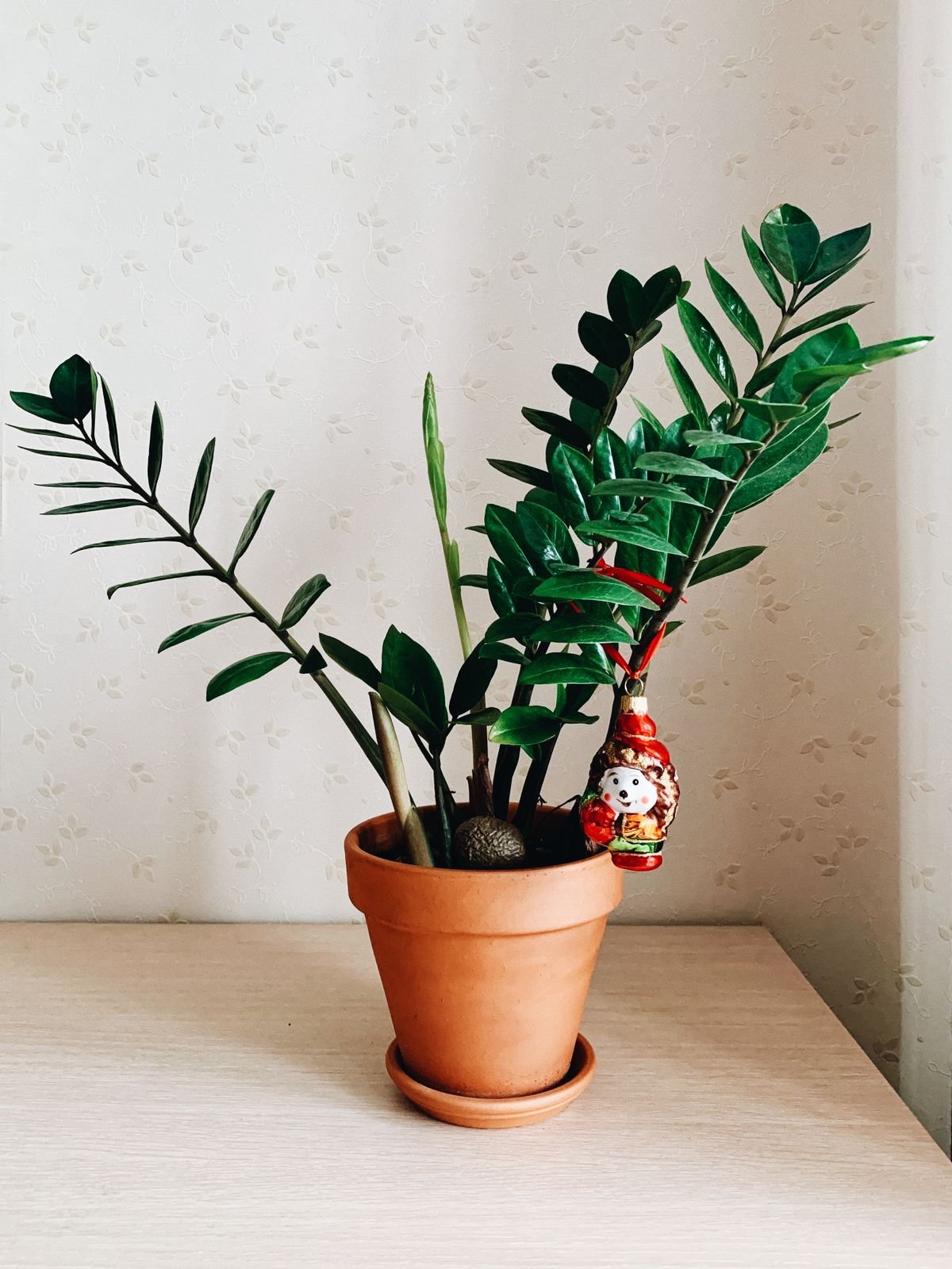
Leaf structure is the fastest check. P. obtusifolia has simple leaves — a single, whole, glossy blade attached directly to the stem, arranged alternately. The ZZ plant has pinnately compound leaves — multiple smaller, glossy leaflets arranged in pairs along a central stalk, closer in structure to a fern frond than a single leaf.
Growth habit differs too. P. obtusifolia grows as an upright cluster of multiple thick stems from the base. ZZ plant growth emerges as individual stalks directly from the soil line, each one a self-contained compound leaf structure rather than a branching stem system.
Underground structure, if repotting. P. obtusifolia has an ordinary fibrous root system. ZZ plant roots connect to large, potato-like rhizomes just below the soil surface — visible immediately if the plant is ever unpotted, and a definitive confirmation if there's any doubt.
Care Differences That Actually Change the Outcome
The similarities (both slow-growing, both drought-tolerant relative to a typical tropical foliage plant) are real, but the differences that actually change how you'd care for each are specific:
- Water storage location and drought tolerance. P. obtusifolia keeps its reserve in leaf and stem tissue, so it still benefits from a dry-down and rewater rhythm on a roughly
10-14day summer interval. The ZZ plant's rhizome buffer is large enough that it tolerates going considerably longer between waterings, and overwatering — not underwatering — is the more common failure mode for a ZZ plant, since the rhizome rots readily in substrate kept too wet. - Light tolerance and what "low light" actually means for each. P. obtusifolia needs
2,000-4,000 luxto grow actively and will etiolate below roughly800 luxsustained for several weeks. The ZZ plant tolerates meaningfully dimmer conditions without the same rapid decline, which is the main reason it gets recommended for offices and low-light corners where Peperomia would struggle. - Toxicity. This is the difference with the most direct consequence for households with pets. P. obtusifolia carries no documented toxic compounds. ZZ plant tissue — like other aroids — contains calcium oxalate crystals that cause immediate mouth and gastrointestinal irritation if chewed, and while rarely life-threatening, it is a real and avoidable risk in a home with a curious cat, dog, or child.
Which Is Easier for a Specific Home
- A dim room with no natural window light: ZZ plant tolerates this considerably better and is the more realistic choice for a genuinely low-light corner.
- Households with pets or young children who chew plants: P. obtusifolia is the meaningfully safer option given the ZZ plant's calcium oxalate content.
- Frequent travel or inconsistent watering: ZZ plant's rhizome buffer gives it more tolerance for extended neglect than Peperomia's leaf-and-stem storage, though both are more forgiving than most tropical foliage plants.
- A grower prone to overwatering: Peperomia is the safer choice here — a ZZ plant kept in consistently moist substrate is prone to rhizome rot, and its tolerance for neglect does not extend to tolerance for excess water.
- A compact tabletop or shelf display: Either works, though P. obtusifolia's upright cluster habit and ZZ plant's individual stalks give a visually different silhouette worth considering for the specific display.
Common Misidentification and Buying Mistakes
- Assuming "glossy and drought-tolerant" means interchangeable care — the two plants fail in opposite directions (Peperomia to underwatering-adjacent stress, ZZ plant more often to rot from overwatering).
- Placing a Peperomia in a ZZ-appropriate dim corner expecting similar tolerance — it will survive briefly but etiolate and decline in a way a ZZ plant in the same spot would not.
- Keeping a ZZ plant within reach of a pet on the assumption that "hard to kill" implies "harmless if chewed" — drought tolerance and toxicity are unrelated properties.
- Watering a ZZ plant on the same schedule as a Peperomia — the rhizome buffer means a ZZ plant needs the substrate to dry far more completely before rewatering than Peperomia's schedule would suggest.
Final Decision Guide
Choose Peperomia obtusifolia if you have pets or children with plant access, a reasonably bright spot (2,000+ lux), and want a compact plant that rewards a normal watering rhythm.
Choose the ZZ plant if the space is genuinely dim, no pets or young children will have access to it, and you want a plant that tolerates being forgotten for extended stretches without active care.
For the general care specification behind Peperomia's own thresholds referenced throughout this comparison, see the complete care guide, and for houseplant marketing claims that don't hold up under scrutiny for either species, see the air purification myths guide. If you're not certain you actually have P. obtusifolia to begin with, confirm against the identification guide rather than assuming — the same care logic in this comparison doesn't necessarily transfer to a misidentified Hoya or Ficus elastica sold under the same generic "rubber plant" branding.
Care FAQ
Is a ZZ plant a type of Peperomia?
No. The ZZ plant (Zamioculcas zamiifolia) is an aroid in the Araceae family; Peperomia obtusifolia is in the pepper family, Piperaceae. They are unrelated and only resemble each other in having glossy, deep-green foliage.
Which one stores more water?
The ZZ plant, by a wide margin. It stores water in large underground rhizomes and can survive an extended period without water, well beyond what Peperomia's leaf-and-stem water storage allows for. Peperomia stores water in its leaves and stems instead and needs a more regular, if still infrequent, watering rhythm.
Can a ZZ plant survive in a windowless room?
No plant survives indefinitely with zero light, but the ZZ plant tolerates meaningfully lower light than Peperomia obtusifolia and can persist for extended periods in dim conditions without dying, even though it will not produce active new growth there.
Is the ZZ plant safe for pets?
No. Like other aroids, ZZ plant tissue contains calcium oxalate crystals that cause mouth and gastrointestinal irritation if chewed or ingested. Peperomia obtusifolia carries no such compounds and is listed as non-toxic to cats, dogs, and horses by the ASPCA.