Peperomia Sunburn: How to Treat Scorched Leaves
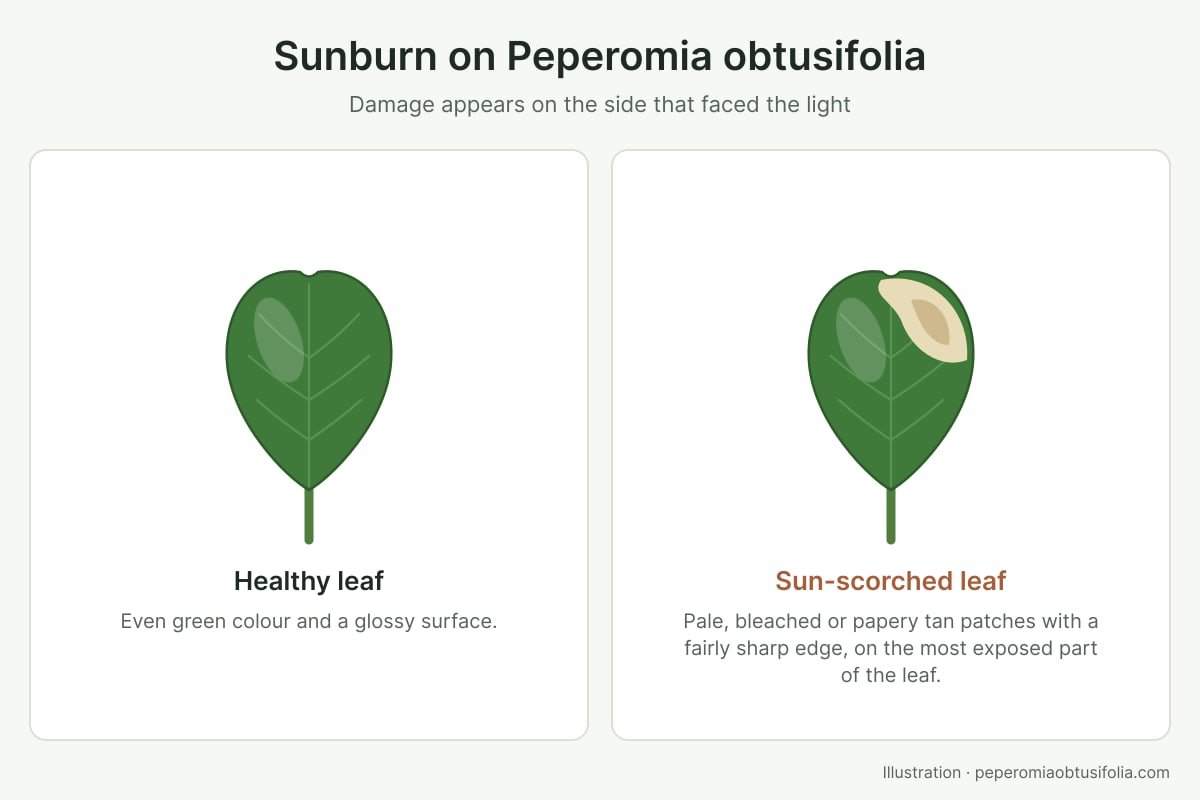
Peperomia sunburn appears as a bleached white or brown patch confined to the side of the leaf that faced the light source — the result of direct, unfiltered sun exceeding the species' damage threshold, not a nutrient or watering problem. Appearance alone does not confirm the cause: check whether the plant was recently moved to a brighter spot or whether the damage sits only on the light-facing side of affected leaves before treating it as sunburn rather than something else.
Quick Diagnosis Table
| Symptom pattern | Likely cause | Confirming check | First action |
|---|---|---|---|
| Bleached/white patch on the light-facing side only | Sunburn (photo-oxidative damage) | Recent move to brighter light or intensified seasonal sun | Move back from direct light immediately |
| Whole leaf or leaf-edge yellowing, not light-direction-specific | Nutrient chlorosis | Check fertilising history and leaf position | See the yellow leaves guide |
| Water-soaked blisters on the leaf underside | Oedema | Recent cold snap plus wet substrate | Address temperature and watering together |
| Soft, browning patch spreading from a wound or pest bite | Infection or pest damage | Inspect for insects or soft rot | Isolate and inspect closely before assuming light damage |
What Sunburn Looks Like on This Species
Sunburn is confined to the tissue that directly faced the light source — typically the upper surface or the edge nearest a window — rather than spreading evenly across the whole leaf. Early damage presents as a faded, washed-out patch where the green has visibly thinned; in more severe cases, the patch dries to a brown, papery texture with a distinct border against still-green tissue. The veins within the damaged patch often pale along with the surrounding tissue, which is a useful distinguishing sign against chlorosis, where veins commonly stay green while the tissue between them yellows.
This pattern is easy to confuse with two other symptoms. Nutrient chlorosis (yellow leaves guide) typically affects a whole leaf or starts at the leaf edges regardless of which way the plant faces a window — direction is irrelevant to a nutrient-driven symptom. Oedema produces water-soaked blisters, usually on the leaf underside, following a cold-and-wet event rather than a light event. Confirm the plant's recent light history before treating a patch as sunburn.
Causes Ranked from Most to Least Likely
1. An abrupt move into direct, unfiltered sun
The dominant cause. Moving a plant that has been acclimated to filtered or indirect light straight into unfiltered south- or west-facing sun exposes it to intensities well above the roughly 40,000 lux threshold at which chloroplast damage begins. Confirm: check whether the plant was repositioned, or whether furniture, curtains, or nearby foliage that previously provided shade was recently removed.
2. A seasonal intensity increase in an already-bright spot
A window that provided safe, moderate light through autumn and winter can deliver direct, higher-angle sun as the season shifts, without the plant having moved at all. Confirm: check whether the damage appeared alongside a change in season rather than a change in the plant's position.
3. Magnification through glass or a nearby reflective surface
Water droplets left on a leaf, or a mirror or reflective surface redirecting additional sun onto the plant, can locally intensify light beyond what the room's general exposure would suggest. Confirm: check for standing droplets after watering or misting, and note any reflective surfaces newly positioned near the plant.
Step-by-Step Recovery Plan
- Move the plant out of direct light immediately — back to indirect light in the 2,000-4,000 lux optimum range, not into a dim corner. The goal is stopping further damage, not eliminating light.
- Do not increase watering in response. Damaged tissue loses water faster through the compromised leaf surface, but this is addressed by confirming the substrate is at its normal watering point with the usual top-2-3-cm-dry check — not by watering ahead of schedule.
- Leave leaves that are still mostly green. A leaf with a bleached patch but substantial healthy tissue remaining continues to contribute photosynthesis and should stay on the plant.
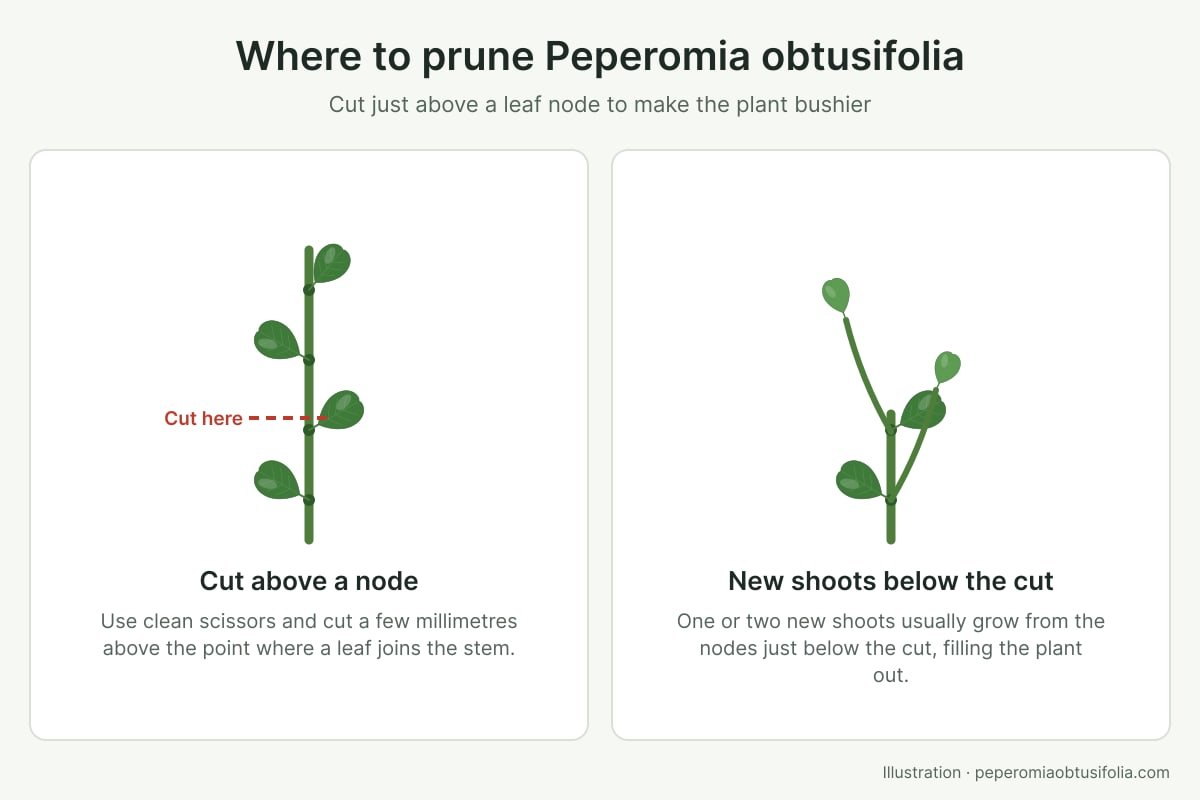
- Prune only leaves that are mostly brown, crisp, or collapsed. Cut with sterilised scissors at the base of the petiole; removing severely damaged tissue redirects the plant's resources away from dead material.
- Do not fertilise during recovery. Damaged, stressed tissue does not need an additional nutrient load, and feeding does not accelerate repair of tissue that will not recover regardless.
Recovery Signs and Realistic Timeline
Damaged tissue itself never turns green again — recovery is measured in new growth, not repaired leaves. Within a few weeks of correcting the light exposure, new leaves should emerge with normal, even colouring and no light-direction-specific patterning. If new growth continues to show pale or bleached patches after the plant has been relocated to appropriate light for several weeks, re-examine the current position rather than assuming the plant is still "recovering" from the original event.
How to Prevent Recurrence
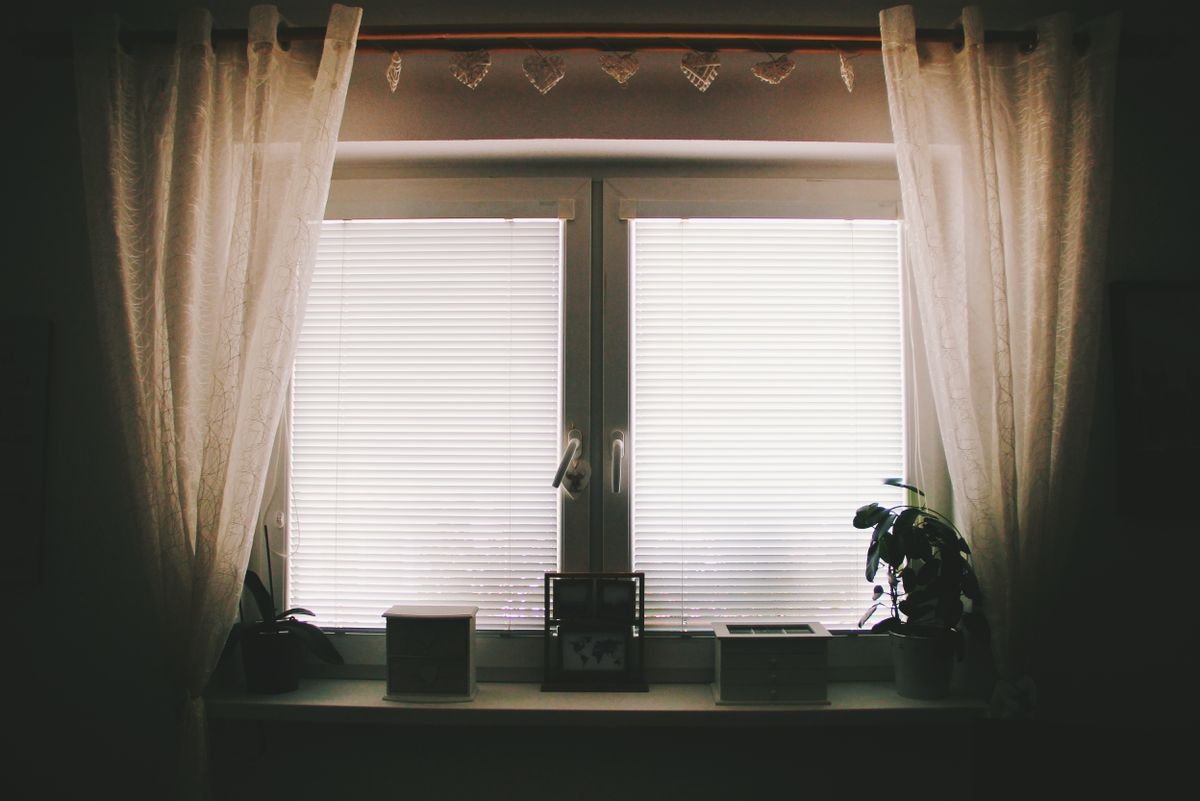
Acclimate gradually. When moving a plant to a brighter spot, increase exposure over one to two weeks rather than in a single step — a sheer curtain during the transition diffuses the most intense midday hours while the plant adjusts. Cuticle thickening and other light-tolerance adaptations develop over this kind of gradual exposure; they do not develop under a sudden jump in intensity.
Reassess after seasonal changes. A spot that was safe in winter can become a direct-sun risk as the sun's angle rises in spring and summer — recheck lux at the leaf surface rather than assuming a previously safe position stays safe year-round. The best window guide and light requirements guide cover how direction and distance change the intensity a given spot delivers through the year.
Consider a supplemental grow light instead of chasing a hotter windowsill. If a plant needs more light than its current spot delivers, a light-emitting diode fixture at a controlled distance raises intensity without the direct-sun risk — see the grow lights guide for setup and distance. This is also the safer route for a specimen recovering from etiolation, where the temptation to overcorrect into harsh direct sun is what causes sunburn in the first place.
Anthocyanin-pigmented cultivars tolerate brighter spots better. Varieties such as 'Red Edge' carry red pigments that absorb some of the high-energy light before it reaches the chlorophyll, giving them a genuine advantage in a spot too bright for the solid green form — see the Red Edge cultivar guide.
Common Mistakes
- Watering more because the leaf looks stressed — sunburned tissue's faster water loss is a substrate-check issue, not a signal to water ahead of the normal dry-down schedule.
- Removing every leaf with any visible patch — a leaf that is still mostly green continues to contribute energy and should stay until it is genuinely mostly damaged.
- Moving a plant into full sun to "toughen it up" after etiolation — light correction after legginess still needs a gradual step-up, not a single abrupt jump into the most intense spot available.
Care FAQ
What does a sunburned Peperomia leaf look like?
A bleached, faded, or white patch confined to the side of the leaf that faced the light source, sometimes with the veins in that area turning pale too. In severe cases the patch dries to a brown, papery texture as the tissue dies outright.
Why did my Peperomia get sunburned?
Direct, unfiltered sun exceeding roughly 40,000 lux overwhelms the leaf's photosynthetic capacity. The excess light energy damages chloroplasts and bleaches chlorophyll faster than the plant can process it, typically after an abrupt move into strong sun without acclimation.
Can a sunburned leaf turn green again?
No. Once chlorophyll in the affected patch is destroyed, that specific tissue does not re-green. If most of the leaf is still healthy green tissue, leave it in place — it continues photosynthesising and supporting recovery. Only remove leaves that are mostly brown or collapsed.
How do I prevent Peperomia sunburn when moving it to a brighter spot?
Increase light exposure gradually over one to two weeks rather than moving the plant directly into full unfiltered sun, and use a sheer curtain to diffuse the most intense midday hours during the transition.